
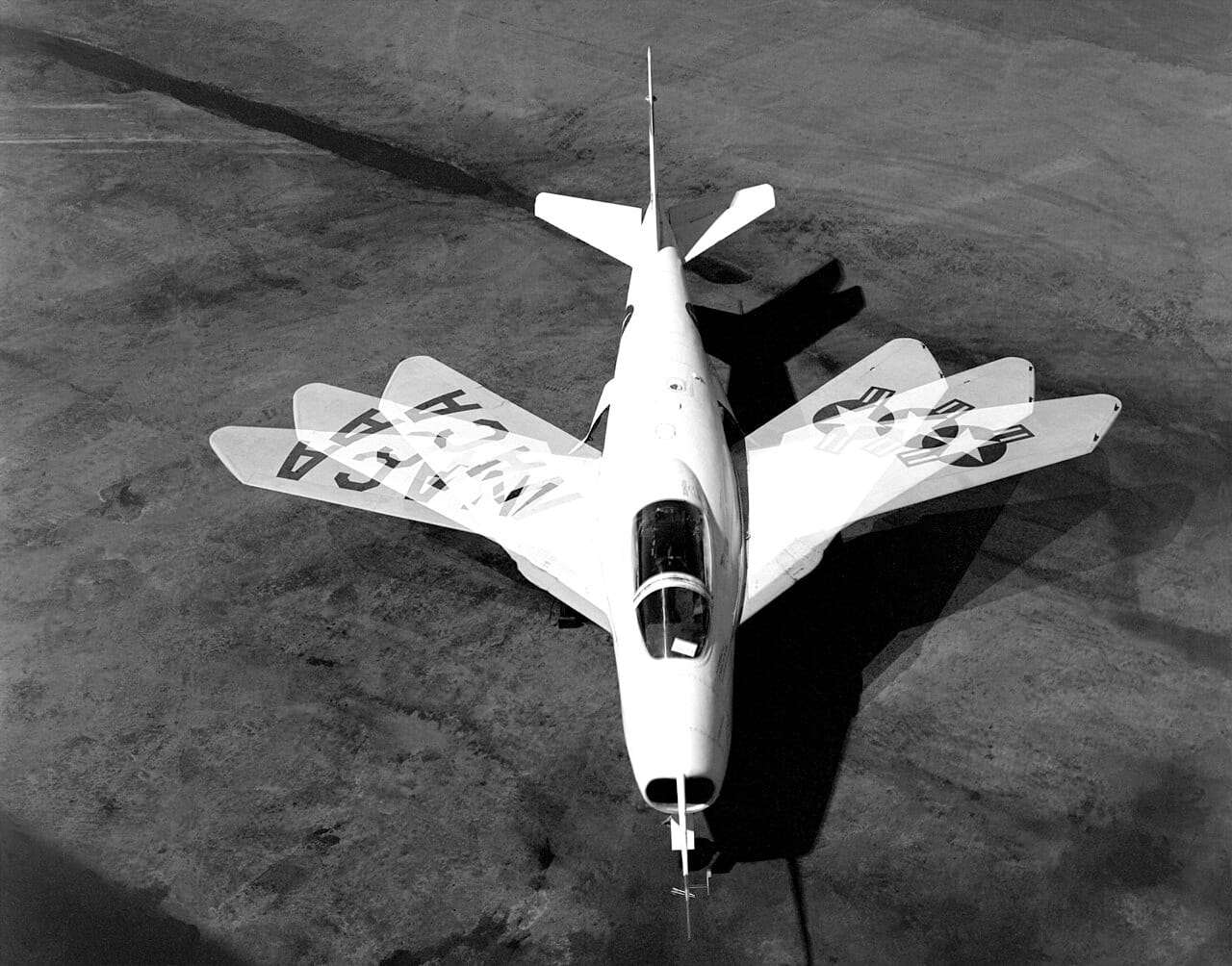
On 20 June 1951, over the dry lakebed at Edwards Air Force Base, test pilot Jean “Skip” Ziegler did something no pilot had ever done. As his stubby little research jet, the Bell X-5, climbed away from the desert floor, he reached for a control and the aircraft’s wings physically swung backwards in mid-air — pivoting from straight-out to swept-back while the jet kept flying. For the first time, an aeroplane could change the shape of its wing in flight.
It sounds like a gimmick. It was actually one of the great engineering dreams of the jet age: a single aircraft that could be slow and docile for takeoff, then transform into a sleek arrow for high-speed dash. For forty years, the “swing wing” chased that dream — and some of the most famous warplanes in history were built around it.
QUICK FACTS
The idea: A wing that pivots in flight — spread out for slow speed, swept back for fast
First to do it: The Bell X-5, first flown 20 June 1951
Test pilot: Jean “Skip” Ziegler, at Edwards Air Force Base
Made operational by: The F-111, F-14 Tomcat, Panavia Tornado and MiG-23
Why it faded: The pivot mechanism is heavy and complex — computers made fixed wings good enough
Why a wing wants to be two shapes at once
Wings are a compromise. A long, straight wing makes wonderful lift at low speed — perfect for taking off, landing and loitering. A short, sharply swept wing slips through the air with little drag at high and supersonic speed. The trouble is you cannot normally have both: a wing optimised for Mach 2 is terrible at landing speed, and vice versa.
The variable-sweep wing was the audacious answer — build a wing that physically changes its shape. Spread the wings for the runway and the loiter, sweep them back for the supersonic run. The Bell X-5 proved it could be done, though it also proved how dangerous it was: the design could pitch up viciously, and one of the two X-5s spun in and killed its pilot.
From experiment to front line: the F-111 and the Tomcat
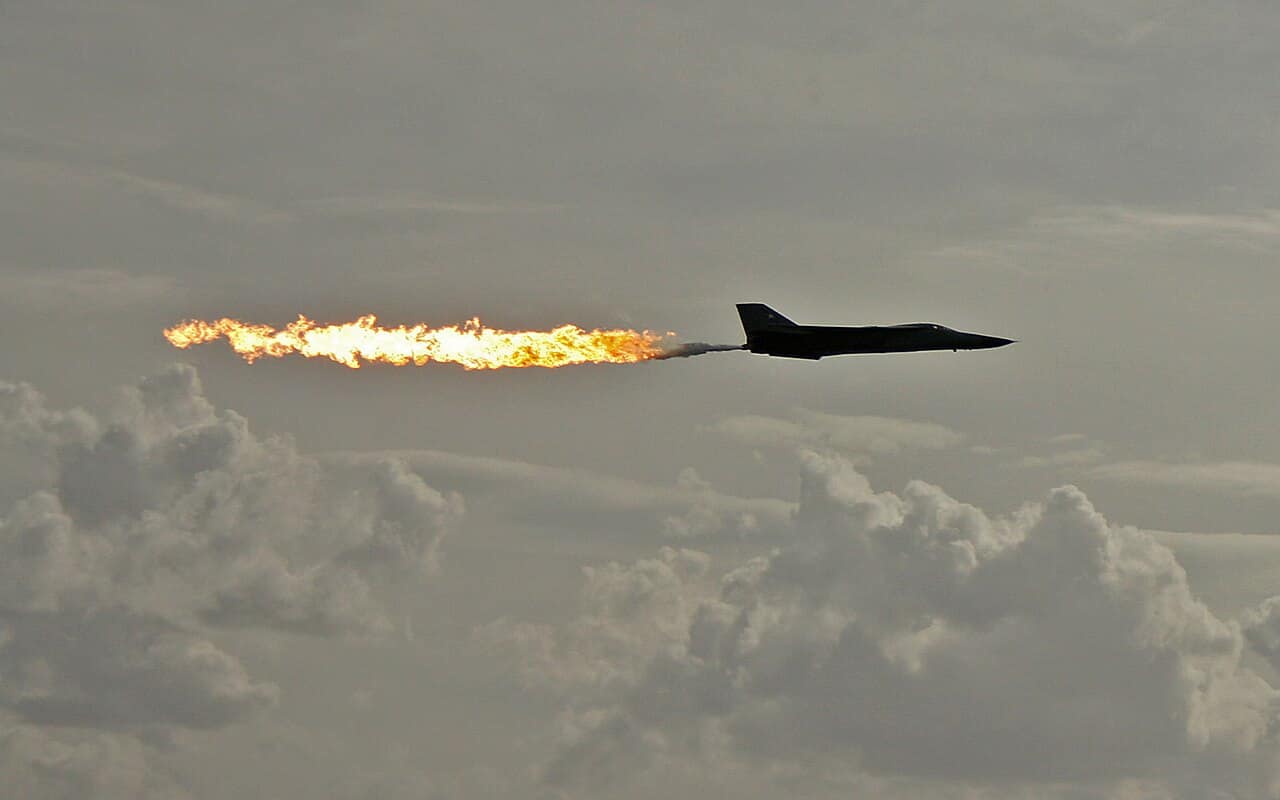
The first to make the idea operational was the General Dynamics F-111 Aardvark in the 1960s — a big, fast strike jet that could sweep its wings to dash at low level. It had a rough start, but matured into one of the most effective strike aircraft of its era.
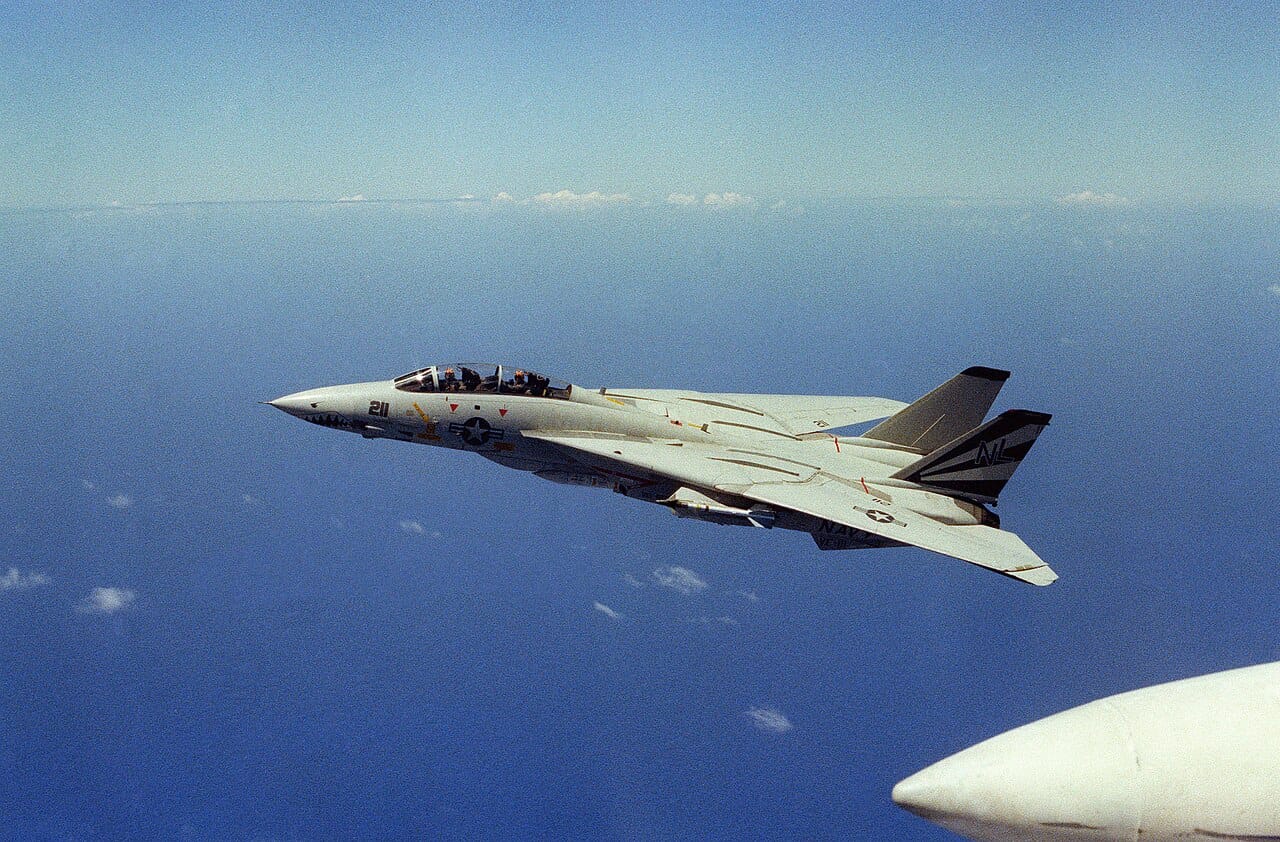
Then came the icon. The Grumman F-14 Tomcat — the jet of Top Gun — carried the idea to the carrier deck, and made it look effortless. Its wings swept automatically, a computer adjusting them constantly so the pilot never had to think about it. Wings forward to claw off a carrier and dogfight; wings back to chase down a target at twice the speed of sound.
Watch an F-14 in a low pass and you can see the wings creeping back as it accelerates and forward as it slows — the aircraft literally reshaping itself in real time. No fighter ever wore the swing wing more beautifully.
A worldwide idea: Tornado and Flogger
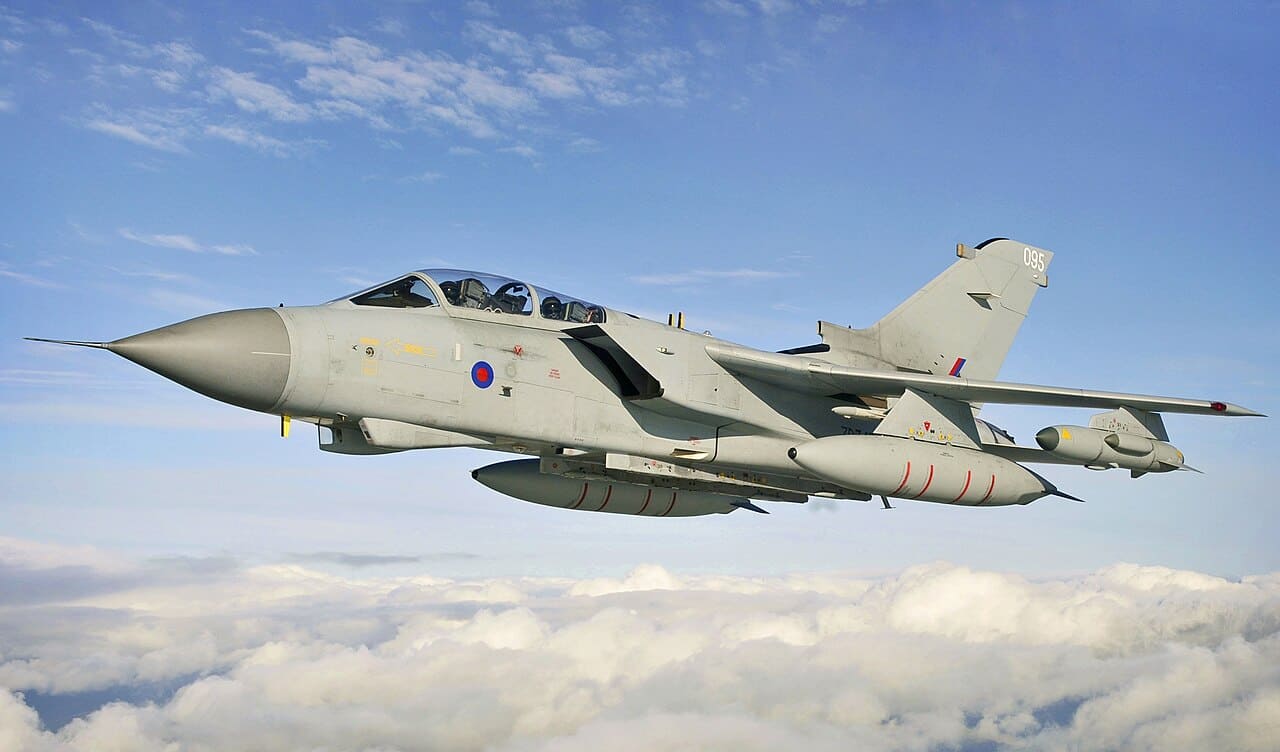
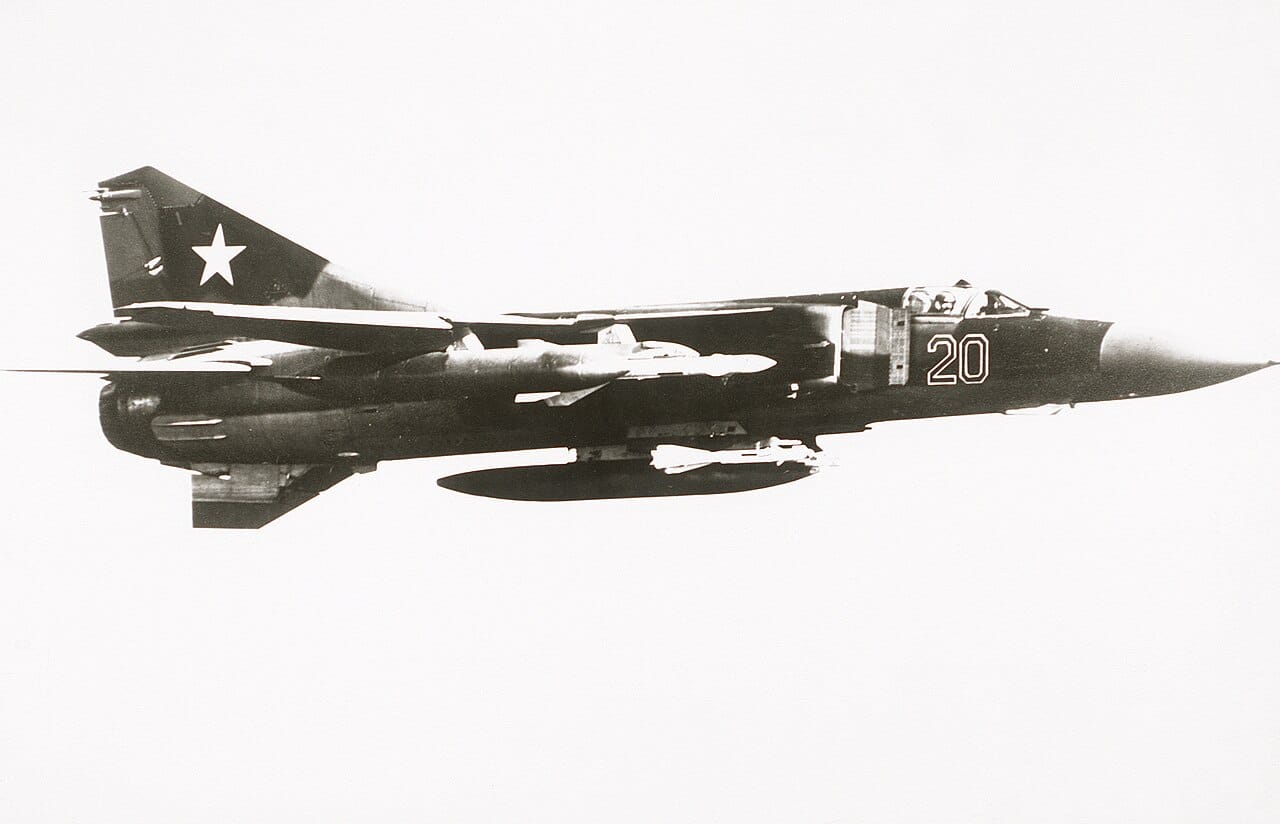
The concept went global. In Europe, Britain, West Germany and Italy jointly built the Panavia Tornado, a swing-wing strike and air-defence jet that served for decades. Across the Iron Curtain, the Soviet Union mass-produced the MiG-23 “Flogger” in enormous numbers, giving the swing wing to dozens of air forces around the world.
Bombers loved the idea too: the American B-1 Lancer and the giant Soviet Tu-160 both use swing wings to combine long range with high-speed dash. For a while in the 1970s and 80s, it seemed every serious combat aircraft had pivoting wings.
Why your favourite swing-wing is the last of its kind
And then it stopped. No major new combat aircraft has used a swing wing since the Cold War, and the reason is simple: the pivot mechanism is heavy, complex and expensive to maintain. All that machinery is dead weight that cannot carry fuel or weapons.
What killed it was the computer. Modern fly-by-wire flight controls and clever leading-edge devices let a fixed wing behave well enough across the whole speed range without any moving pivot — for far less weight. The swing wing was a brilliant mechanical solution to a problem that electronics eventually solved more cheaply. Which makes the Tomcat, the Tornado and the Flogger something special: the magnificent, shape-shifting end of a forty-year idea that began with one little Bell jet over the desert in 1951.
Sources: NASA; National Museum of the U.S. Air Force; This Day in Aviation; Wikipedia.
Related Questions
What is a swing-wing aircraft?
A swing-wing, or variable-sweep-wing, aircraft has wings that pivot in flight to change their angle. Spread straight out, the wings give good lift at low speed for takeoff and landing; swept sharply back, they cut drag for high-speed and supersonic flight. It lets one aircraft perform well across a wide speed range.
What was the first swing-wing aircraft?
The Bell X-5 was the first aircraft able to change its wing sweep in flight. It first flew on 20 June 1951 with test pilot Jean "Skip" Ziegler at Edwards Air Force Base. The design was based on a captured wartime Messerschmitt project, the P.1101, which could only change sweep on the ground.
Why do some fighter jets have wings that move?
Because a wing optimised for high speed is poor at low speed, and vice versa. A swing wing solves the conflict by physically reshaping itself: wings forward for slow, controlled takeoffs, landings and dogfighting, and wings swept back to reduce drag for a fast supersonic dash.
Which famous jets have swing wings?
Notable swing-wing aircraft include the General Dynamics F-111 Aardvark, the Grumman F-14 Tomcat, the European Panavia Tornado and the Soviet MiG-23 Flogger. Swing-wing bombers include the American B-1 Lancer and the Soviet Tu-160 and Tu-22M.
Do the F-14 Tomcat’s wings move automatically?
Yes. The Grumman F-14 Tomcat uses a computer to sweep its wings automatically as speed changes, so the pilot does not have to manage them. The wings move forward as the jet slows and back as it accelerates, which is why you can watch them shift during a flypast.
Why did the military stop building swing-wing aircraft?
The wing-pivot mechanism is heavy, complex and costly to maintain, and all that machinery is weight that cannot carry fuel or weapons. Modern fly-by-wire flight controls and advanced leading-edge devices let a fixed wing perform well enough across the speed range for far less weight, so no major new combat aircraft has used a swing wing since the Cold War.
0 Comments