
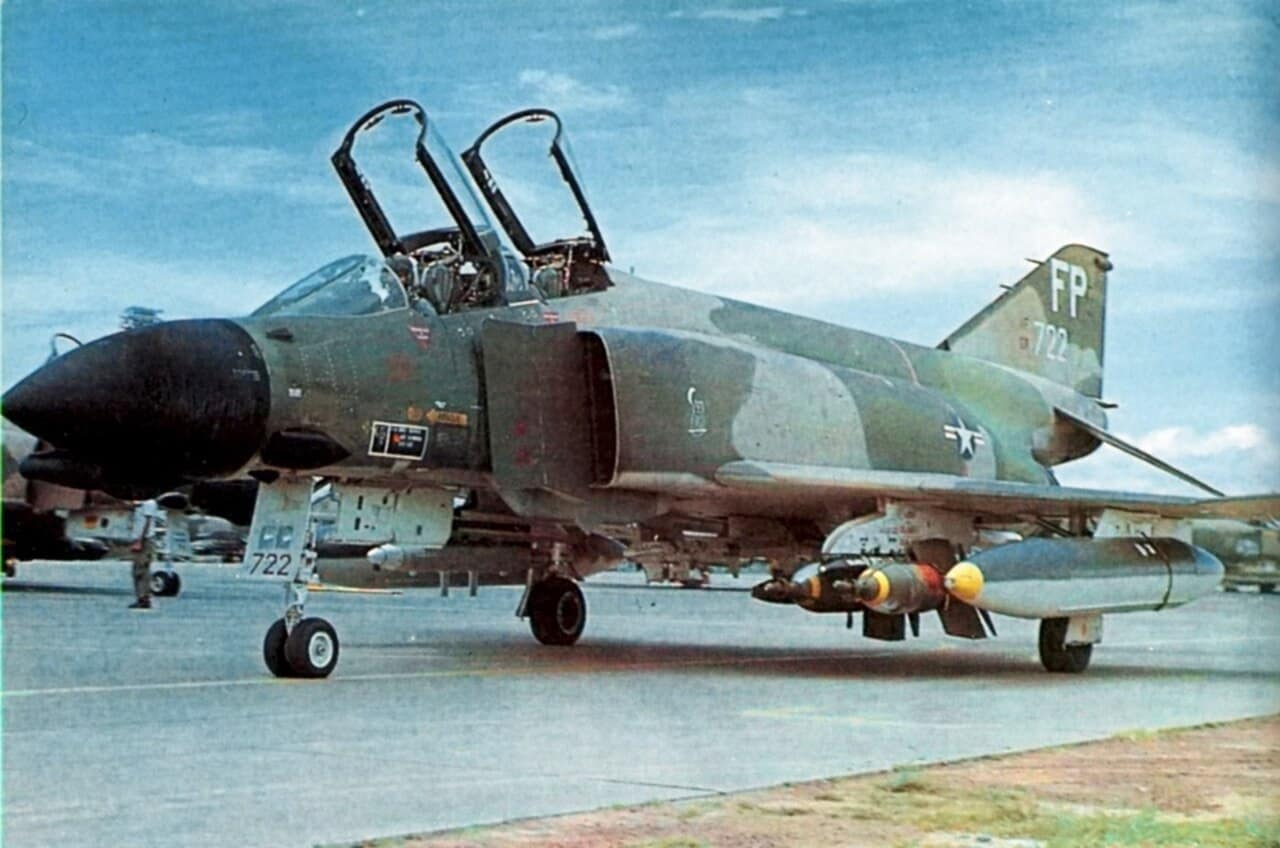
It is mid-morning on 8 June 2026 at Ellington Field in Houston, and Harry “D-Day” Daye is strapping into a machine that has not left the ground in seven years. The ramp smells of jet fuel and Texas heat. Behind him sits Jerod Flohr, one of the volunteers who spent the last months coaxing this aircraft back to life. At 10:50 a.m. local time, two General Electric J79 turbojets light their afterburners, the noise rolls across the field like thunder with a grudge, and the only civilian-operated F-4 Phantom II in the world claws its way back into the sky.
For about forty minutes, a grey ghost from the Vietnam era flies again — two touch-and-goes, then a full stop. It is not a record run or a combat sortie. It is something rarer: a complex, cantankerous 1960s fighter, kept alive by people who simply refused to let it die.
And it wears a name that anyone who loves the Phantom will recognise on sight. This jet flies in the markings of an F-4D associated with Col. Robin Olds — the moustachioed, larger-than-life ace who led the most famous ambush of the air war over North Vietnam.
Quick Facts
- Aircraft: McDonnell Douglas F-4D Phantom II, civil registration N749CF
- Operator: Collings Foundation / Vietnam War Flight Museum, Ellington Field, Houston
- Return to flight: 8 June 2026, ~10:50 a.m. local time, after roughly seven years grounded
- Test pilot: Harry “D-Day” Daye (2,500+ hours on type); Jerod Flohr in the rear cockpit
- Markings: painted as F-4D 66-7680, linked to Col. Robin Olds and Operation Bolo
- Powerplant: two General Electric J79 turbojets; top speed over Mach 2.2
- Status: believed to be the only privately operated, airworthy F-4 in the world
A forty-minute miracle on the Houston ramp
The Phantom was never meant to be a museum piece you could start up and fly. It was built to be flown hard by a national air arm with a supply chain to match — thousands of spare parts, depots, and trained crews. Strip all of that away and you are left with a 1960s interceptor that fights you for every flight hour.
That is why this particular F-4 spent so long on the ground. The aircraft had been grounded for major maintenance since around 2011, and returning it to airworthy condition meant years of patient, unglamorous work: overhauling hydraulics, validating systems, chasing down inspections, and proving every repair. Daye, a former U.S. Air Force Phantom pilot with more than 2,500 hours on type and over a thousand as an instructor, was exactly the right person to take it up and re-earn his currency in the jet.
Vintage Aviation News captured the Collings Foundation Phantom’s first flight in seven years from Ellington Field. Sound up — this is what two J79s waking up sounds like.
What you hear in that footage is not nostalgia. It is engineering. Every system that screams to life had to be coaxed there by hand, and the man who flew it knew exactly how much trust that took.
An Act of Congress to keep a fighter flying
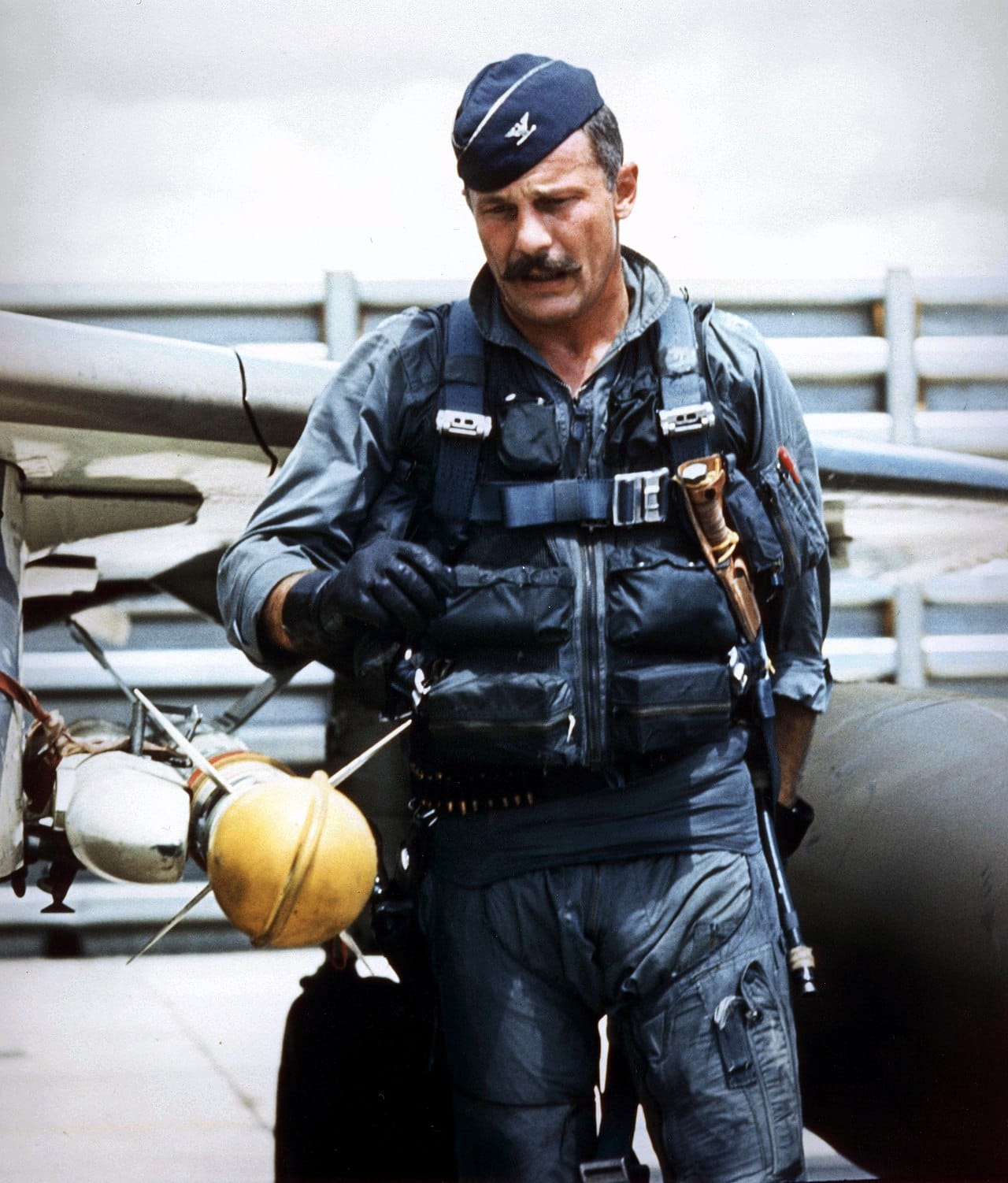
Here is the part most people never realise: it is not simply hard to keep a Phantom flying — it was, for a time, against the rules. A retired front-line fighter does not just get handed over to a museum with the keys. Getting this F-4 into civilian hands took an amendment to the National Defense Authorization Act of 1999 — an actual Act of Congress.
Once the legal door opened, the airframe still needed an enormous refurbishment: zero-timed engines, sourced ejection seats, overhauled hydraulics, and refreshed cockpit avionics. The Phantom made its first flight in civilian hands in August 1999, then flew sparingly — the running costs are brutal — before being parked for the long maintenance that ended this June.
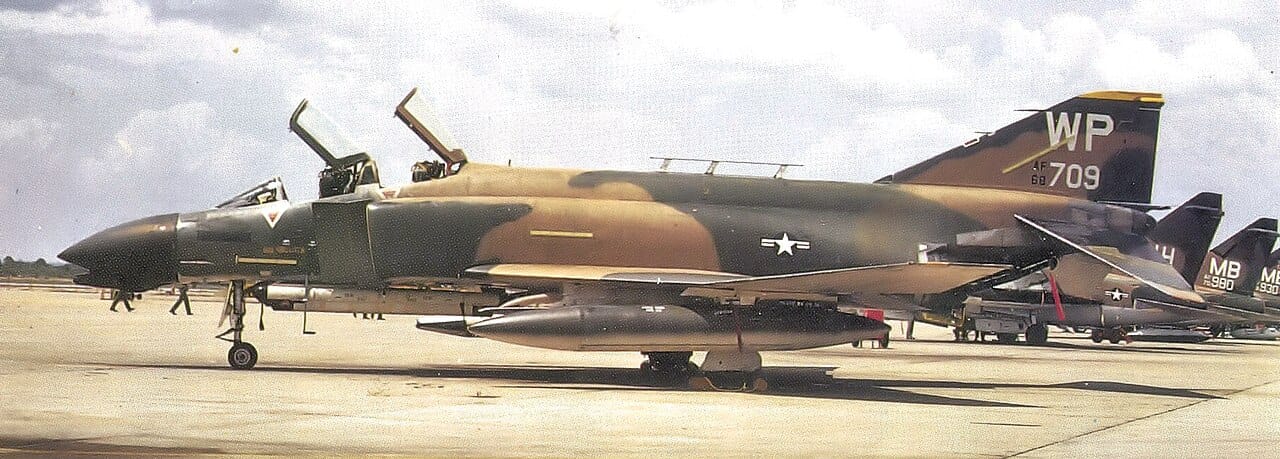
The aircraft itself, registered N749CF, rolled out in 1965 as F-4D 65-0749 for the U.S. Air Force. The Collings Foundation, working through the Vietnam War Flight Museum, has cared for it for more than two decades. The volunteers are the real story here — the kind of people who give up weekends to torque a fitting correctly so that a stranger at an airshow can someday hear a J79 in afterburner and feel their chest vibrate.
Why the Phantom matters — and why people love it
The F-4 Phantom II is one of the defining aircraft of the jet age. A tandem two-seat, twin-engine fighter powered by those two J79s, it could top Mach 2.2 and haul a heavier load than many bombers of an earlier generation. The Navy, Marine Corps, and Air Force all flew it. More than 5,000 were built. It served on the front line for decades and in some air arms well into this century.
It was never delicate or pretty in the conventional sense — pilots affectionately called it the “Rhino,” and joked that it was proof a brick could fly if you bolted enough thrust to it. But it was tough, fast, and adaptable, and it earned a devotion that few machines ever do. Seeing one fly in 2026 is like hearing a song you thought had gone silent forever.
The Robin Olds connection
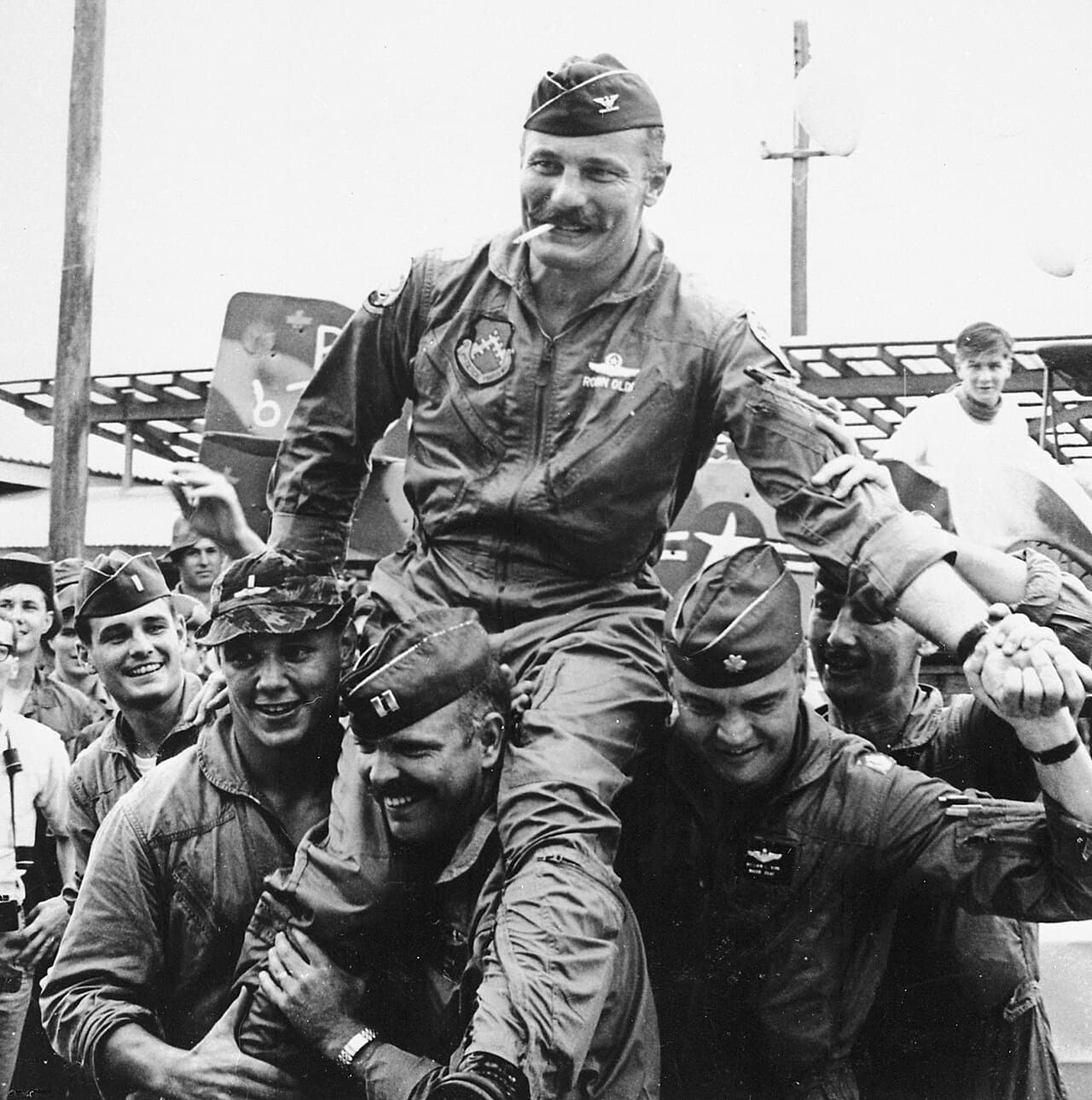
The markings on this jet are not decoration. They are a deliberate salute. The Phantom is painted as F-4D 66-7680, an aircraft associated with Col. Robin Olds, the World War II and Vietnam triple ace who commanded the 8th Tactical Fighter Wing — the “Wolfpack.”
On 2 January 1967, Olds led Operation Bolo, a piece of aerial theatre so audacious it still gets taught today. His Phantoms mimicked the call signs and flight profiles of slower F-105 bombers to bait North Vietnamese MiG-21 interceptors into the air — and then sprang the trap. We have told that story in full elsewhere, so we will not retell it here; if you have never read it, go and do that next.
→ Read the full story: Operation Bolo — Robin Olds’ MiG Trap Over Hanoi
That is the weight this aircraft carries every time it leaves the ground. It is not just an F-4. It is a flying tribute to one of the most charismatic leaders American military aviation ever produced — kept aloft by volunteers who understand exactly what that name means.
What comes next
The 8 June flight was the beginning, not the finale. The Collings Foundation plans to bring the Phantom to the airshow circuit during the 2026 season alongside the rest of its Cold War jet fleet. It is expected to be a featured attraction at the CAF Wings Over Houston Airshow on 31 October and 1 November 2026, where a new generation of spectators may meet the Rhino for the first time.
One honest note on the “only in the world” claim: this is the only flyable, privately operated F-4 anyone can currently point to, and with the U.S. Air Force’s QF-4 drone program shut down in December 2016, it is very likely the last airworthy Phantom in the United States. A handful of enthusiasts dispute whether it is strictly the only one on Earth, so we will say what is provable: it is believed to be the only civilian-operated F-4 flying today, and that is remarkable enough.
A closer look at the Collings Foundation Phantom on the ground at Ellington Field, including the crew preparing the jet for its return to the air.
For seven years, the loudest thing this Phantom did was sit quietly in a hangar. On a hot June morning in Houston, it answered back. And somewhere, you suspect, a moustachioed colonel would have approved.
Sources: Vintage Aviation News; Aero-News Network; Collings Foundation and Vietnam War Flight Museum; National Air and Space Museum (F-4 / J79 reference).
Related Questions
Is the F-4 Phantom still flying?
Yes, in very limited numbers. On 8 June 2026 the Collings Foundation's civilian F-4 Phantom II returned to flight from Ellington Field in Houston after about seven years grounded. It is the only flying example in North America and is believed to be the last privately operated, airworthy F-4 in the world. No air force still flies the Phantom operationally as a front-line fighter.
Who owns the civilian F-4 Phantom?
The aircraft is owned by the Collings Foundation and operated by the Vietnam War Flight Museum, both based at Ellington Field in Houston, Texas. Acquiring a flyable Phantom required an Act of Congress, through an amendment to the National Defense Authorization Act of 1999, before the jet could pass into civilian hands.
What markings does the Collings Foundation F-4 wear?
The jet, registered N749CF, was built in 1965 as F-4D 65-0749 for the U.S. Air Force. Today it is painted in the markings of F-4D 66-7680, an aircraft associated with Col. Robin Olds, the legendary 8th Tactical Fighter Wing commander who led Operation Bolo over North Vietnam in January 1967.
How many engines does the F-4 Phantom have?
The F-4 Phantom II is a twin-engine, tandem two-seat fighter. It is powered by two General Electric J79 axial-flow turbojets, each producing roughly 17,800 pounds of thrust in afterburner, giving the Phantom a top speed of more than Mach 2.2.
Who was Robin Olds?
Robin Olds was a triple-ace U.S. fighter pilot who scored victories in World War II and Vietnam. As commander of the 8th Tactical Fighter Wing, he devised and led Operation Bolo on 2 January 1967, a deception mission that lured North Vietnamese MiG-21s into a trap and downed several without a single American loss.
What was Operation Bolo?
Operation Bolo was a January 1967 U.S. Air Force ruse in which F-4 Phantoms mimicked the flight profiles and call signs of slower F-105 bombers to bait North Vietnamese MiG-21 interceptors. The trap worked, and the engagement cost the North Vietnamese several of their best fighters.
Why was the Collings Foundation F-4 grounded for so long?
The Phantom had been grounded for major maintenance since around 2011, and the work to return such a complex 1960s fighter to airworthy condition is enormous and expensive. Volunteers spent years overhauling systems and validating the airframe before the test flight on 8 June 2026.
Where will the civilian F-4 Phantom fly in 2026?
The Collings Foundation plans to bring the Phantom to the U.S. airshow circuit during the 2026 season alongside other jets in its fleet. It is expected to be a featured attraction at the CAF Wings Over Houston Airshow on 31 October and 1 November 2026.
0 Comments