
When twin earthquakes ripped through northern Venezuela on 24 June — a magnitude 7.2 foreshock followed 39 seconds later by a catastrophic magnitude 7.5 mainshock — the country's fragile infrastructure collapsed in minutes. Buildings pancaked across Caracas. Roads buckled in Yaracuy state. By the time the dust settled, more than 1,430 people were dead, over 3,200 injured, and nearly 69,000 missing beneath the rubble. It was the worst seismic disaster in Venezuela in over a century.
Within hours, the grey giants of the U.S. Air Force were wheels-up.
Three C-17s, Three Bases, One Mission
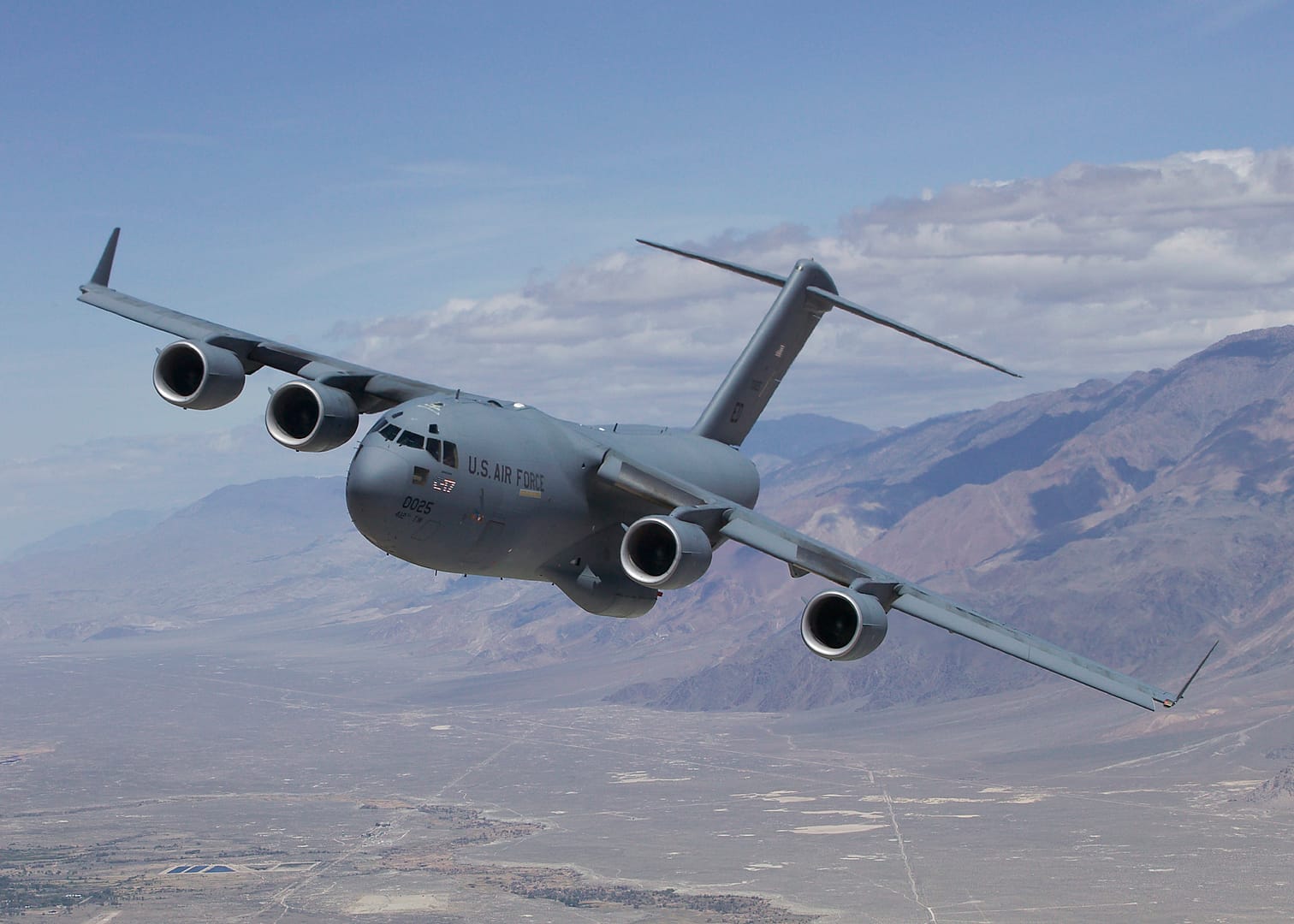
U.S. Southern Command dispatched three C-17 Globemaster IIIs from airfields spanning the American continent. The 437th Airlift Wing at Joint Base Charleston, South Carolina, launched first. A second aircraft from the 305th Air Mobility Wing at Joint Base McGuire-Dix-Lakehurst, New Jersey, followed close behind. A third C-17 from the 62nd Airlift Wing at Joint Base Lewis-McChord, Washington — the Pacific Northwest — rounded out the initial wave.
The first C-17, callsign USA-01, carried 79 personnel from two of America's most experienced urban search-and-rescue teams — Fairfax County, Virginia and Los Angeles County — along with six search dogs and 70,000 pounds of specialised rescue equipment. A second aircraft landed at El Libertador airbase in Maracay, delivering additional teams and medical supplies. The third hauled heavy load-movement equipment to help clear collapsed structures.
An Air Bridge Across the Caribbean
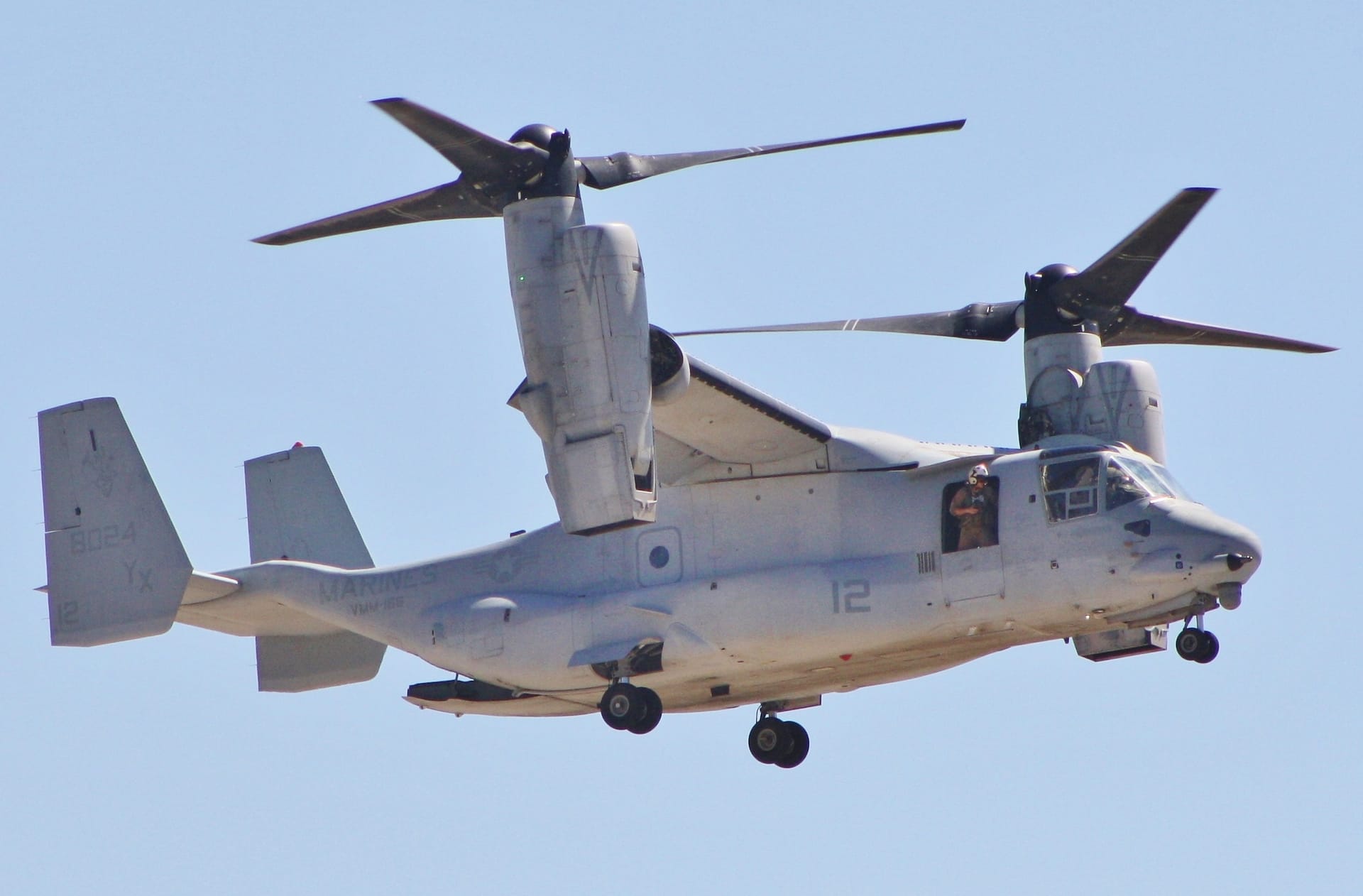
The C-17s were just the spearhead. SOUTHCOM quickly stood up a full air bridge, adding C-130 Hercules transports to shuttle personnel and supplies as the operation scaled. U.S. Marine Corps MV-22 Ospreys — the tiltrotor aircraft that can land like a helicopter but fly like a plane — provided reach into areas where runways had been destroyed or were too short for fixed-wing aircraft. U.S. Army CH-47 Chinooks, the twin-rotor heavy lifters, joined them in the mountains north of Caracas where roads had simply ceased to exist.
At sea, the U.S. Navy dispatched the amphibious transport dock USS Fort Lauderdale and the littoral combat ship USS Billings to support coastal operations and serve as floating logistics hubs. U.S. Marine Maj. Gen. Kevin J. Jarrard was dispatched to Venezuela to coordinate the entire military response — a signal of the operation's scale and seriousness.
Eyes in Space
Perhaps the least visible but most immediately useful contribution came from above the atmosphere. Space Forces Southern, the U.S. Space Force's component command in the region, began providing satellite imagery of the devastated areas within hours. High-resolution orbital photographs gave disaster relief planners in Venezuela the ability to assess damage across vast areas simultaneously — identifying collapsed structures, blocked roads, and areas where survivors were most likely trapped.
The imagery allowed rescue teams to prioritise their efforts rather than searching blindly through an area of destruction spanning hundreds of square kilometres. It is a capability that no other nation could have provided at that speed or at that scale.
$150 Million in Aid
The military airlift was backed by a substantial financial commitment. The United States pledged $150 million in total assistance: $100 million to a UN humanitarian fund for Venezuela and $50 million directly to aid organisations already operating in the country. The UN described the disaster as one requiring an "all-hands response," with international rescue teams from more than a dozen nations converging on the affected area.
For the C-17 Globemaster III — a 174-foot, 585,000-pound aircraft designed to deliver tanks and armoured vehicles into austere airfields — the Venezuela mission is a reminder that the most important cargo it carries is not always weapons of war. Sometimes it is the people and equipment that pull survivors from the rubble.
Sources: Air & Space Forces Magazine, The War Zone, U.S. Southern Command, UN News, NPR
Related Questions
What is the C-17 Globemaster III?
The C-17 Globemaster III is the backbone of US strategic airlift — a large military transport able to carry heavy loads over long distances and operate from short, austere runways. Three C-17s deployed to Venezuela within 48 hours of the June 2026 earthquakes. Boeing has even weighed restarting C-17 production.
How did the US respond to Venezuela’s 2026 earthquake?
US Southern Command dispatched three C-17 Globemaster IIIs from bases across the country within 48 hours. The first, callsign USA-01, carried 79 urban search-and-rescue personnel from Fairfax County and Los Angeles County teams, six search dogs and 70,000 pounds of specialised rescue equipment.
How severe was the 2026 Venezuela earthquake?
Twin earthquakes struck northern Venezuela on 24 June 2026 — a magnitude 7.2 foreshock followed 39 seconds later by a magnitude 7.5 mainshock. More than 1,430 people were killed, over 3,200 injured and nearly 69,000 reported missing, making it the worst seismic disaster in Venezuela in over a century.
What aircraft took part in the Venezuela relief effort?
The US assembled a full air bridge: C-17 Globemaster IIIs and C-130 Hercules transports for fixed-wing airlift, plus MV-22 Osprey tiltrotors and CH-47 Chinook helicopters to reach mountain areas where roads had been destroyed. The Navy added the USS Fort Lauderdale and USS Billings offshore.
What is US Southern Command?
US Southern Command (SOUTHCOM) is the US military command responsible for Central and South America and the Caribbean. It coordinated the Venezuela earthquake response, standing up the air bridge and dispatching Marine Major General Kevin J. Jarrard to direct the overall military relief operation.
0 Comments