
Franz Stigler had one kill to go. One more aircraft, and he would earn the Knight's Cross — the highest military honour the Luftwaffe could bestow. He had fought across North Africa and was now flying Bf 109s over Germany, defending the Reich from the waves of American bombers that came every day. On December 20, 1943, he climbed into his cockpit at a Luftwaffe base near Bremen with 29 kills to his name. He needed one more.
The B-17 that limped across his airfield twenty minutes later should have been his thirtieth. Instead, it became something he carried for the rest of his life.
Ye Olde Pub
Second Lieutenant Charlie Brown had just turned 21. It was his first combat mission, a strike on a Focke-Wulf production facility in Bremen. His B-17F, "Ye Olde Pub," took devastating fire over the target — multiple engines out, control surfaces shredded, the tail gunner dead, most of the crew wounded. Brown himself was barely conscious. The aircraft fell out of formation and descended, alone, deep into German-controlled airspace.
Stigler intercepted it. He manoeuvred alongside and looked in. Through the holes torn in the fuselage he could see the crew — some of them bleeding, some slumped over their stations. The tail gunner was dead at his position. The nose was shot through. This was not a functioning warplane. These were not soldiers. These were wounded boys trying not to die.
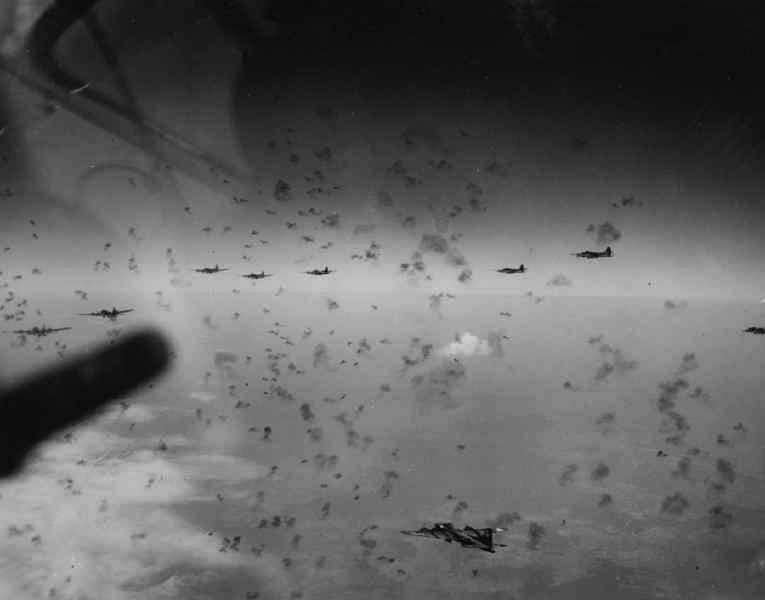
The Decision
Stigler's commanding officer, Gustav Rödel, had told him once: "You are fighter pilots first, last, always. If I ever hear of any of you shooting at someone in a parachute, I'll shoot you myself." Stigler extended that principle now. He could not fire on a crew that could not fight back. It would be murder.
He flew alongside Brown's crippled B-17 — close enough that Brown could see his face — and gestured: land in Sweden. Head for the neutral coast. The Germans will treat your wounded. Brown didn't understand. He kept flying west. Stigler made the decision: he would escort this aircraft to safety or die alongside it. He flew formation on the bomber's left wing across the German coast, shielding it from anti-aircraft guns on the ground that would have opened fire at the sight of a lone B-17. At the North Sea coast, he pulled alongside Brown's cockpit, looked the young American in the eye, and gave a salute. Then he turned back.
Forty-Seven Years of Silence
Brown made it back to England. He and his crew were ordered not to report the incident — their superiors feared the story would sound too strange to be believed, or might be used for enemy propaganda. Stigler told no one either. In post-war Germany, mercy shown to the enemy was not a safe story to tell.
They found each other in 1990 through an appeal Brown placed in a fighter pilot newsletter. "Dear Franz," Brown wrote in the ad, "you are the one who didn't kill me." They exchanged letters, met in person, and became close friends. They died within months of each other — Brown in November 2008, Stigler in March 2008. Adam Makos told their story in the 2012 book A Higher Call.
Stigler once reflected on what he had done: "I didn't want to kill anybody that day." He had 30 kills and a Knight's Cross he never earned. He had something better.
Sources: Adam Makos & Larry Alexander, A Higher Call (2012); Charlie Brown and Franz Stigler Incident, Wikipedia; War History Online
Related Questions
What is the story of Franz Stigler and Charlie Brown?
It is one of WWII's most famous acts of chivalry. On December 20, 1943, German ace Franz Stigler chose not to shoot down a crippled American B-17 bomber flown by Charlie Brown. Instead he escorted it past German defenses, saluted, and let it go — and the two men became lifelong friends decades later.
Who was Franz Stigler?
Franz Stigler was a Luftwaffe fighter ace who had fought in North Africa and flew Bf 109s defending Germany. With 29 victories, he needed just one more to earn the Knight's Cross when he encountered Charlie Brown's shattered B-17 — yet he spared it, an act of mercy reminiscent of older codes of honour among airmen like Oswald Boelcke.
Who was Charlie Brown, the B-17 pilot?
Charlie Brown was a 21-year-old American second lieutenant flying his first combat mission on December 20, 1943. His B-17F was savaged over Bremen, with engines out, the tail gunner dead and most of the crew wounded, leaving Brown barely conscious as the bomber fell out of formation.
What was Ye Olde Pub?
"Ye Olde Pub" was the nickname of Charlie Brown's B-17F Flying Fortress. Hit hard during a raid on a Focke-Wulf factory at Bremen, it survived only because Franz Stigler escorted it to safety. The B-17's legendary toughness is also seen in the story of the All American.
Did a German pilot really spare an American bomber in WWII?
Yes. Franz Stigler escorted Charlie Brown's defenseless B-17 across the German coast, shielding it from anti-aircraft fire, then saluted and turned back. He judged that shooting down a helpless, dying crew violated his sense of honour, even though it cost him a likely decoration.
Did Stigler and Brown ever meet again?
Yes. Ordered to stay silent after the war, both men kept the story private for decades. Brown eventually placed an appeal in a pilots' newsletter, and in 1990 they reunited. They became close friends and remained so for the rest of their lives.
0 Comments