
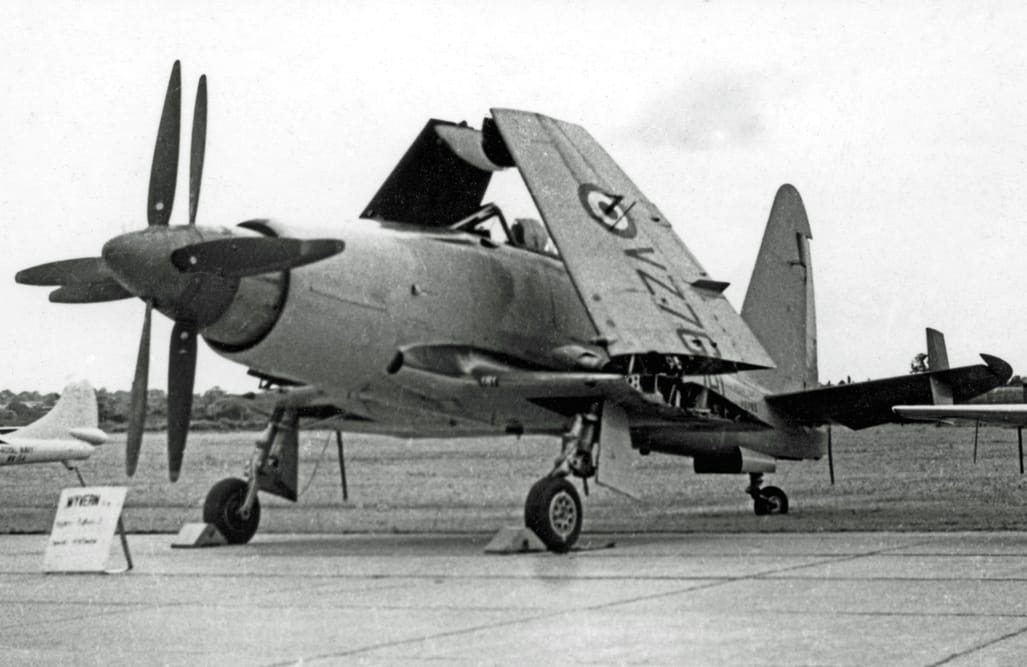
On 13 October 1954, a Royal Navy pilot named Lieutenant B.D. Macfarlane was catapulted off the carrier HMS Albion when his engine died. His aircraft flopped into the sea directly ahead of the ship, which then ran straight over it, slicing the fighter in two. Trapped in the sinking wreckage, underwater, with 20,000 tons of carrier thundering overhead, Macfarlane pulled his ejection handle — and lived.
The aircraft that put him there was the Westland Wyvern: a big, brutal, turboprop strike fighter with contra-rotating propellers and a reputation for killing the men who flew it.
Quick Facts
- Aircraft: Westland Wyvern carrier strike fighter
- Operator: Royal Navy Fleet Air Arm, 1953–1958
- Engine: Armstrong Siddeley Python turboprop driving contra-rotating propellers
- Weapons: Torpedoes, bombs and rockets
- Grim distinction: Its flame-outs on launch caused the first-ever underwater ejection
- Built: 127 aircraft, after a troubled nine-year development
A dragon that took nine years to tame
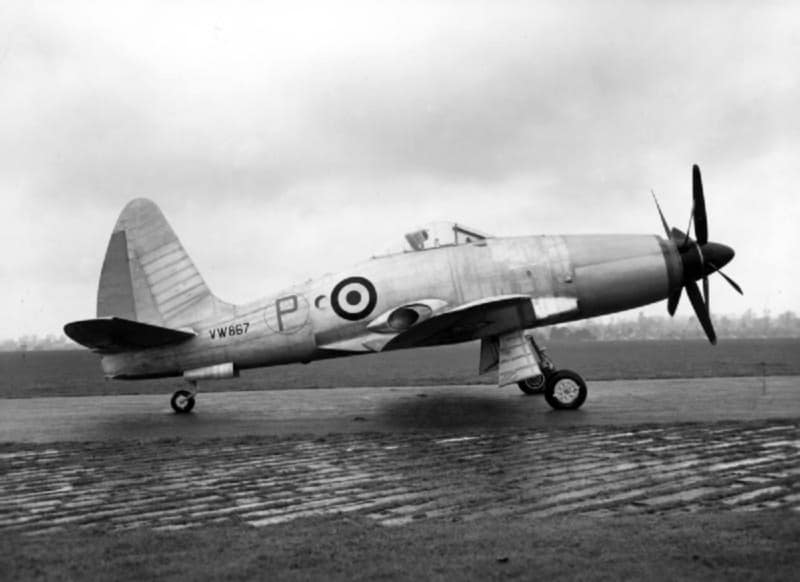
The Wyvern was conceived at the very end of the piston era and dragged, awkwardly, into the age of the turboprop. Its final form was powered by an Armstrong Siddeley Python turboprop of some 3,500 horsepower, mounted behind the pilot and driving two sets of four-bladed contra-rotating propellers in the nose through a long shaft.
On paper it was a powerful torpedo-and-strike aircraft. In practice it took nearly nine years from first flight to front-line service, as Westland wrestled with a string of problems — and a string of fatal accidents that gave the type a grim name among naval aviators.
The engine that quit on launch
The deadliest flaw was the Python itself. Hurled off a catapult, the engine often could not cope with the sudden surge and starved of fuel, flaming out at the worst possible instant — just as the aircraft left the deck with no height and no speed.
That is exactly what happened to Lieutenant Macfarlane. When his Wyvern dropped into the sea ahead of HMS Albion and was cut in half, he kept his head, waited, and fired his Martin-Baker seat while completely submerged.
One real war
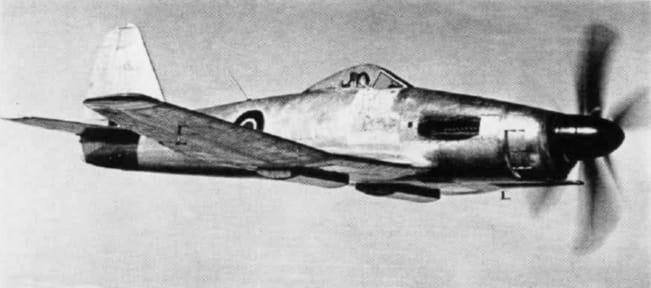
For all its troubles, the Wyvern did see combat. During the Suez operation of 1956, Wyverns flew ground-attack strikes from the carrier HMS Eagle. One was shot down by anti-aircraft fire; its pilot ejected and was rescued from the sea.
It was a brief front-line career. By 1958 the Wyvern was gone, overtaken by pure jets and never much mourned. It is remembered now as a powerful, ungainly dead-end — and as the aircraft that forced a man to become the first to eject from beneath the waves.
Sources: Hush-Kit; Military Matters; Let Let Let Warplanes; Wikipedia.
0 Comments