
What the New Videos Show
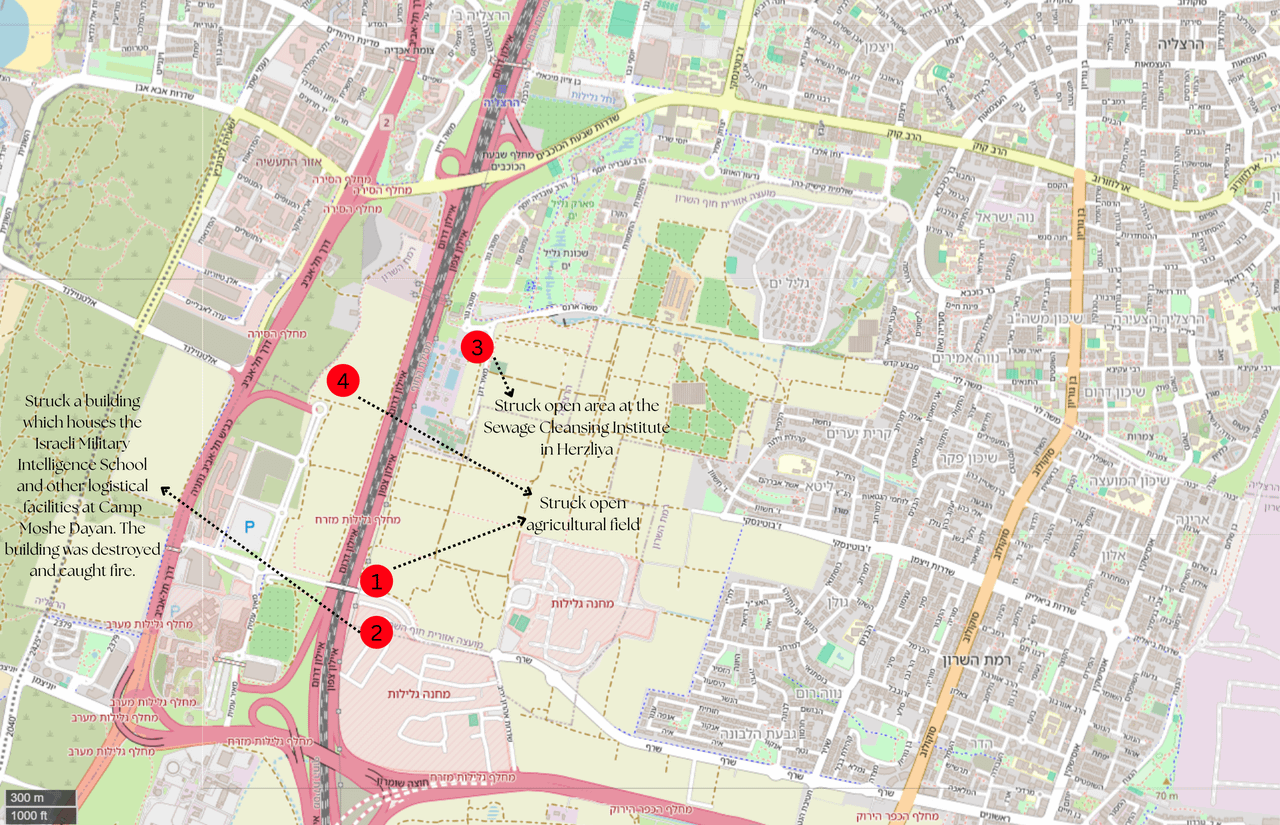
Bellingcat’s investigation, published March 27, centers on two previously unseen videos released by Iran’s Ministry of Foreign Affairs. According to Bellingcat, both were geolocated and verified by their Conflict and Human Rights Team — Carlos Gonzales, Jake Godin, and Trevor Ball. The first video, filmed from approximately 2.5 kilometers north of the IRGC base, shows roughly 10 Tomahawk cruise missiles impacting the compound over a span of about 50 seconds. The missiles are visible in flight — slender silhouettes descending at steep angles. Multiple detonations erupt across the facility in rapid succession. The second video, captured from roughly 2 kilometers southeast of the school, shows a separate wave of strikes hitting the IRGC clinic and at least two other buildings within the compound. By the time this footage was recorded, the school was already destroyed — visible as a flattened structure in the background.An Hour Between Waves
According to an investigation by Bellingcat, solar shadow analysis of the two videos indicates the strikes occurred at different times on February 28. The first wave appears to have hit between 11:00 and 12:00 local time. The second wave came later — the precise gap is still being refined, but the shadow geometry points to a separation of at least one hour. This matters enormously. A single strike wave could be explained as a targeting error — an outdated map, a GPS coordinate off by a few dozen meters. But a second wave, launched after the first had already leveled the area, raises harder questions about battle damage assessment and re-strike protocols. The New York Times separately confirmed that fragments recovered from the school site matched Tomahawk missile components, with a contract number on one remnant traced to a specific U.S. procurement contract. The United States is the only party in the conflict that operates Tomahawk cruise missiles.The Targeting Debate
A preliminary investigation reported by multiple outlets found that the school was hit due to outdated targeting data from the Defence Intelligence Agency. The IRGC compound and the school sit adjacent to each other in Minab — close enough that even a small error in coordinates or imagery interpretation could shift the impact zone from military to civilian structures. The incident has drawn comparisons to other coalition strikes where proximity between military and civilian infrastructure led to catastrophic outcomes. What makes Minab different is the scale — and the fact that it involved a girls’ elementary school during school hours. Iran’s government has used the strike extensively in its information campaign, releasing the Ministry of Foreign Affairs videos to international media. Investigations by The New York Times, CBC, NPR, BBC Verify, and the Washington Post have all concluded that the United States was likely responsible.What Comes Next
Bellingcat’s two-wave finding adds a new layer to an already complex picture. It suggests the Minab attack was not a single imprecise salvo but part of a sustained, multi-phase strike package against the IRGC facility — one that failed to account for, or chose to accept, the presence of a school within the blast radius. The Pentagon has not publicly addressed the two-wave evidence. The story continues to unfold.Sources: Bellingcat, The New York Times, Washington Post, BBC Verify, NPR"Every war is a war against the child."
— Eglantyne Jebb, founder of Save the Children
Related Questions
What is Bellingcat?
Bellingcat is an independent investigative-journalism organisation specialising in open-source intelligence, analysing publicly available videos, photos and data to verify events. Its Conflict and Human Rights Team geolocated and verified footage of the Minab strike. The group is widely known for using digital forensics to reconstruct conflicts and incidents around the world.
What was Operation Epic Fury?
Operation Epic Fury is the name given to the 2026 U.S.-Iran air conflict that began on February 28, featuring extensive air strikes and Iranian missile barrages across the region. Trump and Iran later agreed to a ceasefire framework, and analysts afterward assessed what the campaign actually achieved.
What is the IRGC?
The IRGC, or Islamic Revolutionary Guard Corps, is a branch of Iran's armed forces created after the 1979 revolution. It operates its own ground, naval, aerospace and missile units separately from Iran's regular military and controls much of the country's ballistic-missile arsenal. IRGC facilities were among the targets struck during the 2026 conflict.
How do investigators verify videos of military strikes?
Open-source analysts geolocate footage by matching landmarks to satellite imagery, then date it using techniques like solar shadow analysis, measuring shadow angles to estimate the time of day. Bellingcat used these methods to conclude the Minab strike came in two waves about an hour apart. Similar analysis tracked B-2 bunker-buster strikes during the conflict.
What was the Minab strike?
The Minab strike was an attack on an IRGC compound in southern Iran on February 28, 2026, during Operation Epic Fury, in which an adjacent girls' school was destroyed. According to Iranian authorities, at least 175 people were killed. Bellingcat's later analysis of verified videos indicated the strike occurred in two separate waves rather than a single moment.
0 Comments