
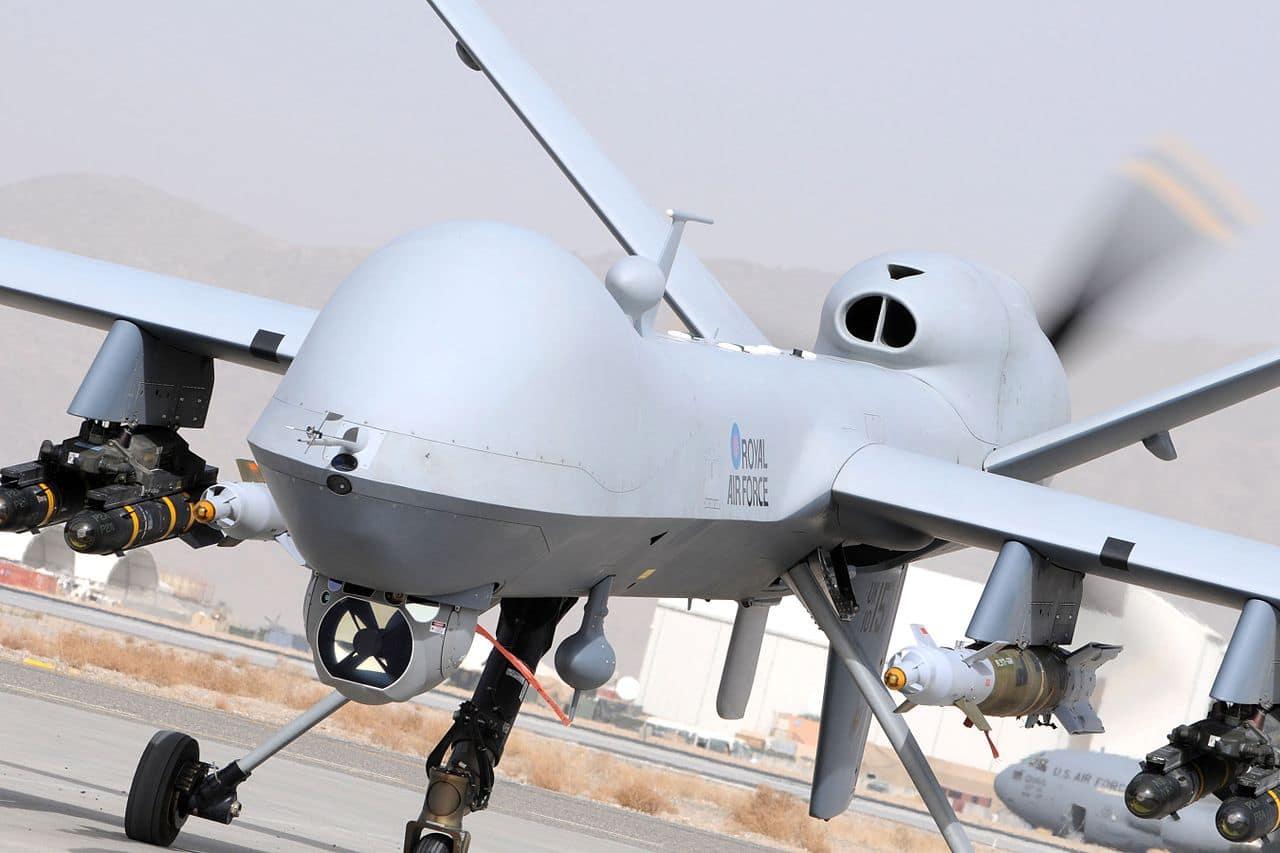
For most of the last twenty years, the MQ-9 Reaper was the single most-flown weapon in the U.S. Air Force inventory. From Afghanistan to Yemen, from Niger to Syria, the Reaper turned every minor military problem into a 24-hour-orbit problem solved by a Hellfire. Then came the Houthis. Then came Iran. Now there are 135 of them left.
That number, confirmed by the Air Force’s MQ-9 fleet manager in testimony reported by Defense News on 13 May, is the lowest the inventory has been in fifteen years. Between Houthi air-defence missiles in the Red Sea, the still-running Operation Epic Fury campaign against Iran, and a slow trickle of accidents and unserviceable airframes, the service has lost something on the order of two dozen Reapers in twelve months. Each one cost up to $50 million fully kitted. The total bill — close to a billion dollars in attrition — is the kind of number that forces a doctrine change.
From Crown Jewel to Cannon Fodder
The blunt language in the Air Force’s April 14 Request for Information is unusual for Pentagon procurement: “low-cost, fast-to-field, fast-to-deploy, airborne ISR mass.” Translate that into plain English and it reads we want a drone we can afford to lose. The replacement programme is officially called the Attritable ISR Aircraft, and the word “attritable” — Pentagon jargon for “expected to be expended” — is the whole story.
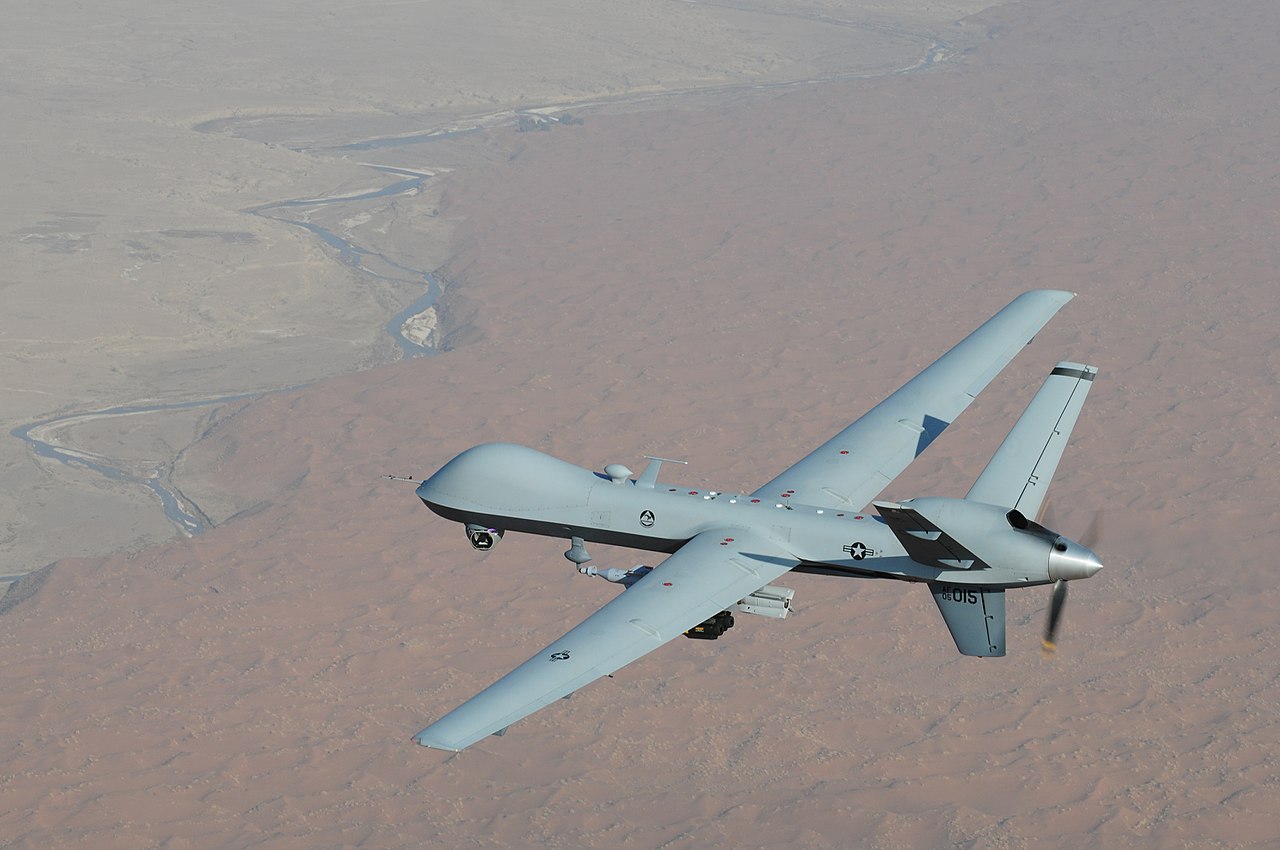
The original MQ-9 was never designed to be expended. It was built to be a long-loiter sniper, peering at the same compound for 22 hours, then putting a Hellfire through a window. Each one had a custom Lynx-II radar, a Multi-Spectral Targeting System, a satellite link rated for full-motion video, encryption, ground stations, pilots in Nevada who’d spent six months in training. That whole system is expensive, exquisite, and — against a 21st-century air defence — fragile.
What Yemen and Iran Taught Everyone
The Houthis figured out the Reaper’s vulnerabilities by mid-2024. A drone orbiting at 25,000 feet, in a predictable pattern, with a radar signature roughly the size of a small Cessna, is an easy target for any reasonably modern surface-to-air missile. A short-range MANPADS won’t reach it; a longer-range SAM will. The Houthis got hold of enough of the latter to start shooting Reapers down at the rate of about one every two months for most of 2024.
Then came Operation Epic Fury — the Israeli-led, American-supported campaign against Iran that opened in March 2026. Iran’s air defence inventory, even with much of it destroyed by Israeli strikes, was still vastly more capable than what the Houthis fielded. The Reaper losses jumped sharply. By April 2026, the fleet manager’s number was 135.
The 100-Mission Drone
Buried in the RFI is a number that tells you exactly what the Air Force has in mind. The successor is being engineered for 100 missions in its service life. The MQ-9 is engineered for 50,000 flight hours — roughly 2,500 missions. By dropping the design service life by an order of magnitude, the Air Force lets manufacturers strip out everything that exists only to support a long airframe lifetime: redundant systems, exquisite materials, expensive structural fatigue analysis.
Endurance of 20 hours is still required — long enough to do the loiter mission the Reaper made famous — but only one airframe lifetime’s worth. The economics work because if you only need the drone to fly 100 missions, you don’t need much of it to survive the first crash.

Who Wins, Who Loses
The fifty companies who responded to the RFI are not the usual primes. General Atomics — the maker of the MQ-9 — is in the running, but only barely; the Air Force has signalled it wants a clean-sheet design from a manufacturer not invested in the existing supply chain. Anduril is on the list. So is Kratos. So are Boeing, Northrop Grumman, and Shield AI. The dark horses are smaller — Saildrone has reportedly responded with a maritime variant of its autonomous platform, and Skydio is rumoured to be partnering with a structural manufacturer to scale up a tactical ISR drone.
If history is any guide, two or three winners will be downselected by the end of 2026, with first flight in 2027 and initial fielding by 2029. That is fast by Pentagon standards. The Air Force is leaning on Other Transaction Authority contracting — the same loophole that let Anduril go from start-up to anchor missile vendor in three years — to keep timelines aggressive.
What 135 Means
The headline number — 135 Reapers — sounds catastrophic. In context it is not quite that bad. The USAF still operates more armed long-endurance drones than the next four militaries combined. The Royal Air Force has 16. France has 12. Italy has 6. China’s Wing Loongs and CH-5s are numerous on paper but unproven in contested airspace.
But the trend line matters more than the absolute number. The Reaper inventory peaked at 160-plus around 2018 and has shrunk every year since. Each Reaper costs roughly $40 million and takes 18 months to build. At the current loss rate, the Air Force cannot replace what it is losing. The Attritable ISR programme is, in effect, a forced doctrinal pivot — the U.S. Air Force tacitly admitting that the future of armed ISR is not a 60-foot-wingspan, exquisite, $50-million sniper drone, but a flock of cheaper, faster, more replaceable platforms designed from day one to be expendable.
The Reaper isn’t dead. There are still 135 of them. But its replacement is going to look very different — and there’s going to be a lot more of it.
Sources: Defense News (13 May 2026); The War Zone (Joseph Trevithick); Breaking Defense; Sandboxx; Defense Express; militaryoverstock.com; USAF RFI "Attritable ISR Aircraft" (14 April 2026); Wikimedia Commons.


 English
0 Comments