
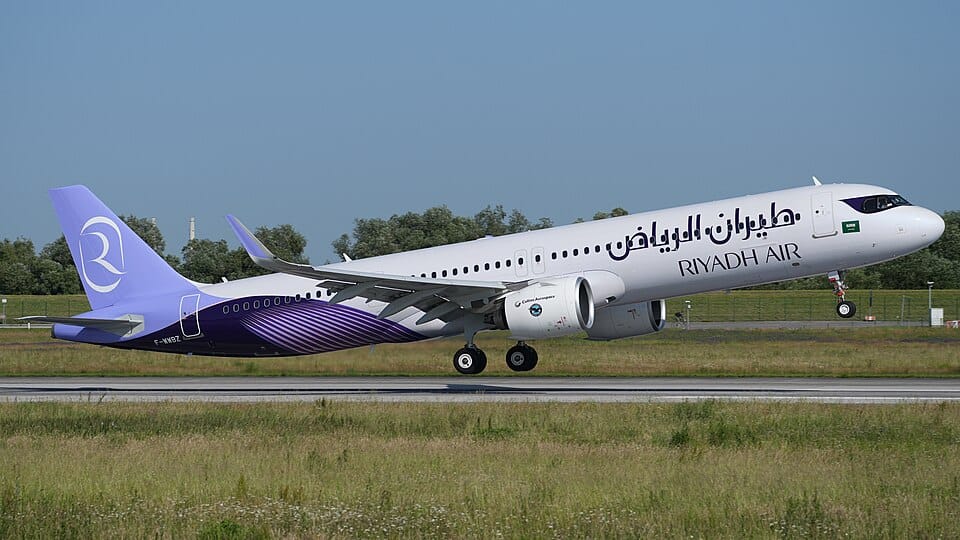
Quick Facts
| Aircraft | Airbus A321XLR (A321-271NX) |
| Operator | Air Canada — first Canadian A321XLR operator |
| Delivery date | April 24, 2026 (Hamburg) |
| Configuration | 14 Signature Class (lie-flat, 1-1) + 168 Economy |
| Fleet order | 30 aircraft (15 leased, 15 direct from Airbus) |
| Range | ~4,700 nm (8,700 km) — longest of any single-aisle jet |
| First route | Montreal–Palma de Mallorca (June 2026) |
| Other new routes | Berlin, Nantes, Toulouse, Edinburgh |
The Routes That Could Not Exist Before
Air Canada has confirmed Montreal to Palma de Mallorca as the A321XLR inaugural route, with service beginning in June 2026. The Balearic destination is precisely the kind of city pair the aircraft was designed for: strong seasonal demand, not enough premium traffic to justify a Boeing 787, but too far for a standard A321neo. Additional European destinations announced for the type include Berlin, Nantes, Toulouse, and Edinburgh — all served from Montreal or Toronto. None of these routes would make economic sense with a widebody. The A321XLR changes the equation by carrying 182 passengers across 4,700 nautical miles on a fuel burn that makes accountants smile.
Lie-Flat in a Narrow Fuselage
The 14 Signature Class seats are arranged in a 1-1 configuration — one seat on each side of the aisle, with a privacy partition between each row. Every passenger gets direct aisle access. The seats convert to a fully flat bed, a feature that until now was exclusive to Air Canada widebody fleet of 787s and 777s. For business travellers on the Montreal–Berlin or Toronto–Edinburgh routes, this is a meaningful upgrade. The alternative was either a connection through a hub like London or Frankfurt, or a direct flight in a standard economy cabin. Now they get a flat bed, a meal, and seven hours of sleep on a route that was previously underserved.
Airbus Delivers on Its Promise
The A321XLR programme had its share of headaches. Certification took longer than Airbus initially projected, partly due to questions about the novel rear centre tank and its fire-protection requirements from EASA. But the aircraft is now in serial delivery, with Iberia, Aer Lingus, and several other carriers already operating the type across the Atlantic. Air Canada ordered 30 aircraft, making it one of the larger XLR customers. As the fleet builds through 2027 and 2028, expect the route network to expand deeper into secondary European cities — destinations that Montreal and Toronto have never had direct links to. For passengers, the message is simple: the days when crossing the Atlantic meant either a premium widebody or an uncomfortable narrowbody are ending. The A321XLR is creating a third option — and Air Canada just bought 30 of them.Sources: Airbus, Air Canada, AeroTime, AirlineGeeks
Related Posts



 English
0 Comments