

He failed five times. Each time, he climbed into a capsule smaller than a garden shed, was lifted to 35,000 feet by a balloon the size of a 14-storey building, and tried to navigate the unpredictable jet streams around the entire planet. Each time, weather, equipment failure, or bad luck forced him down — once into the Coral Sea, once into the mountains of Kazakhstan, once over the Sahara. After six attempts over seven years, Steve Fossett finally completed the first solo balloon circumnavigation of the Earth in 2002. It took 14 days, 19 hours, and 51 minutes.
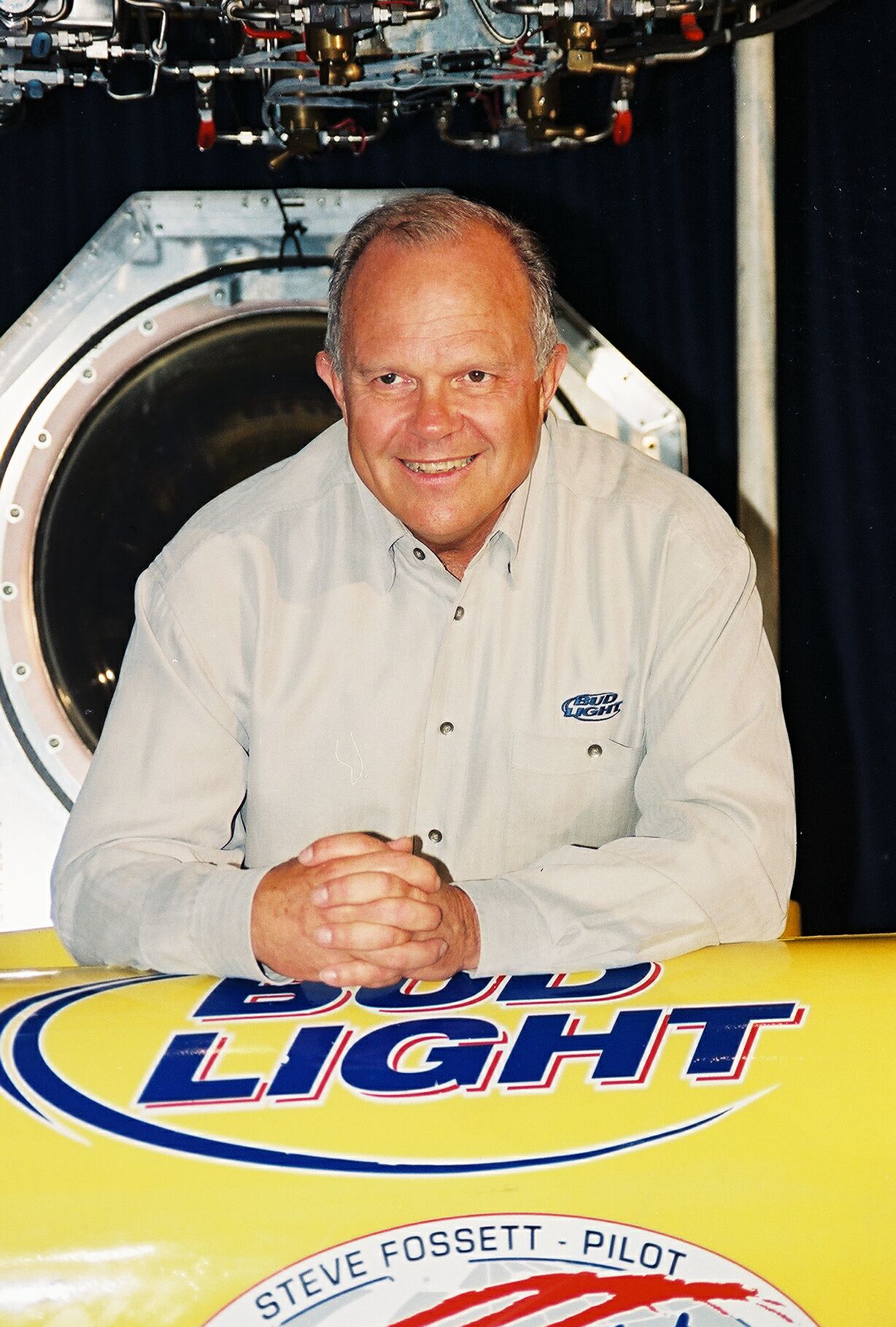
The Man Who Collected World Records
Steve Fossett was a Chicago commodity trader who had made his fortune early and spent it chasing records. By the time he completed his balloon circumnavigation, he had set more than 100 world records across aviation, sailing, and long-distance swimming. He was the first person to swim the English Channel without a wetsuit at night. He set speed records for sailing across the Pacific and Atlantic. He was methodical about it — he would identify an existing record, acquire the best equipment available, train extensively, and attempt the record with meticulous planning.
The balloon circumnavigation was his hardest obsession. He began attempting it in 1996, two years after British entrepreneur Richard Branson had started his own campaign. The first solo circumnavigation by balloon was one of the few major aviation records that had never been claimed — a meaningful gap in the catalogue of human achievement, sitting there like an unclaimed summit.
Six Attempts, Seven Years
His five failed attempts were not failures of preparation. The balloon itself — a helium-filled envelope with a pressurised capsule hanging below — was among the most sophisticated ever built. The problem was the jet stream: the high-altitude rivers of fast-moving air that a balloon circumnavigation depends on to make progress. The jet stream had to cooperate, had to be strong enough to push the balloon fast enough to complete the trip, but not so violent that it tore the envelope apart or drove the aircraft into prohibited airspace. Getting the jet stream routing right was a problem of supercomputer meteorology that the teams were still learning to solve.
His 1998 attempt came closest before 2002. He crossed North America, the Atlantic, and the Mediterranean before weather forced him down in India — 10,000 kilometres short. He climbed into the next attempt balloon the following year. Then the year after. Then the year after that. He was turned back five times before he succeeded.
“He failed five times and tried again each time. The sixth flight lasted nearly fifteen days, alone in a capsule, navigating by jet stream around a planet. He was 57 years old.”
— Steve Fossett, solo balloon circumnavigation, 2002The Successful Flight

On 19 June 2002, Fossett launched from Northam, Western Australia, in the Spirit of Freedom — a Rozière balloon (a hybrid design using both helium and hot air, more efficient than pure helium for long-duration flights). He was 57 years old. The ground crew and meteorologists at the Mission Control facility tracked every movement, communicating weather updates and routing advice.
The flight crossed Australia, over the vast stretches of the Pacific, across South America, and over the Atlantic. The capsule was pressurised and temperature-controlled, but cramped — Fossett slept in 90-minute intervals, ate pre-packaged meals, and monitored the weather data constantly. He could not land mid-flight: there was no recovery capability in mid-ocean. He simply had to keep going.
On 4 July 2002, he crossed the longitude of his departure point over Western Australia, completing the circumnavigation. He landed in Queensland 14 hours later. He had been aloft for 14 days, 19 hours, and 51 minutes, covering approximately 33,195 kilometres. He was the first human being to fly solo around the world in a balloon.
The Record That Couldn't Be Held
Fossett followed his balloon record with more. In 2005, he became the first person to fly a fixed-wing aircraft solo around the world non-stop without refuelling, in the Virgin Atlantic GlobalFlyer. The flight took 67 hours and covered 36,912 kilometres — further than the theoretical circumference of the Earth because of the routing required to follow the jet stream. He held the absolute distance record for fixed-wing flight.
He disappeared on 3 September 2007, on a solo recreational flight over the Nevada desert in a light aircraft. The search operation covered 17,000 square miles — one of the largest in Nevada history — and found nothing for over a year. His remains and aircraft wreckage were finally located in the Sierra Nevada mountains in September 2008. He was 63 years old. He held 116 world records at the time of his death.
Sources: Fédération Aéronautique Internationale; National Air and Space Museum; Per Lindstrand and Steve Fossett Foundation records; Chicago Tribune archives.
Related Questions
Who was the first person to fly solo around the world in a balloon?
Steve Fossett completed the first solo balloon circumnavigation of the Earth in 2002, after failing five times over the previous seven years. The successful sixth flight lasted 14 days, 19 hours and 51 minutes, carrying him alone in a pressurised capsule around the planet via the high-altitude jet streams.
How many times did Steve Fossett fail before flying around the world?
Steve Fossett failed five times before succeeding on his sixth attempt in 2002. He began the quest in 1996, two years after Richard Branson started his own balloon campaign. Weather, equipment failure and bad luck forced him down over the Coral Sea, Kazakhstan, the Sahara and, in 1998, India — about 10,000 km short.
Who was Steve Fossett?
Steve Fossett was a Chicago commodity trader who made an early fortune and spent it chasing records. He set more than 100 world records across aviation, sailing and long-distance swimming, including the first night swim of the English Channel without a wetsuit, plus Pacific and Atlantic sailing speed records.
How does a balloon fly around the world?
A circumnavigation balloon rides the jet stream — high-altitude rivers of fast air that push it around the planet. Steve Fossett's helium envelope, the size of a 14-storey building, carried a pressurised capsule to around 35,000 feet. The jet stream had to be strong enough to make progress, but not violent enough to tear the envelope apart.
How long did Steve Fossett's record balloon flight take?
Steve Fossett's successful 2002 flight took 14 days, 19 hours and 51 minutes. He flew alone in a capsule smaller than a garden shed, navigating by jet stream the entire way. The feat capped a seven-year obsession and filled one of the last great gaps in the catalogue of aviation records.
What other extreme high-altitude records have aviators set?
Aviators have repeatedly pushed the edge of the atmosphere. Steve Fossett's balloon reached roughly 35,000 feet, while record-seekers like those profiled in the highest skydives in history rode balloons to the very edge of space before jumping, testing the limits of human survival at extreme altitude.

0 Comments