
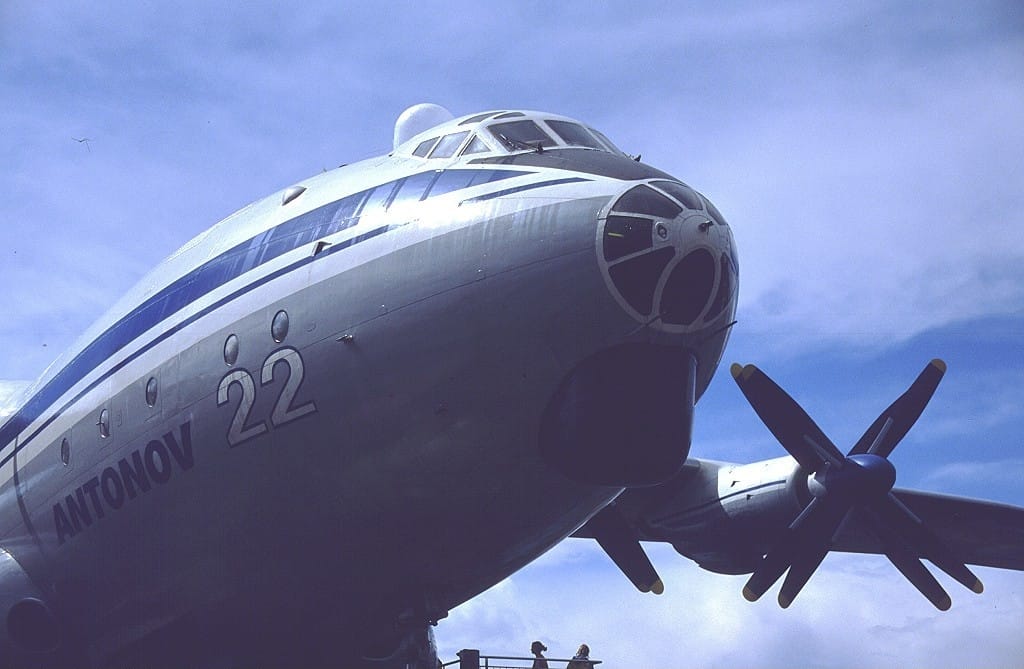
Stand near an Antonov An-22 as it runs up its engines and you do not just hear it, you feel it. Four of the most powerful turboprop engines ever built spin eight enormous propellers, each blade sweeping a circle taller than a house, and the sound is a deep, ripping scream unlike anything else in the sky. Six decades after it first flew, the An-22 Antei is still the largest turboprop-powered aircraft the world has ever seen.
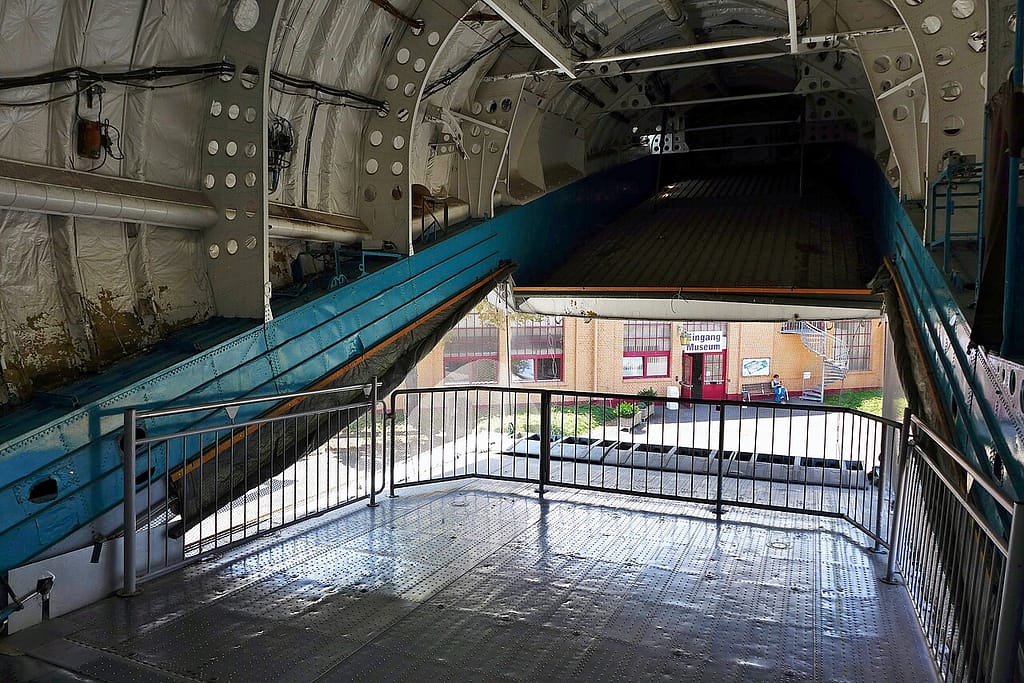
It is a genuine Soviet giant: a machine built to swallow tanks and missiles whole and carry them across a continent.
Quick Facts: Antonov An-22 Antei
- Claim to fame: Largest turboprop aircraft ever built
- First flight: 1965
- Engines: Four Kuznetsov NK-12 turboprops
- Propellers: Contra-rotating pairs, 6.2 m in diameter, the biggest ever
- Payload: Up to around 80 tonnes
- Built: About 66, at Tashkent from 1965 to 1976
A giant unveiled
The Antonov Design Bureau was ordered to build a vast strategic transport in 1962, and in only about three years it produced a flying prototype. When the An-22 rolled out onto the tarmac at the 1965 Paris Air Show, Western observers were stunned; nothing in the West could match it. The Soviets named it Antei, after Antaeus, the giant of Greek myth who drew his strength from the Earth.
Eight blades, one buzz saw
The heart of the An-22 is the Kuznetsov NK-12, the most powerful turboprop engine ever put into service, producing around 15,000 horsepower. Each of the four engines drives not one propeller but two, spinning in opposite directions, and at 6.2 metres across these are the largest aircraft propellers ever made. The tips of those blades move so fast that the aircraft produces its unmistakable, saw-like roar.
Record-breaker, still flying
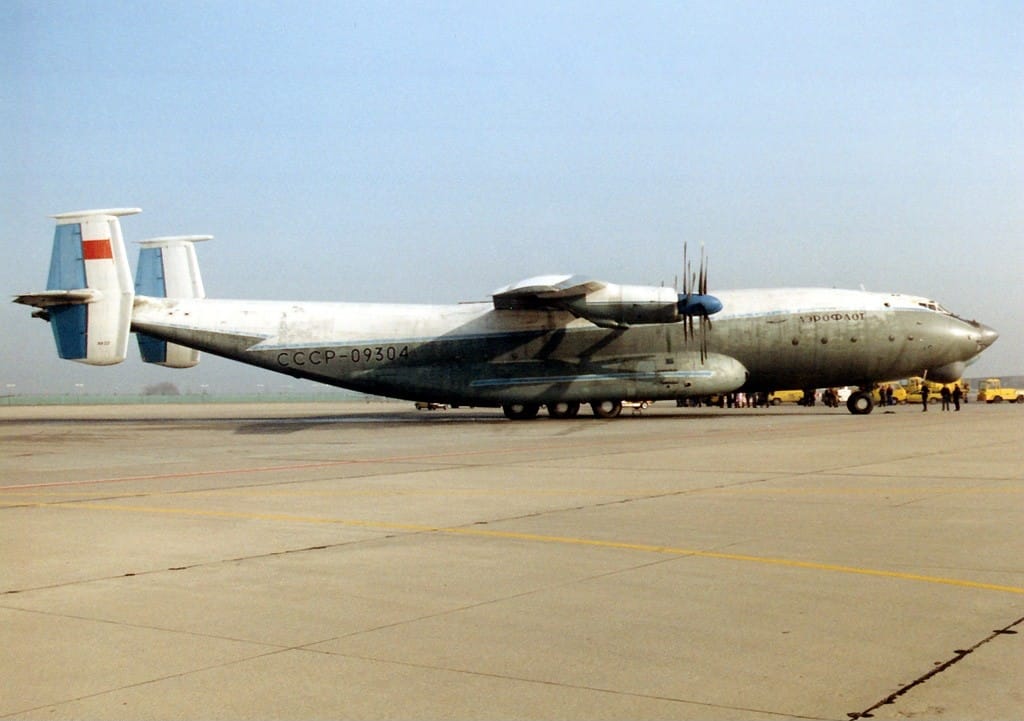
The Antei was not just big; it was a record machine. It set 41 world records in all, and in 1967 alone it hauled 100 tonnes of metal to an altitude of nearly 7,900 metres. Around 66 were built, and although most are long retired, a handful still serve with Russia’s military transport aviation, kept going by sheer stubbornness and irreplaceable capability. For a design that first flew in 1965, it remains one of the most imposing aircraft ever to leave the ground, proof that in the right hands, a propeller can still move mountains.
Sources: Simple Flying, Antonov, GlobalSecurity, Wikipedia.

0 Comments