

The Boeing B-52 Stratofortress first flew on April 15, 1952. The youngest airframe in the fleet was delivered in October 1962. Every B-52 flying today is older than every crew member flying it — and many are older than the crew members’ parents.
The Air Force plans to keep flying them into the 2060s. That would give the B-52 a service life exceeding 100 years.
Meanwhile, both the B-1B Lancer and B-2 Spirit — younger, sleeker, and vastly more expensive — are being retired before the B-52. This is not a joke. This is the U.S. Air Force’s actual plan.
Quick Facts
- First flight: 15 April 1952
- Manufacturer: Boeing, Wichita, Kansas
- Engines: 8 × Pratt & Whitney TF33-P-3/103 turbofans (current H model)
- Range: 8,800 nautical miles unrefueled
- Payload: 70,000 lb (31,500 kg)
- Planned retirement: 2050s–2060s — around 100 years of service
- Re-engining: Rolls-Royce F130 engines replacing TF33s starting 2028
A Resume Like No Other
Boeing built 744 B-52s between 1952 and 1962. About 76 remain in service today, all the B-52H model. In between, the aircraft has fought in every major American conflict for seven decades.
In Vietnam, Operation Linebacker II saw 729 B-52 sorties over 11 days in December 1972, dropping 15,237 tons of bombs on Hanoi and Haiphong. Fifteen B-52s were lost — mostly to SA-2 SAMs. In Desert Storm, B-52Gs flew 1,741 sorties and dropped 27,000 tons of munitions — 30% of all Gulf War tonnage. Operation Secret Squirrel set the record for the longest combat sortie: 14,000 miles in 35 hours from Barksdale AFB, Louisiana.
The B-52 fought in Afghanistan, Iraq, and most recently Syria, where in December 2024 it joined F-15Es and A-10s to strike 75+ ISIS targets with roughly 140 munitions.
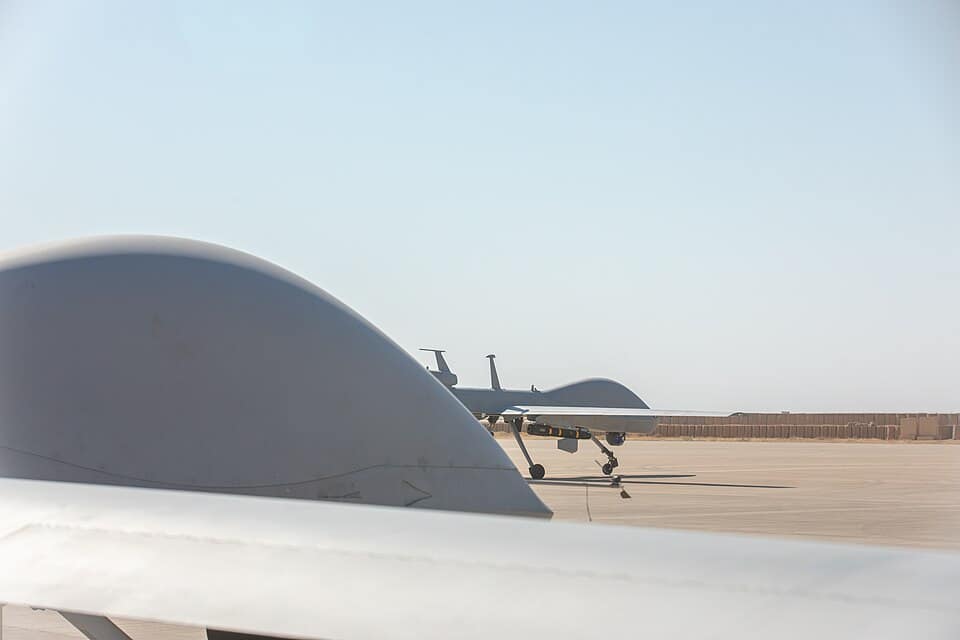
The B-52 Stratofortress remains the backbone of the USAF bomber fleet after seven decades. (USAF)
New Engines for a 60-Year-Old Airframe
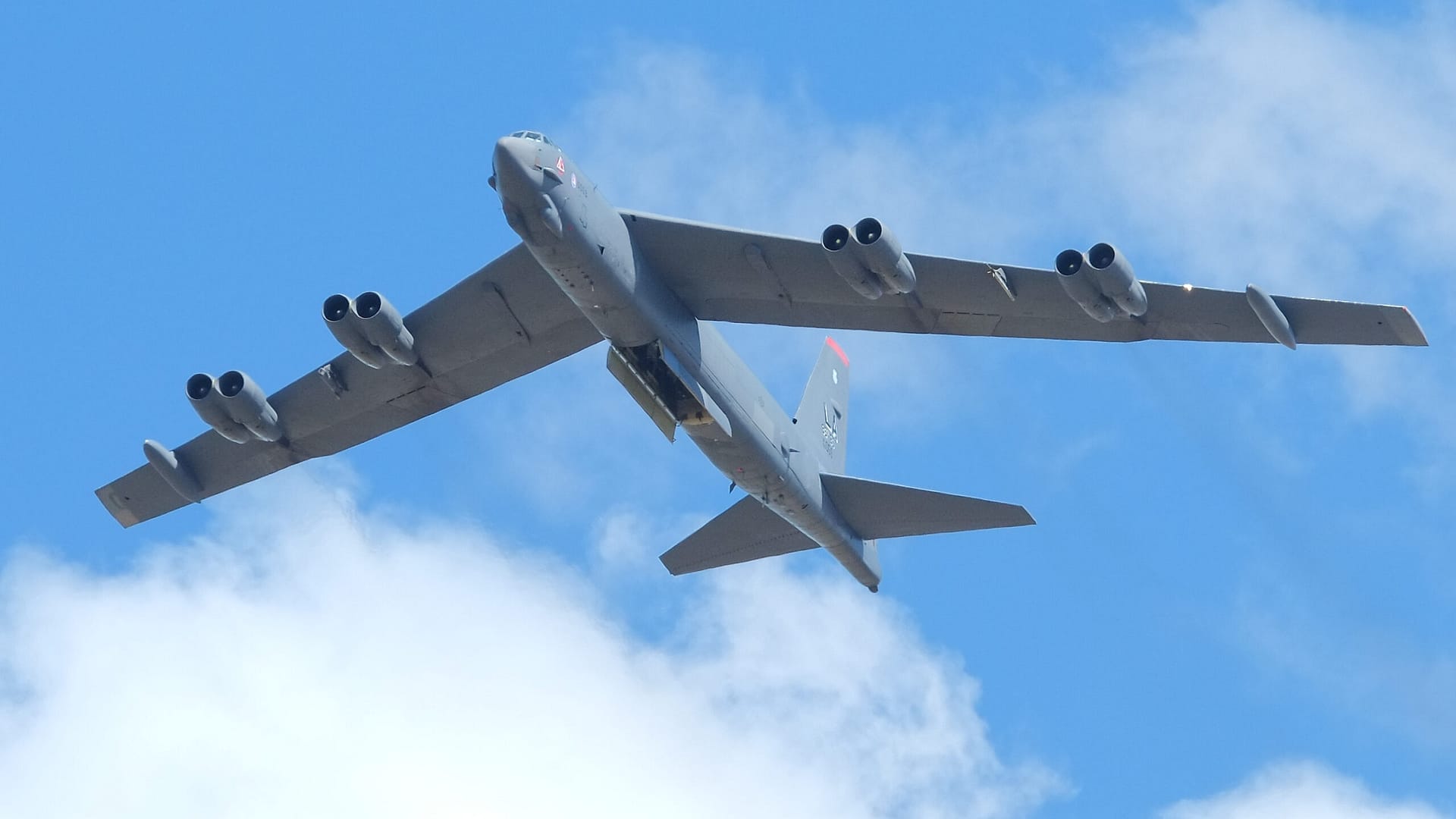
The eight Pratt & Whitney TF33 engines on each B-52H date from the early 1960s. Rolls-Royce won a $2.6 billion contract to replace them with approximately 650 F130 engines. Boeing received a $2.04 billion task order for integration work in December 2025. The first aircraft is scheduled to arrive at Boeing’s San Antonio facility for modification in 2026, with the full fleet re-engined by 2033.
The re-engined aircraft will be redesignated B-52J. Total B-52 modernization — engines, the new Raytheon AN/APQ-188 AESA radar, avionics, and communications — is expected to cost $48.6 billion.
New weapons are coming too. The AGM-158B JASSM-ER conventional cruise missile. The AGM-181 LRSO — a next-generation stealthy nuclear cruise missile replacing the aging AGM-86B. And the AGM-183A ARRW hypersonic missile program, previously cancelled, was revived in 2025 with $387 million in procurement funding.
Why the Old One Outlives the New Ones
The B-1B Lancer and B-2 Spirit are both being retired to make room for the B-21 Raider — physically (hangar space), financially, and in terms of maintenance infrastructure. But the deeper reason is structural. The B-1B’s airframes wore out faster despite being decades newer: 20 years of hard, low-level flying caused severe structural strain, with some airframes needing $10-30 million each just to remain flightworthy.
The B-52 was overbuilt for its mission. Its airframes have accumulated far fewer flight hours relative to their structural life. It is vastly cheaper to operate than either the B-1 or B-2. And its enormous internal volume and external pylons make it an ideal truck for the new generation of standoff weapons — it does not need to penetrate enemy air defenses because its missiles do that job instead.
B-52H crews continue to fly missions worldwide with upgraded avionics and weapons systems. (USAF)
Three Generations, One Airplane
At Minot Air Force Base, Captain Daniel Welch arrived at the 23rd Bomb Squadron in 2011 — the same squadron his grandfather commanded during Vietnam-era operations. His father flew B-52s during the Cold War. Three generations of one family, flying the same type of aircraft — and in some cases, potentially the same individual airframe.
The B-52 is quite possibly the only military aircraft in history where that is true. And if the Air Force’s plans hold, a fourth generation of Welches could fly the B-52J in the 2050s.
There is a reason the bomber community’s unofficial motto is “BUFF” — Big Ugly Fat Fellow. The B-52 has never been graceful. It has never been stealthy. It has never been fast. But it has outlived every aircraft designed to replace it, and it shows no signs of stopping.
Some aircraft are legendary. The B-52 is eternal.
Sources: Air Force Magazine, Boeing Historical Archives, National Museum of the USAF, Aviation Week & Space Technology
Related Questions
How old is the B-52 bomber?
The Boeing B-52 Stratofortress first flew on 15 April 1952, making it over 70 years old. Remarkably, it is still in front-line U.S. Air Force service and is planned to keep flying into the 2050s or 2060s — close to a century of operation.
Why is the B-52 still in service?
Its combination of enormous range, huge payload and low operating cost has never been bettered for many missions. Repeated upgrades have kept it relevant, and it has outlasted every bomber designed to replace it — so the Air Force keeps modernising it rather than retiring it.
How long will the B-52 keep flying?
The Air Force plans to operate the B-52 into the 2050s–2060s, which would give the bomber roughly 100 years of continuous service. A re-engining programme with new Rolls-Royce F130 engines, starting around 2028, is central to keeping it flying that long.
How far can the B-52 fly?
The current B-52H has an unrefuelled range of about 8,800 nautical miles and can carry roughly 70,000 lbs of weapons. With aerial refuelling its reach is effectively global, a major reason the aircraft remains so useful.
How many B-52s were built and remain?
Boeing built 744 B-52s between 1952 and 1962. About 76 remain in service today, all of them the final B-52H model, kept flying through continuous upgrades.
0 Comments