

Quick Facts
Aircraft: A-10C Thunderbolt II (“Warthog”)
New Retirement Date: 2030 (extended from 2029)
Announcement: April 20, 2026, by Air Force Secretary Troy E. Meink
Retained Squadrons: 1 active-duty (Moody AFB) through 2030, 1 reserve (Whiteman AFB) through 2030, 1 additional (Moody) through 2029
Average Aircraft Age: 43+ years
Reason Cited: Operational performance in Operation Epic Fury
The Reversal
The numbers tell the story. Last year, the Pentagon proposed a one-year phase-out of the remaining 162 A-10s in the inventory. Congress blocked it — again. But this time, the Air Force is not merely accepting congressional direction. It is actively choosing to extend the Warthog, citing combat performance in Operation Epic Fury as the decisive factor. Three squadrons will remain operational. One active-duty squadron at Moody Air Force Base and one reserve squadron at Whiteman Air Force Base will fly through 2030. A second Moody squadron will continue through 2029. The preserved combat power helps bridge the gap while the defence industrial base works to increase production of newer combat aircraft. The A-10s still flying are old. The average airframe has more than 43 years of service, with maintenance demands that grow steeper every year. The twin TF34 turbofan engines, the titanium bathtub that protects the pilot, the 30mm GAU-8 Avenger cannon — all of it requires increasingly specialised upkeep on aircraft that were built during the Carter and Reagan administrations.Epic Fury Changed the Math
The war in Iran did what a decade of congressional testimony could not: it forced the Air Force to admit that the A-10 fills a role nothing else can fill. Operation Epic Fury required sustained close air support at low altitude, in contested airspace, against dispersed ground targets — precisely the mission profile the Warthog was designed for in 1972. The A-10’s performance in Epic Fury provided what the Air Force called irrefutable inputs to retain the platform, particularly in mission areas requiring sustained presence and low-altitude engagement. Translation: the jet did its job so well that even the service’s own planners could not argue for getting rid of it. This is not a new argument. A-10 advocates have made it for years. What changed is that the argument now comes with fresh combat data — sortie rates, targets destroyed, troops supported, aircraft survivability — from a real war against a state adversary, not a counterinsurgency campaign.What Comes After
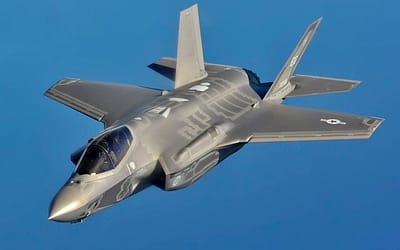
The extension to 2030 buys time, but it does not answer the fundamental question: what replaces the A-10? The Air Force has no dedicated close air support replacement in development. The assumption has been that the F-35 Lightning II and advanced munitions would absorb the CAS mission. Epic Fury tested that assumption — and the results appear to have been mixed enough that the Warthog earned a reprieve. For A-10 crews and their supporters, the extension is vindication. For the Air Force’s force planners, it is an acknowledgement that retiring an aircraft that works — even an old one — is a luxury that a service fighting a war cannot afford. The Warthog will fly through the end of the decade. Given its history, betting against another extension would be unwise.Sources: Stars and Stripes, Air Force Times, Military Times, Air & Space Forces Magazine, AIAA

 English
0 Comments