
Quick Facts
- J-10CE orders: Pakistan (36), Indonesia (42), Bangladesh (20), Egypt (interest reported; deal stalled)
- JF-17: Co-produced with Pakistan; Block II flown by Myanmar and Nigeria, Azerbaijan the first Block III export customer
- FC-31/J-35: Fifth-gen stealth export fighter — interest from Saudi Arabia, UAE, Egypt
- Price advantage: J-10CE estimated at $40-50M vs. $80M+ for F-16V or Rafale
- Pentagon assessment: Chinese fighter exports set to grow significantly
The J-10C: China's Calling Card
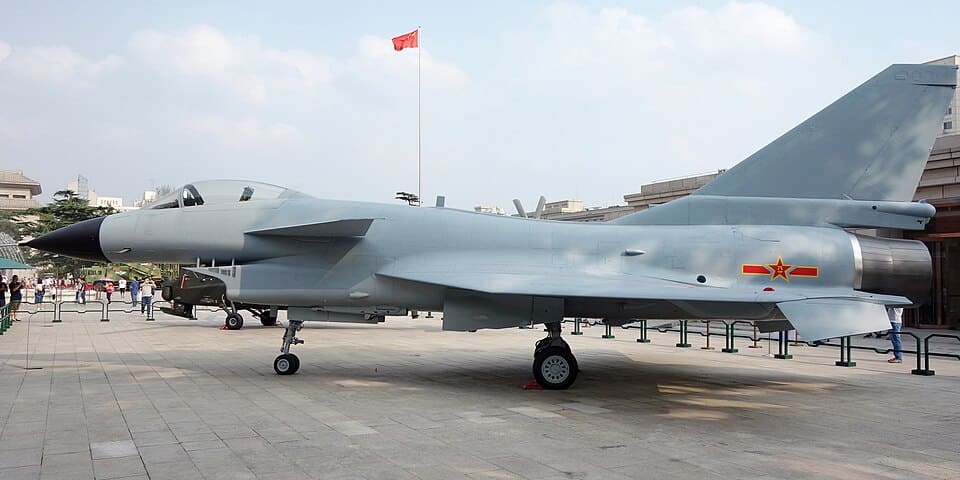
The Chengdu J-10C is the spearhead of China's export push. A single-engine, delta-canard fighter with an AESA radar, infrared search-and-track, and compatibility with PL-15 beyond-visual-range missiles, it competes directly with the F-16V, Gripen E, and the lower end of the Rafale's market. What separates it is price. At an estimated $40-50 million per airframe, the J-10CE undercuts every Western competitor by 30 to 50 per cent.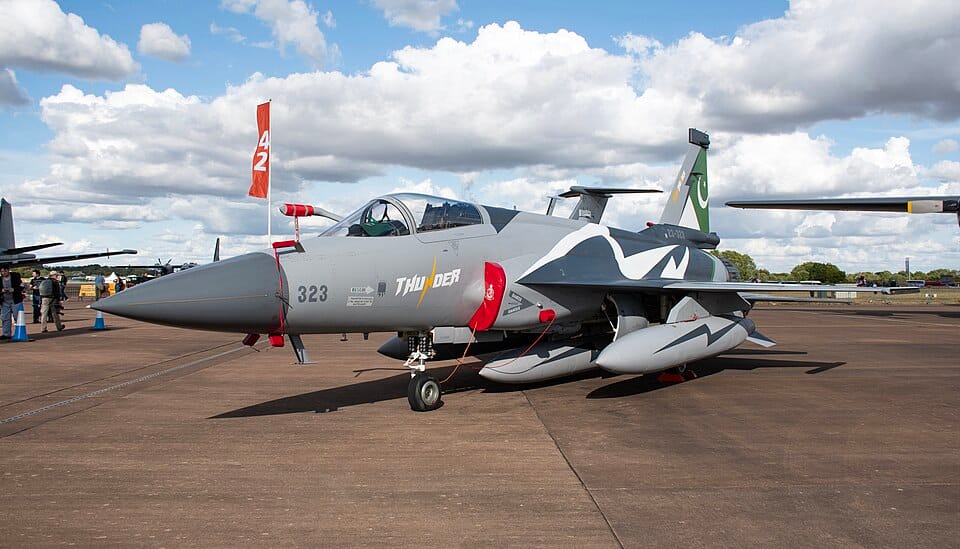
The FC-31: Stealth for Everyone
The more consequential development is the FC-31, the export variant of the Shenyang J-35. It is China's answer to the F-35 — a medium-weight, fifth-generation stealth fighter designed explicitly for the international market.What the West Is Losing
Every J-10C sold to Indonesia is an F-16 that Lockheed Martin did not sell. Every FC-31 evaluated by Saudi Arabia is an F-35 that Congress refused to approve fast enough. China's growing share of the fighter market is not just a commercial concern — it is a strategic one. Nations that fly Chinese fighters train with Chinese doctrine, use Chinese datalinks, and build maintenance infrastructure tied to Chinese supply chains. The fighter export market is no longer a two-player game. China is on the field, the prices are low, the strings are few, and the stealth variant is coming. The West had better have an answer — because the customers are already shopping. Sources: The War Zone, Newsweek, Military Watch Magazine, AeroTime, Aviation A2ZRelated Questions
Which countries buy Chinese fighter jets?
China’s main fighter export customers include Pakistan, Indonesia, and Bangladesh. Pakistan has ordered 36 J-10CE fighters, Indonesia confirmed an order for 42 J-10Cs in October 2025, and Bangladesh plans to buy 20 J-10CEs by 2027. The JF-17, co-produced with Pakistan, is China’s most widely exported fighter.
How much does a Chinese J-10 fighter cost?
The export J-10CE is estimated at around $40–50 million per aircraft. That undercuts Western rivals like the F-16V and Rafale, which cost $80 million or more, by roughly 30 to 50 per cent. This price advantage is central to China’s growing success in the global arms market.
What is the Chengdu J-10?
The Chengdu J-10 is a single-engine, delta-canard multirole fighter with an AESA radar, infrared search-and-track, and PL-15 long-range missiles. Its export version, the J-10CE, competes with the F-16V, Gripen E, and lower-end Rafale. It is the spearhead of China’s expanding combat-aircraft industry.
What is the JF-17 Thunder?
The JF-17 Thunder is a lightweight multirole fighter co-produced by China and Pakistan. Affordable and easy to maintain, it has become China’s most prolific fighter export, serving with several air forces. Azerbaijan became the first export customer for the upgraded Block III version.
What is the FC-31 / J-35?
The FC-31, also known as the J-35, is China’s fifth-generation stealth export fighter. It has drawn interest from Saudi Arabia, the UAE, and Egypt as a lower-cost alternative to the American F-35. It complements China’s wider next-generation push, including the radical tailless J-36.
Why are Chinese fighters becoming popular?
Chinese fighters are gaining customers mainly because of price, availability, and politics. They cost far less than Western jets and come without the political conditions that often accompany American or European sales. For nations that cannot afford or cannot obtain Western fighters, China offers a credible, modern alternative.
0 Comments