
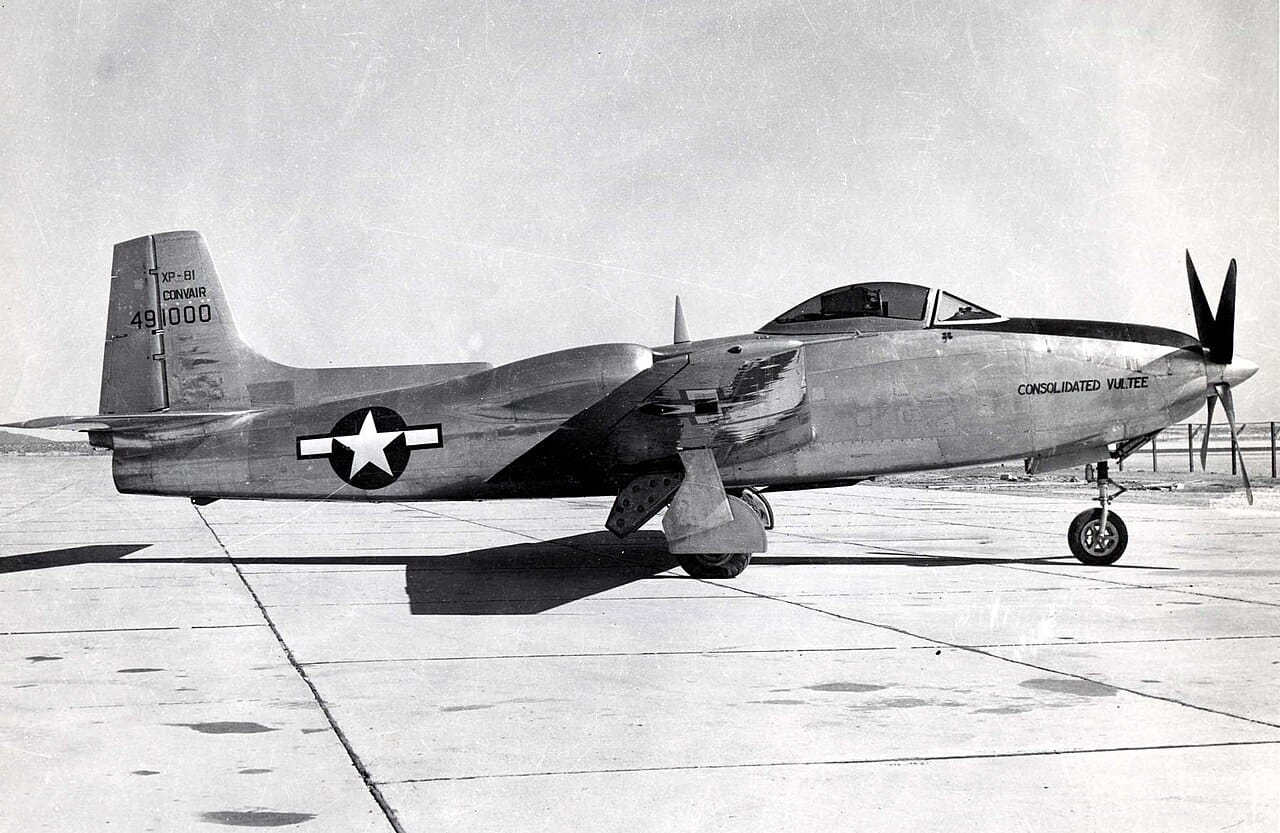
From the front it looks like a Mustang that ate a bigger meal. A four-bladed propeller, a long slim nose, a bubble canopy. Then you notice the jet exhaust at the tail, and the Convair XP-81 stops making sense in the best possible way. This was a fighter with two kinds of engine, front and back.
The problem was distance. The Army wanted a fighter that could escort B-29 bombers deep across the Pacific, which meant fuel-sipping range and combat-winning speed in one airframe. No single engine of the day gave both, so Convair used two.
Kurzinfo
| Typ | Hybrid turboprop/turbojet escort fighter |
| Erster Flug | 11 February 1945 (on a substitute Merlin) |
| Rolle | Long-range B-29 escort fighter |
| Kraftwerk | 1 x GE turboprop (nose) + 1 x J33 turbojet (tail) |
| Höchstgeschwindigkeit | About 507 mph (estimated) |
| Anzahl gebaut | 2 prototypes |
| Schicksal | Cancelled 1947; both survive with the National Museum of the USAF |
Propeller for cruise, jet for the fight
A General Electric turboprop in the nose would spin the propeller for efficient long-range cruising. A GE-designed J33 turbojet in the tail would light up for a burst of high speed over the target. It was a clever hedge between the piston age ending and the jet age beginning.
Reality intervened. The turboprop was not ready, so engineers bolted a Packard Merlin from a P-51 into the nose to get flying. On 11 February 1945 the Merlin-powered XP-81 took off at Muroc and handled well, once a bigger tail cured a wobble caused by the long forward fuselage.
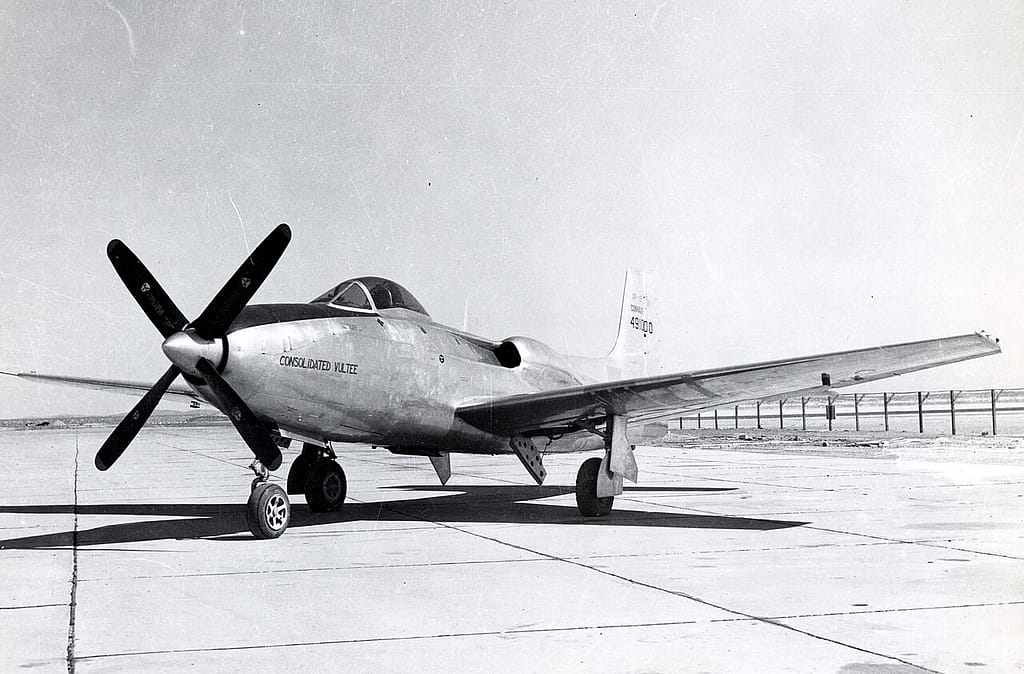
First on turboprop power
Late in 1945 the real turboprop finally went in, and on 21 December the XP-81 became the first American aircraft to fly under turboprop power. But the engine never delivered its promised output, giving no more than the Merlin had, and the performance gains evaporated.
With the war over and Pacific bases captured, the need for a long-range escort vanished. The programme was cancelled in 1947 after two prototypes, and the pair were later used as targets on a bombing range.
Both survived that indignity. Today the two XP-81 airframes rest with the National Museum of the United States Air Force, a hybrid experiment that arrived just as the world it was built for disappeared.
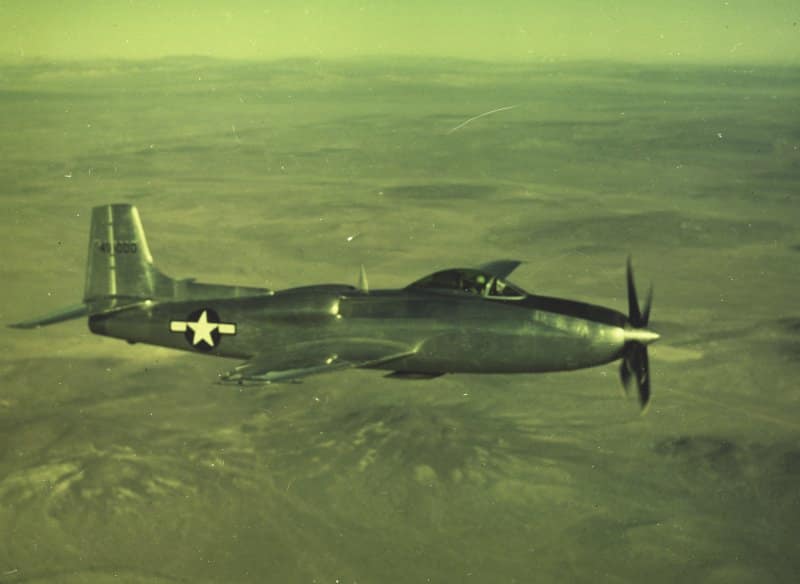
The hybrid escort fighter that arrived just as its mission disappeared:
Sources: National Museum of the USAF; White Eagle Aerospace; Wikipedia.

0 Kommentare