
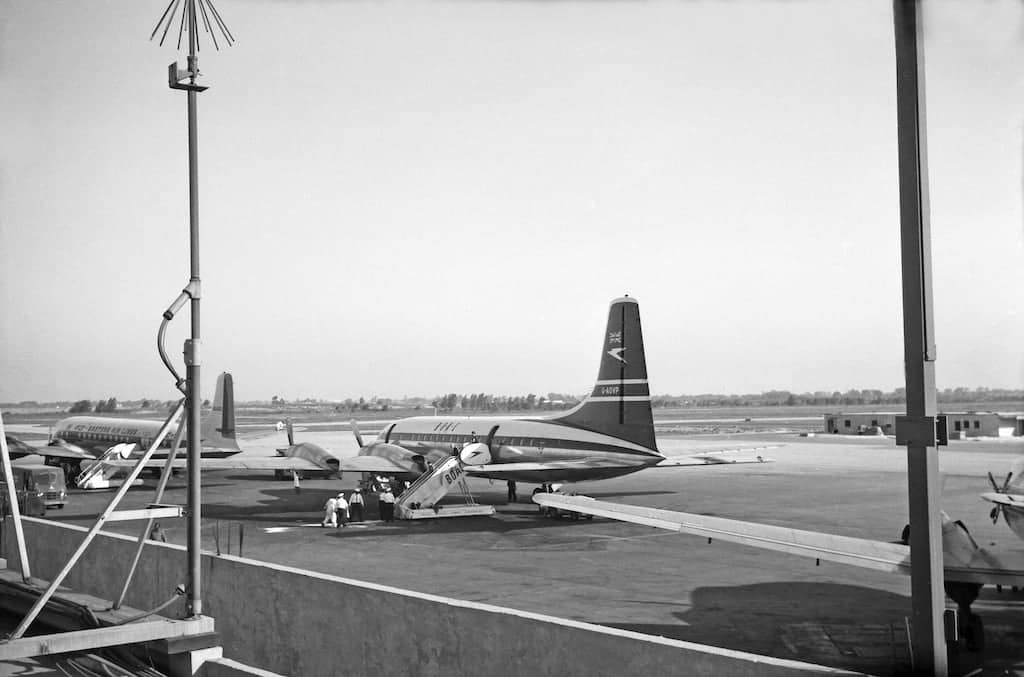
Seventy-four years ago today, on 16 August 1952, a large and beautiful British airliner lifted off from Filton for the first time. Passengers who later flew in it swore it was the smoothest, quietest airliner they had ever experienced, so hushed that it earned an affectionate nickname that stuck forever: the Whispering Giant.
The Bristol Britannia should have been a world-beater. It was elegant, comfortable, long-legged, and years ahead of the propliners it replaced. Instead it became one of aviation's great might-have-beens, an aircraft undone not by any fault of its own, but by a troublesome engine and the cruelest timing imaginable.
Kurzinfo
| Flugzeug | Bristol Type 175 Britannia |
| Spitzname | The Whispering Giant |
| Erster Flug | 16 August 1952, at Filton |
| Motoren | Four Bristol Proteus turboprops |
| Entered service | 1 February 1957, with BOAC |
| Die Verzögerung | Proteus engine icing took years to cure, pushing service back |
| The killer | By 1957 the pure jets, the Comet 4 and Boeing 707, were arriving |
| Gebaut | 85 (production ended 1960) |
The Smoothest Ride in the Sky
The Britannia sat at a fascinating hinge point in aviation history: a turboprop, not a piston-engined propliner, but not yet a pure jet either. Its four Bristol Proteus turboprops spun propellers, but with the smooth, vibration-free power of a turbine. The effect inside the cabin was revelatory. Compared with the shaking, droning piston airliners of the day, the Britannia was serene, and remarkably quiet, hence the name.
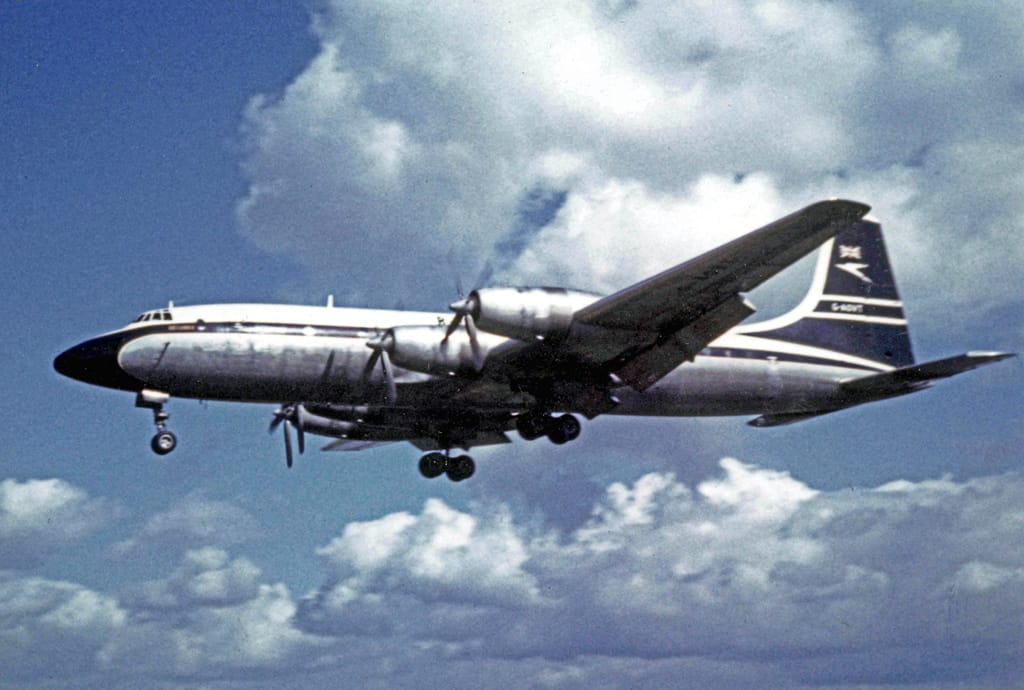
BOAC put it to work on its glamorous long-haul Empire routes, including a marathon London-to-Sydney service that hopped across the world through Zurich, Istanbul, Karachi, Calcutta, Singapore and Darwin. For a few years, the Britannia was the classiest way to cross the planet.
The Engine That Kept Icing Up
So why did only 85 get built? The first problem was the Proteus engine. In service testing, its air intakes proved dangerously prone to icing, the engines could flame out in certain tropical and high-altitude conditions, and the fix took years of painstaking development. Every month spent curing the icing was a month the Britannia was not earning money, or winning orders.
And that was the fatal second problem: timing. The prototype Boeing 707 flew in August 1954, while the Britannia was still wrestling with its engines. By the time the Whispering Giant finally entered service in 1957, the pure jets were almost ready. Any airline choosing a new long-haul fleet now looked past the elegant turboprop to the faster, more modern jets just over the horizon. The orders dried up.
A Quiet, Dignified Retirement
It is a familiar and slightly heartbreaking story in British aviation: a superb aircraft, beaten to market by the very future it helped point toward. The Britannia was retired from front-line passenger service remarkably quickly, in some cases after barely a decade.
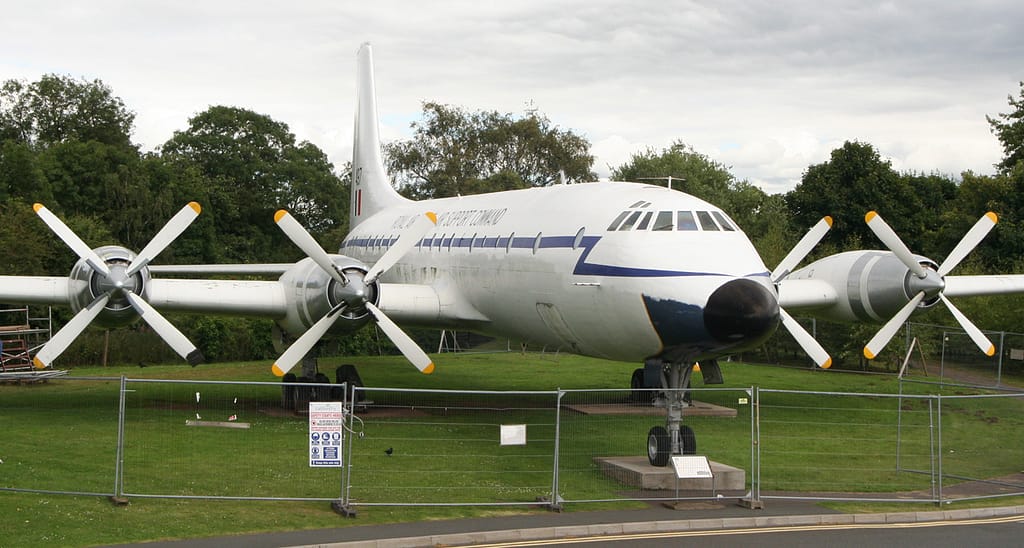
But the aircraft was too good to simply scrap. Freed from passenger duty, Britannias found a long and useful second career as freighters, hauling cargo around the world well into the 1990s, and serving the Royal Air Force as transports. Not bad for a design that first flew before most of its passengers were born. Seventy-four years on, the Whispering Giant is remembered fondly as one of the finest airliners that never quite got its moment.
Sources: Wikipedia; Simple Flying; Aeropedia; The British Airliner Collection.
0 Kommentare