
A launch rail is a humble thing: a length of metal angled at the sky. Build fifty-nine of them along your western frontier, and you have something else entirely — a machine for reaching deep into a nervous continent.
That is the picture drawn by a Telegraph investigation published this week. Working from leaked documents and satellite imagery, the newspaper says it located at least 59 newly built drone launch rails spread across roughly ten Russian military and civilian sites near the borders with Ukraine and Belarus. The drone-intelligence firm DroneSec, which analysed the imagery, concluded that around twenty of the rails are unusually long — the tell-tale signature of Russia’s newest long-range attack drones.
The immediate purpose is the war in Ukraine. The longer shadow falls on NATO.
Kurzinfo
- The claim: at least 59 new drone launch rails across about 10 Russian sites near the NATO and Belarus borders
- Quelle: a Telegraph investigation using leaked documents and satellite imagery; analysis by drone-intelligence firm DroneSec
- Long-range rails: roughly 20 are long enough for Russia’s Geran-4 and Geran-5 drones
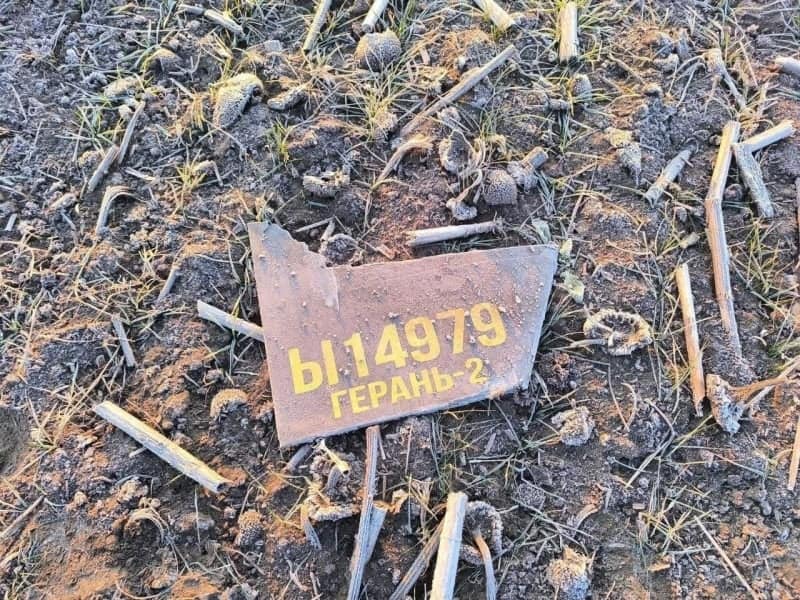
- The drone: Geran is a Russian development of Iran’s Shahed; Kyiv says it can reach nearly 1,000 km with a ~90 kg warhead
- In range: Warsaw sits within reach of several of the new sites
- Caveat: the Telegraph stresses there is no evidence of a Russian plan to attack Poland or NATO
Fifty-nine rails, ten sites
Some of the launch sites reuse existing bases; others were carved from scratch in the Russian hinterland, according to the reporting. At several, satellite images show large warehouses said to hold up to a thousand drones at a time. Construction, the Telegraph notes, is still under way at some locations — the network is growing, not finished.
The strategic logic is uncomfortable. More rails mean more drones launched at once, from more directions, with less warning — a way to overwhelm air defences by sheer arithmetic.

From Shahed to Geran
The Geran-4 and Geran-5 are Russian evolutions of the notorious Iranian Shahed-136, the delta-winged “kamikaze” drone that has terrorised Ukrainian cities since 2022. Ukrainian intelligence says the latest variants can strike targets almost 1,000 kilometres away while carrying a warhead of around 90 kilograms — and that Moscow has begun fitting some Gerans with air-to-air missiles, trading the warhead for the ability to hunt other aircraft.
The view from Warsaw
Geography does the talking. Several of the new sites place the Polish capital within a Geran’s reach, and Warsaw has spent the past year watching drones drift across European skies — over Copenhagen, where Denmark called it a “hybrid attack”; over German and Belgian airfields; even, reportedly, over Airbus plants. European and US intelligence services warned in August 2026 that the Kremlin was weighing a confrontation on Polish soil.
The false-flag fear
The darkest reading is not a barrage but a trick. Analysts cited by the Telegraph and European outlets worry the rails could feed “false-flag” provocations — incidents engineered to look like something they are not. Finland and the Baltic states have already shot down Ukrainian drones over their own territory; Kyiv and those governments blame Russian GPS-spoofing and jamming for steering the machines off course, a way to drive a wedge between Ukraine and its friends. For now, the rails point at Ukraine. The question Europe is asking is how easily that could change.
Sources: The Telegraph (investigation and analysis with DroneSec); 20 Minuten; Kyiv Post; Militarnyi; Euronews. Reporting dated 16–17 August 2026. Figures on drone range and air-to-air conversion attributed to Ukrainian intelligence.



0 Kommentare