
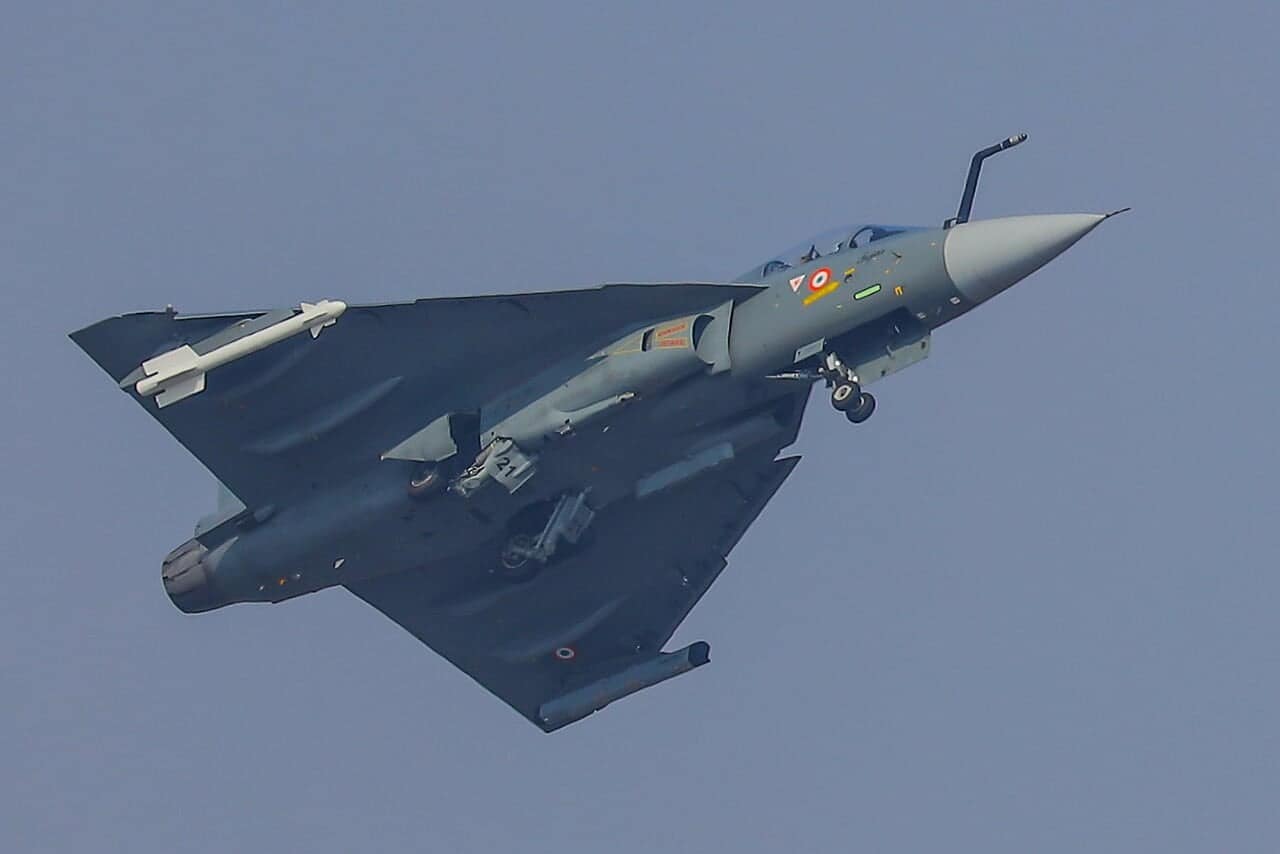
India’s fighter problem used to be a problem you could count. Dozens of finished Tejas Mk1A airframes have sat on Hindustan Aeronautics Limited’s (HAL) lines in Nashik and Bengaluru, waiting on a single missing part, the General Electric F404 engine, from a single supplier, against a known delivery date. That is the kind of shortage a planner can track to the week. A quieter one is now taking shape behind it, and it is measured not in engines but in tonnes of a silver-grey metal that India mines in abundance and refines almost not at all.
The metal is titanium. And the bottleneck, laid out in a new analysis by the Observer Research Foundation, is structural: India’s defence ambitions are expanding faster than its titanium capacity.
Kurzinfo
- Domestic sponge output: 500 tonnes per year, unchanged since 2011 (KMML, Kollam, the sole producer)
- The paradox: India holds the world’s third-largest ilmenite and second-largest rutile reserves; the shortage is capacity, not ore
- One alloy maker: Mishra Dhatu Nigam (MIDHANI), Hyderabad, is India’s only producer of titanium alloys
- Imports: Aerospace-grade sponge is still bought from Russia, Japan and China; MIDHANI has courted Russia’s VSMPO-AVISMA
- Tejas Mk1A: HAL is at 24 aircraft a year, targeting 30 by 2027–28, against an order book of 180
- AMCA: Series production scheduled for 2035, but qualifying a new defence-grade titanium alloy takes several years on its own
- The chain: Mine — sponge (KMML) — alloy (MIDHANI) — factory, with no domestic backup at any stage
Why titanium, and why it is hard to replace
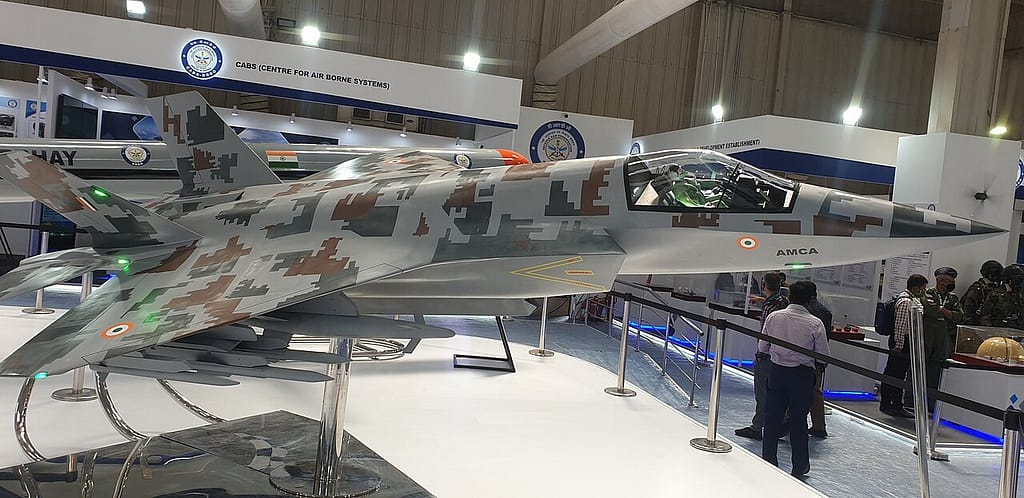
Titanium earns its place in a fighter by doing two things at once: it carries high loads at high temperature, and it does so at roughly 60 percent the density of steel while resisting corrosion. That combination makes it the material of choice for the parts an airframe cannot afford to have fail, the load-bearing bulkheads that hold the aircraft together under g-load, engine-bay structure, high-strength fittings and fasteners. Inside the engine, titanium alloys form fan and compressor discs and blades in the cooler stages of the compressor. The AMCA is designed to be composite-heavy, carbon-fibre skins over much of the fuselage and wing, but its primary load paths still run through titanium, including a monolithic bulkhead of the kind machined for the F-35.
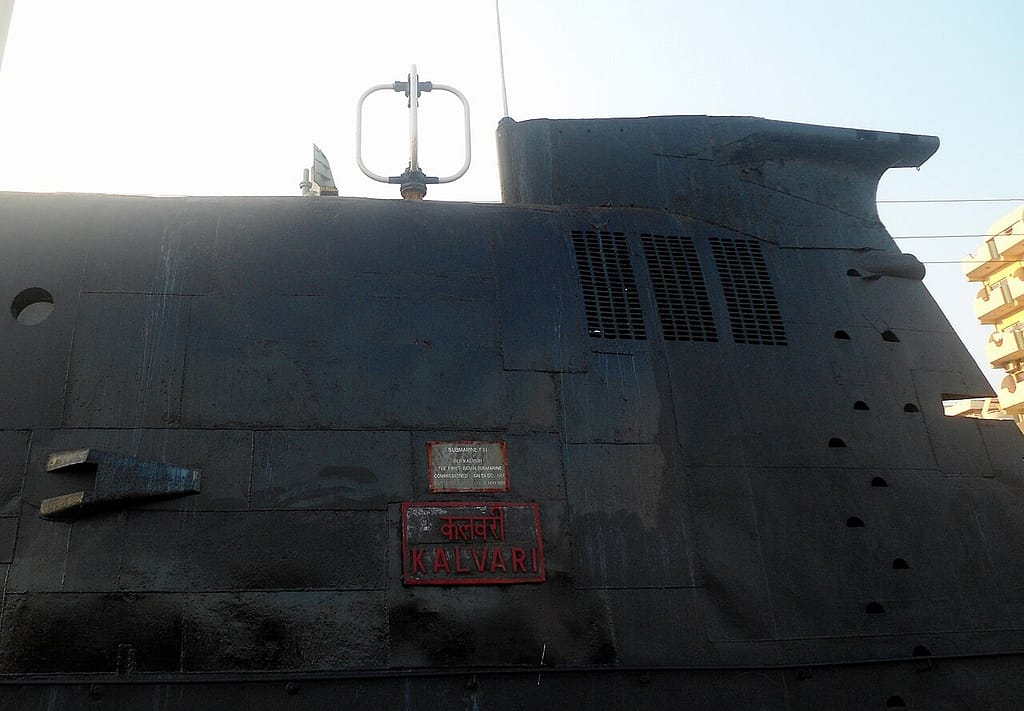
Submarines lean on the same metal for a different reason: it does not rust in seawater and it is non-magnetic. Pressure-critical components and propulsion hardware draw on the same narrow domestic alloy chain that the fighters do. That shared dependence is the heart of the problem.
A chain of single points of failure
The paradox is that India is not short of the raw material. It holds the world’s third-largest ilmenite reserves and second-largest rutile reserves, in beach-sand deposits along the coasts of Kerala, Tamil Nadu, Andhra Pradesh and Odisha. The constraint appears one step downstream: turning that ore into titanium sponge, the porous metallic feedstock from which alloys are made.
Kerala Minerals and Metals Limited (KMML), in Kollam, is the country’s only sponge producer, working with technology developed by the Defence Metallurgical Research Laboratory (DMRL) in Hyderabad. Its 500-tonne-a-year ceiling has not moved in fifteen years. Downstream sits a second single point: Mishra Dhatu Nigam (MIDHANI), also in Hyderabad, India’s sole maker of titanium alloys. Every tonne of domestic sponge passes through that one firm before it reaches a factory floor. And because turning aerospace-grade metal into qualified defence-grade metal takes years of testing on its own, the chain cannot simply be sped up when demand rises.
The gap is filled with imports. Despite sitting on some of the largest titanium-bearing reserves on Earth, India buys aerospace-grade sponge from Russia, Japan and China, with MIDHANI having pursued cooperation with Russia’s VSMPO-AVISMA, the world’s largest titanium producer, to close the shortfall. None of these four links is a weakness on its own. Together they form a chain in which any shutdown, quality failure or export disruption has no domestic backup.
The cost to the programmes
The most immediate exposure is the Tejas Mk1A. HAL has reached a build rate of 24 aircraft a year and is targeting 30 by 2027–28, against an order book of 180. There is encouraging news here: MIDHANI has already shipped a first batch of indigenous titanium and superalloy products for the Tejas Mk2’s airframe and structural parts, proof the domestic chain can deliver. But sustaining 30 airframes a year needs a continuous, reliable flow of alloy, and a capped, single-vendor chain cannot guarantee it. The risk will not arrive as a headline. It will look like the engine delays that already slowed the line, only from a different link: slower deliveries, rising costs.
The AMCA raises the stakes because its schedule leaves less slack. Series production is set for 2035, but the capacity to feed it has to exist years earlier, since qualifying a new titanium alloy for defence use is itself a multi-year process. If the expansion does not begin now, it will not be ready in time, however well the aircraft itself is developed.
Three programmes, one plant
Submarine construction adds to the same pressure rather than a separate one. The result is three defence programmes, on three different timelines, quietly drawing from the same single sponge plant and the same single alloy producer. None is likely to collapse outright. The more probable failure mode is a slow, compounding delay across all three at once, harder to trace to one cause than an engine shortage, and harder to reverse once it starts.
Closing the gap
The fixes are known and none of them is exotic. First, fast-track the proposed joint venture between KMML and the Steel Authority of India Limited (SAIL) to lift sponge output, and tie its timeline publicly to the Tejas Mk1A and AMCA delivery schedules rather than treating it as a routine industrial project. Second, qualify a second domestic alloy source so MIDHANI is no longer a single point of failure. Third, and cheapest, write mineral and alloy sourcing disclosure into future Defence Acquisition Procedure contracts, so that new orders come with a documented supply chain rather than an assumed one. The United States has done exactly this since 1973 under a specialty-metals clause; India has no equivalent.
The window is set by the AMCA’s 2035 production start, and a decision taken within the current budget cycle would still arrive in time. This is the same lesson as India’s engine problem, examined here recently in Ambani and Rolls-Royce Take On India’s Engine Problem: sovereignty in fighter aviation is not won at the airframe. It is won several links up the supply chain, in the unglamorous business of metal, and it has to be planned for before the shortage arrives, not after.
Sources: Observer Research Foundation; IDRW; The Week; Forbes; USGS.



0 Kommentare