
The number barely moved, and that is precisely the point. France booked €21.24 billion in new arms-export orders in 2025, its Ministry of the Armed Forces told Parliament in the annual report published on 13 August. A shade below 2024’s €21.59 billion, it is the second consecutive year above the €20 billion mark, and a world away from the €8.2 billion trough of 2023. What once looked like a spike now looks like an altitude France intends to hold.
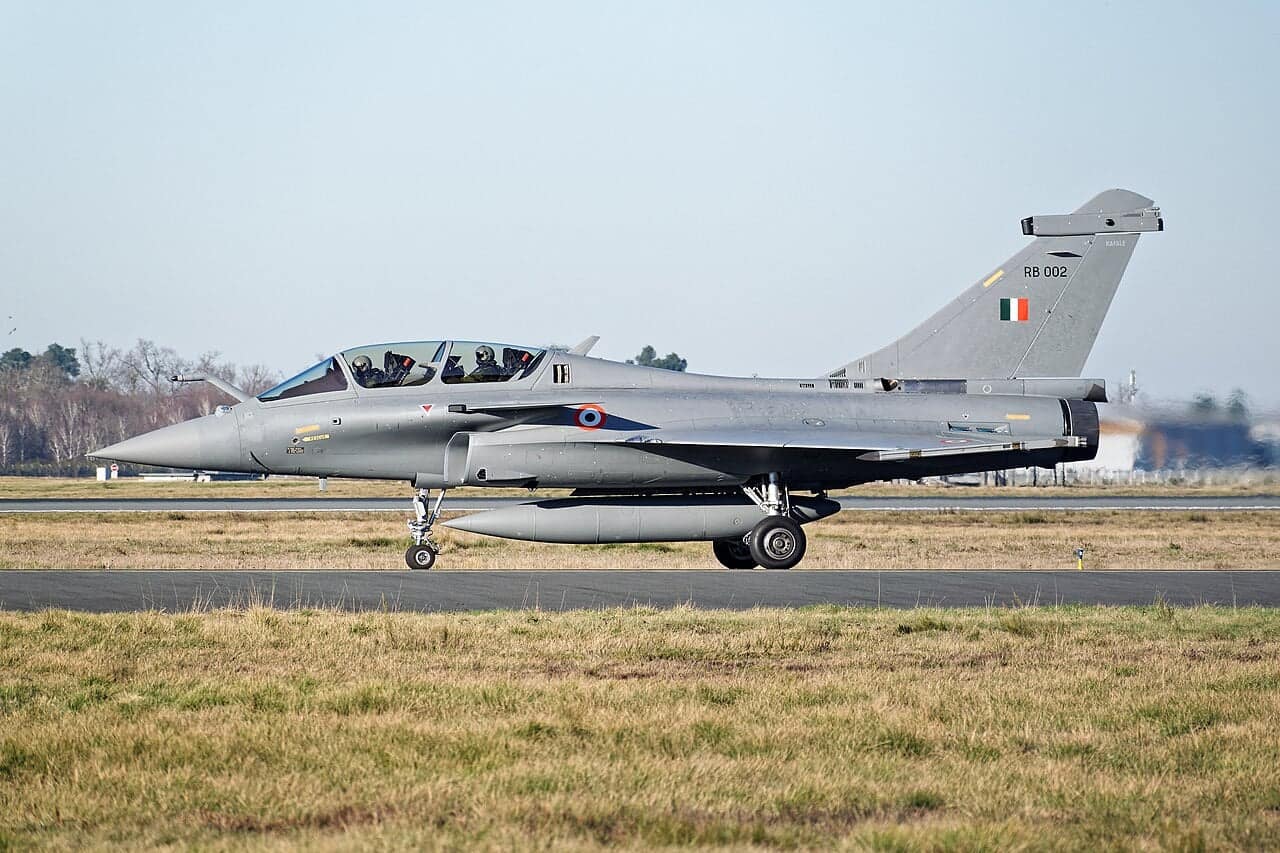
Behind the steadiness sits a familiar silhouette: the Dassault Rafale, still the aircraft doing much of the heavy lifting in the French carnet de commandes.
Kurzinfo
- 2025 export orders: €21.24 billion, per the Ministry of the Armed Forces’ annual report to Parliament, published 13 August 2026
- Prior years: €21.59bn in 2024, a slump to €8.2bn in 2023, and the €27bn record of 2022 (inflated by the UAE’s 80-Rafale contract)
- Rafale role: Aeronautics is about 40% of the book; the headline deal is 26 Rafale Marine for the Indian Navy
- Top customers: India (€6.9bn, roughly a third of the total); Asia ~43%; EU states 27%, led by Greece (€1.1bn); Ukraine €781m
- Other big-ticket items: Two Scorpène Evolved submarines (Indonesia), a fourth FDI/Belharra frigate (Greece), and a 15% surge in missile orders
- Global rank: 2nd-largest arms exporter per SIPRI 2021–2025 data (9.8% share), ahead of Russia, behind the United States
- Lieferungen: Reached €9.64bn (up from €8.18bn); the ministry issued 4,113 export licences
Stability, at a very high altitude
Read across the decade and the shape becomes clear. France took €11.7 billion in 2021, then leapt to a record €27 billion in 2022, a figure swollen by the United Arab Emirates’ order for 80 Rafales, worth some €16 billion on its own. Such a contract is a once-in-a-cycle event; no country signs one every year. So the truer measure of French health is not whether 2025 beat that outlier, but whether it stayed elevated without it. It did. Deliveries, the slower, more honest series that tracks what actually leaves the factory, rose to €9.64 billion from €8.18 billion, and Paris issued 4,113 export licences.
The composition tells the story of a mature industry. Aeronautics accounts for roughly 40% of orders, naval construction 19%, missiles 18% and land systems 12%. The raison d’être of the whole enterprise, as successive ministers have argued, is to keep France’s rare full-spectrum savoir-faire, the ability to design an entire fighter or a nuclear-powered submarine, commercially alive.
The Rafale, still the engine of the ledger
If one line carries the year, it is the Rafale. India was France’s single largest customer at about €6.9 billion, close to a third of the entire book, anchored by an order for 26 Rafale Marine jets to fly from the Indian Navy’s carriers. It is a striking vote of confidence: the world’s most populous nation, courted assiduously by every arms power, choosing the French naval fighter for its most prestigious platform.
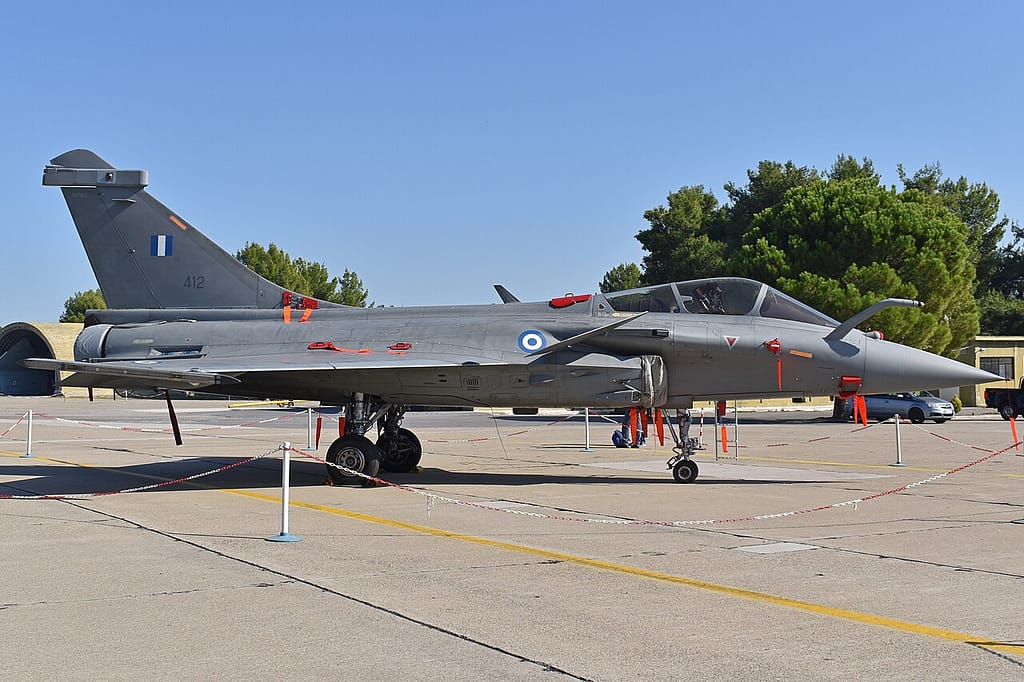
The Rafale’s export story now stretches across continents, Egypt, Qatar, Greece, Croatia, Indonesia, Serbia and the UAE among the operators or buyers of recent years, and each sale drags a long tail of missiles, training, support and sovereignty guarantees behind it. Dassault, for its part, logged 30 Rafale export orders in 2024, a rhythm that keeps the Mérignac line humming. The aircraft has become, in effect, France’s calling card abroad: proof that a middle-sized European economy can still build a frontline fighter and sell it against American and, increasingly, Asian competition.
The European quarter
The quieter revelation is geographic. European Union customers took about 27% of French orders, some €5.68 billion, a share that would have seemed fanciful a decade ago, when Paris sold chiefly to the Gulf and Asia. Greece led the EU pack at roughly €1.1 billion, followed by Denmark near €1 billion, then Belgium, Romania and a resurgent Germany at €526 million, its highest French purchase in ten years. Ukraine, unsurprisingly, features too, at €781 million.
This is the war in Ukraine rewriting the map. As European states rearm and Brussels writes buy-European preferences into instruments like the SAFE facility, a French rifle-shot that used to fly east now increasingly stays on the continent. The question the report cannot yet answer is whether those European orders convert into deliveries before the political and budgetary windows close.
Beyond the jet: submarines, frigates and a missile surge
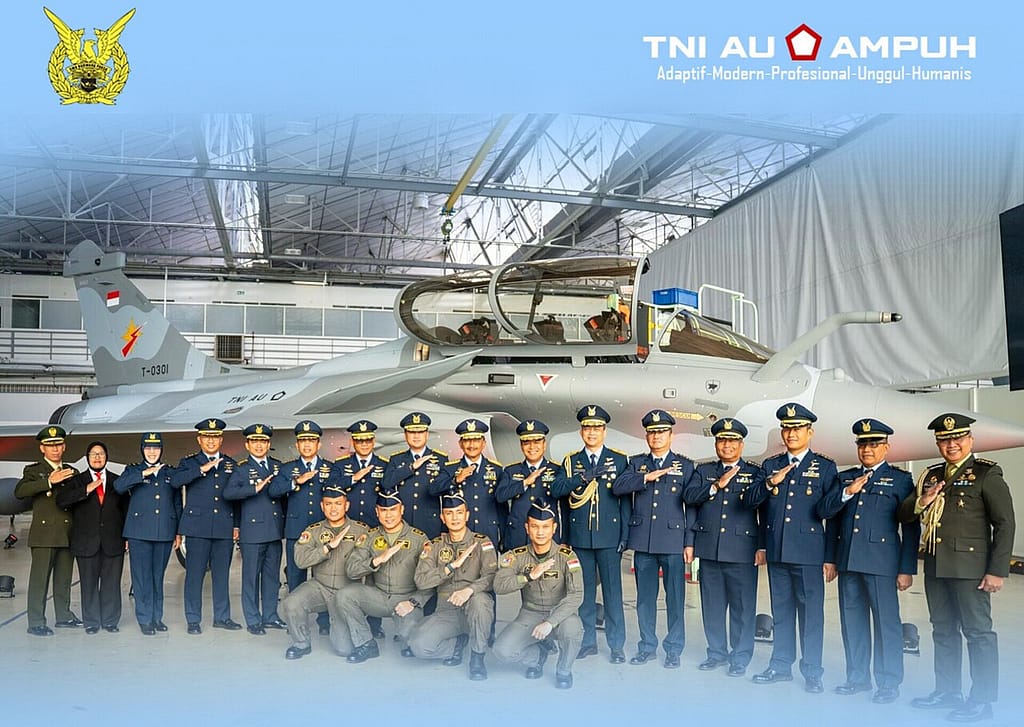
Aviation may lead, but it does not travel alone. Naval Group’s yards booked two Scorpène Evolved submarines for Indonesia and a fourth FDI-class Belharra frigate for Greece, the kind of long-horizon industrial marriages that bind a customer to France for decades of maintenance and upgrades.
The fastest-growing line, though, was missiles, up 15% year on year. The ministry singled out Denmark’s selection of the Franco-Italian SAMP/T NG air-defence system, its first-ever export, as historic, alongside a run of VL MICA and Mistral orders spread across Belgium, Cyprus, Denmark, Estonia, Romania and Oman. In an era defined by drones and ballistic threats, air defence has become the discipline everyone suddenly wants, and France arrived with product in hand.
Rank, and the argument for sovereignty
All of this has lifted France to a rank it has not held in living memory. By SIPRI’s 2021–2025 tally, France is now the world’s second-largest arms exporter with a 9.8% share, ahead of a Russia consumed by its own war and behind only the United States. Asia still buys the most French hardware, about 43% of orders, but the European surge means Paris is no longer a one-region seller.
For France, arms exports were never merely commerce. They are the mechanism that lets a nation with an economy a fraction of America’s or China’s afford a sovereign defence industry at all. Every Rafale sold to New Delhi or Athens helps pay for the next one built for the Armée de l’air, and underwrites the strategic autonomy, that most French of ambitions, of designing and building the whole aircraft at home. The 2025 ledger, steady at altitude, suggests the model is working. Whether it can keep climbing depends on the next Rafale signature, and on how much of Europe’s rearmament France can keep on its own side of the balance sheet.
Sources: Le Monde; Rapport au Parlement 2025 (Ministère des Armées); OPEX360; Defense News; SIPRI.
0 Kommentare