
As the Third Reich’s fortunes collapsed, its engineers reached for ever more extreme ideas. Some were genuinely brilliant. Some were merely enormous. And a few belonged squarely in science fiction. Hitler’s faith in war-winning “wonder weapons” produced one of the strangest catalogues of hardware in military history — where the line between engineering and fantasy got very blurry indeed.
Kurzinfo
- Was: Nazi Germany’s “Wunderwaffen” — a sprawl of experimental and fantasy weapons, especially as the war turned
- Actually built: the 80 cm Schwerer Gustav railway gun, the Karl-Gerät siege mortars, a one-off spherical Kugelpanzer, and the Krummlauf curved rifle barrel
- Stayed on paper: the 1,500-tonne Landkreuzer P.1500 “Monster,” the full V-3 supergun, and a far-fetched orbital “Sun Gun”
- The pattern: as defeat loomed, German ambition increasingly outran resources and reason
The Ones They Actually Built
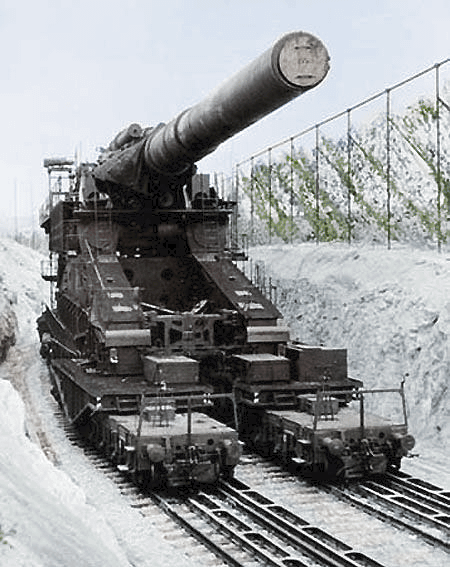
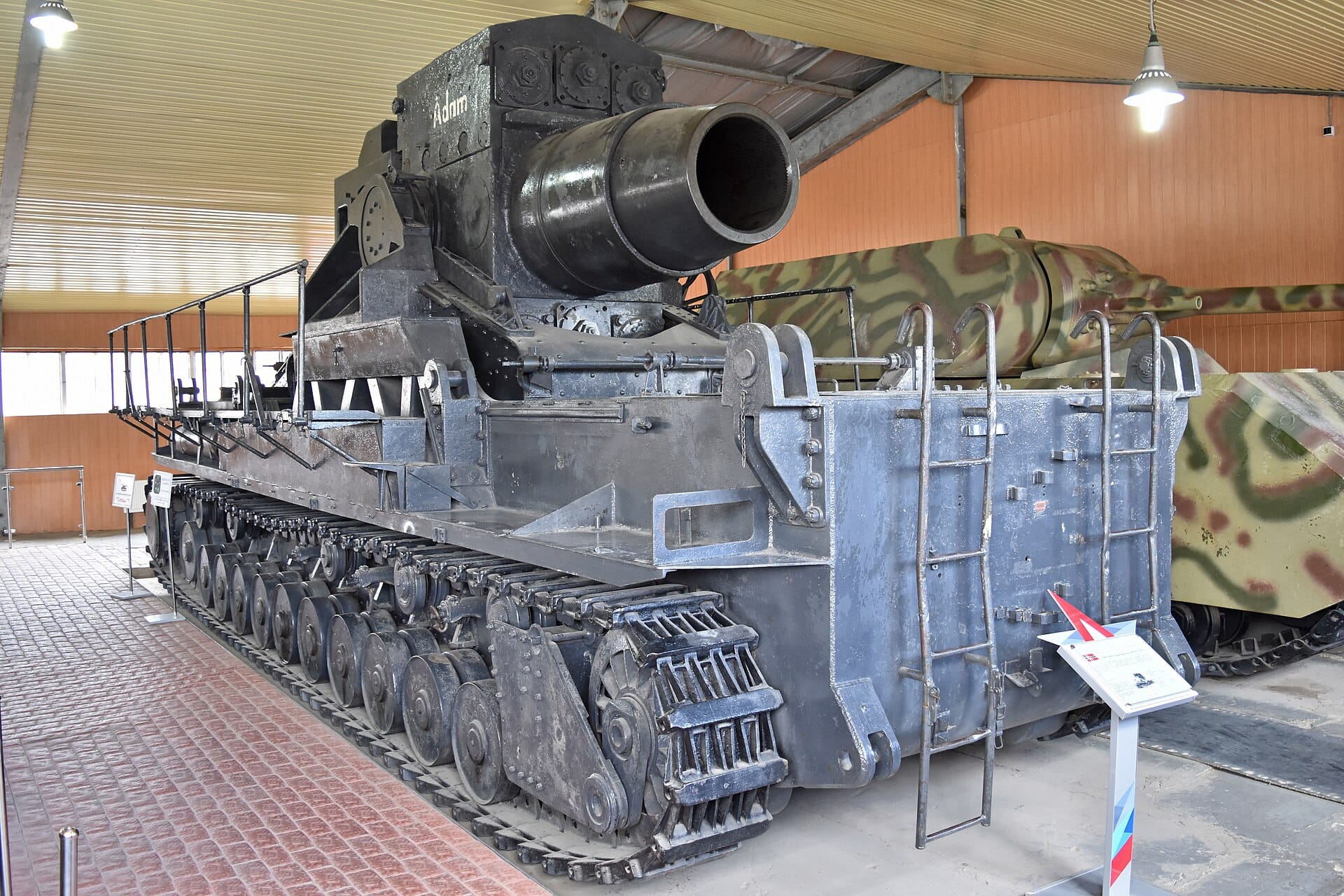
The most famous was the Schwerer Gustav: an 80-centimetre railway gun weighing some 1,350 tonnes that hurled seven-tonne shells over 30 miles. It took a small army and a pair of rail tracks to operate, and it actually saw combat, pounding the fortress of Sevastopol in 1942. Its cousins, the Karl-Gerät self-propelled mortars, lobbed two-tonne shells into besieged cities.
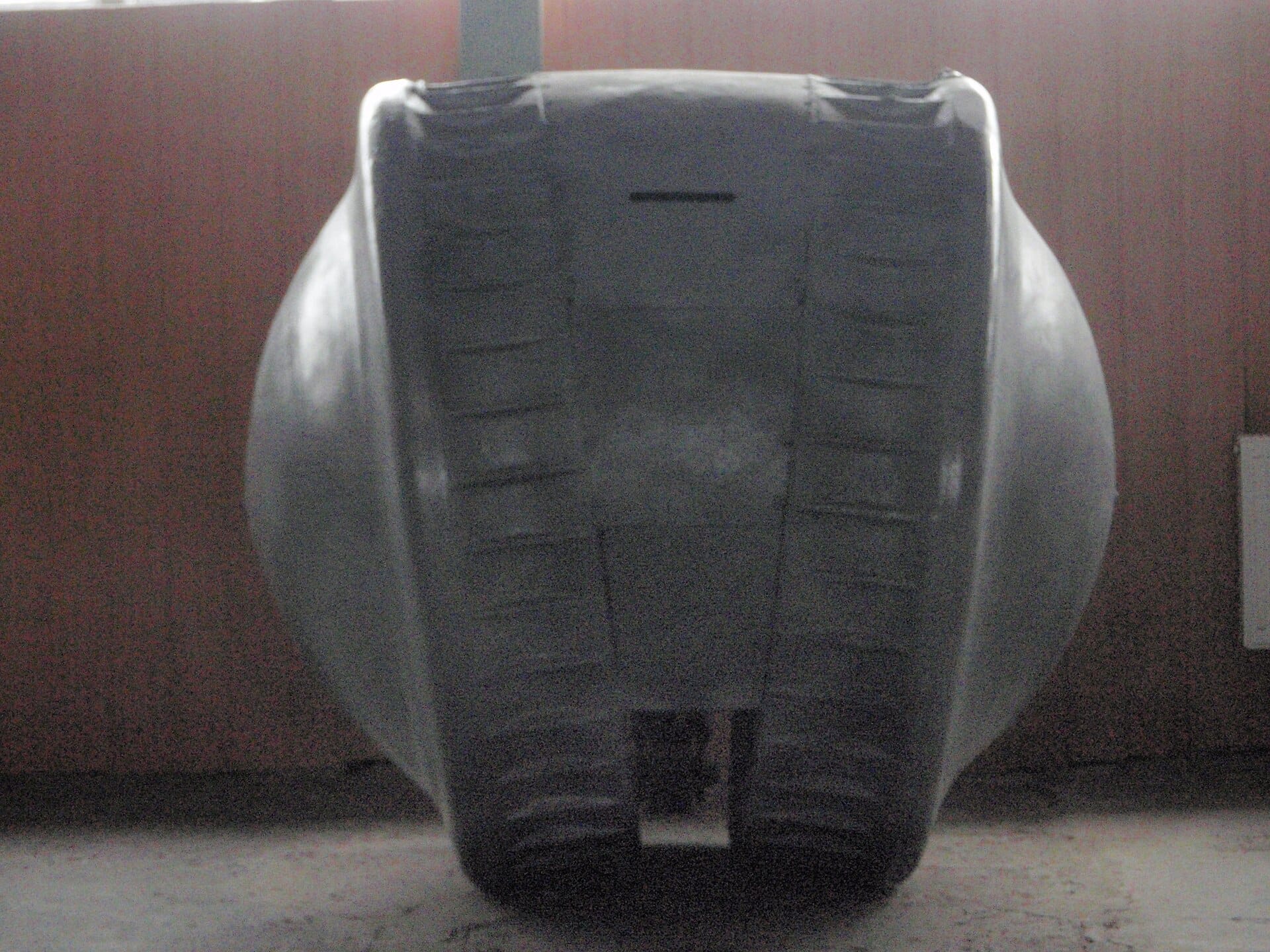
Stranger still was the Kugelpanzer, a one-man armoured ball — a tank shaped like a sphere. Exactly what it was for is still debated; a single example was captured by the Soviets in 1945 and sits in a Russian museum to this day. And then there was the Krummlauf, a curved barrel for the StG 44 assault rifle that let a soldier (in theory) shoot around corners. It sort of worked, at the cost of wrecking the barrel.
The Ones That Stayed on Paper
Then there were the fantasies. The Landkreuzer P.1500 “Monster” was a proposed 1,500-tonne land battleship that would have carried the Schwerer Gustav’s gun on tracks — an idea so absurdly impractical it never left the drawing board. The V-3 was a multi-chamber supergun built into tunnels in France and aimed at London; smaller versions saw limited use late in the war. The Windkanone, a “wind cannon” meant to knock aircraft from the sky with blasts of compressed air, was tested and found useless.
And at the far edge of plausibility sat the “Sun Gun” — a theoretical orbital mirror, kilometres across, that would focus sunlight into a death ray to scorch cities below. It was never more than a thought experiment, but the fact that it was discussed at all says everything about the desperation of the regime’s final years.
The documentary above surveys the sprawling catalogue of Nazi “miracle weapons,” from the genuinely revolutionary to the frankly deranged. Six more are worth a closer look.
Six More From the Wonder-Weapon Catalogue
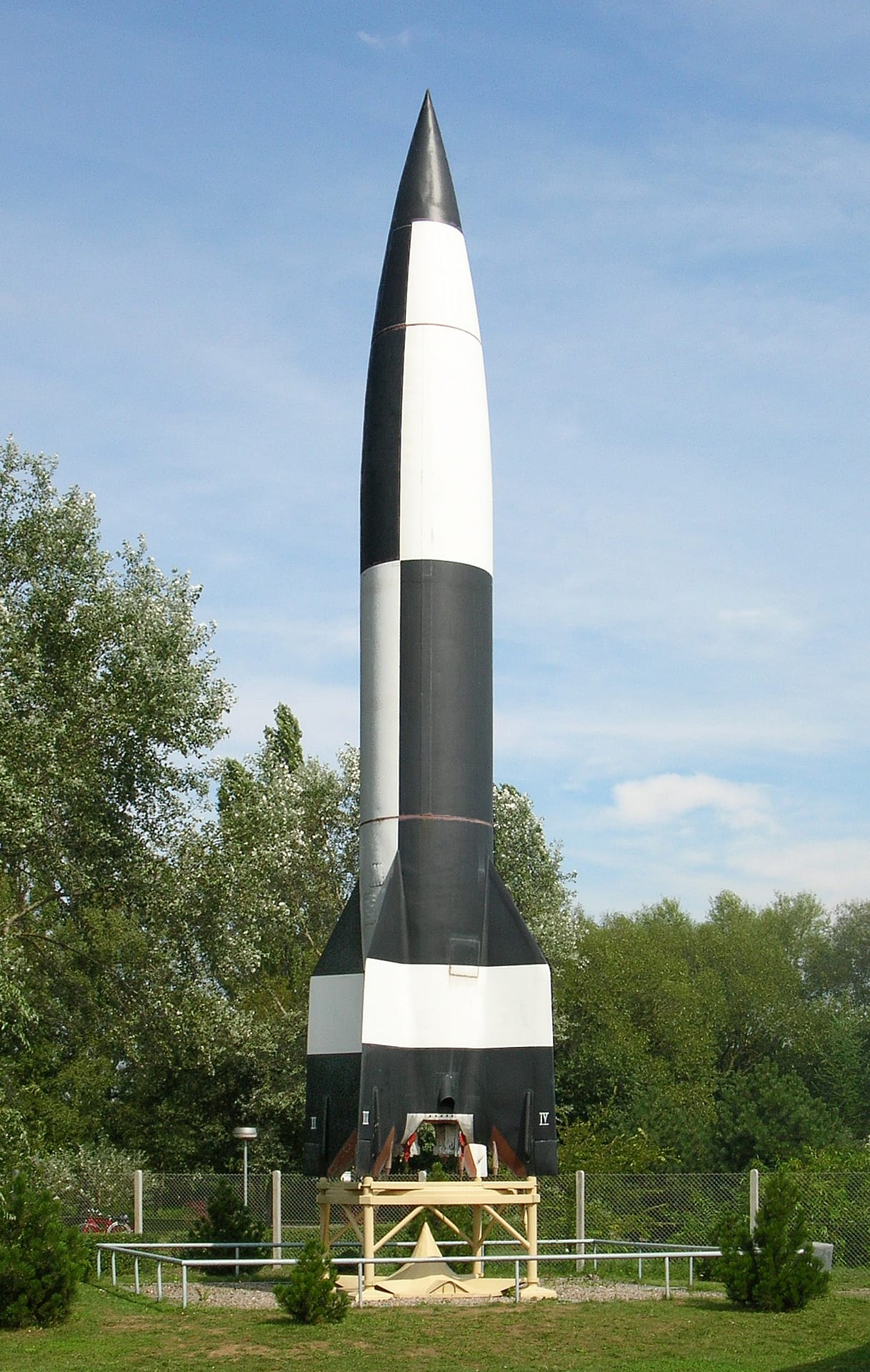
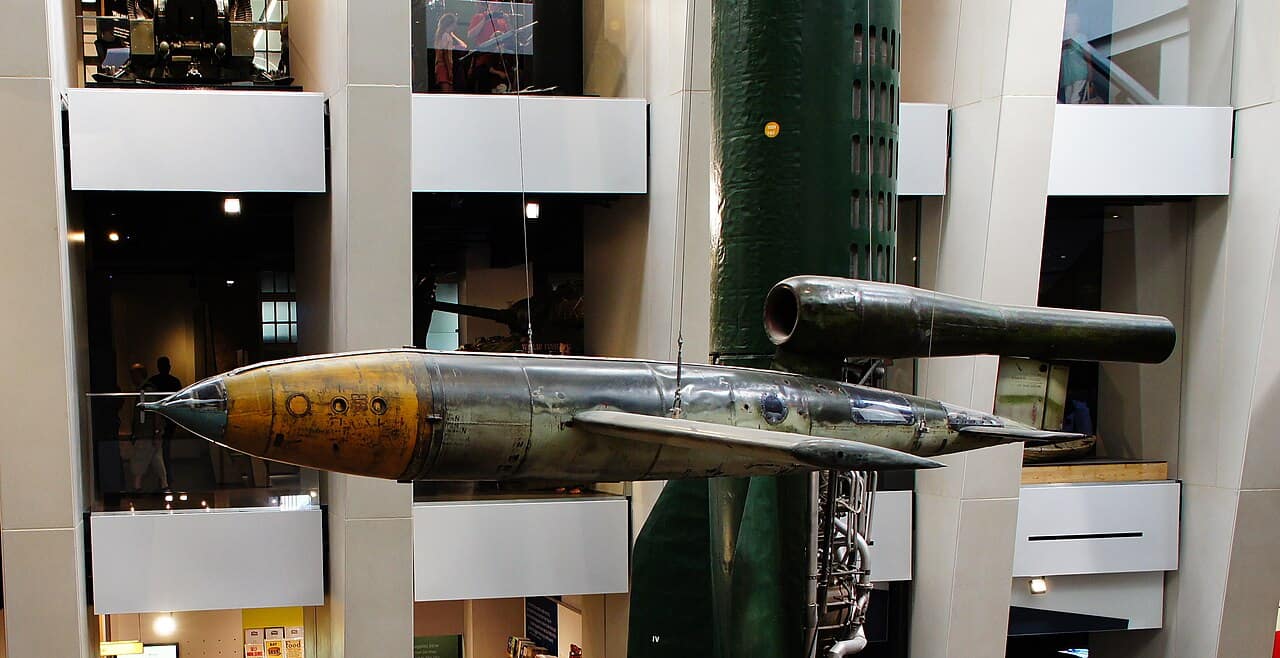
The V-2 rocket. This was the one that actually worked — and the one that should trouble us most. The V-2 (or A4) was the world’s first long-range guided ballistic missile: a supersonic rocket that fell out of the sky without warning and that no defence of the day could intercept. First fired in anger in September 1944, more than 3,000 were launched at London, Antwerp and other cities. Its true horror lay in its making — the V-2 was assembled by concentration-camp prisoners in the underground Mittelwerk, where more people died building the rocket than were ever killed by it.
The V-1 flying bomb. Its cruder cousin, the pulsejet-powered V-1 — the “buzz bomb” or “doodlebug” — announced itself with a distinctive droning growl. When the engine cut out, the silence meant it was falling. Unlike the V-2, the V-1 was slow enough to fight: fighters, anti-aircraft guns and barrage balloons all brought them down, and a few daring pilots learned to tip them off course with a wingtip.
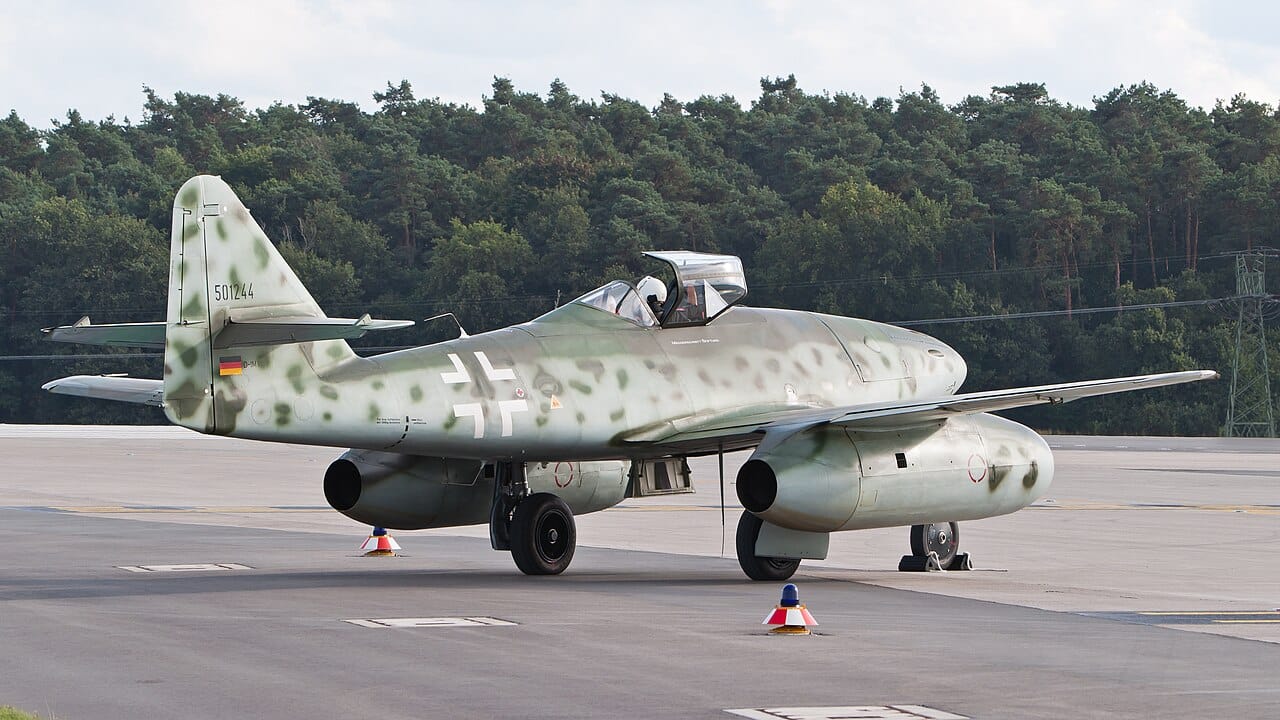
The Messerschmitt Me 262. Not every wonder-weapon was a fantasy. The Me 262 was the world’s first operational jet fighter, and it was genuinely a generation ahead — fast enough to slash through Allied bomber formations almost at will. But it came too late and in too few numbers, hobbled by short-lived engines and a chronic shortage of fuel and trained pilots. A war-winner on paper; a footnote in practice.
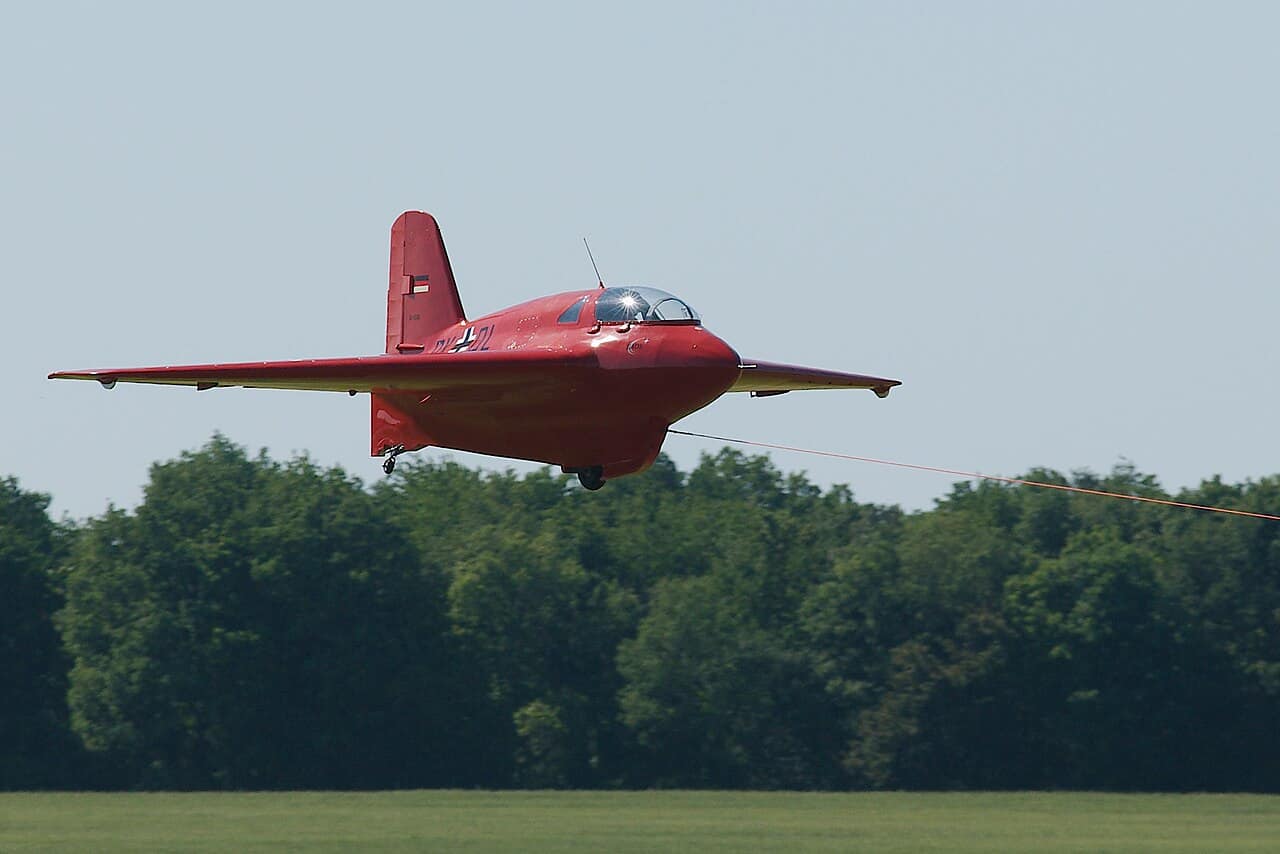
The Messerschmitt Me 163 Komet. Stranger still was this tiny rocket-powered interceptor, which could climb to altitude at a speed nothing else could match. The trouble was everything else: its volatile fuels could dissolve a careless pilot or explode on a hard landing, its powered endurance was measured in minutes, and it glided home with no second attempt. It killed an alarming number of its own pilots.
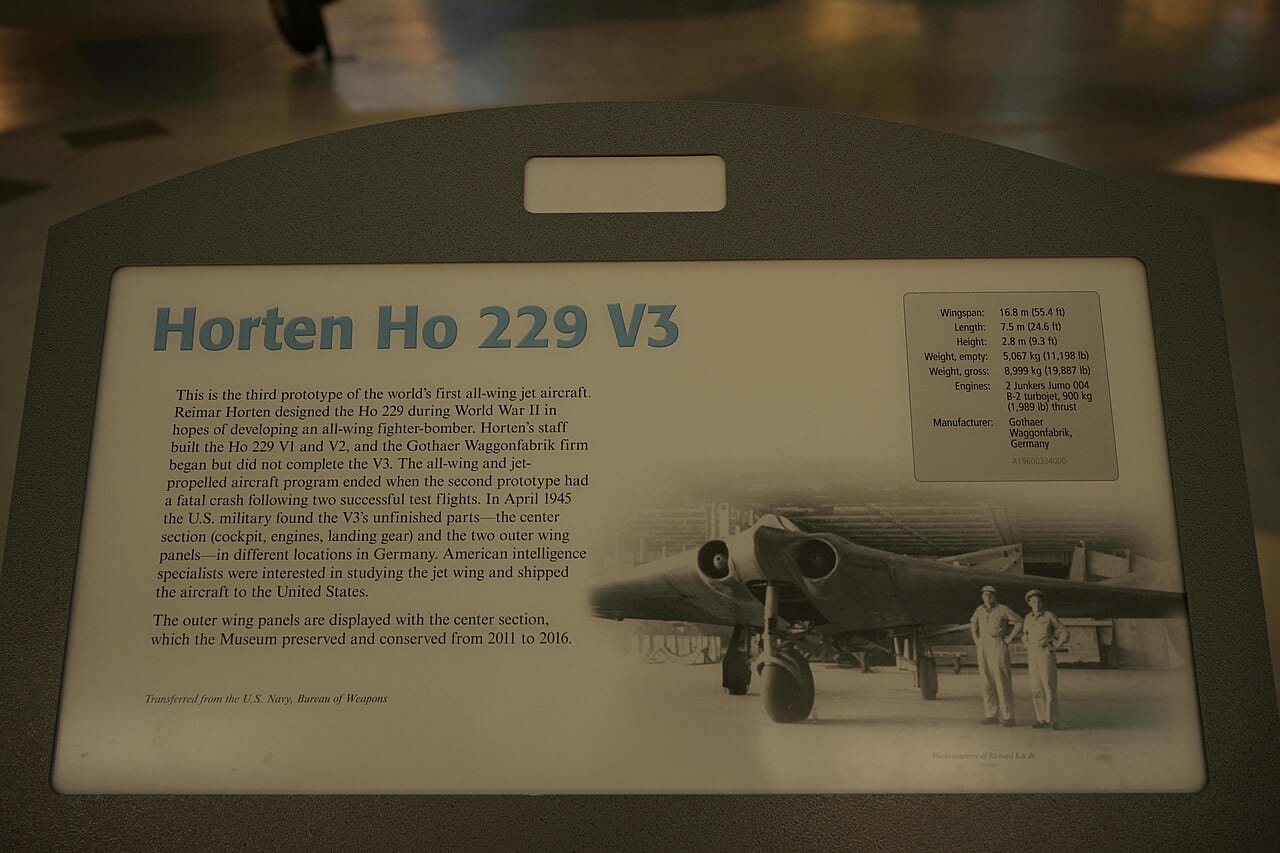
The Horten Ho 229. Perhaps the most prophetic of all was this jet-powered flying wing, whose smooth, tailless shape looks unsettlingly modern. Designed by the Horten brothers, it flew only a handful of times before the war ended, and it is often described as a proto-stealth aircraft. The single surviving airframe sits today in the Smithsonian’s collection, looking like something that escaped from the wrong decade.
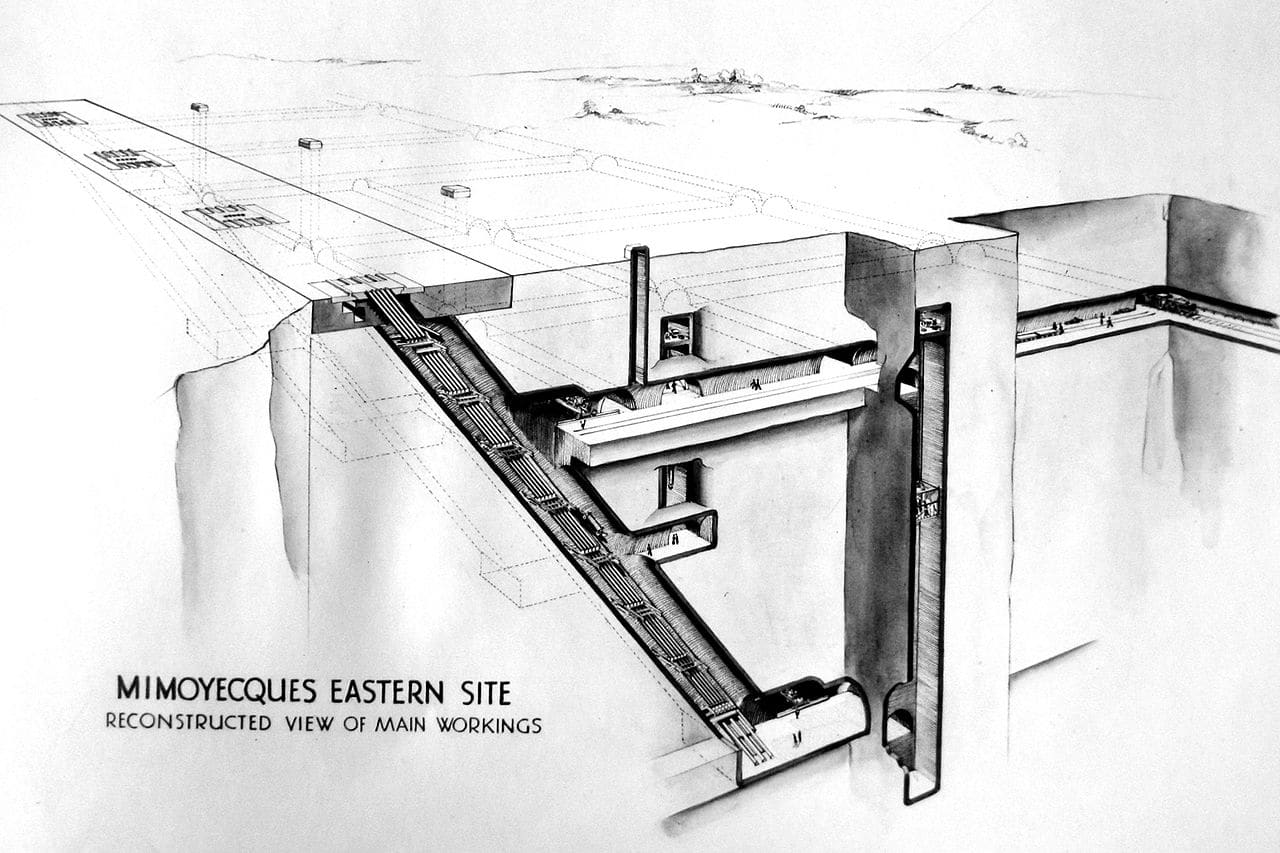
The V-3 supergun. And then there was a weapon so ambitious it bordered on the absurd. The V-3 was to be an enormous multi-chambered “centipede” gun, its long barrel fed by dozens of secondary charges firing in sequence to fling shells clear across the Channel into London. An entire bunker complex was tunnelled into a hillside at Mimoyecques in northern France to house a whole battery of them. It never fired a shot at London — RAF bombing, including the giant Tallboy “earthquake” bombs, wrecked the site before it could open fire.
The reel above brings a few of these machines vividly back to life.
Why So Many Wonder-Weapons?
The flood of Wunderwaffen was driven by a toxic mix: genuine engineering talent, a leadership convinced that a single miracle weapon could reverse the war, and a propaganda machine that needed something to promise a battered population. Most of these projects simply drained resources that Germany could not spare. A handful — the V-2 rocket, the jet fighter — really did point to the future. The rest are a monument to ambition gone mad.
Sources: Heritage Daily; The Collector; Warfare History Network; Wikipedia.
Verwandte Fragen
What were the Nazi wonder weapons?
The Wunderwaffen were Nazi Germany's experimental and fantasy weapons, pushed especially as the war turned against it. They ranged from genuinely built oddities like giant railway guns to outlandish paper schemes such as a 1,500-tonne land cruiser and an orbital sun gun.
Which Nazi wonder weapons were actually built?
Several were real, including the 80 cm Schwerer Gustav railway gun, the Karl-Gerät siege mortars, a one-off spherical Kugelpanzer, and the Krummlauf curved rifle barrel for shooting around corners. Most other wonder weapons never left the drawing board.
What was the Schwerer Gustav?
The Schwerer Gustav was an 80 cm (31.5-inch) German railway gun — the largest-calibre rifled weapon ever used in combat. One of the few Wunderwaffen actually built, it was enormous, slow to deploy and far too impractical to affect the war's outcome.
Did the Nazi wonder weapons work?
A handful functioned, but none changed the war. The pattern of the Wunderwaffen was ambition outrunning resources and reason: as defeat loomed, Germany poured effort into ever more extravagant designs, most of which stayed on paper or proved hopelessly impractical.
What was the Landkreuzer P.1500 Monster?
The Landkreuzer P.1500 Monster was a proposed 1,500-tonne German super-tank — so heavy it could never have moved usefully or crossed any bridge. It was never built, epitomising the fantasy end of the Nazi wonder-weapon programme.
Ähnliche Beiträge
Churchill’s Aircraft Carrier Made of Ice
The He 162 Volksjäger: Hitler’s Jet for Teenage Pilots
0 Kommentare