
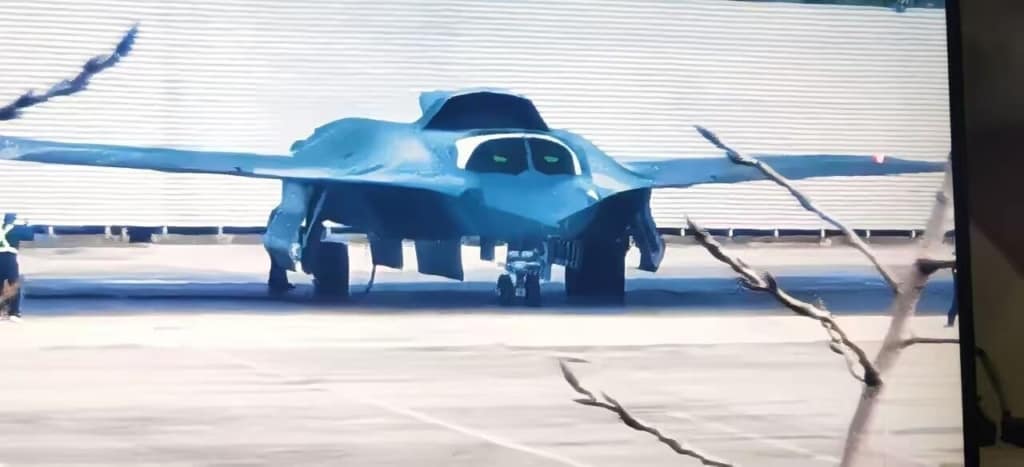
One question has shadowed China’s J-36 since it first flew: a tailless aircraft can be stealthy and stable, but can it actually manoeuvre? New footage circulating online appears to answer it. The big, three-engined sixth-generation prototype is seen pulling a sharp turn-climb — exactly the kind of agile manoeuvre analysts had doubted a tailless design could perform.
We have looked at this aircraft closely before — the three-engined stealth giant — and at its tailless sibling, the J-50. What is new here is the first public glimpse of the larger jet showing what it can do in the air.
Quick Facts
| Aircraft | Chengdu J-36 — China’s tailless, three-engine sixth-generation prototype |
| New development | Footage appears to show it performing a sharp turn-climb, indicating high manoeuvrability |
| Why it is notable | Tailless designs lack tailplanes for pitch control, which makes agility hard to achieve |
| How | Advanced flight-control software and, on the second prototype, 2D thrust-vectoring nozzles |
| First flight | 26 December 2024; a revised second prototype flew in 2025 |
| Status | Prototype / flight-test phase |
Why “tailless” is hard
A conventional fighter uses horizontal tailplanes to control pitch, provide stability and snap the nose around in a turn. A tailless aircraft deletes them — which is excellent for stealth, because it removes edges and shrinks the radar signature, and good for drag. The price is that it gives up the most direct tool for agility. Such an aircraft is aerodynamically unstable and can only be flown by computer, with control authority split across the wing surfaces and, increasingly, the engine exhaust.
Thrust vectoring fills the gap
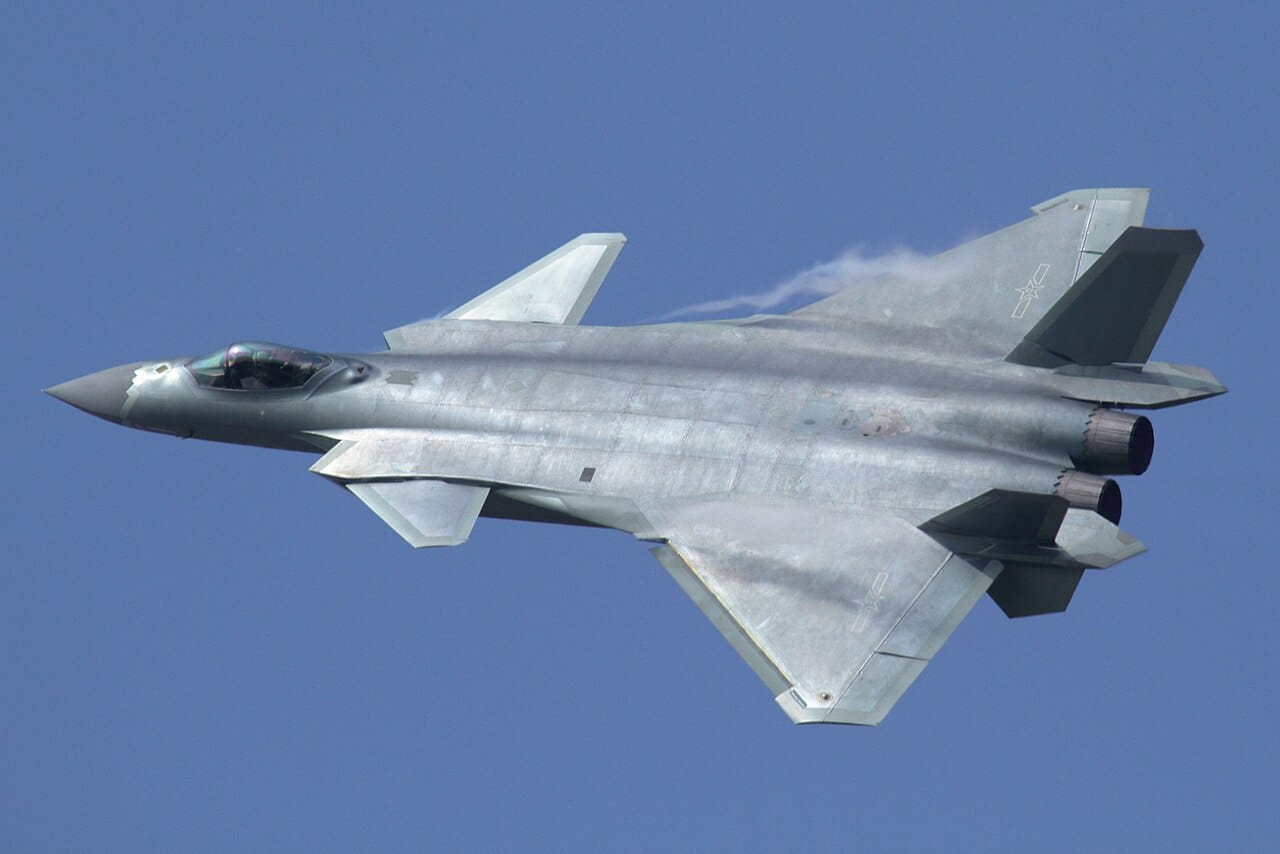
This is where the J-36’s revised second prototype matters. It reportedly introduced two-dimensional thrust-vectoring nozzles, reworked DSI intakes and a new landing-gear arrangement. Vectoring the exhaust restores much of the pitch and agility authority that the missing tailplanes would otherwise provide. The turn-climb in the latest footage is the first public hint that the approach is actually working in flight, rather than only on a designer’s simulation.
What it means — with caveats
A tailless, three-engine aircraft in the 50-tonne class that can also manoeuvre would be a serious statement of intent. The caveats, however, are real. This is footage interpreted by analysts, not a Chinese flight-test report; camera angles deceive, and a single clip proves far less than a controlled trial. The J-36 remains a prototype, and prototypes flatter to deceive.
Still, each appearance answers another doubt about whether China can field a credible sixth-generation fighter, and this one chips directly at the “it cannot turn” objection. The horizontal tail has defined the fighter silhouette for seventy years. The J-36 is betting it can be deleted without losing the fight — and the latest footage suggests that, so far, the bet is holding.
Sources: Military Watch Magazine; 19FortyFive; Interesting Engineering.
Related Questions
What is the Chengdu J-36?
The J-36 is a Chinese sixth-generation fighter prototype with a tailless airframe and three engines. It first flew publicly on 26 December 2024 and is being developed by the Chengdu Aircraft Corporation.
Why is a tailless fighter hard to manoeuvre?
Tailless aircraft remove the horizontal tailplanes that conventional fighters use to control pitch and provide stability. This improves stealth and drag but makes the aircraft aerodynamically unstable and harder to manoeuvre, requiring computer flight control and often thrust vectoring.
What did the new J-36 footage show?
Footage circulating online appears to show the J-36 performing a sharp turn-climb \u2014 an agile manoeuvre that analysts had questioned whether a tailless design could achieve. It is the first public indication of the type\u2019s manoeuvrability.
How does the J-36 manoeuvre without a tail?
It relies on advanced digital flight controls and, on its revised second prototype, two-dimensional thrust-vectoring nozzles that deflect the engine exhaust to provide the pitch and agility authority the missing tailplanes would otherwise supply.
When did the J-36 first fly?
The J-36 made its first public flight on 26 December 2024. A revised second prototype, with thrust-vectoring nozzles and other changes, was observed flying in 2025.
Is the J-36 in service?
No. The J-36 remains a prototype in the flight-test phase. The recent footage is an early demonstration of its capabilities, not evidence of operational service.

0 Kommentare