
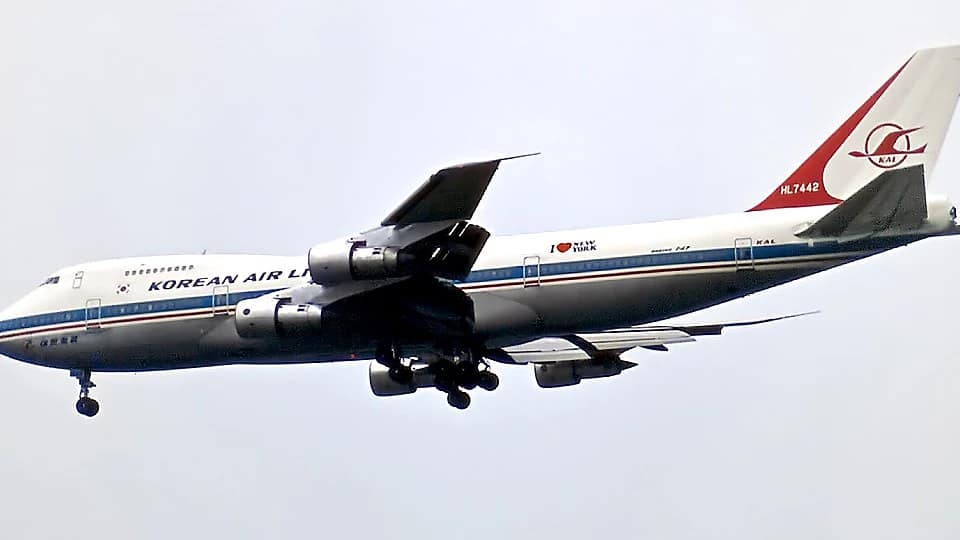
Gate 15 at John F. Kennedy International Airport, a few minutes past midnight on the last day of August 1983. A Boeing 747 sits in the floodlights, doors open, while 246 passengers file aboard: businessmen bound for Taipei and Hong Kong, honeymooners, grandparents, and 22 children under the age of twelve. Somewhere near the front sits Larry McDonald, a sitting United States congressman from Georgia. The cabin lights dim. Korean Air Lines Flight 007 lifts off into the summer night, 35 minutes late, and turns toward Alaska.
At Anchorage the jet refuels while a fresh crew comes aboard. Captain Chun Byung-in is one of the airline's most experienced pilots, with more than 10,000 flying hours. At 4:00 a.m. local time he lines the aircraft up on the runway and departs for Seoul, out over the Bering Sea on route Romeo 20, an airway that at one point passes within about 20 miles of Soviet airspace off the Kamchatka Peninsula.
Nobody aboard knew it, but the aircraft was already beginning to drift. Not dramatically. Just a few miles at first, the width of a small town, growing quietly wider with every hour of darkness.
Quick Facts
- 1 September 1983: Korean Air Lines Flight 007, Boeing 747-230B HL7442, New York JFK to Seoul via Anchorage
- 269 aboard, no survivors: 246 passengers (22 of them children under 12) and 23 crew
- Among the dead: US Congressman Larry McDonald of Georgia
- Cause of the deviation (ICAO): autopilot left in HEADING mode; the INS course was never captured
- Shot down by a Soviet Su-15 flown by Major Gennadi Osipovich with two missiles near Moneron Island
- The USSR secretly recovered the flight recorders in October 1983 and hid them until 1992; the tapes reached ICAO in January 1993
- On 16 September 1983, President Reagan directed that GPS be made freely available for civilian use once operational
The Autopilot That Never Locked On
The 747's autopilot had several lateral modes, and two of them mattered that night. HEADING simply held a compass course. INS followed the flight-planned waypoints stored in the inertial navigation system. There was a catch, and it was an unforgiving one: if the pilots armed INS while the aircraft was more than 7.5 nautical miles from the programmed track, the system would never capture it. The autopilot would keep flying the old heading indefinitely, and nothing in the cockpit shouted a warning.
That, investigators from the International Civil Aviation Organization later concluded, is almost certainly what happened. Either the crew never switched from HEADING to INS after departure, or they switched too late, when the aircraft had already slipped outside the capture window. Radar near Anchorage showed Flight 007 about six nautical miles off track within minutes; by King Salmon, Alaska, it was twelve. No one on the ground noticed in time, and no one in the cockpit ever seemed to realize it at all.
Green Dot Aviation reconstructs the navigation error that carried Flight 007 into Soviet airspace.
For five hours the jumbo flew on through the dark, its deviation swelling to hundreds of kilometres, its crew calmly reporting positions they did not actually occupy. And the sky they were drifting into was one of the most dangerous on Earth. The autumn of 1983 was among the coldest stretches of the entire Cold War: the Soviet leadership genuinely feared a surprise attack, and an American RC-135 reconnaissance plane had been circling off Kamchatka that very night, watching for a Soviet missile test.
When the unidentified blip crossed into the buffer zone off Kamchatka, Soviet fighters scrambled and found nothing; a key warning radar had reportedly been out of action for days. The 747 crossed the peninsula untouched, flew out over the Sea of Okhotsk, and then, near dawn, approached Soviet territory a second time, over the island of Sakhalin. This time the interceptors were waiting.
Two Rows of Windows
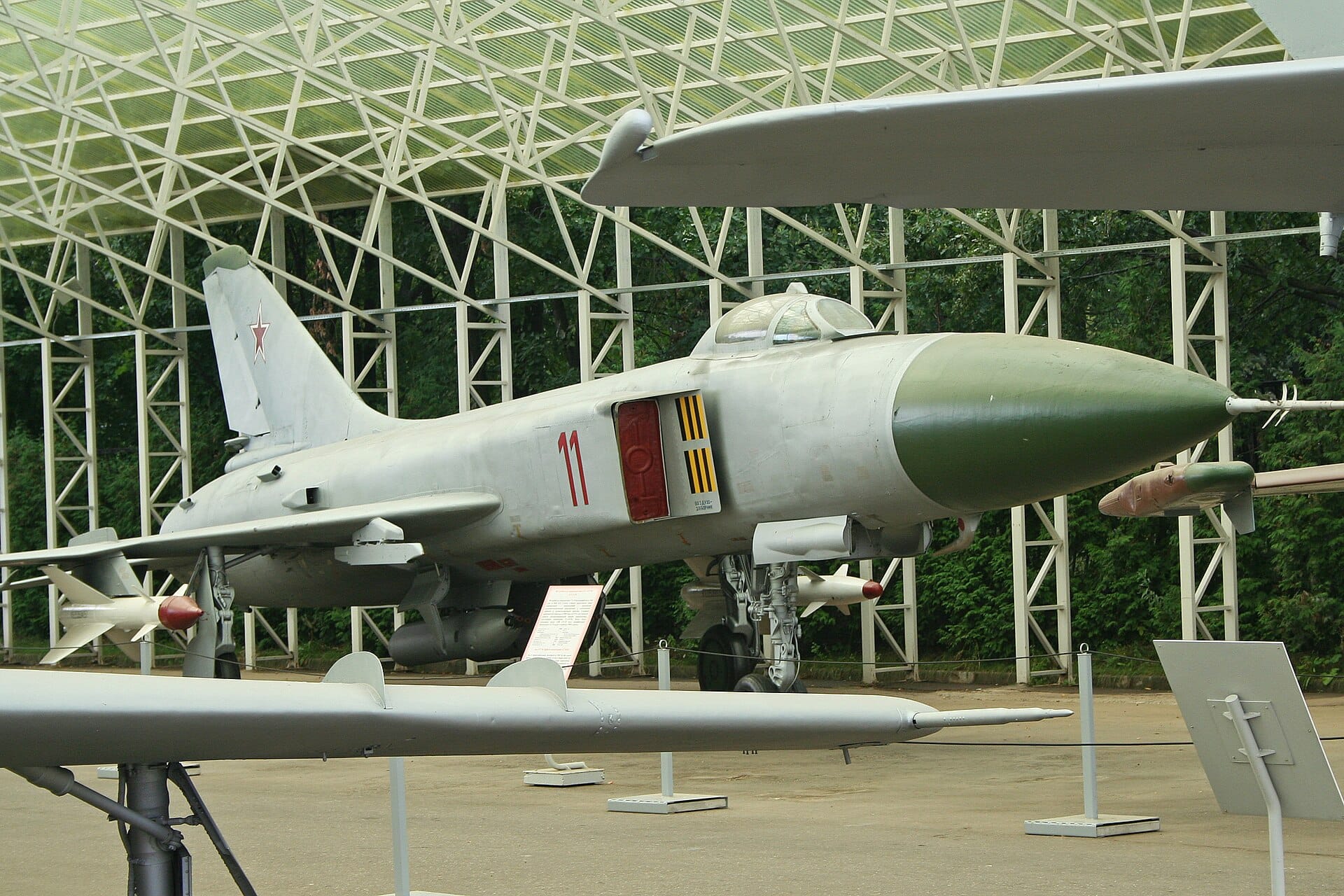
Major Gennadi Osipovich lifted his Su-15 off from Dolinsk-Sokol air base and was vectored onto the intruder in the pre-dawn blackness. He pulled alongside, 150 to 200 metres away, and saw blinking navigation lights and a double row of glowing windows. He fired warning bursts from his cannon, but the shells were armour-piercing rounds, not tracers, all but invisible in the night. In the cockpit ahead, nothing changed.
At that same moment, in one of history's cruellest coincidences, Flight 007 asked Tokyo control for a routine climb to save fuel. As the 747 rose and slowed, Osipovich's faster jet overshot. To the Soviet ground controllers, the lumbering airliner appeared to be manoeuvring evasively, and it was minutes from escaping into international airspace. The order came up from the ground: destroy the target.
At 18:26 UTC, Osipovich launched two missiles. At least one detonated near the tail. The crew, wounded aircraft still answering partially to their hands, radioed a descent and held on for twelve more minutes before the 747 spiralled down over the small island of Moneron and broke apart above the sea. All 269 people aboard died. Years later, Osipovich would insist he had recognized a Boeing but believed it was a military plane in disguise; he never expressed regret.
The Lie That Lasted Nine Years
For days, Moscow said nothing at all, then claimed an unidentified plane had simply vanished from radar. Only under the weight of intercepted radio traffic, played aloud at the United Nations Security Council, did the Soviet Union admit its pilot had fired, insisting the airliner had been on an American spy mission. In Washington, President Reagan went on national television.
President Reagan's 5 September 1983 address on the shootdown, from the Reagan Library.
Beneath the surface of the sea, a second deception was under way. Soviet divers found the wreckage within two weeks, and by late October 1983 the flight recorders had been quietly flown to Moscow, a fact recorded in a memo from the KGB chief and the defence minister. Publicly, the Soviets let American, Japanese and South Korean ships search a decoy area for weeks. The families were told nothing. The recorders, and the answers inside them, stayed hidden for nine years.
It took the collapse of the Soviet Union to break the silence. In 1992 President Boris Yeltsin revealed the secret memos, and that November he handed the recorder containers to South Korea's president. The tapes themselves reached ICAO in Paris on 8 January 1993. Their contents confirmed the quiet, human explanation: a crew that never realized the autopilot was steering them by compass heading alone, chatting normally until the moment the missile struck. Both recorders stopped 104 seconds later.
What 269 Lives Changed
Sixteen days after the shootdown, the Reagan administration announced that the Global Positioning System, then still a military constellation under construction, would be made freely available for civilian use once operational, so that no airliner need ever again wander blindly across a border. That promise, reaffirmed by later presidents and fully realized when civilian signal degradation ended in 2000, is part of why the navigation display in every cockpit and every pocket today knows exactly where it is.
ICAO's investigations reshaped procedures too: better tracking of flights leaving Alaska, and a hard international lesson about intercepting civil aircraft. Osipovich lived out his years on a military pension, giving interviews until his death in 2015, still certain he had done his duty.
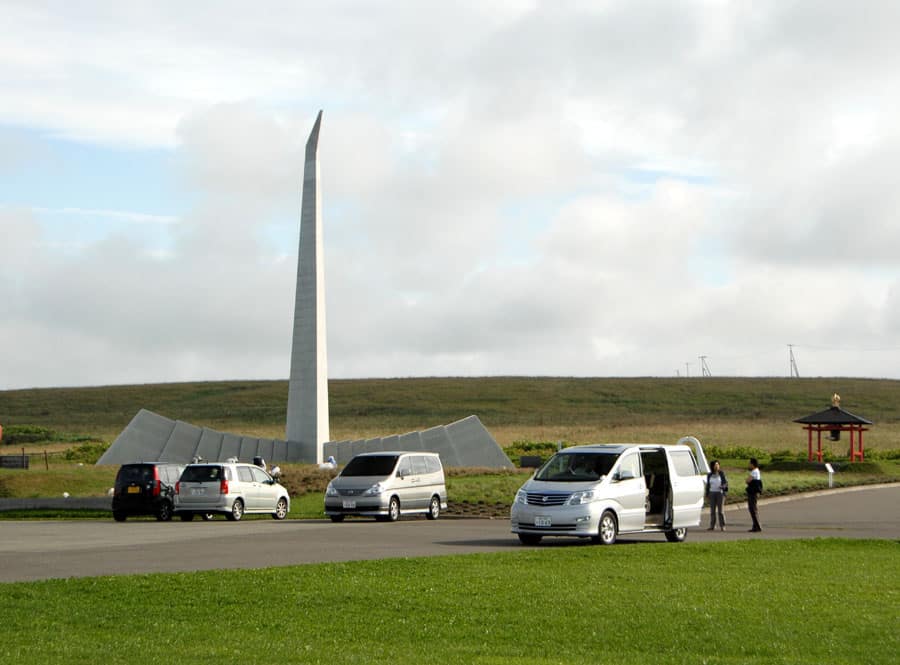
On the northern tip of Japan, at Cape Sōya, that granite tower rises above the grass. On a clear day you can see Sakhalin from its base. The water between holds Flight 007, the airliner that drifted, mile by silent mile, into the wrong sky, carrying 269 people who were simply trying to get home.
Sources: Wikipedia, ICAO 1993 fact-finding report, The New York Times, Ronald Reagan Presidential Library
Related Questions
What happened to Korean Air Lines Flight 007?
On 1 September 1983 a Soviet Su-15 interceptor shot down Korean Air Lines Flight 007, a Boeing 747 that had strayed into Soviet airspace near Sakhalin. All 269 people aboard died — 246 passengers and 23 crew. The airliner had drifted hundreds of kilometres off its planned course.
Why did KAL 007 stray off course?
According to the ICAO investigation, the 747's autopilot was left in HEADING mode, holding a fixed compass course, and never captured the programmed inertial navigation (INS) route. The small initial error grew until the aircraft was deep inside Soviet airspace.
Who shot down KAL 007?
The airliner was shot down by a Soviet Su-15 interceptor flown by Major Gennadi Osipovich, who fired two missiles near Moneron Island. The Boeing 747 was destroyed and crashed into the sea, killing everyone aboard.
How many people died on KAL 007?
All 269 people aboard were killed: 246 passengers — 22 of them children under 12 — and 23 crew. Among the dead was US Congressman Larry McDonald of Georgia, who was travelling to Seoul.
How is KAL 007 connected to GPS?
After the disaster, on 16 September 1983 President Reagan directed that the GPS satellite navigation system be made freely available for civilian use once operational. A tragedy blamed partly on a navigation error thus helped open GPS to the world.
What happened to the KAL 007 flight recorders?
The USSR secretly recovered the flight recorders in October 1983 and concealed them for years. The tapes were only handed to ICAO in January 1993, after the Soviet Union's collapse, finally clarifying what had happened in the cockpit.
Have other civilian airliners been shot down by the military?
Tragically, yes. In 1988 the US Navy cruiser USS Vincennes shot down Iran Air Flight 655 over the Persian Gulf, mistaking the airliner for an attacking fighter and killing all 290 aboard — a grim parallel to KAL 007.
Why was the KAL 007 shootdown so significant in the Cold War?
Coming in the tense autumn of 1983, the destruction of a civilian airliner inflamed US–Soviet relations at a dangerous moment. Just weeks later, a Soviet officer's decision to doubt a false missile-attack alert may have helped avert catastrophe.
0 Kommentare