
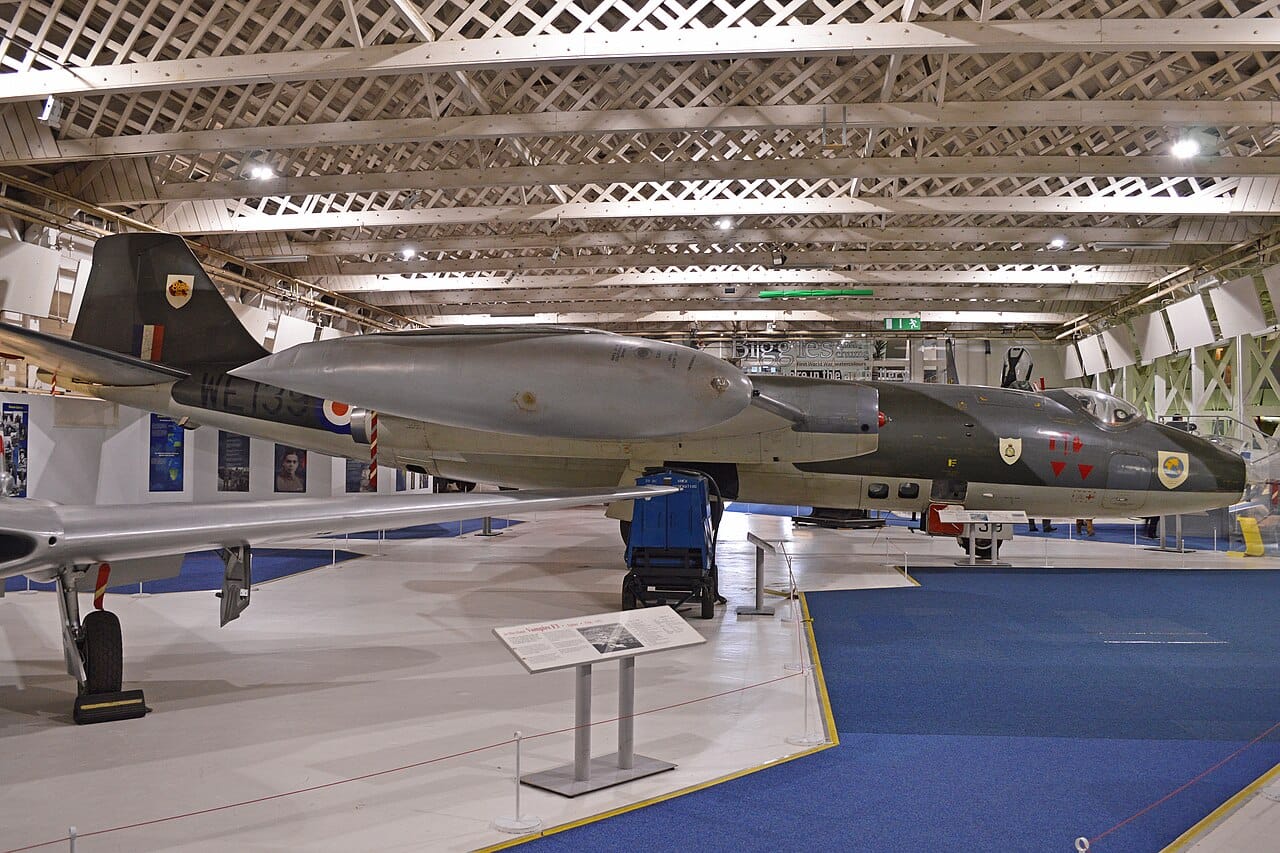
In May 1949, a test pilot was reminded that the day chosen for his aircraft’s maiden flight — the 13th — fell on a Friday, and that no one would blame him for waiting. He was unmoved. The aeroplane he flew that day went on to serve for fifty-seven years in the Royal Air Force. And, astonishingly, a version of it is still flying research missions in 2026.
Der English Electric Canberra was Britain’s first jet bomber, and one of the most successful aircraft the country ever built. Simple, tough and able to fly higher than the fighters sent to catch it, it just kept finding new jobs to do — decade after decade.
Kurzinfo
| Flugzeug | English Electric Canberra — Britain’s first jet bomber |
| Erster Flug | 13 May 1949 — pilot Roland “Bee” Beamont |
| Designer | W. E. W. “Teddy” Petter |
| Motoren | 2 × Rolls-Royce Avon turbojets |
| Superpower | Extreme altitude — it out-climbed contemporary fighters |
| Records | First unrefuelled jet Atlantic crossing (1951); 70,310 ft (1957) |
| Still flying | As NASA’s WB-57, three examples fly today |
If the aeroplane is fit to fly
When designer Teddy Petter warned chief test pilot Roland Beamont that first flight was scheduled for Friday the 13th, Beamont brushed the superstition aside with a line that has become part of Canberra lore.
It was. The Canberra’s secret was deceptively simple: a big, broad, unswept wing that gave it enormous lift and let it climb far above the reach of 1950s interceptors. It was not the fastest jet, but at altitude it was almost untouchable — ideal for high-level bombing and, especially, photo-reconnaissance.

The story of Britain’s first jet bomber.
The jet that stole the show
In February 1951 the Americans held a fly-off to replace their ageing bombers. The RAF flew a Canberra across the Atlantic to take part, crossing in four hours and forty minutes — the first unrefuelled Atlantic crossing by any jet. It stole the show and won the contract, and the United States built the Canberra under licence as the Martin B-57 — the only foreign combat aircraft America adopted as its own in that era.
The type spread across the world, serving more than twenty air forces and fighting in Suez, over the Indian subcontinent, in Vietnam and even, on the Argentine side, in the Falklands. High-flying reconnaissance Canberras did the same job the U-2 Dragon Lady would become famous for, peering down from the edge of the atmosphere. In 1957 a rocket-boosted Canberra zoom-climbed to 70,310 feet, a world altitude record.
Still flying at 77
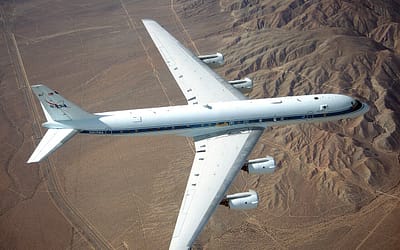
The RAF finally retired its last Canberras in June 2006 — fifty-seven years after that Friday-the-13th first flight, an almost unheard-of service life. But the story did not end there. The B-57 lineage lives on at NASA, whose high-altitude WB-57s still climb to the stratosphere to do science no other crewed aircraft can.

Think about that. A design first flown in 1949, in the age of propeller airliners and Spitfires still in squadron service, is still leaving the runway in 2026. Few aircraft have ever earned the word “timeless.” The Canberra is one of them.
How the Canberra conquered the world’s air forces.
The Canberra at the edge of space.
Sources: NASA; The Canberra Association; BAE Systems heritage; Vintage Aviation News.
0 Kommentare