
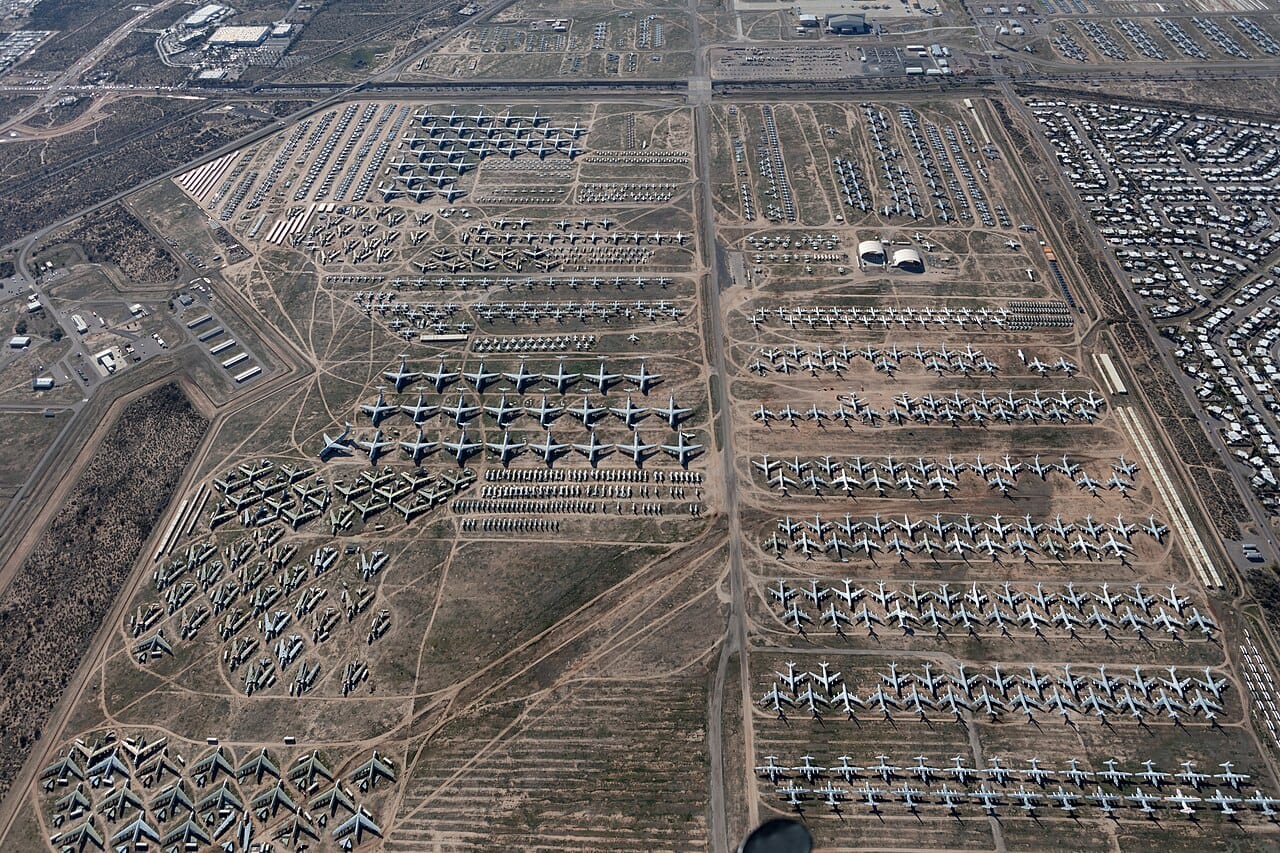
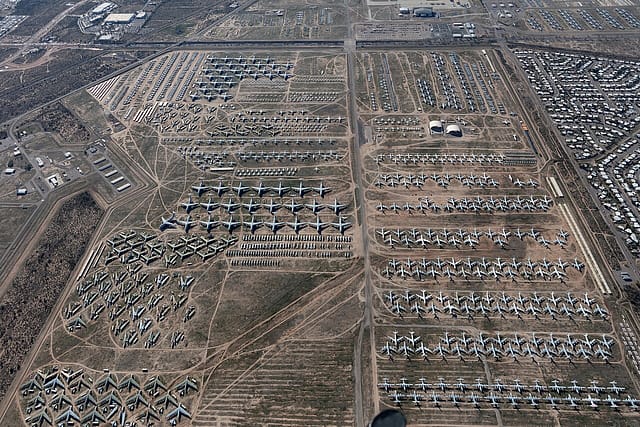
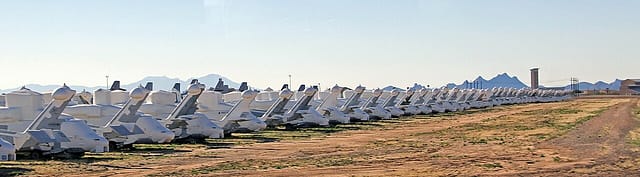
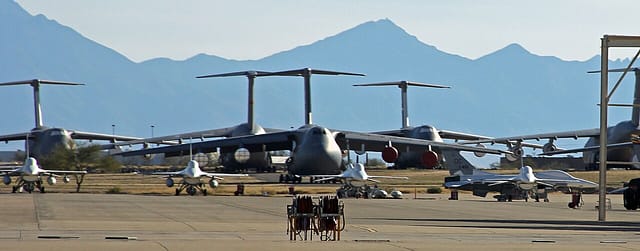
From the air it looks like a filing system for aeroplanes. Row upon row of them, wingtip to wingtip, laid out across ten square kilometres of Arizona desert in lines so straight they look drawn. Bombers here. Fighters there. Transports over there. Around four thousand aircraft, parked on bare earth, baking.
Everyone calls it the Boneyard. The people who run it find that mildly irritating, because a significant number of these aircraft are going to fly again.
Kurzinfo
Proper name: the 309th Aerospace Maintenance and Regeneration Group, or AMARG
Wo: Davis-Monthan Air Force Base, Tucson, Arizona
Inventory: roughly 4,000 aircraft, with some counts above 4,400
Customers: Air Force, Navy, Marine Corps, Army, Coast Guard, NASA and allied governments
Why Tucson: low humidity, little rain, alkaline soil and 2,550 feet of altitude, which together suppress corrosion
Why no tarmac: the ground is hard enough to park and tow heavy aircraft on directly
Started: 1945, storing B-29s and C-47s after the Second World War
Renamed AMARG: 2007, when it moved under the 309th Maintenance Wing
Why Arizona and nowhere else
The site was not chosen for space. There is plenty of empty land in America. It was chosen for chemistry.
Aluminium airframes are destroyed by moisture and salt. Park a fleet on a coastal airfield and within a few years you have four thousand corrosion problems. Tucson sits at 2,550 feet in a desert with very low humidity and very little rainfall, and the soil is alkaline rather than acidic, so it does not attack metal from below either.
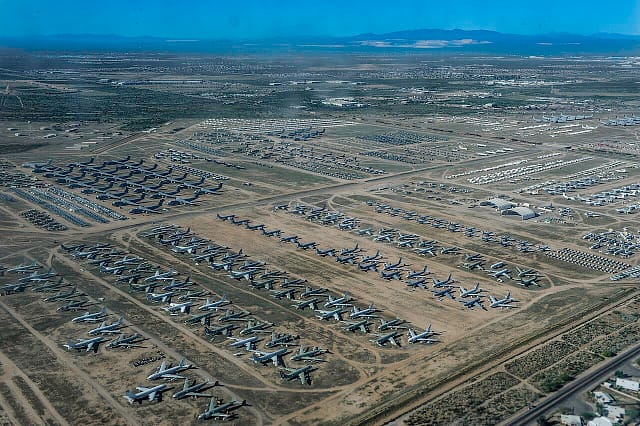
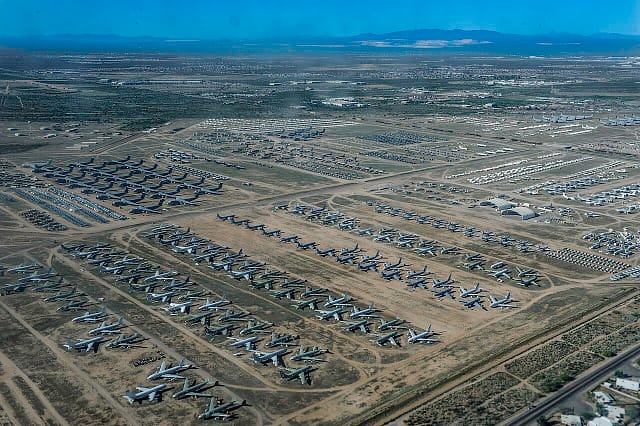
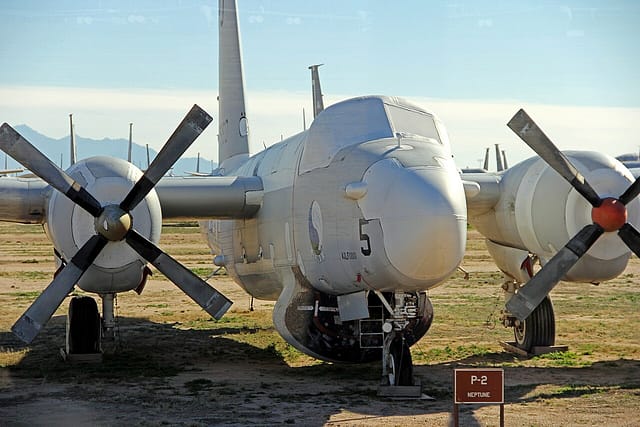
The soil has a second useful property. It is hard-packed caliche, firm enough to take the weight of a B-52 without paving. That is why the photographs look the way they do: the aircraft are parked directly on the desert floor, because building ten square kilometres of concrete apron would have cost more than the aircraft.
It is not a graveyard, and they will tell you so
The popular image of the place is wrong in a specific way. It is not a scrapyard with good weather. It is a storage and regeneration facility, and the distinction is the entire point of its existence.
His counter to that, in the same interview, was blunt: at AMARG, he said, they generate aircraft, for the Defense Department, for NASA and for multiple foreign governments.
Aircraft arrive and are sorted into categories. Type 1000 is long-term inviolate storage: the aircraft is kept complete, and nothing may be removed from it without permission from the relevant programme office. These are the ones the nation might genuinely need again. Type 2000 is parts reclamation, where the airframe is a warehouse of components for aircraft still flying. Others are held for foreign military sales, waiting to be regenerated and handed to an ally.
How you mothball an aeroplane
Preparing an aircraft for the desert is a real engineering process, not simply parking it.
Fuel systems are drained and then refilled with lightweight oil, which is drained again, leaving a protective film on the inside of every tank and line. Guns, ejection seat cartridges and any classified equipment come out. Every opening, intake, exhaust and gap is sealed against dust, insects and rodents.
Then comes the white coating that makes boneyard photographs look the way they do. It is a vinyl compound sprayed on in two layers, black first and then white over the top. The black seals. The white reflects sunlight, and it matters more than it sounds: a sealed cockpit in Arizona sun can otherwise reach temperatures that destroy instruments, wiring and seals within a season.
The ones that come back
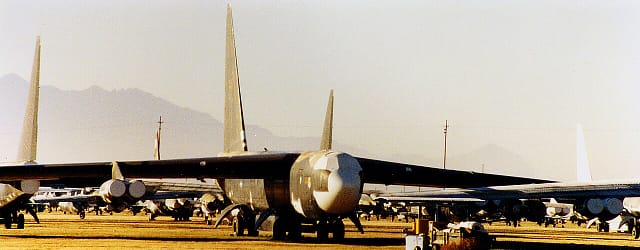
The best argument against the graveyard label is the B-52.
The Stratofortress fleet has been in service since the 1950s and is expected to remain so into the 2050s, which means the Air Force needs parts for an aircraft nobody has built since 1962. AMARG is where those parts come from. It is also, occasionally, where whole aircraft come from: airframes have been pulled out of storage, restored and returned to the active fleet.
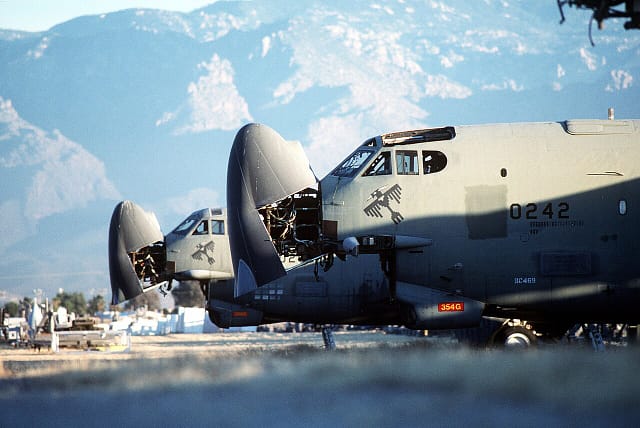
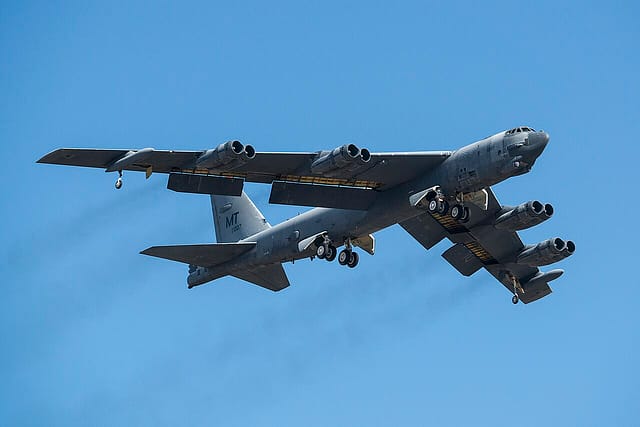
The commanders who run the place have spent years pushing back on the graveyard framing, because it misrepresents what the unit is funded to do.
Three words, and they cover work for the Defense Department, NASA and a list of allied air forces.
Reading the desert as a document
What makes AMARG genuinely interesting is not the storage. It is what the inventory tells you.
The composition of the Boneyard is a physical record of American defence policy. Every retired type that arrives in quantity marks a decision taken years earlier. Every aircraft held in inviolate Type 1000 storage represents somebody's judgement that a capability might be needed again. Every fleet stripped for parts is a bet that the remaining aircraft will fly long past their design life, which is a polite way of saying the replacement is late.
You could reconstruct a fair amount of the last eighty years of US airpower from an aerial photograph of that desert, if you knew what you were looking at.
The uncomfortable part
There is one more thing out there, and it has nothing to do with maintenance.
Under arms control agreements, verifying that bombers have actually been eliminated requires that the elimination be visible from orbit. So aircraft have been cut into pieces with a guillotine blade and the sections left in the open, arranged so that a satellite passing overhead can count them and confirm the treaty is being kept.
That is the least sentimental use of an aircraft imaginable. Not scrapped for value, not preserved for a museum, but dismembered and laid out to be photographed from space as evidence of good faith.
Four thousand aircraft sitting in a desert, some waiting to fly, some being slowly consumed to keep others flying, and some cut up specifically so that a foreign government can watch it happen. It is the most complete picture of what an air force actually is that exists anywhere.
Sources: 309th Aerospace Maintenance and Regeneration Group, Hill Air Force Base, Air and Space Forces Magazine, HistoryNet, airplaneboneyards.com, US Air Force.
0 Kommentare