
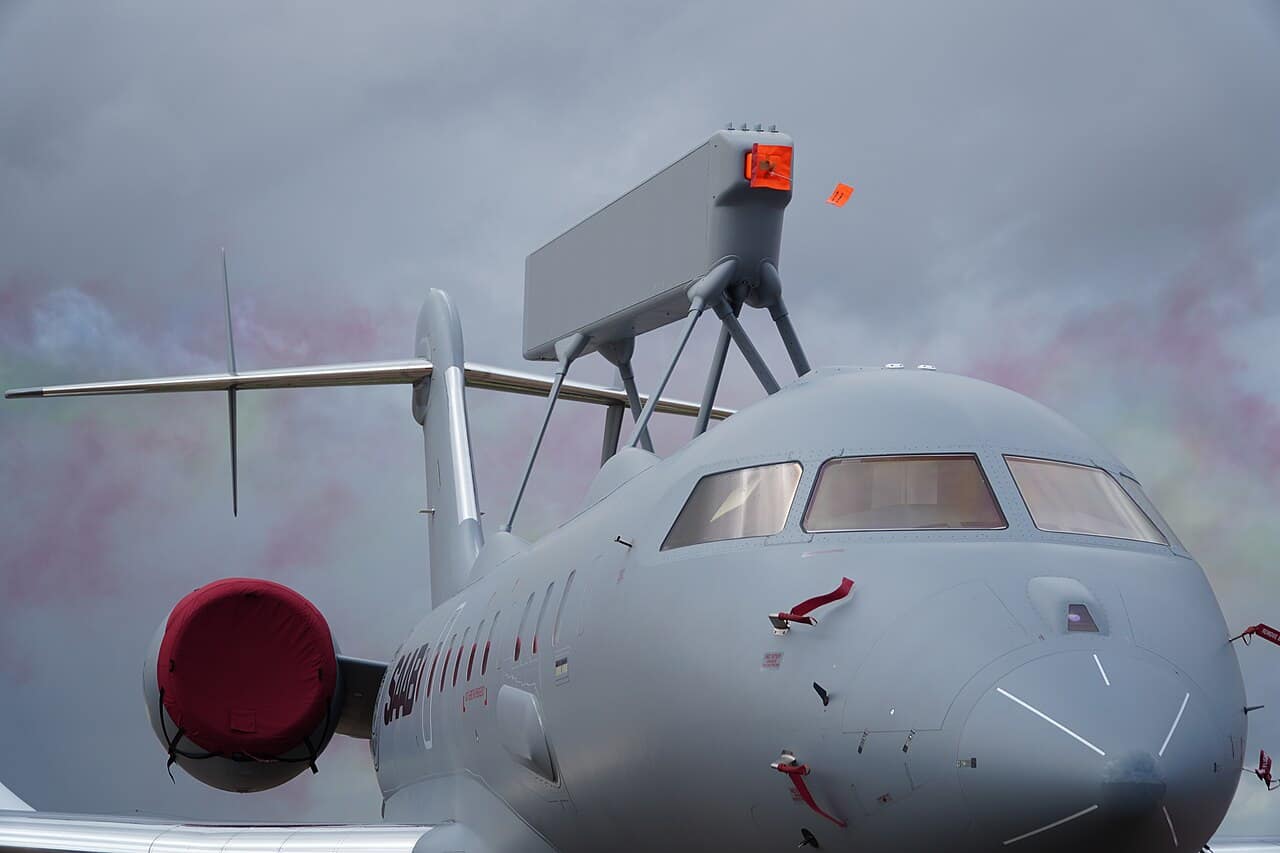
The order is worth SEK 10.1 billion — a little over one billion US dollars. It covers two of the most sophisticated surveillance aircraft flying today. And the customer? Saab will not say. Not the country, not the air force, not a single identifying detail.
On 27 July 2026 the Swedish defence group announced that an unnamed Middle East nation had ordered two GlobalEye Airborne Early Warning & Control aircraft, with deliveries scheduled from 2030. In a single sentence of corporate discretion, Saab closed the door on any follow-up questions.
Secrecy aside, the deal matters. It is the latest in a remarkable run of wins for an aircraft that, only a few years ago, had exactly one export customer.
Kurzinfo
- Flugzeug: 2 × Saab GlobalEye AEW&C
- Order value: SEK 10.1 billion (~US$1.04 billion)
- Angekündigt: 27 July 2026
- Customer: undisclosed Middle East nation
- Lieferungen: from 2030
- Platform: Bombardier Global 6000/6500 business jet
- Primary sensor: Erieye Extended Range radar
A radar plank on a business jet
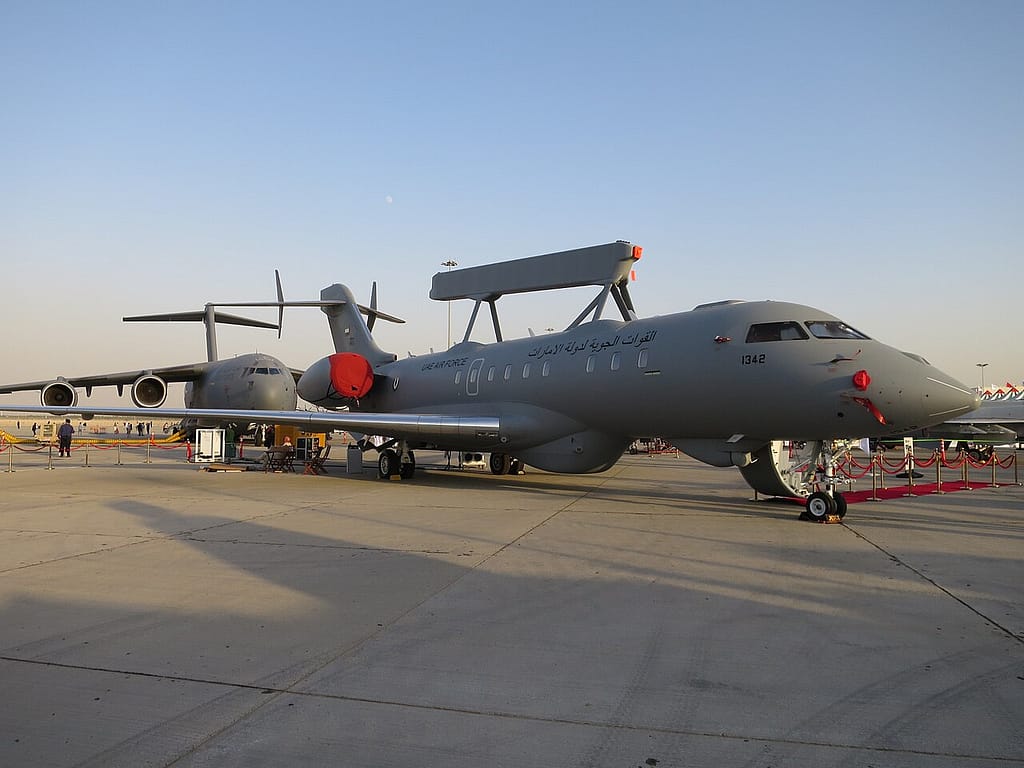
GlobalEye is Saab’s answer to the airborne early-warning problem, and it does not look like the flying-saucer AWACS most people picture. Instead of a rotating dome, it carries a long dorsal “plank” — the Erieye Extended Range radar — bolted to the spine of a Bombardier Global 6000/6500 business jet.
The result is an aircraft that can watch air, sea and land at the same time, feeding a multi-domain command-and-control system, while cruising at business-jet speed and altitude with business-jet running costs. It is smaller, newer and cheaper to operate than the Boeing E-3 Sentry it increasingly competes to replace.
That combination is exactly why the order book keeps growing — and why a customer that wants to stay invisible was still willing to spend a billion dollars.
From one customer to a crowd
For years the United Arab Emirates was the whole story. Abu Dhabi was the launch export customer; the first aircraft arrived in April 2020 and the fifth completed the fleet by September 2024. Then the dam broke.
Sweden’s own air force ordered three, across 2022 and 2024, with deliveries due from 2027. France ordered two in December 2025. Canada selected six in May 2026. And on 7 July 2026, a group of NATO allies confirmed they would jointly buy up to ten GlobalEyes to replace the alliance’s ageing E-3 Sentry fleet. Against that backdrop, a quiet two-jet order from an unnamed Gulf state is less an outlier than a continuation.

Johansson added that the contract “underscores our commitment to providing customers with mission-proven, multi-domain AEW&C capability.” The company’s only comment on the buyer was a flat refusal: “Due to the nature of the industry, circumstances concerning the customer and national security interests, no further information regarding this order or the customer will be provided.”
Why the silence?
Anonymity in a defence contract usually points to a politically sensitive buyer, a sensitive region, or both — and the Middle East in mid-2026 offers no shortage of either. An early-warning aircraft is a strategic asset: it tells rivals how far and how well a nation can see. Announcing who just bought two of them, and when they arrive, hands an adversary a planning calendar.
What is not secret is the trend. In under two years GlobalEye has gone from a niche Gulf export to the surveillance aircraft of choice for a widening circle of Western and Middle Eastern air forces. The buyers may not always want their names in print. The aircraft, increasingly, speaks for itself.
Saab’s official film on the GlobalEye AEW&C system and its multi-domain sensors.
Sources: Saab press release (27 July 2026); Jane’s; Quwa; Breaking Defense; The Defense Post.

0 Kommentare