
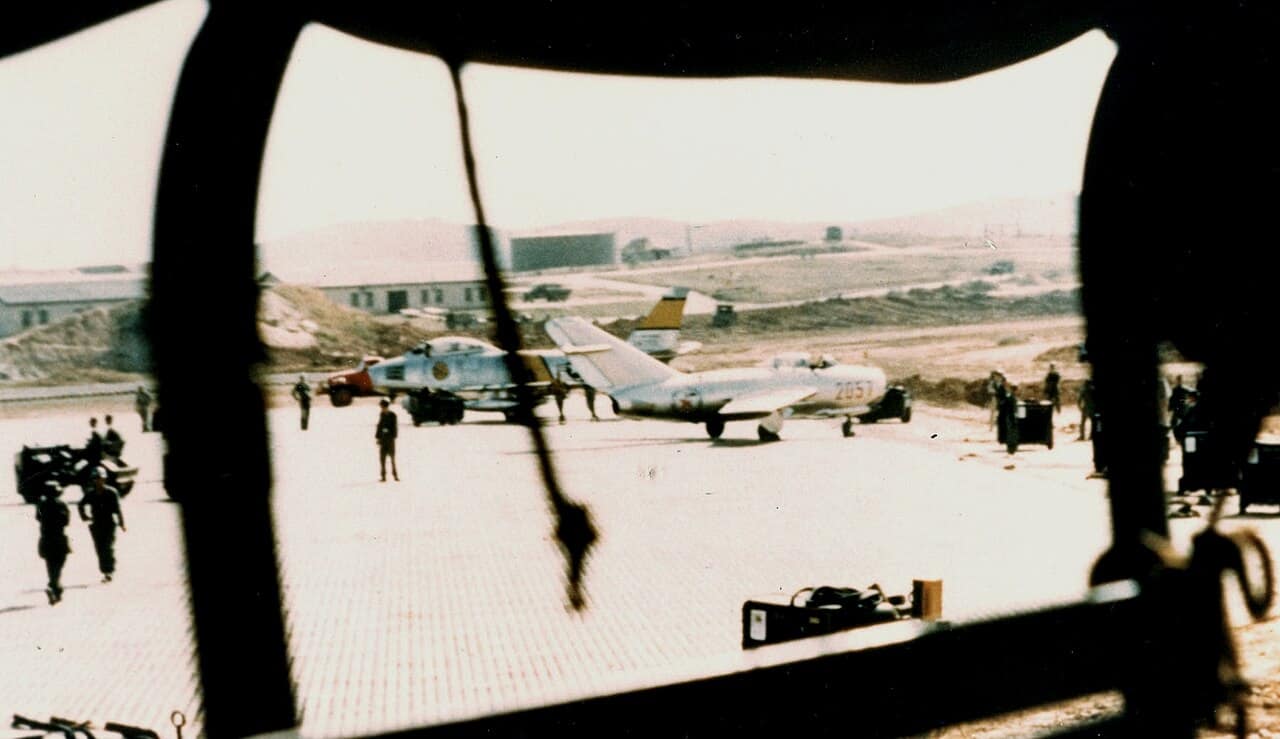
On the morning of 21 September 1953, a flight line at Kimpo Air Base watched a swept-wing jet swing onto the approach and took it for one of their own F-86 Sabres. It wasn’t. It was a Soviet-built MiG-15, still wearing North Korean red stars, flown by a 21-year-old enemy lieutenant named No Kum-Sok.
He landed the wrong way down the runway, nearly clipping a Sabre, taxied between two American jets, climbed out, tore the portrait of Kim Il Sung from his cockpit, and threw up his hands.
In seventeen minutes he had crossed from the world’s most closed society into the West — and handed the United States the prize it had chased for three years: an intact MiG-15. What he did not know was that he had also just earned a secret $100,000 bounty.
Kurzinfo
| Pilot | Senior Lt No Kum-Sok, North Korean air force, age 21 |
| Datum | 21 September 1953, weeks after the armistice |
| Flugzeug | MiG-15bis — later marked “616” by the USAF for testing |
| Route | Sunan, near Pyongyang, to Kimpo Air Base, South Korea |
| Flugzeit | About 17 minutes |
| Reward | Operation Moolah’s $100,000 — which No says he never knew about |
| The jet | Tested by US pilots incl. Chuck Yeager; now at the National Museum of the USAF |
| Later life | Emigrated in 1954, became engineer Kenneth H. Rowe |
An Anti-Communist Hiding in a Cockpit
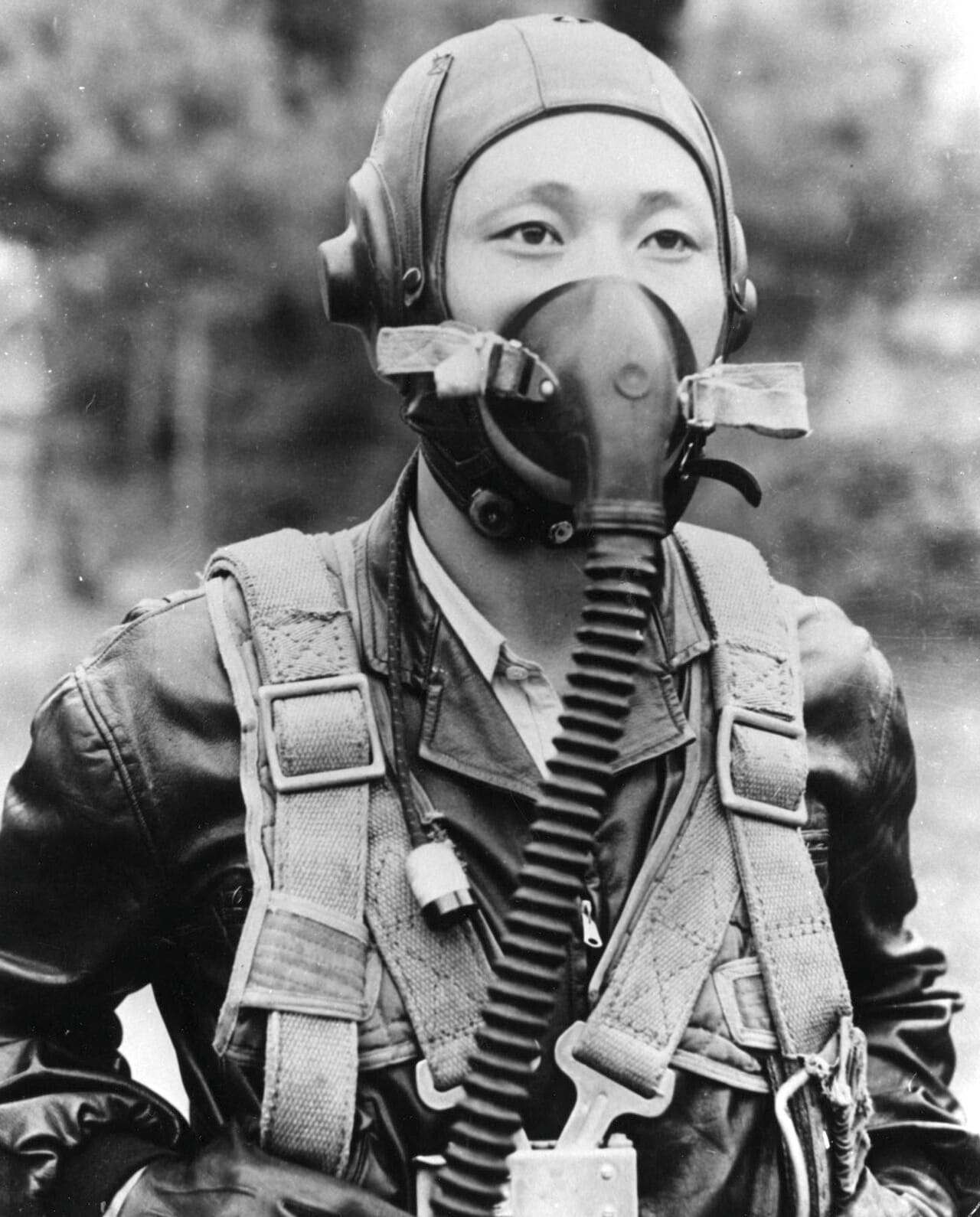
No Kum-Sok grew up quietly anti-communist under a regime where such views could get a man killed. To survive — and to fly — he buried them, talked his way into pilot training, and was sent to learn the MiG-15. By the war’s end he had flown scores of combat missions, expecting to keep fighting until he died.
Defection, he always insisted, was about escape, not money. The hard part was finding a moment when he was airborne, armed, and briefly beyond the reach of his own side.
Seventeen Minutes to Freedom
On that September morning he took off from Sunan as if on a routine patrol, then broke south alone across the front. He was too far from base to be chased, and the American radar covering Kimpo happened to be down for maintenance. He crossed the line in minutes.
Landing against the traffic pattern was itself luck: pilots said that had he joined the pattern the “correct” way, he would have been spotted and shot down. Instead the most secret fighter of the Cold War rolled to a stop on an American airfield.
No Kum-Sok, beside his own jet, recounts the defection.
The $100,000 He Never Heard Of
Months earlier, the US had launched Operation Moolah, promising $100,000 and asylum to the first communist pilot to deliver an intact MiG-15. Leaflets rained on air bases and the offer was broadcast in several languages — yet No landed genuinely unaware of it.
North Korean pilots, he explained, could not listen to Southern radio, and the leaflets were not dropped where the MiGs were actually based. He was eventually handed a US Treasury check for $100,000, dated April 1954.
No Kum-Sok and his biographer on the flight and its aftermath.
Yeager Flies the Enemy’s Jet
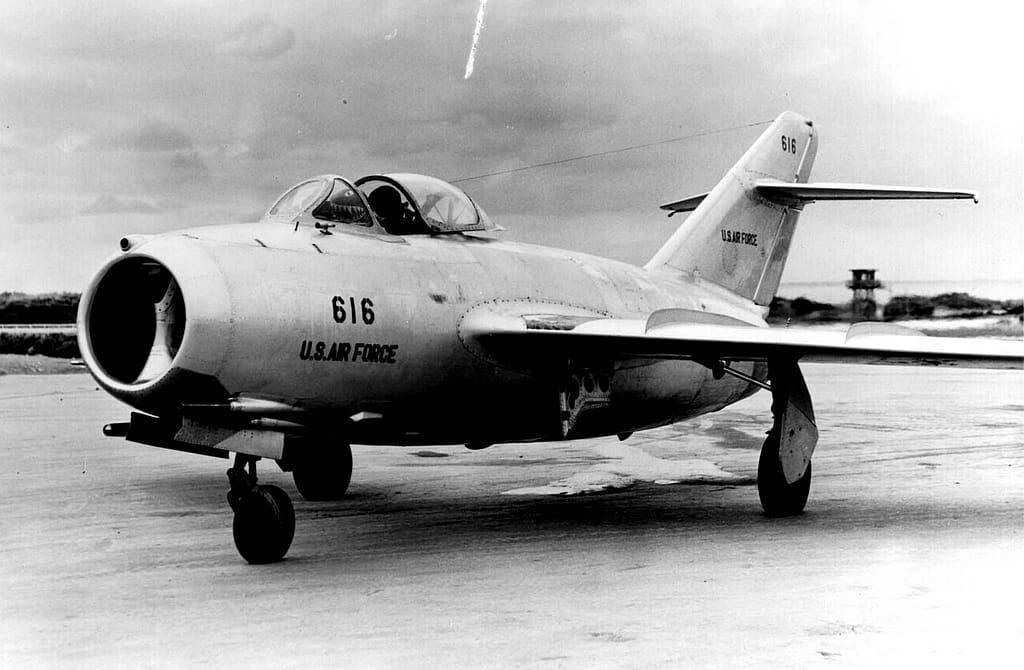
The MiG was taken apart within a day, flown to Okinawa, and rebuilt in USAF markings with “616” on its nose. Test pilots, among them Major Chuck Yeager, put it through its paces — with No himself briefing them on its quirks. Their verdict: a fast-climbing, high-flying fighter that was also treacherous near the edge of its envelope.
Becoming Kenneth Rowe
In 1954 No emigrated to the United States and chose a new name: Kenneth H. Rowe. He earned engineering degrees, worked for Boeing, General Dynamics and Lockheed, and later taught for 17 years at Embry-Riddle Aeronautical University.
He wrote a memoir, visited his old jet at the museum many times, and said he never once second-guessed his decision. He died in 2022, at the age of 90 — an ocean and a lifetime away from the runway at Sunan.
The seventeen-minute flight to Kimpo.
Sources: Wikipedia (No Kum-sok; Operation Moolah); National Museum of the US Air Force; University of Delaware Messenger (2011); Yeager: An Autobiography (1985).
0 Kommentare