
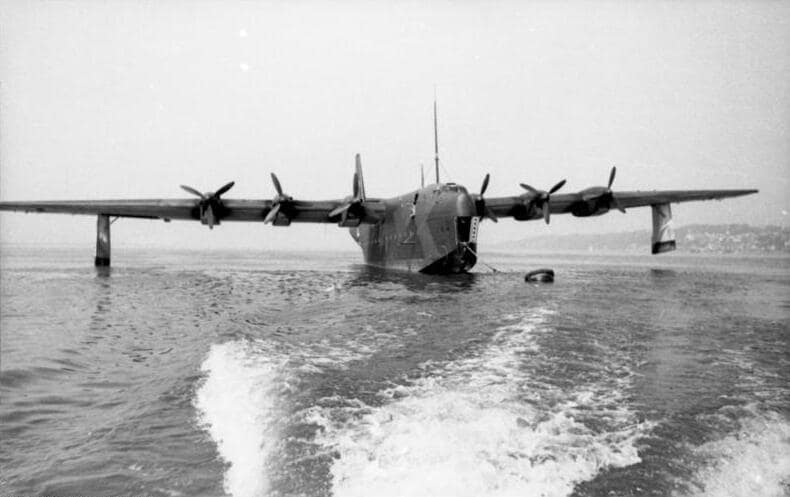
The biggest aircraft the Axis powers ever built was not a bomber or a transport — it was a flying boat the size of a small ship, hauled into the air on six engines by a company that normally built ocean liners. And when an American fighter pilot finally sank it on a quiet German lake, he had no idea what he had just destroyed. He would not find out for another twenty-nine years.
This is the story of the Blohm & Voss BV 238: the heaviest aeroplane in the world when it flew, and one of the least-known giants of the Second World War.
Kurzinfo
- Flugzeug: Blohm & Voss BV 238, a six-engined flying boat
- Claim to fame: the largest aircraft built by any Axis power — and the heaviest in the world when it flew
- Erster Flug: 1944 (prototype BV 238 V1)
- Motoren: six Daimler-Benz DB 603 inverted-V12s, ~1,750 hp each
- Gewicht: around 85 tonnes fully loaded
- Bauherr: Blohm & Voss — a Hamburg shipbuilder
- Schicksal: the sole flying example was strafed and sunk on the Schaalsee
A shipbuilder’s aeroplane
Blohm & Voss was, first and foremost, a Hamburg shipyard, founded in 1877 and famous for building large vessels. Aircraft were a wartime sideline — and it showed in the BV 238’s sheer scale. Six Daimler-Benz DB 603 inverted-V12 engines, arranged three to a wing, hauled a hull weighing around 85 tonnes fully loaded. It was intended for long-range maritime patrol and transport across the oceans the Reich could not otherwise reach.
Fear of a Nazi escape
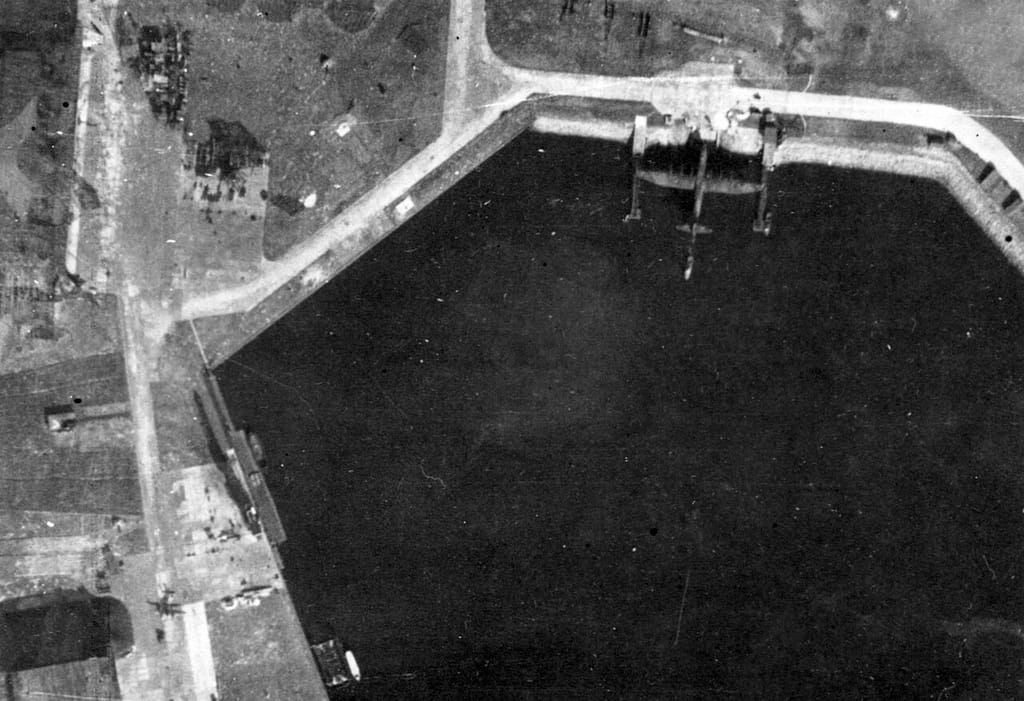
By the time the single flying prototype was undergoing tests in the last months of the war, the Allies had more than a passing interest in it. A flying boat with transatlantic reach, sitting on a German lake as the Reich collapsed, raised an alarming possibility in Allied minds.
Sunk on the lake — by whom?
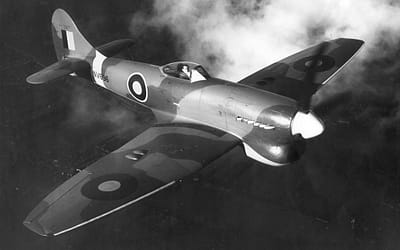
The BV 238 V1 was strafed and sunk while moored on the Schaalsee, and here the story splits. According to American accounts, it was destroyed in 1944 by P-51 Mustangs of the US 361st Fighter Group, led by the ace Lieutenant Urban “Ben” Drew in his Mustang “Detroit Miss.” British and German sources instead date the attack to late April or early May 1945 and credit RAF Typhoons or Tempests, whose fire set the engines ablaze until the hull broke and sank.
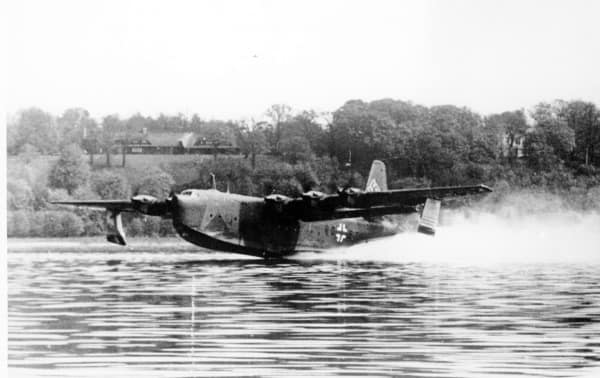
What is not in dispute is the twist. Drew was told he had shot up a BV 222 Wiking, a smaller German flying boat, and he believed it for decades. Only in 1974, when the BBC contacted him while researching a documentary, did he learn the truth: the giant he had raked with gunfire was the one and only flying BV 238.
A quarter-scale flop, and the end
The programme never had a chance to mature. To test the design, engineers built a quarter-scale flying model, the FGP 227 — which promptly made a forced landing on its first flight and delivered no useful data. Two further full-size prototypes were begun but never finished. When the war ended, all that remained of the largest aircraft the Axis ever built was a section of wing poking above the surface of a German lake.
For a machine meant to cross oceans, it never got further than a quiet stretch of inland water — and a footnote nobody could quite agree on.
Sources: Wikipedia; The Vintage News; historyofwar.org; Warbirds Resource Group.
0 Kommentare