
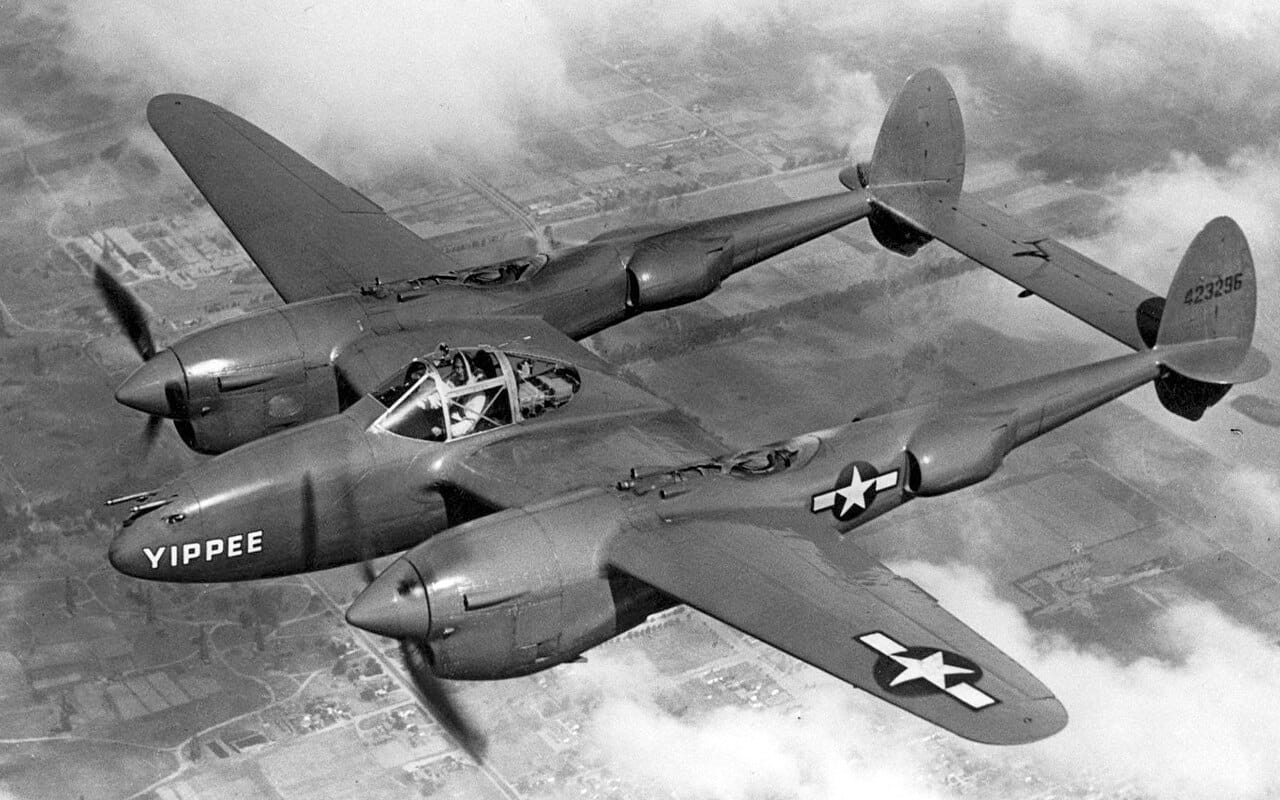
You could identify it from the ground before you could hear it: two long booms, a pod slung between them, and a wing that seemed to float without a fuselage behind it. Nothing else in the sky of 1942 looked remotely like the P-38 Lightning — and, according to legend, German pilots called it der Gabelschwanz-Teufel, the fork-tailed devil.
That nickname is probably folklore; no one has ever produced a wartime German source for it. But it stuck, because it fit. The Lightning was strange, fast, heavily armed, and it flew in every theatre of the war — and it carried the two highest-scoring American fighter pilots in history.
Kurzinfo
- Flugzeug: Lockheed P-38 Lightning
- Designer: Hall Hibbard and Clarence “Kelly” Johnson
- Erster Flug: January 27, 1939
- Layout: Twin-boom, twin turbo-supercharged Allison V-1710s, single seat
- Rüstung: Four .50-cal machine guns and a 20 mm cannon, all in the nose
- Gebaut: around 10,000 — the only US fighter in production from before Pearl Harbor to V-J Day
A fighter that broke every rule
When the US Army asked for a high-altitude interceptor in 1937, Lockheed had never built a military fighter. Hall Hibbard and his brilliant young assistant Kelly Johnson — the man who would later give the world the U-2 and the SR-71 — answered with something radical. To fit two turbo-supercharged Allison engines and still concentrate the guns, they split the aircraft into twin booms and hung the cockpit and armament in a central pod.
The payoff was a fighter that could top 400 mph, climb like nothing else, and put four machine guns and a cannon into a tight, non-converging stream straight ahead — no wing guns, no harmonisation range to worry about. When the prototype first flew on January 27, 1939, and then dashed across the United States in a headline-grabbing record attempt days later, it announced that American fighter design had arrived.
The aces of the Pacific
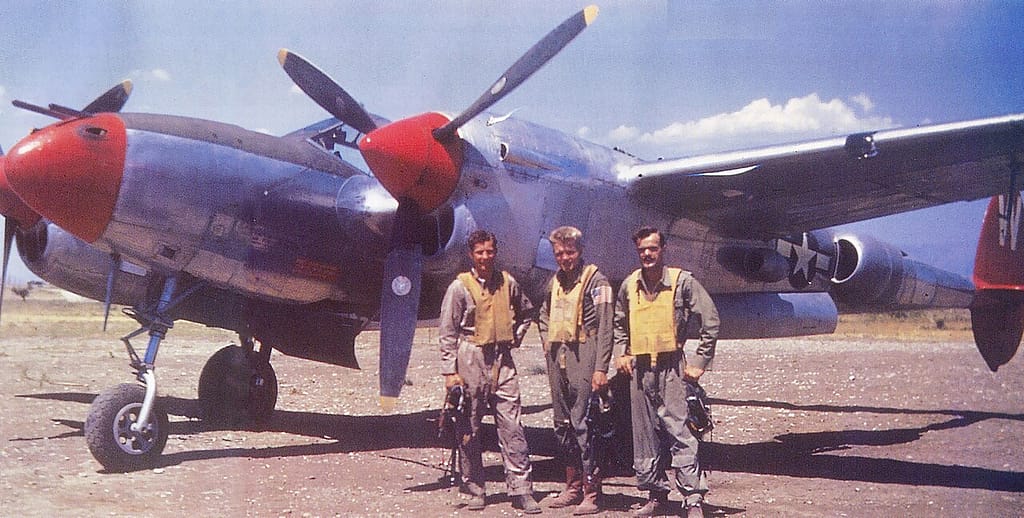
It was over the Pacific that the Lightning became a legend. Its two engines meant a long over-water flight home was survivable on one; its range let it reach where single-engine fighters could not. The top two American aces of the entire war both flew it: Major Richard Bong, with 40 victories, and Major Thomas McGuire, with 38 — friends and rivals who often flew together over New Guinea.
P-38s also flew the most surgical mission of the Pacific war, the long-range interception that killed Admiral Isoroku Yamamoto in April 1943 — a job only the Lightning had the legs to attempt.
The Lone Eagle in the cockpit
One of the more remarkable men to fly the P-38 in combat was a civilian: Charles Lindbergh. Officially an observer for the manufacturer, he flew some 50 missions with the 5th Air Force and taught its pilots engine-leaning techniques that stretched the Lightning’s combat radius by roughly half. He also, quietly, shot down a Japanese aircraft — and recorded the moment in his journal with a novelist’s eye.
Lindbergh’s fuel-economy lessons were not a footnote. They turned the P-38 into a genuinely strategic weapon in a theatre measured in thousands of miles of open ocean.
Trouble over Europe
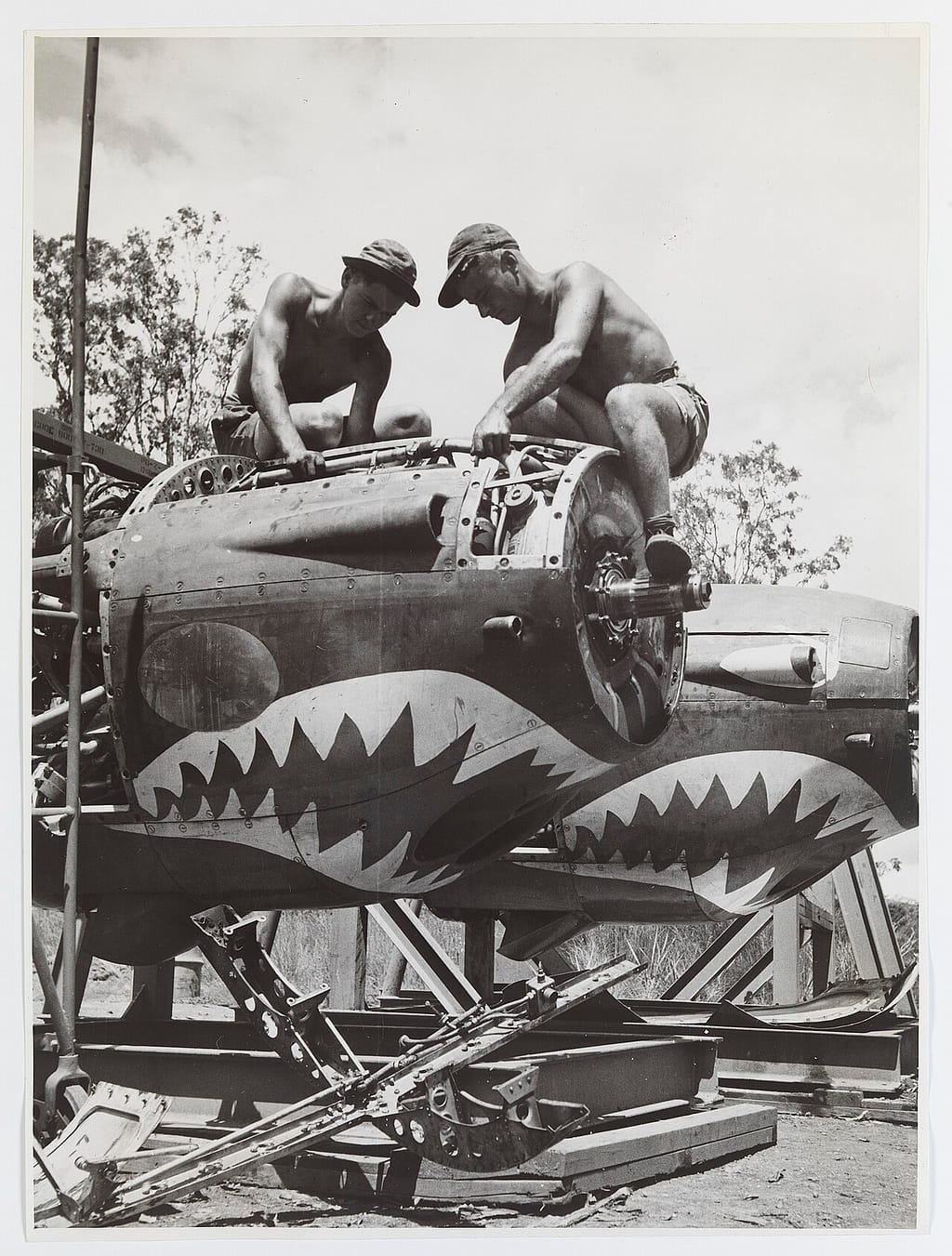
Europe was harder on the Lightning. At the freezing altitudes of high-cover escort, the early Allisons suffered, cockpits went bitterly cold, and pilots ran into compressibility — a terrifying nose-down tuck in high-speed dives, as the airflow over the wing approached the speed of sound before anyone fully understood the phenomenon. Dive-recovery flaps and better training eventually tamed it, but the P-38 never dominated the European air war the way the Mustang did.
Where it truly excelled beyond dogfighting was reconnaissance. Stripped of guns and packed with cameras as the F-4 and F-5, unarmed Lightnings brought home much of the Allied photo intelligence of the war — fast, high, and hard to catch.
The devil’s legacy
Around 10,000 Lightnings were built, and it holds a distinction no other American fighter can claim: it was in front-line production from before the United States entered the war until the day Japan surrendered. Bombers, escorts, interceptors, photo-ships, even makeshift level-bombers with a bombardier in the nose — the P-38 did all of it.
Robin Olds scored his first victories in one before becoming a legend in the P-51 and, decades later, the F-4. For him and for a generation of pilots, the fork-tailed devil was the aeroplane where they learned to fight. Folklore or not, the nickname earned its place.
Sources: Wikipedia; Lockheed Martin history; The Wartime Journals of Charles A. Lindbergh (1970); Air & Space Forces Magazine; HistoryNet.
0 Kommentare