
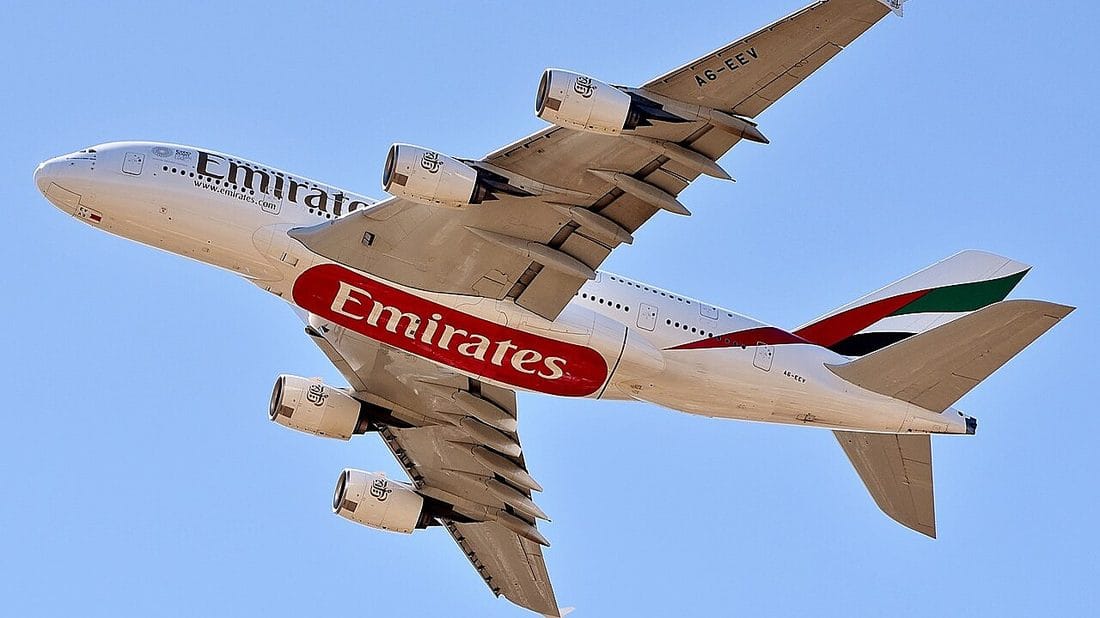
For nine years, one subfleet of Emirates A380s held a record nobody else wanted: 615 seats, the densest passenger configuration ever flown on a commercial aircraft. Two classes, no frills up top — just row after row of economy stretching across both decks of the superjumbo. That era is now ending, one aircraft at a time.
In mid-May, the first of those high-density giants — registration A6-EUX — rolled out of the Emirates Engineering hangars in Dubai after a two-month rebuild and went straight onto the Dubai–Birmingham run as EK39/40. The seat count dropped from 615 to 569. But look closer at the cabin math, and you'll see this isn't a downgrade. It's a calculated bet on where airline money actually lives.
Emirates ripped out 120 economy seats from the upper deck and replaced them with 56 premium economy seats and 18 extra business class seats. Total capacity fell 7.5 percent. Premium capacity, meanwhile, exploded — and premium seats are where the margins are.
Quick Facts
- Aircraft: Airbus A380-800, registration A6-EUX (delivered in 2017)
- Old layout: 615 seats — 557 economy + 58 business (two classes)
- New layout: 569 seats — 437 economy, 56 premium economy, 76 business
- The retrofit: ~50 engineers, ~35,000 man-hours, 2,500+ part types, two months
- First route: Dubai–Birmingham (EK39/40), May 2026
- Next up: 14 more high-density A380s, ~30 days each, all done by end of 2026
Why Kill 46 Seats on Purpose?
Because not all seats earn the same money. A premium economy fare on a long-haul Emirates route typically sells for 1.5 to 2 times an economy ticket, while taking up only modestly more floor space. Swap 120 economy seats for 56 premium economy and 18 business seats, and the revenue per square metre of that upper deck goes up — not down — even though the headline seat count shrinks.
Emirates has been running this play since 2021, when delivery delays on the Boeing 777X forced the airline to confront an uncomfortable truth: the new jets weren't coming, and the old ones had to carry the brand for years longer than planned. The answer was a retrofit programme that started at 120 aircraft and has since ballooned to 219 airframes and a $5 billion budget.
The numbers behind this single conversion are sobering. Around 50 engineers and technicians logged roughly 35,000 man-hours, handling more than 2,500 different types of parts. The entire upper deck was gutted — galleys repositioned, overhead bins replaced, electrical and plumbing systems reworked — before a single new seat was bolted in.
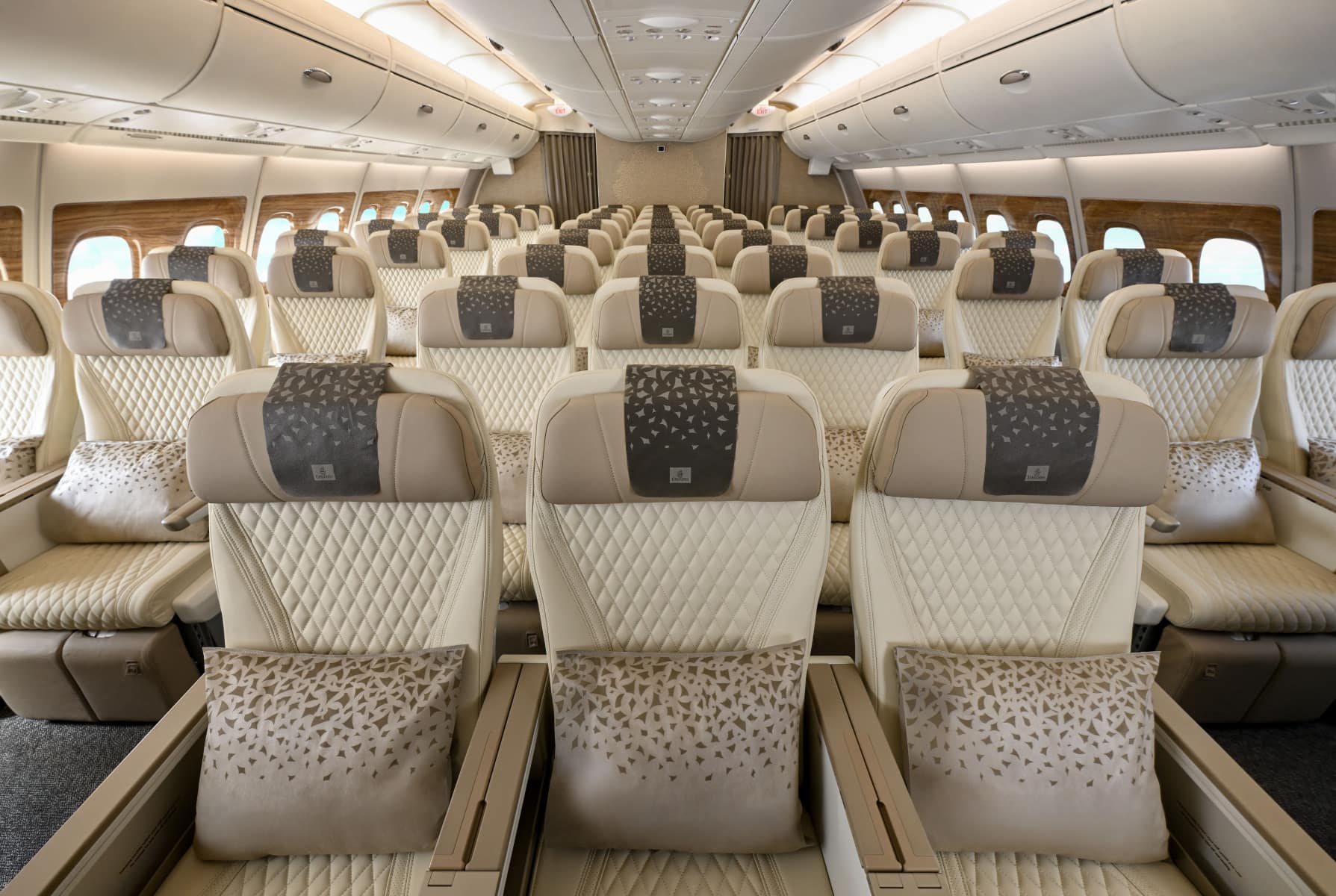
Premium Economy Moves Upstairs
This retrofit marks a first: Emirates' premium economy cabin has never lived on the A380's upper deck before. The 56 leather seats are arranged 2-3-2, with full leg and footrests, six-way adjustable headrests, charging ports, cocktail tables and 13.3-inch entertainment screens. On the A380s that pioneered the product, premium economy sat on the main deck at the nose.
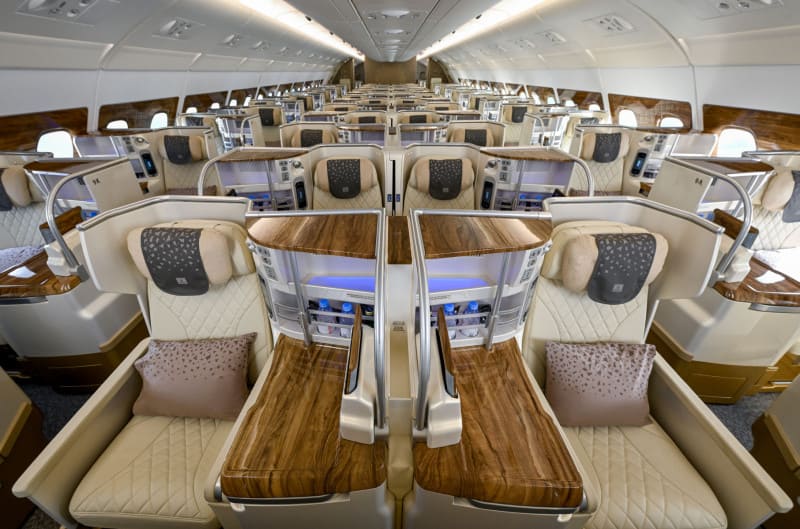
The economy cabin, meanwhile, retreats entirely to the lower deck in its familiar 3-4-3 layout — 437 seats instead of 557. Business class grows from 58 to 76 seats in the 1-2-1 configuration, and the A380's famous onboard lounge survives the rebuild with refreshed finishes.
Birmingham, the launch route, is no accident either. Emirates flies 18 daily services to eight UK airports, and the UK has been one of the strongest markets for its premium economy product since the cabins first appeared on London routes. Manchester, Edinburgh and Newcastle followed; Birmingham now joins the club.
The A380's Second Life
Step back and the bigger story comes into focus. Airbus stopped building the A380 in 2021. Conventional wisdom said the superjumbo was a dead end — too big, too thirsty, too dependent on a hub-and-spoke world. Emirates never believed it, and the cabin math explains why: no other aircraft can put this many premium seats over a single pair of slots at a congested airport.
The retrofit programme has now refreshed 95 aircraft — 42 A380s and 53 Boeing 777s — more than a third of the fleet. With the first high-density conversion done, Emirates says the remaining 14 will take roughly 30 days each, with all of them finished before the end of 2026. Two refreshed aircraft now emerge from the Dubai hangars every month.
By New Year's Eve, the 615-seat A380 will be extinct. Not because the aircraft failed — but because Emirates found a more profitable way to fill the biggest cabin in the sky. The superjumbo's second life, it turns out, is a premium one.
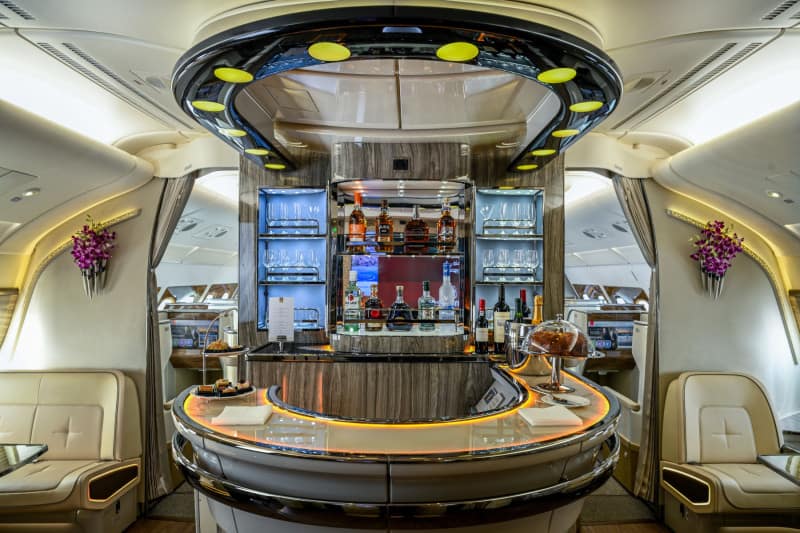
Want to see what the cabins look like in motion? The walkthrough below tours an Emirates A380 fitted with the premium economy product now spreading across the fleet.
Sources: Emirates media centre, Simple Flying, FlightGlobal, The National, Runway Girl Network
Related Questions
What was the densest passenger aircraft ever flown?
For nine years, a subfleet of Emirates Airbus A380s held the record for the densest passenger configuration ever flown commercially: 615 seats in just two classes, with economy stretching across both decks of the superjumbo. Emirates is now retrofitting these jets into a lower-density, more premium layout.
How is Emirates reconfiguring its 615-seat A380s?
Emirates is cutting the 615-seat A380s to 569 seats. It removed 120 upper-deck economy seats and added 56 premium economy and 18 business seats, giving a new layout of 437 economy, 56 premium economy and 76 business. Total capacity falls about 7.5 percent, but premium capacity rises sharply.
Why would an airline remove seats on purpose?
Because not all seats earn the same money. A premium economy fare on a long-haul Emirates route typically sells for 1.5 to 2 times an economy ticket while taking only modestly more floor space. Swapping economy for premium seats lifts revenue per square metre of the upper deck even as the headline seat count shrinks.
How big a job is the Emirates A380 retrofit?
Each retrofit is a major undertaking: about 50 engineers, roughly 35,000 man-hours and more than 2,500 part types over two months. The first reconfigured jet, A6-EUX, returned in mid-May 2026 on the Dubai-Birmingham route (EK39/40). Emirates plans 14 more, about 30 days each, all completed by the end of 2026.
Why is Emirates keeping the A380 flying?
Emirates has run this upgrade programme since 2021, when delivery delays on the Boeing 777X meant the new jets were not coming and the older A380s had to carry the brand for years longer than planned. Refreshed cabins keep the superjumbo competitive, while retired A380s become a spare-parts goldmine.
Related Posts
Starlink Goes Live on the Emirates A380
0 Comments