
Quick Facts
| Nationality | German 🇩🇪 |
| Aerial Victories | 40 |
| Aircraft Flown | Fokker Eindecker E.III, Albatros D.I/D.II |
| Wars | World War I |
| Born / Died | 19 May 1891 – 28 Oct 1916 (age 25) |
| Unit | Jagdstaffel 2 (founder) |

If Adolphe Pégoud proved that airplanes could fight, it was Oswald Boelcke who figured out how. Germany's greatest aerial tactician didn't just rack up kills — he wrote the rulebook that every fighter pilot since has followed. In a war defined by chaos, Boelcke brought science to the skies.
From Student Pilot to National Hero
Born in 1891 in Giebichenstein, Germany, Oswald Boelcke was a quiet, methodical young man who happened to be gifted with extraordinary spatial awareness and cool-headed judgment under fire. He earned his pilot's certificate in 1914, just in time for the outbreak of World War I, and was immediately deployed to the Western Front.
His early victories came quickly. By 1916 he was Germany's top ace, celebrated in newspapers and adored by the public. Kaiser Wilhelm personally decorated him. But what set Boelcke apart from every other pilot of his era wasn't his kill count — it was his mind.
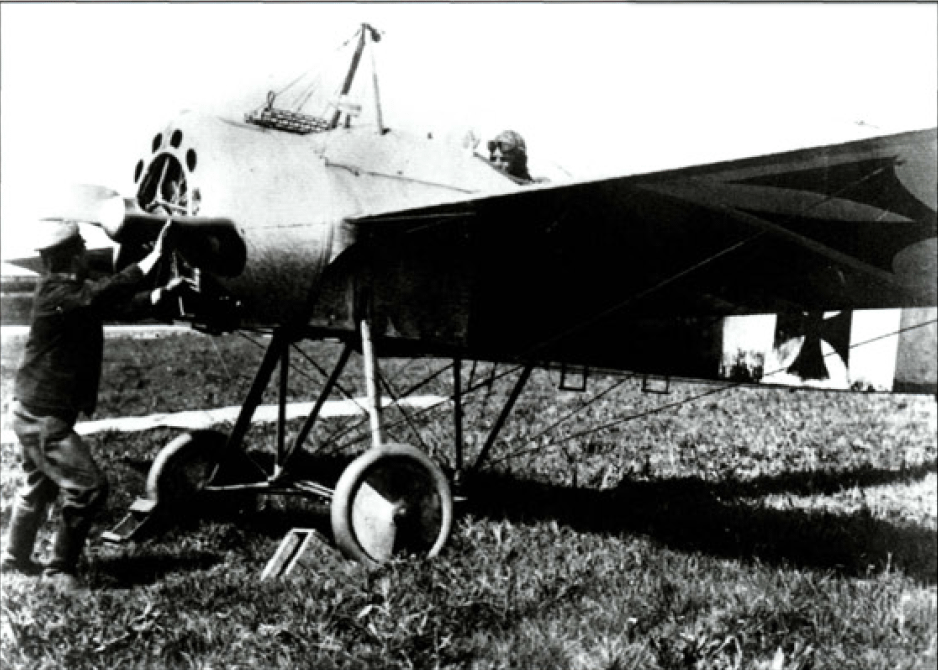
The Dicta Boelcke: The Original Fighter Pilot Manual
In 1916, Boelcke sat down and codified eight rules of aerial combat — the Dicta Boelcke — that remain foundational to dogfighting doctrine to this day. Principles like securing altitude advantage before attacking, never breaking off combat until the enemy is fully defeated, and always attacking from the direction of the sun — these were revolutionary in 1916, and they're still taught at air force academies around the world.
He also understood that individual brilliance wasn't enough. Boelcke created the concept of the Jagdstaffel — a dedicated fighter squadron of trained, coordinated pilots working as a team. He personally selected and mentored his pilots, including a young, impetuous pilot named Manfred von Richthofen, who would later become the Red Baron. In a very real sense, Boelcke didn't just train the Red Baron — he created him.
40 Victories, No Equal
By autumn 1916, Boelcke had 40 confirmed aerial victories — an almost incomprehensible number at a time when the average life expectancy of a WWI fighter pilot was measured in weeks. He flew the Fokker Eindecker and later the Albatros D.I with equal mastery, always controlling the engagement, always hunting from a position of advantage.
On October 28, 1916, Boelcke was involved in a mid-air collision during a dogfight. His aircraft's upper wing was clipped by a friendly plane, the control surface failed, and he crashed to his death. He was 25 years old. The entire German Army mourned. Even the British dropped a note behind enemy lines acknowledging his death with respect.
The Father of Aerial Combat
Boelcke's legacy is everywhere in modern aviation. The Dicta Boelcke evolved into energy-maneuverability theory, BFM doctrine, and the tactical principles used by every jet fighter pilot alive today. When a modern F-16 pilot angles for a positional advantage or breaks off to maintain energy, they're executing a concept Boelcke wrote on paper in 1916.
He was not the deadliest ace of WWI. But he was its most important. The sky would have been a far more chaotic, wasteful battlefield without Oswald Boelcke's brilliant, systematic mind.
“Always try to secure an advantageous position before attacking. If possible, keep the sun behind you.”
— Oswald Boelcke — Dicta Boelcke, Rule 1Watch: Oswald Boelcke Documentary
Related Questions
Who was Oswald Boelcke?
Oswald Boelcke (1891–1916) was a German fighter pilot of World War I, often called the father of aerial combat. With 40 confirmed victories he was Germany's top ace by 1916 and was personally decorated by Kaiser Wilhelm. He is best remembered for codifying the first systematic rules of dogfighting.
What are the Dicta Boelcke?
The Dicta Boelcke are eight rules of aerial combat that Boelcke codified in 1916, covering principles such as securing an altitude advantage before attacking, attacking from the direction of the sun, and never breaking off until the enemy is defeated. They remain foundational doctrine taught at air force academies today.
Did Boelcke train the Red Baron?
Yes. Boelcke personally selected and mentored Manfred von Richthofen, the future Red Baron, within his squadron Jagdstaffel 2. In a very real sense, the man who wrote the rules of dogfighting created the war's most famous ace.
How did Oswald Boelcke die?
On October 28, 1916, Boelcke died in a mid-air collision during a dogfight when a friendly aircraft clipped his upper wing, causing a control failure and crash. He was just 25. Even British airmen dropped a wreath behind enemy lines to honour him.
What was a Jagdstaffel?
A Jagdstaffel ("hunting squadron," often shortened to Jasta) was the German fighter-squadron concept Boelcke pioneered, with coordinated pilots fighting as a team rather than as lone hunters. He founded and led Jagdstaffel 2.
Who were the other great World War I aces?
Besides Boelcke, the First World War produced legends such as Manfred von Richthofen, the Red Baron, and Max Immelmann, whose evasive "Immelmann turn" still bears his name.
0 Comentarios