
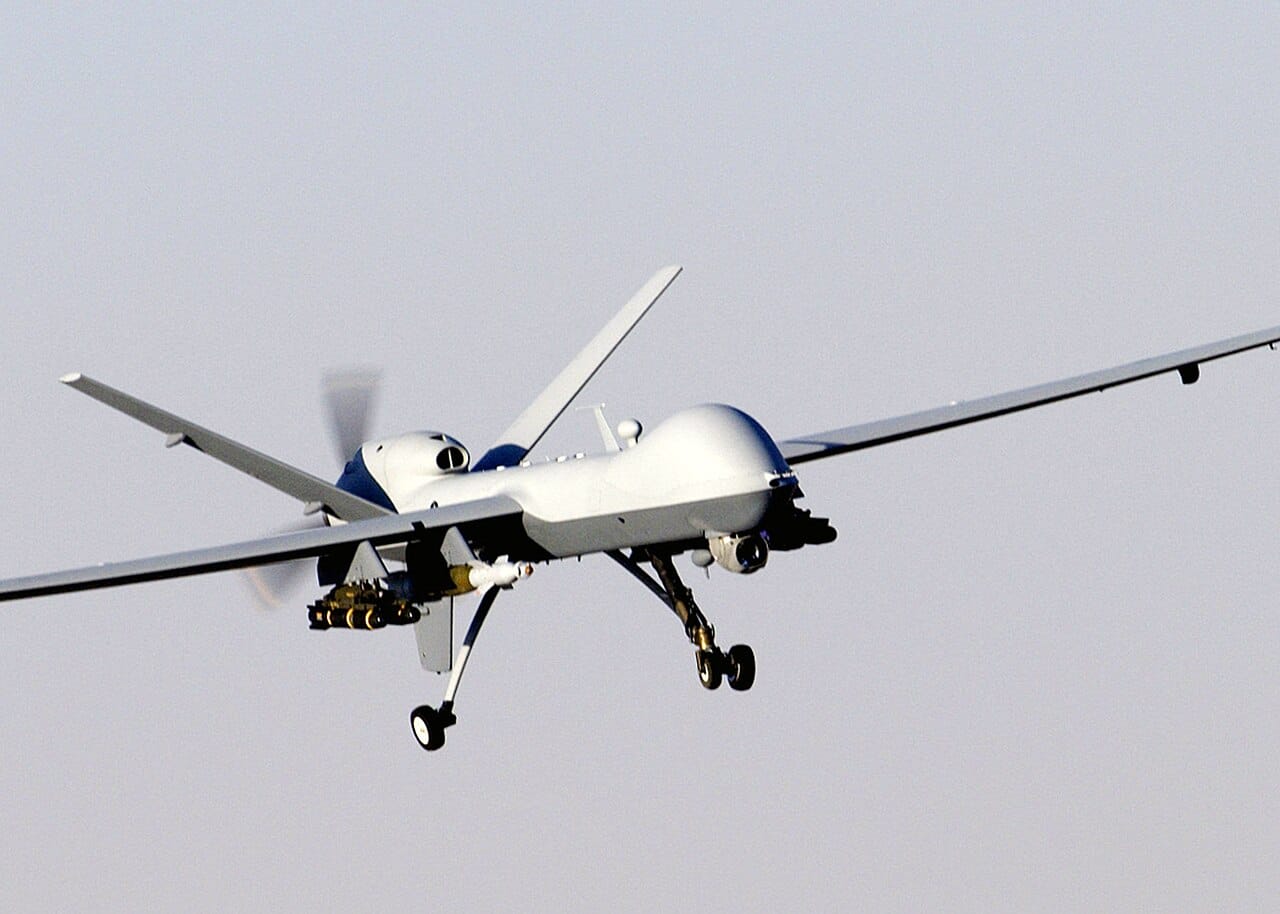
Last week we told you that America had lost roughly a quarter of its MQ-9 Reaper fleet in the war with Iran. That eye-watering number — around 45 drones, more than $1.3 billion — turned out to be a single line in a much longer invoice.
Nearly six months into the fighting that began on 28 February, the bills are stacking up: burned airframes, empty missile magazines, a carrier that will not come home, and a radar the size of a building knocked offline. No one has published a tidy grand total, because there isn’t one. But the pieces are now visible enough to add up — carefully, and with a lot of asterisks.
- Estimated direct cost (by June): $35–43 billion, per CSIS and AEI analysts
- US aircraft lost: as many as ~55, the largest share of ~130 in the wider conflict
- Headline loss: ~36–45 MQ-9 Reapers (~25% of the fleet), >$1.3B
- Biggest cost driver: munitions and interceptors — north of $26 billion (AEI)
- US personnel: 13 killed, hundreds injured
- Caveat: figures are contested, some overlap, and the war is ongoing
The aircraft ledger
Start with the metal. A public loss tracker cited by analysts counts about 130 aircraft destroyed across the whole conflict, with the United States accounting for the largest single share — roughly 55, some 60 of the conflict’s total being uncrewed. Afterburner’s own running tally of the opening operation, “Epic Fury,” came to 39 aircraft lost and 10 damaged in the first five weeks alone.
| Aeronave | US lost | Cómo |
|---|---|---|
| MQ-9 Reaper | ~36–45 | SAMs, MANPADS, lost data-links, and strikes on bases — about a quarter of the fleet |
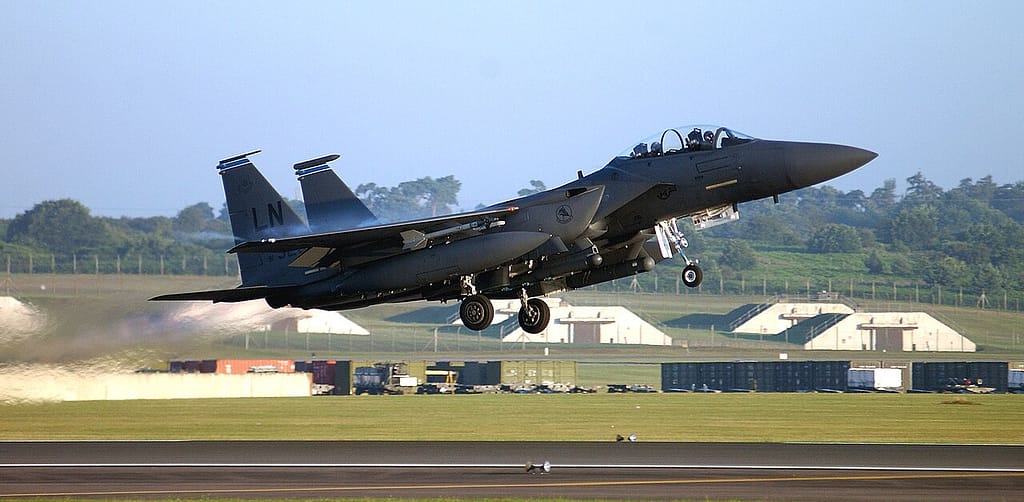
| F-15E Strike Eagle | 4 | 3 to Kuwaiti friendly fire (1 Mar); 1 to a MANPADS over Iran (DUDE 44, 3 Apr) |
| E-3G Sentry (AWACS) | 1 | Destroyed on the ground at Prince Sultan Air Base |
| KC-135R tanker | 2–3 | Incl. a mid-air collision that killed six aircrew (ZEUS 95) |
| MC-130J Commando II | 2 | Destroyed on the ground to avoid capture |
| A-10C, MQ-4C, MQ-1, AH-64, MH-60S | 1 each | Combat losses, mishaps and one non-hostile ditching |
| F-35A (damaged) | 0 | First-ever combat damage to a 5th-generation fighter |
Behind each row is a story we have covered: the three F-15E Strike Eagles shot down in a single day, one of them later paraded by Iran as “DUDE 44”; the E-3 AWACS destroyed on the ground; the KC-135 rebuilt from two broken tankers; and the A-10 and helicopters lost during a 155-aircraft rescue for one downed crewman. Add it up and the destroyed airframes alone are worth an estimated $2–3 billion.
The munitions bill
Airframes, though, are not where the money went. By the analysts’ reckoning, munitions and interceptors are the single largest expense of the entire war — more than $26 billion by the American Enterprise Institute’s June estimate. The reason is a brutal arithmetic Afterburner has written about before: cheap threats, expensive answers.
| Arma | Reported use | Unit cost |
|---|---|---|
| Tomahawk cruise missile | ~850+ fired | ~$2M |
| Patriot (PAC-3 MSE / PAC-2) | ~1,500 drawn down (stock ~2,330 to ~800) | ~$4M |
| THAAD interceptor | 38–80% of the inventory | ~$12M |
| ATACMS / PrSM | “virtually all” of the Army’s long-range stock | ~$1.5–3.5M |
| JASSM, JDAM, SM-3/SM-6, Hellfire | Large, unquantified | $25k–$36M |
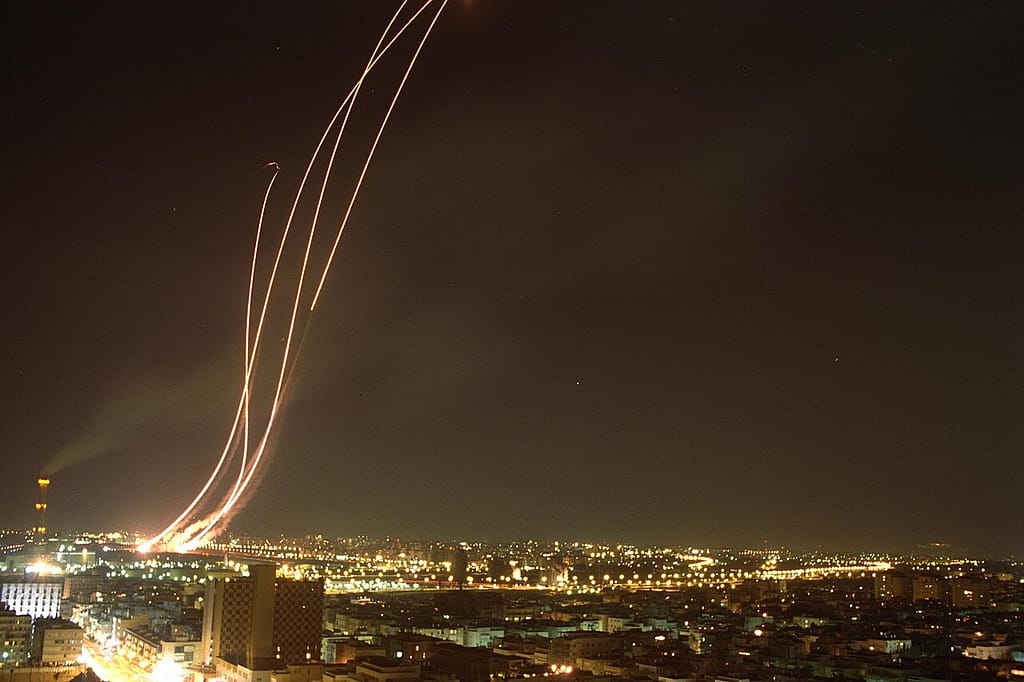
The interceptor drawdown has been staggering. Afterburner reported the Pentagon’s own “twenty-one days to rebuild the arsenal” memo, which tracked the Patriot stockpile falling from roughly 2,330 interceptors before the war to somewhere around 800. Analysts say five months of fighting consumed virtually all of the Army’s long-range precision missiles and between 38 and 80 percent of its THAAD interceptors — a big enough hole that Washington signed a $35 billion deal to quadruple THAAD production.
What Iran destroyed, and the cost of staying
The ledger runs both ways. On the defensive side, Iran’s missiles knocked out an AN/FPS-132 early-warning radar valued at around $2.1 billion, along with the AWACS and tankers caught on the ground. And simply keeping the force in theatre is expensive: a carrier strike group costs $6–8 million a day to operate, and the USS Abraham Lincoln has now spent a record-breaking 200-plus days at sea. Thirteen American service members have been killed and hundreds injured.
Adding it up
So what is the number? The most credible answer comes not from us but from budget analysts. In June, CSIS’s Mark Cancian put the direct cost at $35.2–42.5 billion; the American Enterprise Institute pegged it at $38.6 billion. With fighting continuing into August, the real figure is now higher.
Two honest caveats. First, these are estimates that fold together different things — weapons fired, weapons that must be bought to replace them, aircraft lost, and day-to-day operations — and reasonable people put the pieces together differently. Second, some of the biggest line items, like the $35 billion THAAD contract, are multi-year replacement bills, not cash already spent. What is not in doubt is the direction of travel. Every category — drones, jets, interceptors, cruise missiles, carrier days at sea — is pointing the same way: up. And the invoice is still open.
Sources: Afterburner (Afterburner’s own Iran-war coverage, linked above); The Washington Post; CSIS (Mark Cancian); American Enterprise Institute; GlobalMilitary.net tracker; Militarnyi; Air & Space Forces Magazine. All totals are reported or estimated figures and remain contested; the war is ongoing.
Publicaciones relacionadas
0 Comentarios