
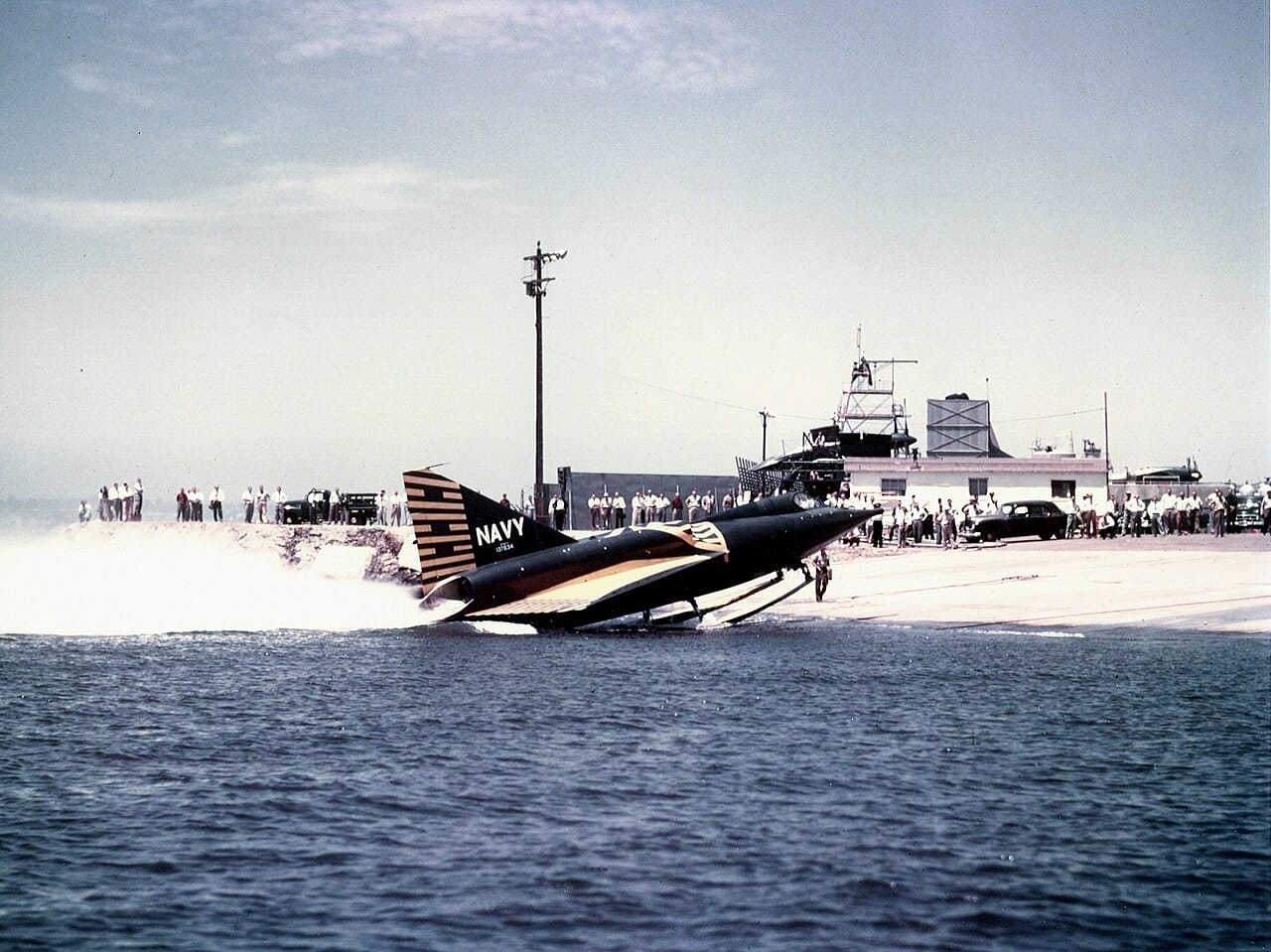
Picture the pitch meeting. It is 1948, the jet age is barely out of diapers, and someone at the U.S. Navy stands up and says: what if the fighter took off from the ocean? No carrier. No runway. Just a supersonic delta-wing jet, water-skiing into the sky like it is late for a Bond premiere.
Incredibly, someone built it. Convair — the San Diego outfit that basically invented the American delta wing — bolted retractable hydro-skis to the bottom of a fighter, pointed it at San Diego Bay, and made the whole strange dream fly. They called it the Sea Dart. To this day it is the only seaplane on Earth ever to break the sound barrier.
It should have been a legend. Instead it became a cautionary tale — a jaw-rattling, spine-compressing, occasionally airborne cautionary tale that ended in tragedy on live television. Here is the whole wet, wild story.
Datos rápidos
| Aeronave | Convair XF2Y-1 / YF2Y-1 Sea Dart |
| Role | Experimental supersonic jet seaplane fighter, U.S. Navy |
| Primer vuelo | 9 April 1953, San Diego Bay |
| Motivo de fama | Only seaplane ever to exceed the speed of sound (August 1954, in a dive) |
| Landing gear | Retractable hydro-skis — twin at first, later a single wider ski |
| Built / flew | 5 built, only 3 ever flew; cancelled in the late 1950s |
A fighter on water skis (yes, really)
Here is the problem the Navy was chewing on around 1948: supersonic jets were coming, and everyone was terrified they would be too fast, too twitchy and too runway-hungry to ever operate off a carrier deck. So the Navy asked a wild question — why bother with the deck at all? Oceans cover seventy per cent of the planet. Make the sea your runway.
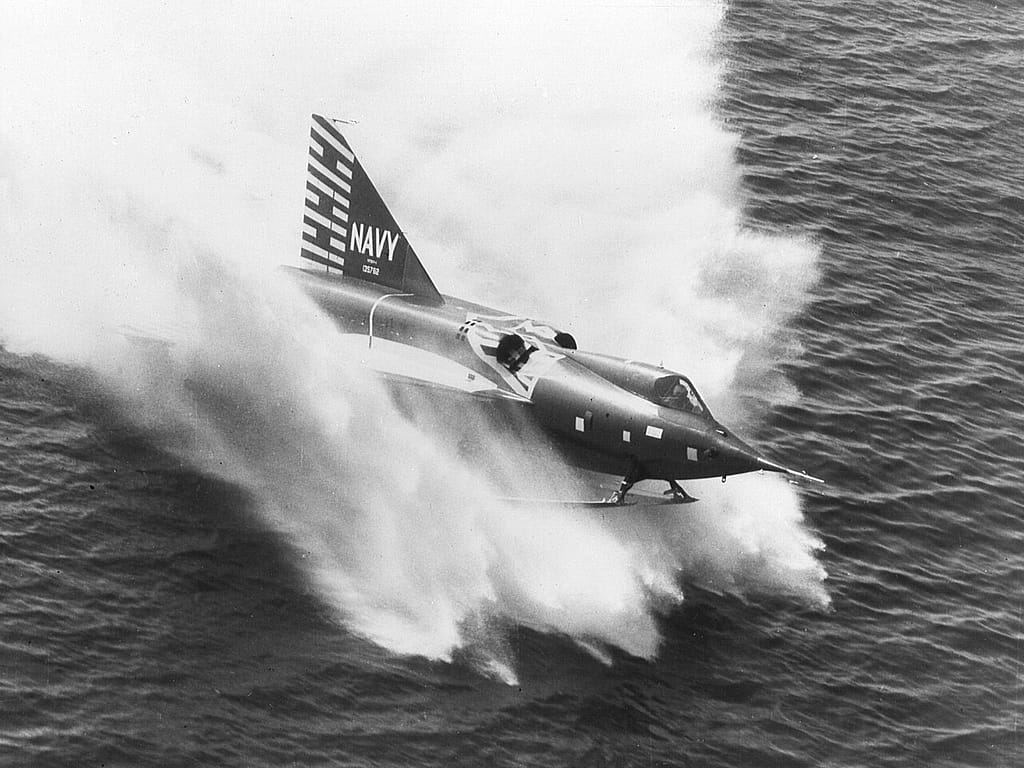
Convair was the obvious pick. Their engineers had cut their teeth on the delta wing — the XF-92A, the F-102 Delta Dagger — chasing research the Germans had started in the war. The design: a watertight delta-wing hull that floated with its wing trailing edges kissing the water, engine intakes mounted high on the back to dodge the spray, and twin retractable hydro-skis that stayed tucked until the jet hit about 10 mph, then extended to lift the hull clear for takeoff.
The Navy loved it enough to order production aircraft before a single prototype had even flown. On paper, the Sea Dart was the future. On the water, it was about to teach everyone some very expensive lessons.
The ride from hell
The first flight came on 9 April 1953 — the test pilot had actually gotten it airborne accidentally that January during a fast taxi run; the thing just left. And almost immediately, two brutal truths surfaced. One: the prototype’s engines were badly underpowered, leaving it sluggish. Two: those beautiful twin hydro-skis turned takeoff into a full-body assault.
As the Sea Dart accelerated, the skis hammered the airframe with a violent, teeth-loosening vibration — bad enough that it blurred a pilot’s vision at near-takeoff speed. Convair swapped the twins for a single wider ski, which helped but never truly fixed it. Test pilot B.J. Long put the experience plainly after riding it down into ocean swells.
He rode it to nine Gs off the wave crests, tasted blood, and later joked about the price.
Still, they chased the dream. Fitted with stronger afterburning engines, a Sea Dart squeaked past Mach 1 on 3 August 1954 — in a shallow dive. That single dive made it the only supersonic seaplane in history. But it never went supersonic in level flight; its pre-area-rule shape simply carried too much drag. The “supersonic seaplane” was, honestly, supersonic on a technicality.
The crash, and the quiet cancellation
On 4 November 1954, test pilot Charles Richbourg took a Sea Dart up over San Diego Bay for a demonstration — press on the shoreline, Navy brass watching, cameras rolling. He made a high-speed low pass and lit the afterburners. The kick from those high-mounted engines shoved the nose down. Richbourg hauled back to catch it, and the jet snapped into a divergent pitch oscillation — each swing worse than the last. It broke apart almost instantly. Richbourg was killed in front of everyone.
The tragedy did not so much kill the program as confirm what the Navy already suspected. While Convair had been wrestling skis and vibration, naval aviation had quietly solved the exact problem the Sea Dart existed to dodge. Angled flight decks and better landing systems made supersonic jets perfectly safe to land on carriers, and the new supercarriers had a thousand feet of deck to spare. A water-based fighter suddenly answered a question nobody was asking any more.
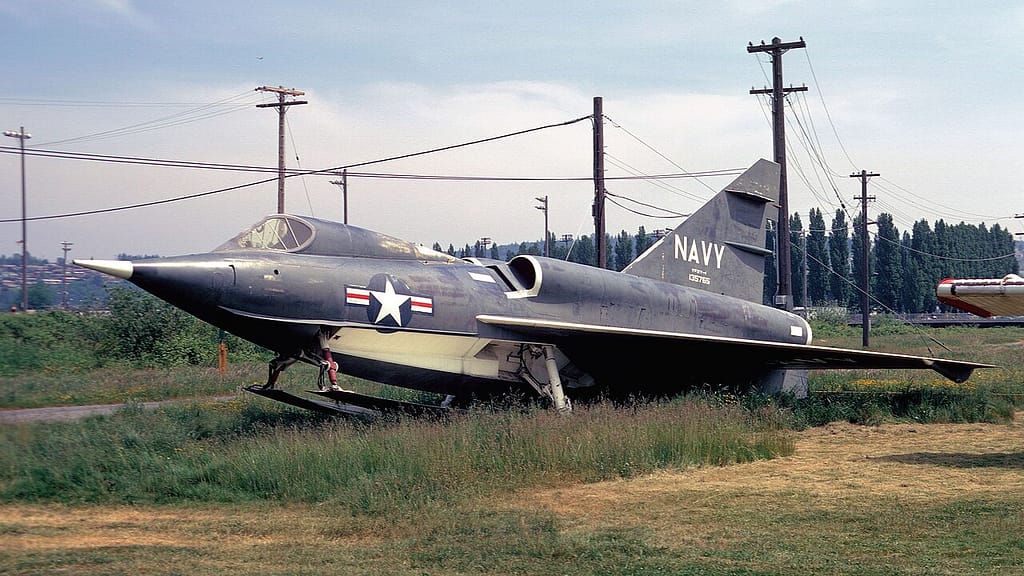
The Navy nursed the Sea Dart along in experimental status, then let it go. Of five built, only three ever flew. Today the survivors sit in museums in San Diego, Florida and Pennsylvania — beautiful, bizarre, and forever grounded.
Sources: Wikipedia (Convair F2Y Sea Dart); Smithsonian Air & Space Magazine; HistoryNet / Aviation History; San Diego Air & Space Museum.

0 Comentarios