
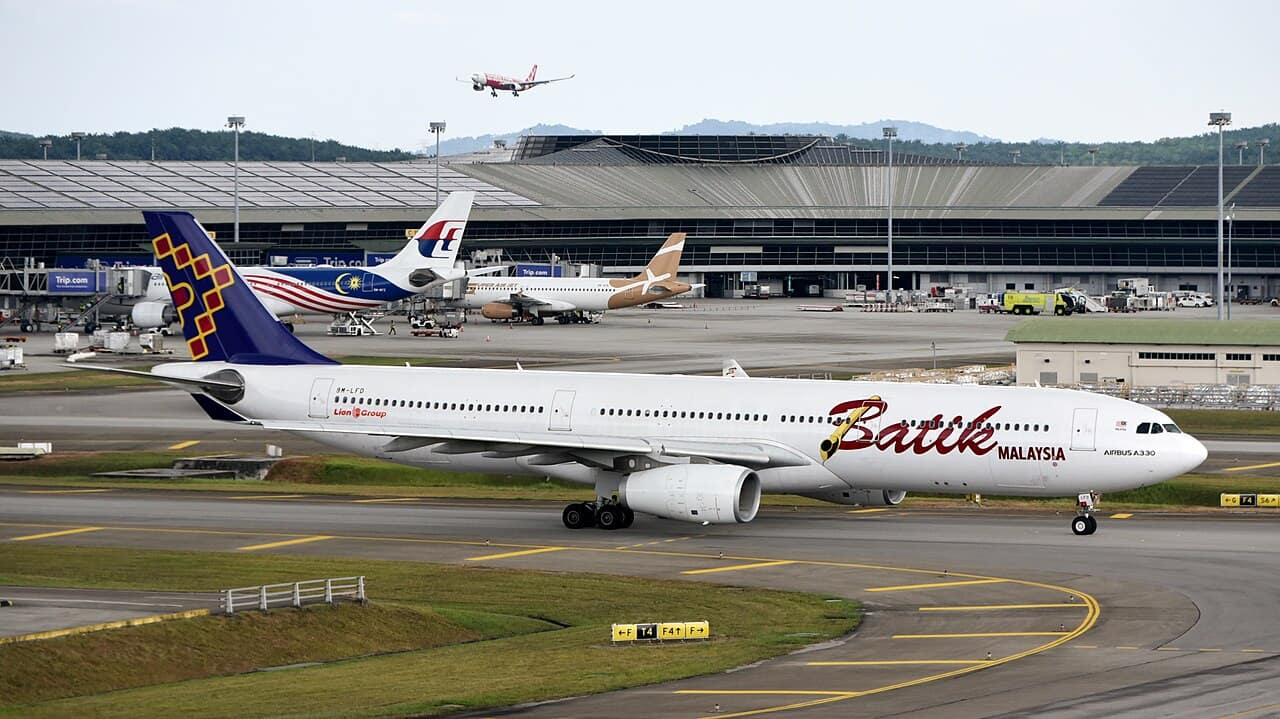
Sydney has a new way to reach Asia, and it comes wearing a splash of Malaysian batik on its tail. From 1 July 2026, Batik Air Malaysia flies a daily Airbus A330 between Kuala Lumpur and Sydney — the airline’s fourth city in Australia and a fresh shot across the bows of the established carriers on the Australia–Asia run.
It is a widebody route at hybrid-carrier prices, and it says a lot about where the fastest-growing air-travel market on earth is heading.
| Ruta | Kuala Lumpur (KUL) – Sydney (SYD) |
| Comienza | 1 July 2026, daily nonstop |
| Aeronave | Airbus A330 widebody |
| Fares from | RM749 economy (about US$170) |
| Hito | Batik Air’s 4th Australian city |
Four cities and counting
Sydney joins Perth, Brisbane and Melbourne on Batik Air’s Australian map, and the airline is not being shy about it: seven flights a week on an A330, adding roughly 120,000 seats between the two cities over the next year. Economy fares open at RM749 — around US$170 — with business class from RM4,069, pitching the service squarely at value-hunting leisure travellers as much as the corporate crowd.
The Sydney launch came bundled with a second new route, a daily Kuala Lumpur–Shanghai service, as the Lion Group-owned carrier leans into the two markets it sees as its biggest growth engines: China and Australia.

Why Kuala Lumpur, why now
The appeal for travellers is not just Kuala Lumpur itself but everything beyond it. KL is one of South-East Asia’s busiest hubs, and a nonstop from Sydney turns it into a springboard for onward connections across the region. For Batik Air, meanwhile, the timing rides a powerful wave: travel between Australia and South-East Asia has rebounded hard, and widebody seats on the corridor are in demand.
None of this happens in a vacuum. Sydney–Asia is fiercely contested territory, fought over by full-service flag carriers and low-cost long-haul operators alike. Batik’s bet is a familiar one in modern aviation: put a comfortable widebody on a popular route, keep the fares keen, and trust that a booming market will fill the seats.
The bigger picture
One new route rarely reshapes a market on its own. But Batik Air’s push into Sydney is another data point in the same story playing out all over the Asia-Pacific: more capacity, more competition, and more choice for passengers who, not long ago, had far fewer ways to fly between Australia and the heart of South-East Asia.
Sources: AeroRoutes; CAPA - Centre for Aviation; Destination NSW; The Star.
Preguntas relacionadas
Does Batik Air fly from Kuala Lumpur to Sydney?
Yes. From 1 July 2026, Batik Air Malaysia operates a daily nonstop service between Kuala Lumpur and Sydney using an Airbus A330 widebody. Sydney is the airline's fourth Australian destination, adding roughly 120,000 seats a year between the two cities and turning Kuala Lumpur into a springboard for onward connections across Southeast Asia.
What aircraft does Batik Air use on the Sydney route?
Batik Air flies the Kuala Lumpur–Sydney route with an Airbus A330 widebody, operating seven flights a week. The twin-aisle jet lets the hybrid carrier offer widebody comfort at competitive fares, adding about 120,000 seats a year on the corridor and positioning Batik Air against established full-service carriers on the Australia–Asia run.
How much does a Batik Air flight from Kuala Lumpur to Sydney cost?
Batik Air's Kuala Lumpur–Sydney fares open at around RM749 in economy, roughly US$170, with business class starting near RM4,069. Those hybrid-carrier prices are pitched deliberately below the established flag carriers on the route, following the familiar strategy of putting a comfortable widebody on a popular corridor and trusting a booming market to fill the seats.
Which Australian cities does Batik Air fly to?
Batik Air serves four Australian cities: Perth, Brisbane, Melbourne and, from July 2026, Sydney. The expansion mirrors a broader wave of new long-haul routes worldwide, from AirAsia X's return to London a GOL's Rio–New York service, as carriers chase rebounding international demand.
What is Batik Air?
Batik Air is a Malaysian hybrid airline that blends full-service features with competitive, low-cost-style fares. It operates a growing international network, including widebody routes to Australia and, more recently, added destinations such as Shanghai and Sydney. Its strategy centres on aligning capacity with sustained demand on key corridors between Southeast Asia and the wider world.
Why are airlines expanding routes between Australia and Southeast Asia?
Travel between Australia and Southeast Asia has rebounded strongly, and widebody seats on the corridor are in high demand. Carriers are responding by adding capacity and new routes to capture the traffic. Batik Air's Sydney launch is one example of a fiercely contested market where flag carriers and low-cost long-haul operators compete hard for passengers.



0 Comentarios