
Most fighter pilots come up through the same narrow chute: flight school, a commission, a cockpit before they are old enough to rent a car without a surcharge. Kenneth Gilmore came up through a football program. Before he ever pulled Gs, he was drawing plays on a chalkboard, blowing a whistle, teaching young men how to hold a line under pressure. Then he traded the sideline for a cockpit — and pressure took on an entirely different meaning.
His memoir, Room 13: A Fighter Pilot’s Story, published in April 2026, tells that improbable story: a college football coach who became a U.S. Air Force fighter pilot, flew some 220 combat missions over Vietnam and Laos, and came home with three Distinguished Flying Crosses. It is a book about what happens, as the publisher puts it, when training ends and real combat begins.
What follows is not a review so much as an invitation — to a man’s life, and to the machines he strapped himself into.
• Book: Room 13: A Fighter Pilot’s Story by Col. Kenneth Gilmore (USAF, Ret.)
• Published: April 2026
• The arc: college football coach → USAF fighter pilot
• Combat: ~220 missions over the Vietnam/Laos conflict
• Honors: three Distinguished Flying Crosses
• Aircraft flown: F-102, F-101, A-1 Skyraider, F-106
From the sideline to the cockpit
Coaching and combat flying share more than a stopwatch. Both reward the person who can slow the world down when everyone else is speeding up, who can read a situation a half-second before it fully arrives. A good coach spends his career teaching that composure to teenagers. Gilmore ended up having to summon it himself, alone, at several hundred miles an hour, with people trying to kill him.
The book traces that transformation without pretending it was tidy. Gilmore rose through the aircraft of his era one type at a time, eventually earning a seat in some of the most demanding machines the Air Force fielded, and climbing in rank to full colonel — a rise that reflected his skill and his instinct for leadership, and that came at the cost of pulling him, over time, away from the cockpit he loved.
The Century Series: fast metal, thin margins
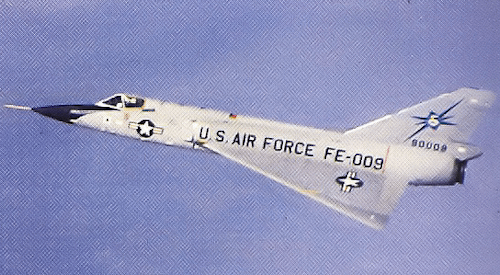
To understand Gilmore’s logbook is to understand a specific, jet-age moment in American air power. The F-102 Delta Dagger, the F-101 Voodoo and the F-106 Delta Dart were all part of what pilots called the “Century Series” — supersonic fighters and interceptors built during the Cold War, when the mission was to climb fast, catch bombers and get home.
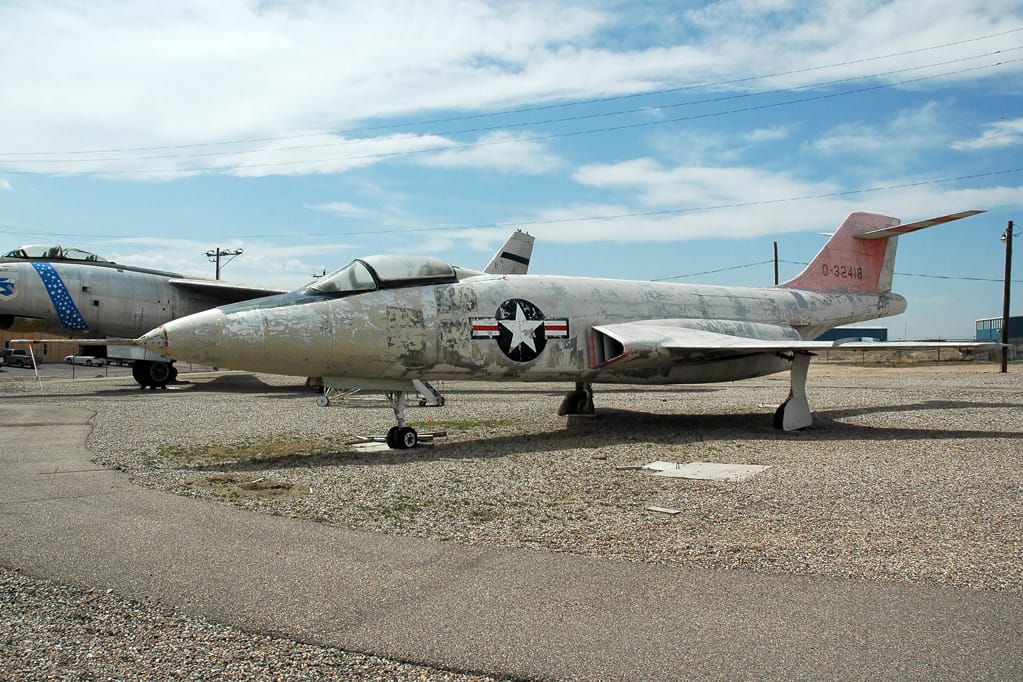
The Convair F-102 was the first operational supersonic all-weather interceptor. The McDonnell F-101 Voodoo was a big, twin-engine machine, muscular and quick, flown as an interceptor and, in its reconnaissance version, as a set of eyes over hostile ground. And the F-106 Delta Dart became the backbone of continental air defense, so capable that it soldiered on for decades. These were not forgiving aircraft. They demanded precision, and they punished the pilot who lacked it.
The Skyraider: slow, heavy, and asked to do the impossible
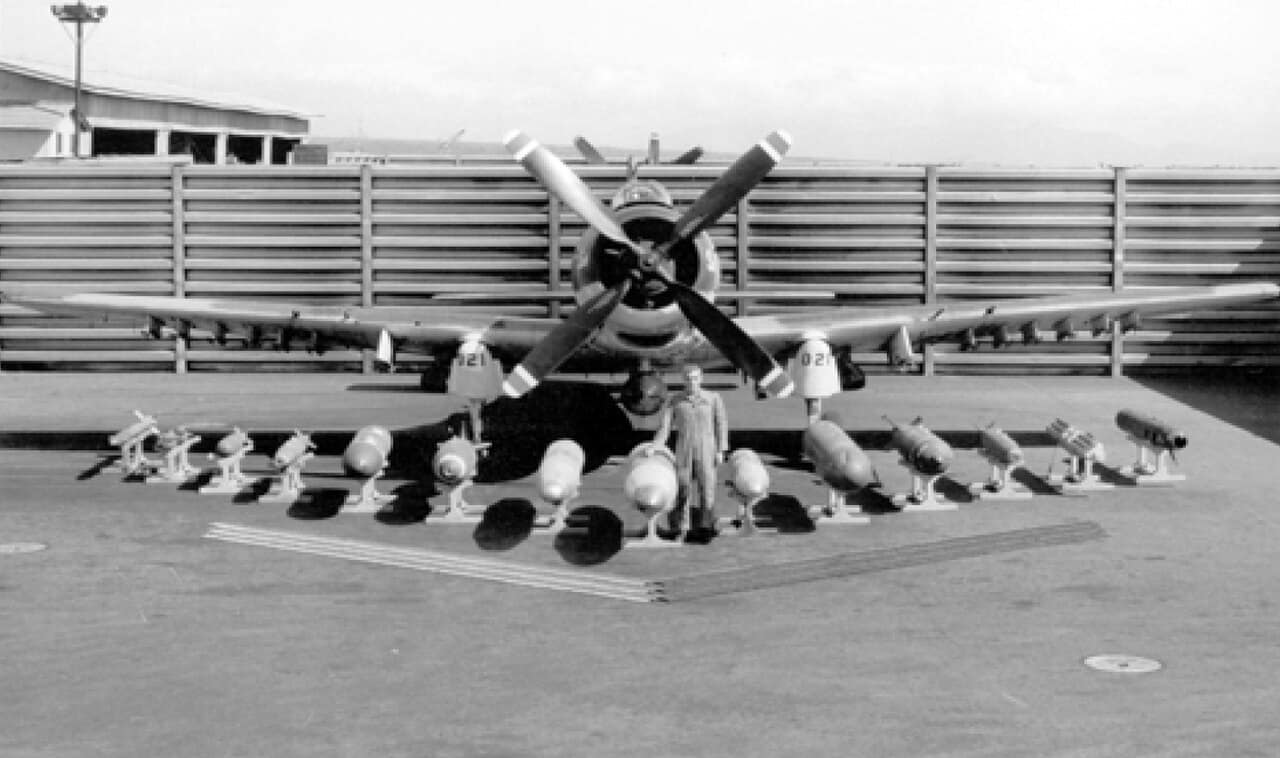
And then there was the airplane at the heart of the book. When Gilmore was assigned to the A-1 Skyraider, he stepped out of the sleek supersonic age and into something that looked like a holdover from another war — because it was. The Douglas A-1 was a big, piston-engine, propeller-driven attack aircraft, a relic on paper in a decade of jets. Pilots called it the “Spad,” after a First World War biplane.
But the Skyraider had virtues no jet could match over Southeast Asia. It could loiter for hours, carry an enormous load of ordnance, and fly low and slow enough to protect the men it was covering — which made it indispensable for close air support and for the search-and-rescue missions that went in after downed airmen. Flying low and slow, though, is exactly what exposes an airplane to everything on the ground. To climb into one, mission after mission, took a particular kind of nerve.
The coach who never left
Every combat memoir has its hinge, the moment the narrator’s luck is called in — and Gilmore’s book builds toward exactly the kind of day that reorganizes a person’s priorities permanently. What comes out the other side is something practical: hard-won rules for survival, forged in the worst conditions a pilot can face, that he carried into command when he later mentored younger fighter pilots. The coach, in other words, never really left. He just had a new team, and far higher stakes.
Why this one is worth your shelf
What makes Room 13 stand out in the crowded field of pilot memoirs is the shape of the life behind it. Most combat aviators were pointed at the cockpit from the start. Gilmore arrived by a side door, carrying the habits of a teacher into a world of afterburners and tracer fire — and it is that double vision, the coach who learned to fight and the fighter who never stopped coaching, that gives the book its warmth.
He says he wrote it to honor the pilots he flew with and to help a later generation understand what the reality of war actually asks of people. That is a modest aim for a story with 220 missions and three Distinguished Flying Crosses in it. But modesty, it turns out, is often what the best of them have in common. Somewhere there is a whistle in a drawer, and a flight helmet on a shelf, and a man who used both to do the same job: get his people home.
Sources: Official book description and author bio (RABT Book Tours; MindStir Media), 2026; Amazon and Barnes & Noble listings for Room 13: A Fighter Pilot’s Story. Aircraft background: general reference on the A-1 Skyraider and the F-102/F-101/F-106.
Related Questions
What is the book "Room 13: A Fighter Pilot's Story" about?
"Room 13: A Fighter Pilot's Story," published in April 2026, is the memoir of Colonel Kenneth Gilmore (USAF, Ret.), a college football coach who became a US Air Force fighter pilot. It recounts his improbable path from the sideline to the cockpit and his roughly 220 combat missions over Vietnam and Laos.
Who was Kenneth Gilmore?
Kenneth Gilmore was a college football coach who became a US Air Force fighter pilot, rising to the rank of full colonel. He flew about 220 combat missions over Vietnam and Laos and earned three Distinguished Flying Crosses. His memoir "Room 13" traces his transformation from coaching teenagers to flying combat at several hundred miles an hour.
What is the Distinguished Flying Cross?
The Distinguished Flying Cross is a US military decoration awarded for heroism or extraordinary achievement in aerial flight. Kenneth Gilmore earned three of them during his combat tours over Vietnam and Laos — a reflection of the intense air war later chronicled in stories like the bombing runs along Thud Ridge.
What aircraft did Kenneth Gilmore fly?
Over his career Kenneth Gilmore flew the F-102 Delta Dagger, the F-101 Voodoo, the A-1 Skyraider and the F-106 Delta Dart — a spread ranging from a piston-engined attack aircraft to supersonic interceptors, reflecting the varied types the US Air Force fielded during the Cold War and Vietnam era.
How many combat missions did Kenneth Gilmore fly?
Kenneth Gilmore flew approximately 220 combat missions over Vietnam and Laos. That tally, together with his three Distinguished Flying Crosses, places him among the more heavily decorated pilots of the conflict, and forms the backbone of his 2026 memoir "Room 13: A Fighter Pilot's Story."
0 Comentarios