
On the afternoon of 12 September 1943, a string of flimsy plywood gliders scraped down onto a boulder-strewn plateau high in the Italian Apennines, right outside a mountaintop ski hotel. Out of them poured German paratroopers and SS commandos. Within a few minutes, and with barely a shot fired in anger, they had done what they came to do: they had Benito Mussolini.
It is remembered as one of the great commando raids of the Second World War. But the truly hair-raising part was not storming the hotel — the Germans already controlled the mountain, and the Italian guards had little appetite for a fight. The hard part was what came next: getting a soft, sick, deposed dictator off a 2,100-metre peak that had no road out and no runway. The answer was one tiny aeroplane and a takeoff that had no business working.
Datos rápidos
- Operación: Unternehmen Eiche (“Operation Oak”), 12 September 1943
- Objective: free Benito Mussolini from the Hotel Campo Imperatore, a ski hotel at about 2,100 m on the Gran Sasso massif
- Ordered by: Hitler; approved by Gen. Kurt Student; planned and led by Maj. Harald Mors
- Assault force: around 100 Fallschirmjäger and SS troops in 10 DFS 230 gliders, towed aloft by Henschel Hs 126s
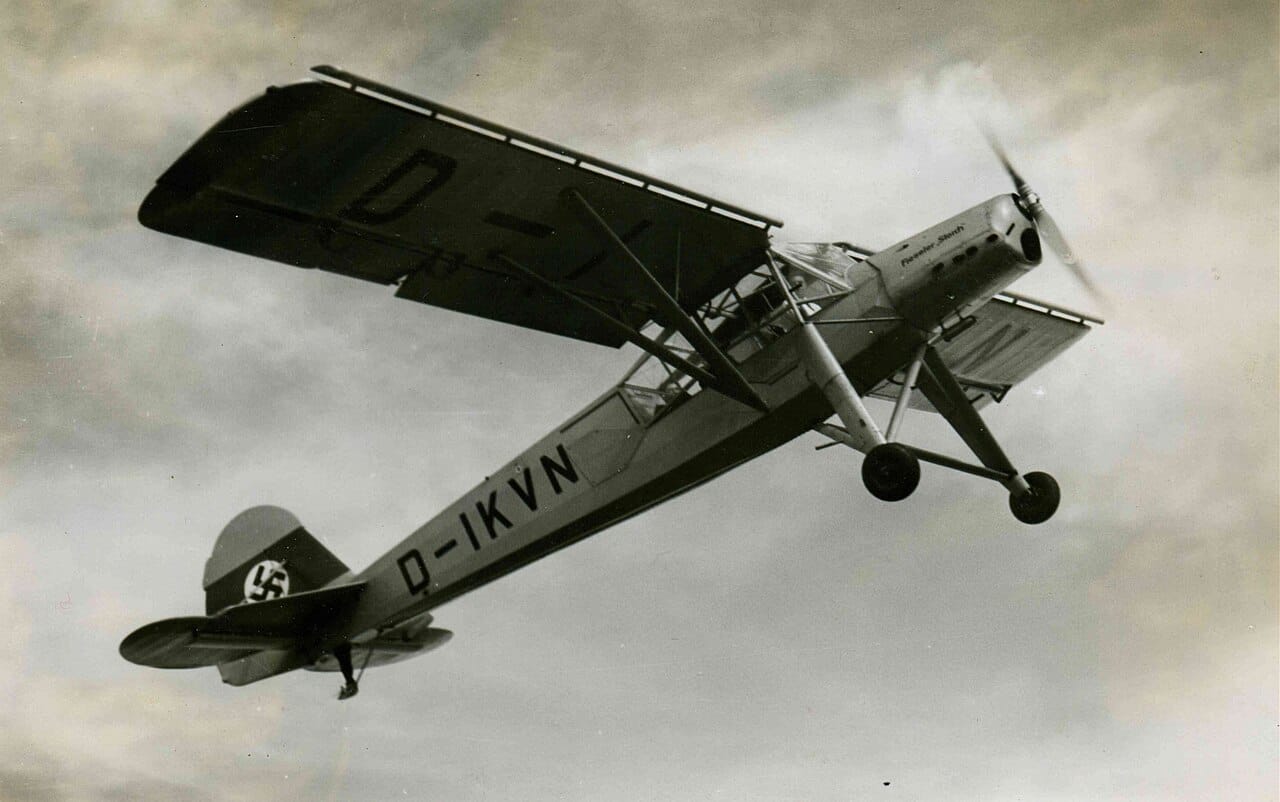
- Getaway aircraft: a single Fieseler Fi 156 Storch, flown by Gen. Student’s personal pilot, Heinrich Gerlach
- The flying feat: the overloaded Storch got airborne by rolling off the edge of the plateau and diving into the valley to gain speed
- Casualties: two Italians killed; there was almost no fighting — Mussolini himself urged the guards not to shoot
- El giro: Nazi propaganda handed nearly all the credit to SS officer Otto Skorzeny
How a Dictator Ended Up on a Mountaintop
By the summer of 1943, Mussolini’s war had collapsed around him. The Allies were in Sicily, Rome was being bombed, and on 25 July his own Grand Council voted him out. The King had him arrested and spirited from hiding place to hiding place — a Rome barracks, the island of Ponza, a villa on La Maddalena — before finally lodging him at the Hotel Campo Imperatore, a modern ski resort perched on the Gran Sasso d’Italia and reachable only by cable car. On paper it was the perfect prison.
Hitler was not willing to leave his fellow dictator to be handed over to the Allies. He secretly ordered General Kurt Student, the father of Germany’s airborne forces, to get him back. German intelligence pieced together where Mussolini was being held — partly through intercepted messages, partly through a German doctor who talked his way up to the hotel on the pretext of scouting it for a clinic. The prize was located. Now someone had to reach it.
Ten Gliders and a Borrowed General
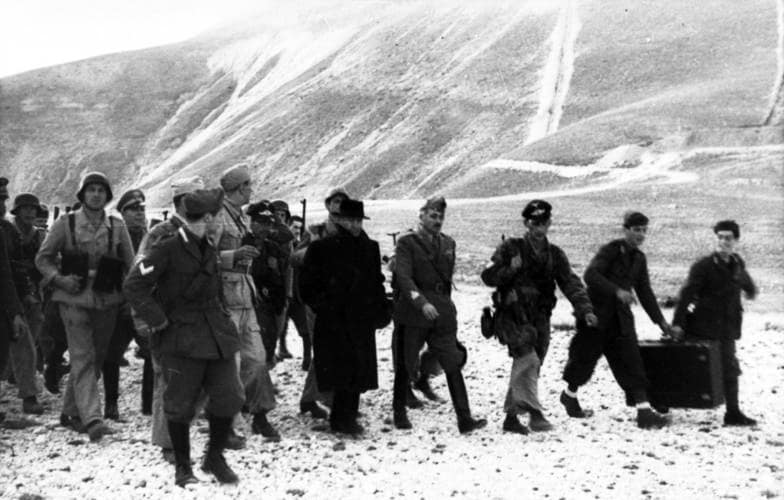
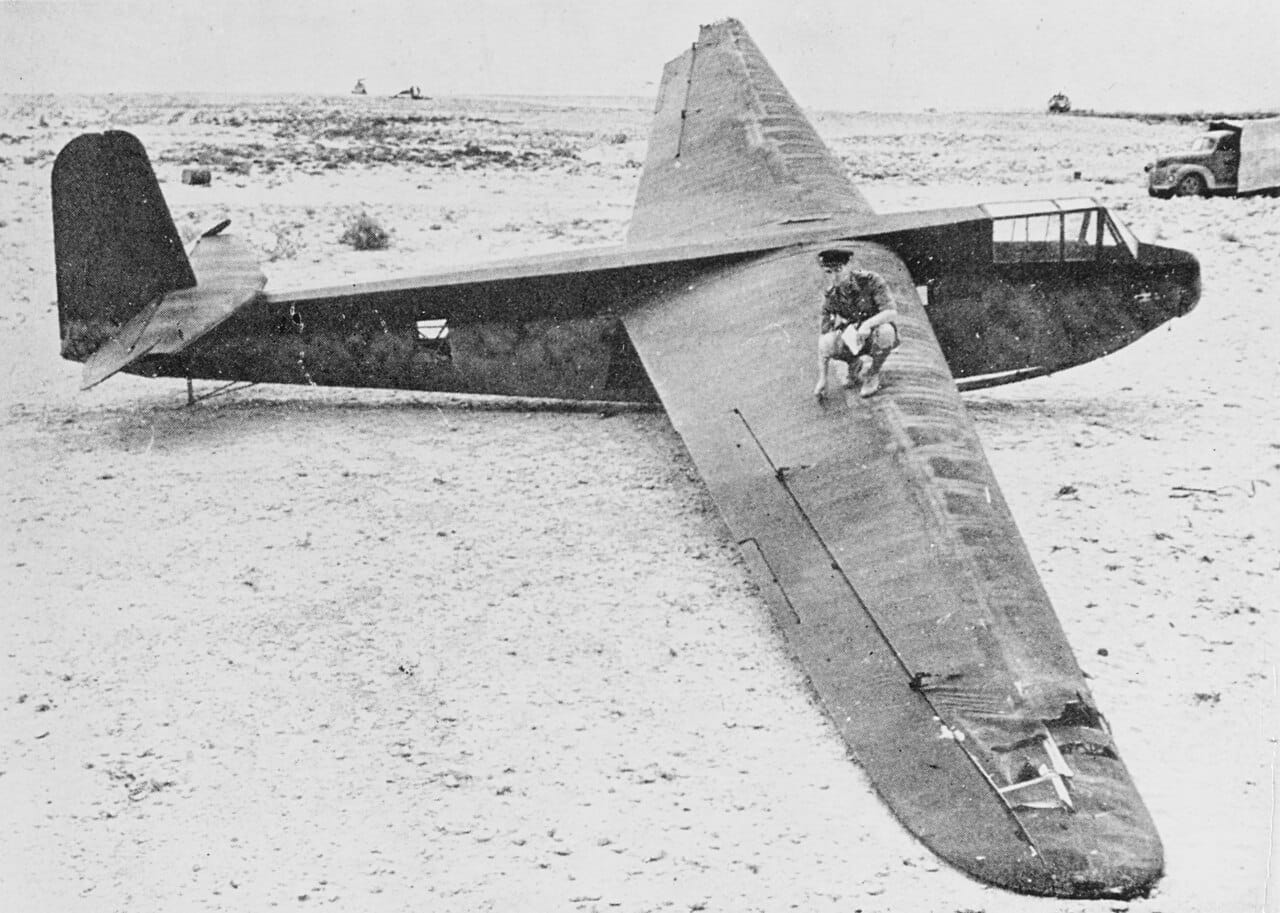
Parachuting onto a rocky plateau at that altitude was judged too risky, so Student and Major Harald Mors settled on gliders. Just after midday, Henschel Hs 126 tugs hauled ten DFS 230 assault gliders into the air from an airfield near Rome, each carrying nine soldiers and a pilot. Mors himself led an armoured column up the mountain roads to seize the cable-car station below. To keep the Italian guards from opening fire, the raiders even brought along a captured Italian general, Fernando Soleti, in the hope that his men would not shoot at an officer they recognised.
The landing was chaos — one glider came in too steep and wrecked — but it hardly mattered. Mussolini reportedly leaned from his window and begged that no blood be spilled; General Soleti shouted at the Carabinieri to hold their fire; and the garrison, like so many Italian units that confused fortnight, simply had no wish to die for the Germans. The whole assault was over in minutes. Only two Italians were killed in the entire operation. Then a barrel-chested SS officer named Otto Skorzeny bounded up to Mussolini and delivered a line he would dine out on for the rest of his life.
The Part Nobody Could Fake: Getting Him Down
Seizing Mussolini was one thing. Extracting him was the problem the whole plan hinged on — and this is where the raid becomes an aviation story. The escape aircraft was a Fieseler Fi 156 Storch, flown up by Student’s personal pilot, Heinrich Gerlach. The Storch was a genuine short-field marvel, all high wing, huge flaps and leading-edge slats, able to land and take off in almost absurdly little space. On a good day, lightly loaded, it could unstick in a few dozen metres.
This was not a good day. Gerlach’s Storch was built to carry a pilot and one passenger. Now it had to lift the pilot, the considerable bulk of Mussolini, y Skorzeny, who insisted on climbing aboard rather than be left behind by the propaganda cameras — all from a short, rock-littered strip more than two kilometres up, where the thin mountain air robs wings and engine of much of their bite. Gerlach protested the extra passenger and was overruled.
What followed is the stuff of aviation legend. The overloaded Storch bounced and lurched across the boulders, soldiers hanging onto the wings until the last second to steady it, one wheel reportedly slamming into a rock. Rather than fight for height he did not have, Gerlach did the only thing that could work: he ran the little aeroplane straight off the lip of the plateau and let it fall into the valley, trading altitude for the airspeed the wing needed to finally, grudgingly, start flying. It worked. The Storch clawed its way level and turned for Rome with the most wanted man in Italy wedged inside.
The Legend, and the Letdown
From the plateau, Mussolini was flown to Rome, then on by Heinkel He 111 to Vienna and eventually to Hitler in East Prussia. The Nazi propaganda machine went into overdrive: the picture magazine Signal and a torrent of newsreels turned the raid into a glittering triumph and made Skorzeny its swashbuckling star, showering him with promotion and a Knight’s Cross. In truth the operation had been planned and commanded by Mors and Student, the landing led by a lieutenant named von Berlepsch, and the single most dangerous job of the day flown by Gerlach. Student’s paratroopers were furious to watch the SS take the credit.
And the man at the centre of it all? Mussolini was a shadow, ill and broken, of little use to anyone. Hitler had to bully him into heading a puppet state in northern Italy, the Salò Republic, which lasted only as long as the German army propping it up. In April 1945 he was caught by partisans and shot. The rescue that dazzled the world had, in the end, only prolonged one sad and brutal footnote of the war. What endures instead is the flying: ten gliders on a mountaintop, and a little Storch that got off a peak by throwing itself off a cliff.
Sources: Óscar González López, Freeing Mussolini: Dismantling the Skorzeny Myth; Der Spiegel; Hansard (House of Commons); Wikipedia.
Publicaciones relacionadas
0 Comentarios