
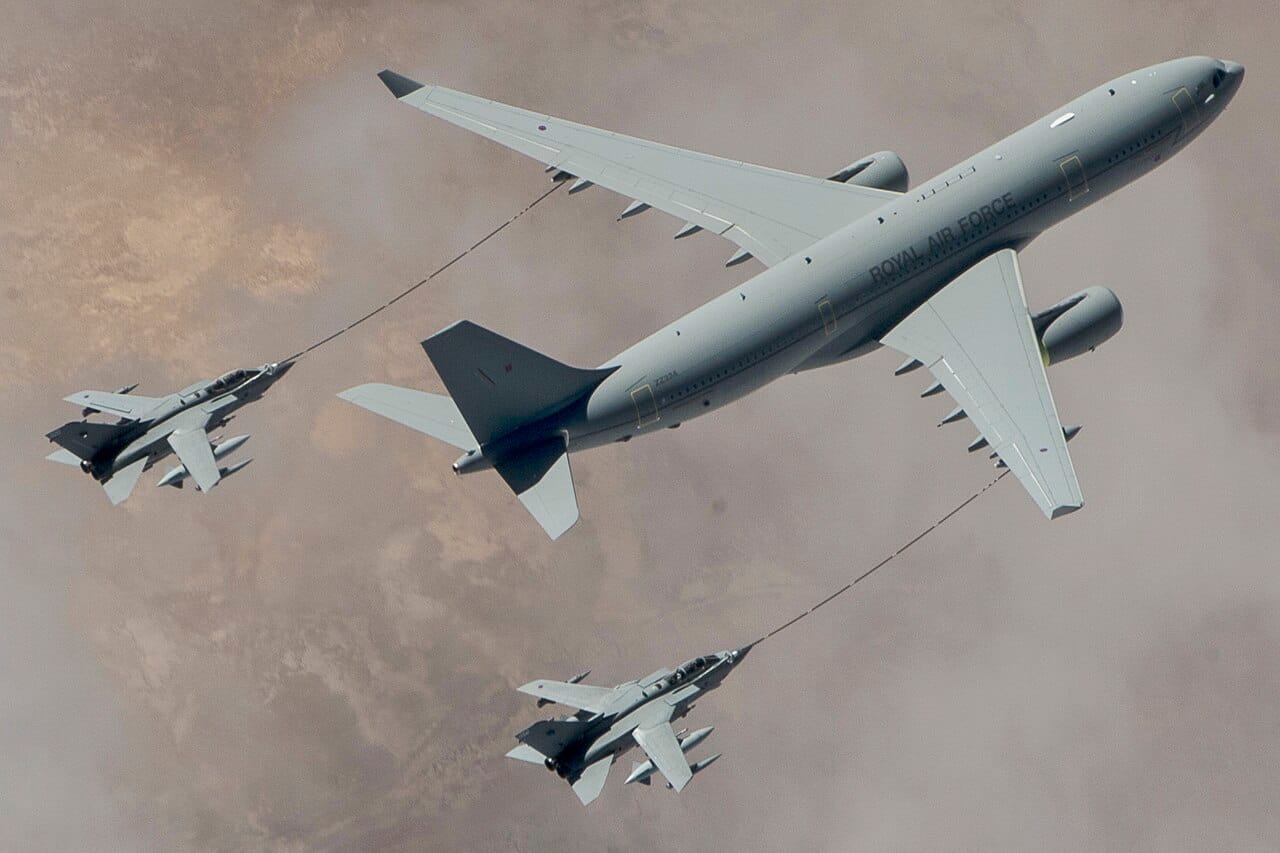
Britain owns a fleet of the most capable aerial tankers on the market — and cannot use them to refuel some of its own most important aircraft. It is one of the quiet embarrassments of the Royal Air Force, and after fifteen years the RAF has finally said out loud that it intends to fix it.
Speaking to Aviation Week in an interview reported on 16 July 2026, the Chief of the Air Staff, Air Chief Marshal Harv Smyth, confirmed the service is in talks with AirTanker to fit its Airbus A330 Voyager fleet with refuelling booms. The trigger is the next-generation fighter Britain is building with Italy and Japan: GCAP.
The admission is small in words and large in meaning. It exposes a gap that has forced Britain to lean on the Americans for years — and points to how the RAF plans to fly, and fight, in the 2030s.
DATOS RÁPIDOS
| Aeronave | Airbus A330 Voyager (RAF designations KC2/KC3) |
| Current fit | Hose-and-drogue (probe) refuelling only |
| Wanted | Flying boom capability |
| Why | GCAP fighter requirement; refuelling the RC-135 Rivet Joint |
| Fleet | ~10 operational Voyagers, owned by AirTanker (PFI lease) |
| Estado | Talks under way; no timeline or numbers disclosed (July 2026) |
Two ways to pass fuel, and Britain only has one
There are two systems for refuelling an aircraft in flight. The hose-and-drogue method trails a flexible hose with a basket on the end; the receiving pilot flies a probe into it. The flying boom is a rigid, steerable pipe lowered from the tanker’s tail, flown into a receptacle by a boom operator. Most fighters take one or the other by design.
The RAF’s Voyagers — leased from the AirTanker consortium under a private finance deal rather than owned outright — were fitted only for hose-and-drogue. That was fine when everything the RAF flew took a probe. It stopped being fine the moment Britain bought aircraft that need a boom.
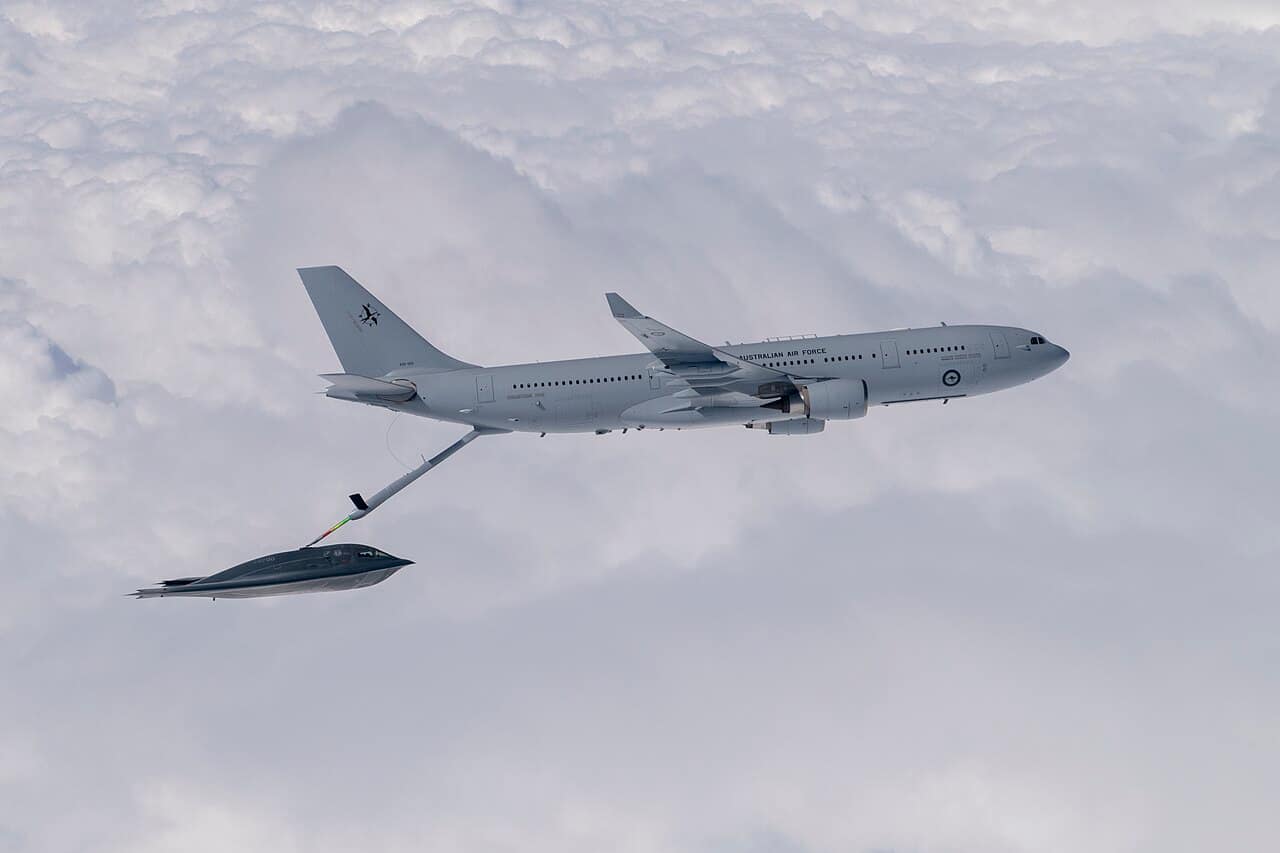
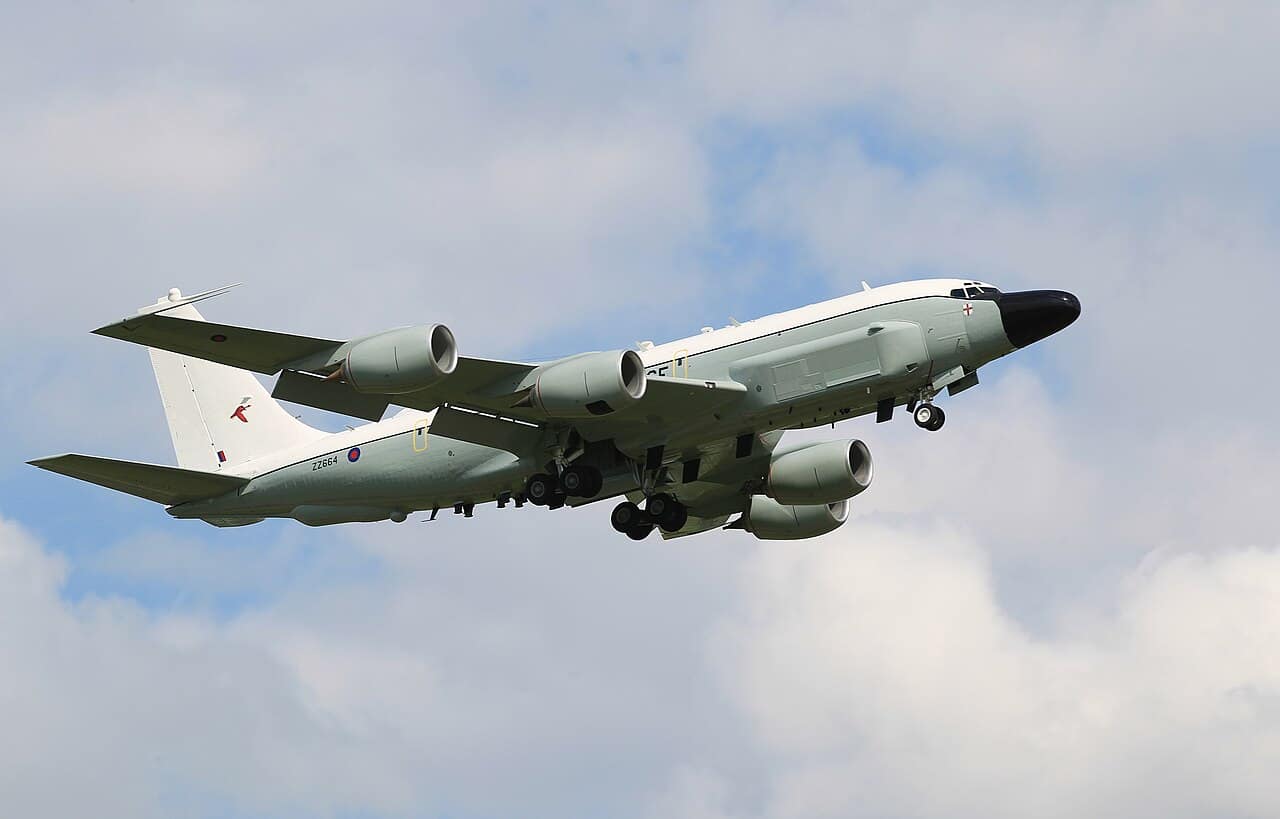
The most glaring example is the RC-135 Rivet Joint, the RAF’s signals-intelligence aircraft (known in British service as Airseeker). It refuels only by boom. So every time an RAF Rivet Joint needs topping up on a long mission, the RAF has had to ask a US Air Force tanker to do the job its own Voyagers cannot.
GCAP forces the issue
The catalyst is the Global Combat Air Programme — the sixth-generation fighter Britain, Italy and Japan are developing to replace the Typhoon. Its refuelling requirement, the RAF confirms, includes a boom. That turns a long-standing inconvenience into a hard requirement the service must now design around.
None of this will be quick. No timeline has been set, and the RAF has not said how many of its roughly ten operational Voyagers might be modified, or how the PFI ownership structure complicates the work. What has changed is direction: for the first time, Britain has publicly committed to giving its tankers the one capability they have always lacked.
For a nation that prides itself on expeditionary air power, it is a fix that is fifteen years overdue — and one that the fighter of the 2040s will simply demand.
Sources: Aviation Week; The Aviationist; ADS Advance; Janes; RAF.
0 Comentarios