
In December 2011, an Air Zimbabwe Boeing 767 landed at London Gatwick and did not leave. It was impounded over unpaid debts, and with it went the last direct air link between Zimbabwe and the United Kingdom — a route the airline had flown since April 1980.
On Wednesday, that link comes back. Air Zimbabwe flight numbers return to the Gatwick departure boards after fourteen years, three times a week, with an Airbus A330 that arrived in Harare on Monday.
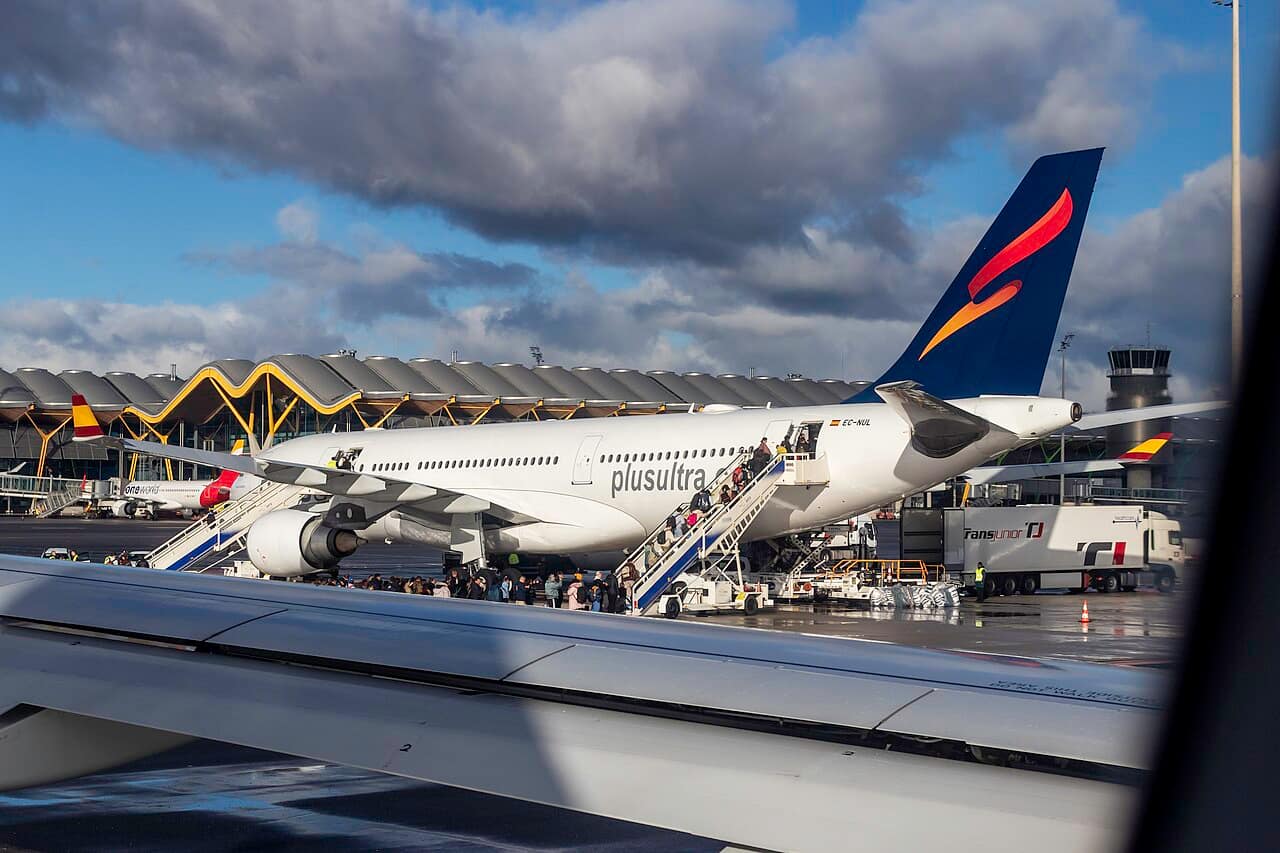
The aeroplane, though, is Spanish. And the reason why is the most interesting part of the story.
Datos rápidos
| Ruta | Harare (HRE) to London Gatwick South Terminal, resuming 22 July 2026 |
| Frecuencia | Three times weekly. Sundays, Wednesdays and Fridays from Harare; Mondays, Thursdays and Saturdays from Gatwick |
| Aeronave | Airbus A330-300, wet-leased from Plus Ultra Líneas Aéreas of Spain |
| Arrangement | A 13-month ACMI lease — aircraft, crew, maintenance and insurance all provided by Plus Ultra — brokered by Chapman Freeborn |
| Branding | Flights carry Air Zimbabwe’s code and branding. Air Zimbabwe keeps ticket sales and commercial control |
| Gap | Air Zimbabwe last served London in December 2011, when a Boeing 767 was impounded at Gatwick over unpaid debt |
| El problema | Air Zimbabwe has been on the EU Air Safety List since May 2017 and cannot operate its own aircraft to the UK or EU |
A workaround with wings
This is the part that most coverage skates over. Air Zimbabwe is not permitted to fly its own aircraft into British or European airspace. It has been on the EU Air Safety List since 2017, and the UK ban followed.
So it did not solve the safety-listing problem. It rented its way around it.
Under an ACMI wet lease — Aircraft, Crew, Maintenance, Insurance — the flight is operated by Plus Ultra Líneas Aéreas, a Spanish carrier, using a Spanish-registered A330 flown by Spanish crew under Spanish oversight. Air Zimbabwe sells the tickets, applies its own flight code and branding, and handles the passengers. Legally, Plus Ultra is flying the aeroplane.
It is an entirely normal piece of airline machinery, used everywhere from summer charter peaks to fleet groundings. It is just rarely the entire basis of a flag carrier's flagship route.

Why it matters anyway
The cynical read is that this is a flag carrier renting a costume. The more generous one — and probably the more accurate — is that a country with a large diaspora in Britain has just got a direct flight back, and the passengers boarding on Wednesday will not much care whose air operator certificate is on the paperwork.
Harare to Gatwick is roughly 8,200 kilometres. Until now the journey has meant a connection through Johannesburg, Addis Ababa, Nairobi or Dubai, with the time and cost that implies. A nonstop changes the economics of visiting family, moving goods and doing business.
Thirteen months to prove it
The lease runs for thirteen months from the start of July. That is the window Air Zimbabwe has to show the route can fill an A330 three times a week and cover what a wet lease costs — which is considerably more per hour than flying your own aircraft, because you are paying somebody else's crew, maintenance and insurance as well as their profit.
The launch has already slipped once, from 1 July to 22 July. And the underlying problem has not gone away: to fly its own aeroplanes to Europe, Air Zimbabwe would have to get off the EU Air Safety List, which requires satisfying regulators about oversight and maintenance standards rather than signing a leasing contract.
For now, though, there is an A330 on the ramp at Robert Gabriel Mugabe International, and on Wednesday it turns north.
The leased A330 arriving in Harare ahead of the route’s return.
Sources: CAPA Centre for Aviation, ch-aviation, Chapman Freeborn, AJOT, Aviator.aero.
0 Comentarios