
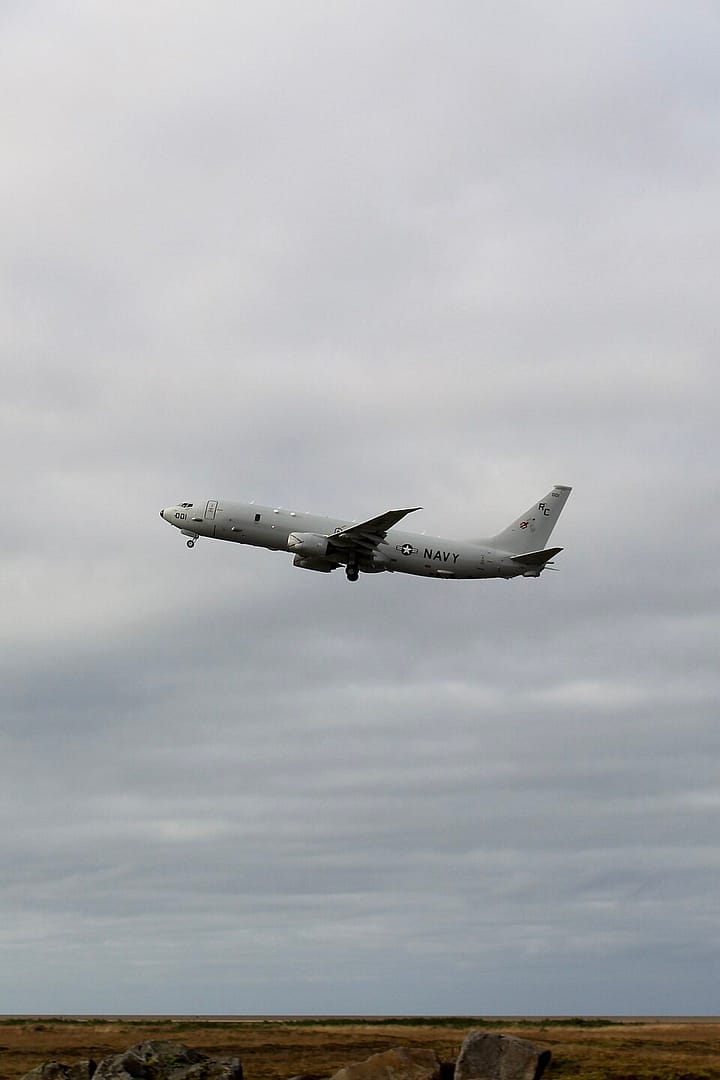
Most aviation news arrives with a roar. This one arrives with a quiet announcement that, somewhere over the cold North Atlantic, a U.S. Navy P-8A Poseidon is now flying in a configuration that can probably hear a Russian submarine before the submarine knows it is being heard.
The U.S. Navy has declared Initial Operational Capability for the P-8A Poseidon Increment 3 Block 2 — the next major upgrade of the Boeing-built submarine hunter. The acronym is unfortunate. The capability is not. Block 2 brings new sensors, new communications, new processors, and most importantly a new way of fusing data from sonobuoys, electronic support measures, and surface radar into a single picture of what is actually happening under the water. After more than a decade of operational service, the Poseidon has just become significantly harder to lose to.
Datos rápidos
Aeronave: Boeing P-8A Poseidon Increment 3 Block 2
Operating squadron: Various; operational testing by VX-1
Rango: 1,200 nm mission radius with 4 hours on station
Multitud: Two pilots, one tactical coordinator, six mission operators
Primary weapons: Mk 54 torpedo, AGM-84D Harpoon, Mk 82 / 83 / 84 bombs
Sonobuoy capacity: 129 buoys, multistatic active and passive
What Block 2 actually changes
The P-8A is, at its heart, a heavily modified Boeing 737-800 with one job: find submarines. Every square metre of its interior is dedicated to the kind of dull but vital work that maritime patrol aviation involves — flying for hours over open ocean, dropping sonobuoys in carefully calculated patterns, listening to the returns, and slowly building up a picture of what is moving below the surface.
Block 2, together with companion upgrades fielded alongside it, improves that workflow in three meaningful ways.
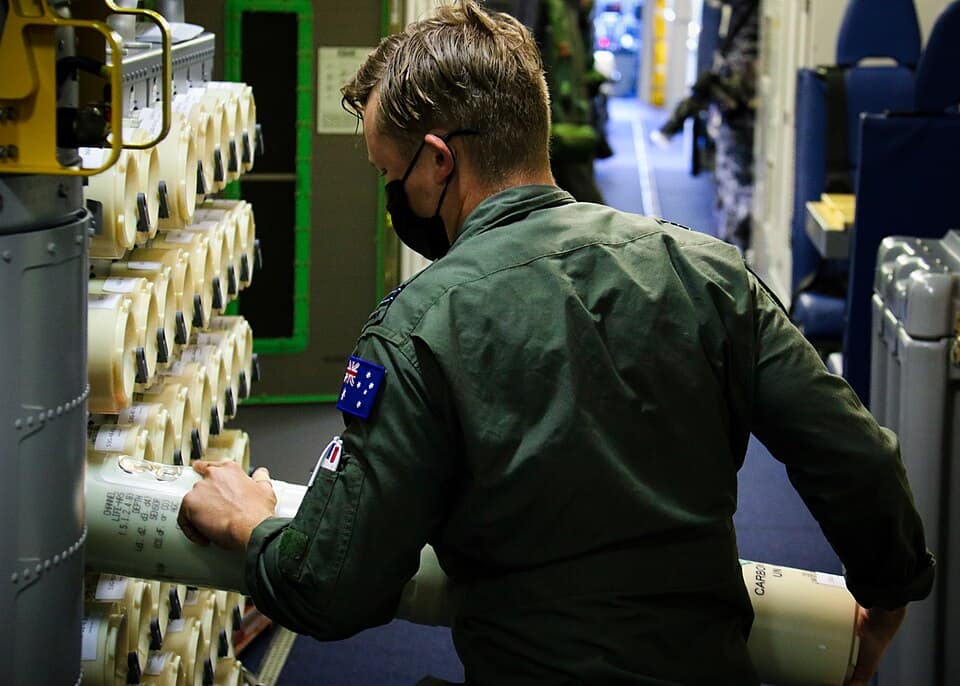
Multistatic active coherent sonar. The P-8A has fielded multistatic active sonobuoys — which ping the water themselves and listen for the return — since the earlier Increment 2 upgrade. Block 2 enhances how those returns are processed, helping the Poseidon find quiet diesel-electric submarines that passive listening alone would have missed.
High-altitude anti-submarine warfare weapons capability. Older P-8As had to descend to a few thousand feet to drop a torpedo accurately. The HAAWC kit, operational on the P-8A since 2022, lets the aircraft drop a Mk 54 torpedo from cruise altitude, with a guided wing pack that flies it to the right point in the ocean before the parachute deploys. That keeps the Poseidon out of range of any submarine-launched air-defence missile and lets it engage from far away.
Sensor fusion. The new mission system processes radar, ESM, EO/IR, and sonobuoy data in a single track manager, and it shares the resulting picture with other Poseidons, surface ships, and headquarters in near-real time. The crew sees less raw data and more conclusions.
Why this matters now
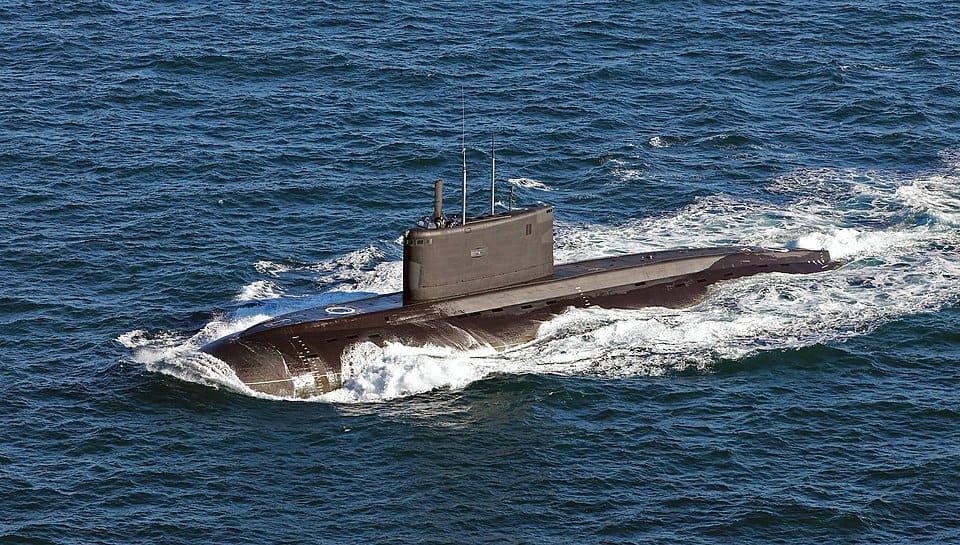
The submarine threat the Poseidon was designed to track has changed dramatically over the past decade. Russia's Yasen-class boats are an order of magnitude quieter than anything the Soviets ever built. China's nuclear submarine fleet, while still trailing, is growing fast. Iran has invested in a fleet of small diesel-electric Kilos that are nearly silent on battery. North Korea is, against most expectations, flying a small fleet of cruise-missile-capable submarines.
Against any of these, sitting back and listening passively is no longer enough. Block 2 is the U.S. Navy's bet that going active — pinging the water on demand, sharing the result instantly, and engaging at distance — restores the Poseidon's edge.
Where the Poseidons fly
The U.S. Navy currently operates roughly 130 P-8As across both coasts and Hawaii. The aircraft has also become the most successful maritime patrol export of the modern era. India, Australia, the United Kingdom, Norway, Germany, New Zealand, South Korea, and Canada have all bought, are buying, or are about to buy the type. Block 2 will, in time, flow into all of those fleets — though the timing is different in each case.
For the U.S. Navy, the immediate priority is getting Block 2 into the squadrons that fly the GIUK gap and the Western Pacific. Both are hot.
The quiet machine
Anti-submarine warfare is the kind of mission that disappears from public attention because there are no kills to celebrate, no air shows to fly. A Poseidon crew that successfully tracks a Russian submarine across the North Atlantic and quietly hands off contact to a U.S. Navy fast-attack submarine has done its job. The submarine eventually goes home. Nobody outside the community knows what happened.
Block 2 makes that quiet, invisible work measurably better. It is the kind of upgrade you only notice if it fails to happen — because then, one day, an adversary submarine that should have been tracked simply isn't.
Today, that day got pushed further out.
Sources: U.S. Navy public affairs, Boeing Defense, Naval News.
Preguntas relacionadas
What is the P-8A Poseidon?
The P-8A Poseidon is a Boeing-built maritime patrol and anti-submarine warfare aircraft based on the 737 airliner. Operated by the US Navy and allies, it hunts submarines, patrols vast ocean areas and conducts surveillance. It replaced the long-serving P-3 Orion submarine hunter.
What is the P-8A Increment 3 Block 2 upgrade?
Increment 3 Block 2 is the Poseidon's latest major upgrade, now declared at Initial Operational Capability. It adds new sensors, communications and processors, and fuses data from sonobuoys, electronic support measures and surface radar into a single picture of what is moving beneath the surface, making the aircraft far harder to evade.
What is multistatic active coherent sonar?
Multistatic active coherent sonar is a P-8A capability, enhanced under Block 2, in which sonobuoys actively ping the water and listen for the returns, rather than passively waiting for a submarine to make noise. This lets the Poseidon detect quiet diesel-electric submarines that earlier passive-only P-8s would likely have missed.
What is HAAWC on the P-8 Poseidon?
HAAWC stands for High-Altitude Anti-Submarine Warfare Weapon Capability. It is a guided wing kit that lets the P-8 drop a Mk 54 torpedo from cruise altitude, with the wing pack flying the weapon to the right spot before a parachute deploys. This keeps the aircraft above the reach of submarine-launched air defences.
What aircraft did the P-8 Poseidon replace?
The P-8A replaced the Lockheed P-3 Orion, the propeller-driven patrol aircraft that watched the oceans for around 60 years. The jet-powered Poseidon flies higher and faster, and modern upgrades have kept it ahead of increasingly quiet submarines for over a decade of service.
How is the P-8A Poseidon maintained worldwide?
As the global P-8 fleet grows, operators are building dedicated support infrastructure. For example, Australia opened the Southern Hemisphere's first P-8A deep maintenance facility, allowing heavy servicing to be done regionally rather than ferrying aircraft back to the United States.
Publicaciones relacionadas
USS Eisenhower Returns: 15 Months in Drydock, Ready for the Fleet
El submarino ruso Gripen sigue la trayectoria de un avión Gripen en aguas escandinavas.
How M-Code GPS Works — and Why Enemies Can't Jam It

0 Comentarios