
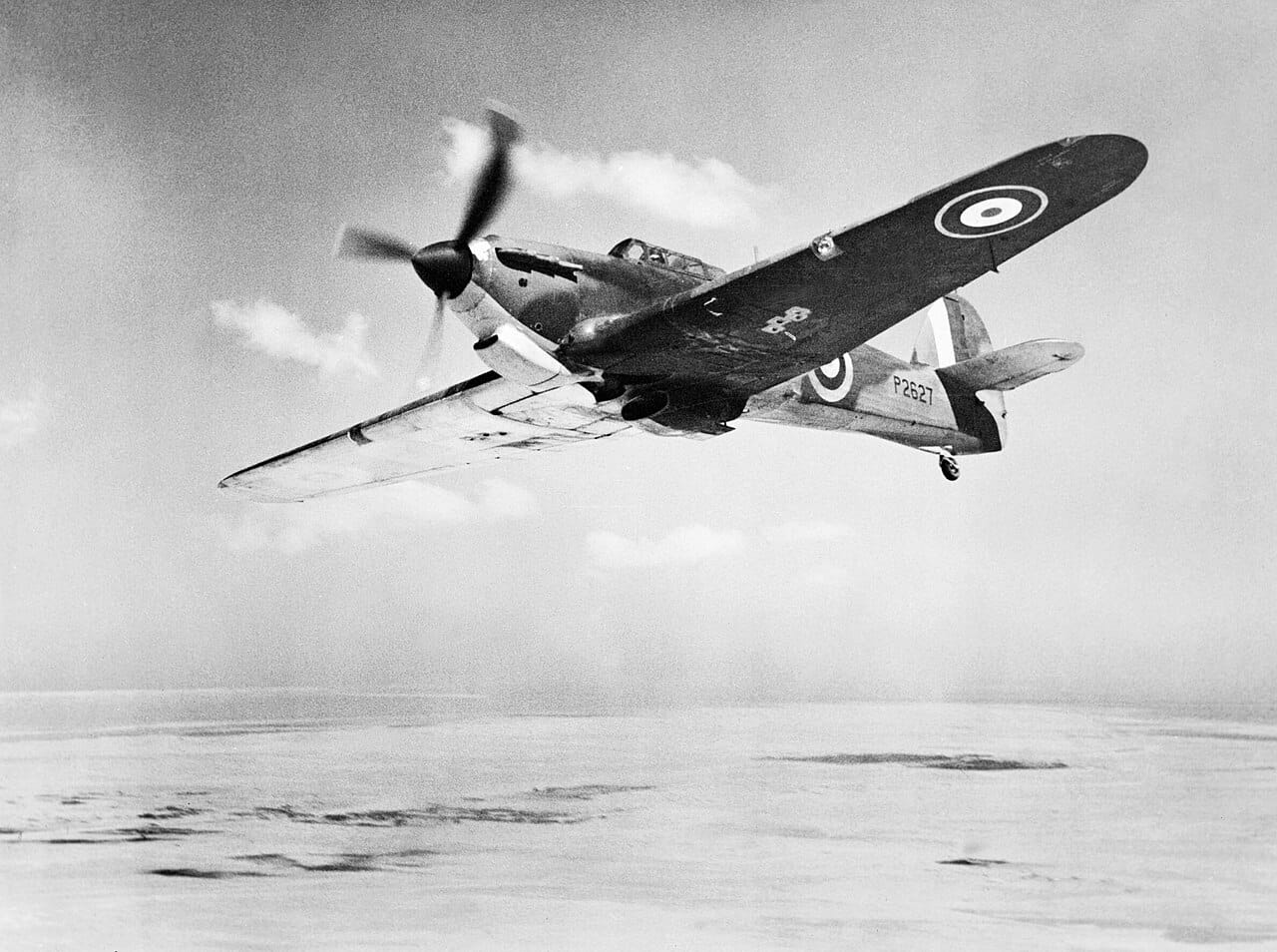
Long before he invented Willy Wonka's chocolate factory or the giant peach, Roald Dahl was lying in the Libyan desert with a fractured skull, blood in his eyes, and a burning biplane a few yards away. He was 24 years old, and he had just crash-landed a fighter he had barely been taught to fly.
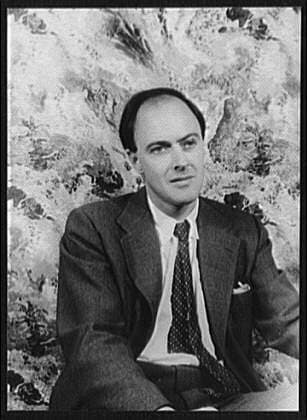
The man who would become one of the best-loved children's authors of all time spent his early twenties as an RAF fighter pilot — and by his own account, the crash that nearly killed him may be the reason he ever became a writer at all.
Datos rápidos
- OMS: Roald Dahl (1916-1990) — before the books, an RAF fighter pilot
- Servicio: Royal Air Force, 1939-1946; No. 80 Squadron
- Aeronave: Gloster Gladiator biplane, then Hawker Hurricane Mk I
- The crash: 19 September 1940, forced landing in the Libyan desert near Mersa Matruh
- Lesiones: fractured skull, smashed nose, temporarily blinded for weeks
- Historial de combate: credited as a flying ace, with five confirmed victories
- Afterwards: invalided out; a 1942 writing assignment launched his literary career
A very long drive to war
In 1939 Dahl was a young Shell Company employee in East Africa. When war came he drove 600 miles across Kenya to Nairobi to join the Royal Air Force, learning to fly in Tiger Moths under the African sun. He was tall — too tall, really, for a fighter cockpit — and he folded his lanky frame into the machine anyway.
The crash in the desert
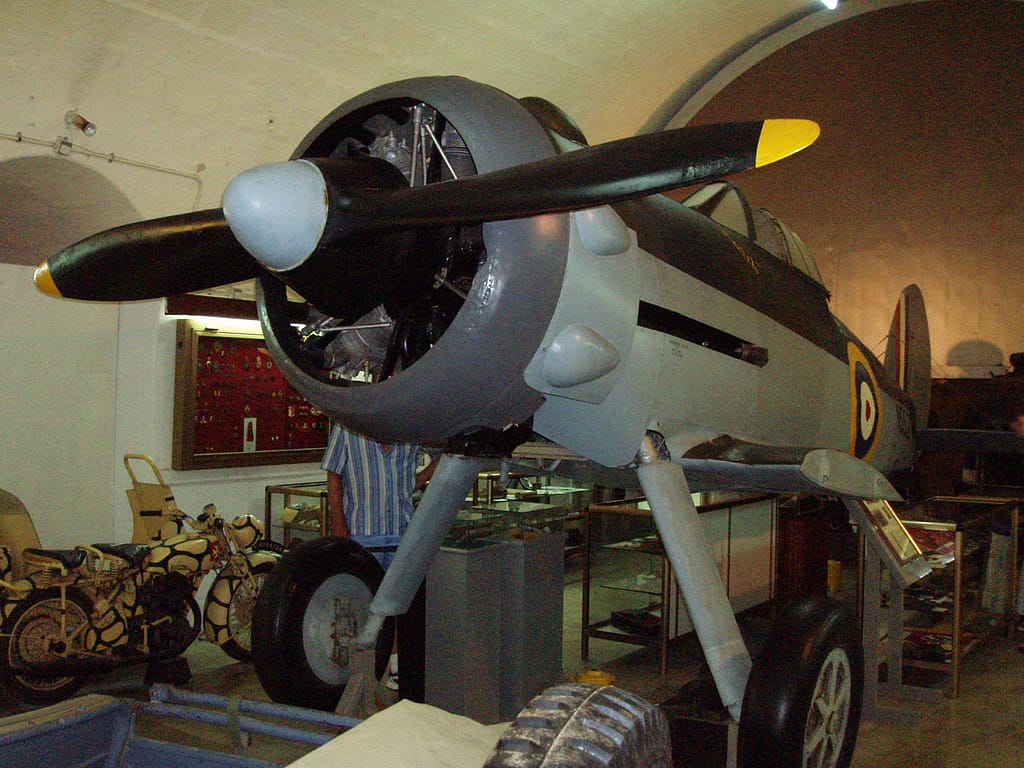
On 19 September 1940, Dahl was ordered to fly a Gloster Gladiator across the desert to join his squadron. He had never flown the type in combat, and he was given a location that turned out to be wrong — sending him into empty desert between the Allied and Italian lines. Low on fuel and with night falling, he attempted a landing. The undercarriage struck a boulder, the aircraft slammed down, and Dahl fractured his skull, smashed his nose and was blinded for weeks.
An RAF inquiry later concluded he had been sent to the wrong place. It was, in other words, not his fault — but it very nearly ended him.
Ace over Greece
Astonishingly, he recovered and returned to flying. By April 1941 he was with No. 80 Squadron in Greece, now at the controls of a Hawker Hurricane, thrown into a hopeless battle against overwhelming German air power. In the chaos over Athens he fought alone against swarms of enemy aircraft and, over the following weeks in Greece and later Syria, was credited with five confirmed kills — making him, by the strict definition, a flying ace.
It could not last. The blinding headaches from his skull fracture kept returning in the cockpit, and he was eventually invalided home. Posted to Washington as an air attaché, he was asked by the novelist C.S. Forester to write down his war experiences. The result — a vivid account of being shot down over Libya — became his first published work.
The boy who crash-landed in the desert had found, in the wreckage, the storyteller he would become. The RAF lost a pilot. The world gained Roald Dahl.
Sources: Roald Dahl, "Going Solo" (1986); Wikipedia; HistoryNet; Forces News.
Publicaciones relacionadas
0 Comentarios