
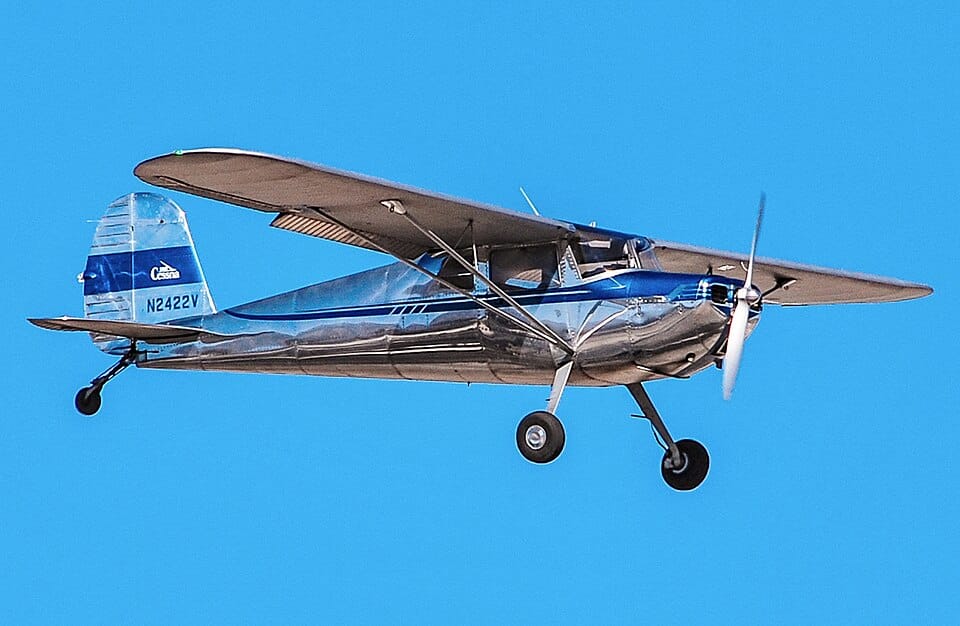
At three o'clock on a September morning in 1956, the residents of St. Nicholas Avenue in Washington Heights were asleep — blissfully unaware that a single-engine Cessna was descending toward their street from the darkness above the Hudson River. The pilot had no radio, no lights, and no landing clearance. What he did have was a blood alcohol level that would make a flight surgeon weep, a New Jersey bar bet riding on the outcome, and — as it turned out — rather extraordinary hands.
His name was Thomas Fitzpatrick. He was 26 years old, a Marine Corps veteran and an ironworker from New Jersey. In the long catalogue of reckless aviators who have pushed light aircraft into situations they were never designed for, he stands almost entirely alone. Not because he landed on a Manhattan street. Because he did it twice.
Datos rápidos
OMS: Thomas Fitzpatrick, Marine veteran and ironworker, born 1930, New Jersey
Primer vuelo: September 30, 1956 — Teterboro Airport to St. Nicholas Avenue, Manhattan
Second flight: 1958 — Teterboro Airport to Amsterdam Avenue, Manhattan
Aeronave: Cessna 140 (1956) and Cessna 120 (1958), both stolen
Distance: Approximately 10 miles, New Jersey to upper Manhattan
Penalty, first offence: $100 fine
Penalty, second offence: 6 months in prison
The Bet That Started It All
The evening of September 30, 1956 began unremarkably enough. Fitzpatrick was at a bar in Washington Heights — the neighbourhood that sits on the high northern ridge of Manhattan, overlooking the George Washington Bridge and the flat New Jersey lowlands beyond. Someone made a remark. Someone else doubted. The bet: Fitzpatrick claimed he could get from New Jersey to New York City in under fifteen minutes.
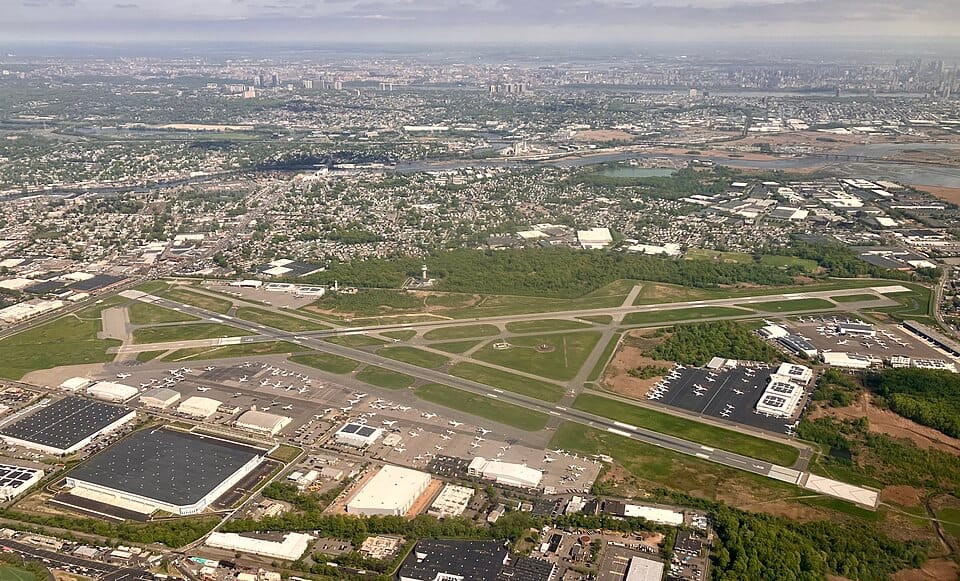
What made this claim remarkable was that Fitzpatrick knew how to fly. He knew something the rest of the bar did not — that Teterboro Airport in New Jersey was only about ten miles away as the crow flies, and that in a light single-engine aircraft, ten miles takes about eight minutes. He excused himself, crossed the George Washington Bridge into New Jersey, made his way to Teterboro, and stole a Cessna 140 off the ramp.
The Cessna 140 is a docile, forgiving aircraft — a two-seat taildragger with a fixed landing gear and an 85-horsepower Continental engine. It cruises at around 100 mph. It was designed for American countryside: grass strips, small town airports, Sunday afternoon flights over farmland. It was emphatically not designed to be flown at night without lights, without radio, into one of the most densely populated urban corridors on earth.
Fitzpatrick flew it anyway. He crossed the Hudson at low altitude, navigated by the Manhattan street grid glowing below him, identified St. Nicholas Avenue — the wide boulevard where his bar sat — and set the Cessna down between the parked cars. He cut the engine, climbed out, walked back into the bar, and sat down. The whole thing had taken less than fifteen minutes.
A Hundred Dollars and an Arrested Career
The police were not thrilled. New York City in 1956 had seen its share of eccentrics, but landing a stolen light aircraft on a residential street at three in the morning was sufficiently unusual to attract attention even by Manhattan standards. Fitzpatrick was charged with grand larceny for stealing the aircraft. The New York courts — apparently moved by some combination of admiration for the audacity and relief that nobody had been killed — levied a fine of $100.
One hundred dollars. For what was arguably the most reckless unsanctioned aviation feat in New York City history, it seems — in retrospect — rather lenient. Fitzpatrick paid the fine, went back to work as an ironworker, and presumably went back to bars in Washington Heights.
The actual flying skill involved is not trivial. St. Nicholas Avenue is about 100 feet wide between buildings. A Cessna 140's wingspan is 33 feet. The approach speed in short-field configuration is around 55 mph. Setting it down accurately, at night, in an urban canyon with parked cars on both sides, requires genuine precision — the kind that comes from real flying ability, not luck alone. Multiple aviation writers have noted that this feat, however reckless, demonstrates a level of airmanship that many licensed pilots would struggle to replicate in daylight on an actual airstrip.
Round Two: The Sequel Nobody Asked For
Two years passed. 1958. Fitzpatrick was in a different bar. Someone doubted the story. The tale of the midnight Manhattan landing had presumably been told many times by this point — across bars, at ironworker job sites, over kitchen tables in New Jersey. And someone, fatally, said: prove it.
Fitzpatrick drove to Teterboro. He found another Cessna, a 120 this time. He flew it across the Hudson. This time he set down on Amsterdam Avenue at 187th Street, a few blocks from his original landing site. He returned to the bar. The courts, this time, were considerably less amused.

The judge — reasoning, one imagines, that a $100 fine had failed as a deterrent in any meaningful sense — sentenced Fitzpatrick to six months in jail. He served his time, was released, and went on to have a successful career as a steamfitter. He died in 2009 at the age of 79, having managed not to steal any more aeroplanes in the intervening decades.
Why the Story Won't Die
There is a version of this story in which Thomas Fitzpatrick is simply a reckless drunk who got very lucky twice. That version is not entirely wrong. The risk to pedestrians, to residents of those apartment buildings, to the aircraft's owner, and to anyone else who happened to be on St. Nicholas or Amsterdam Avenue at three in the morning was real and unjustifiable.
But the story endures — told and retold in aviation circles, in New York City history accounts, in "most audacious pilot" lists — because it sits at the intersection of several things that humans find irresistible. Genuine skill deployed in spectacular defiance of every rule. A bet honoured in the most improbable way possible. And the sheer improbability of getting away with it once, let alone twice. The aircraft ended up parked between parked cars on a Manhattan street, undamaged. The pilot walked into a bar. And American aviation had a story it would still be telling seventy years later.
Fitzpatrick never became famous in his lifetime — not in the way pilots who break records or fly combat missions become famous. He was, as far as the record shows, a working man who could fly, who had a gift for improvised airmanship, and who twice made the extraordinary decision to demonstrate that gift in the worst possible venue. He is remembered now as a footnote — an extraordinary, infuriating, slightly magnificent footnote — in the history of aviation in America.
Sources: New York Times archives (1956, 1958); New York City Municipal Archives; FAA historical records; Aviation History magazine; New York Post archives
Preguntas relacionadas
Who landed a plane on a Manhattan street?
Thomas Fitzpatrick, a New Jersey ironworker and Marine Corps veteran, landed a small plane on a Manhattan street not once but twice, in 1956 on St. Nicholas Avenue and again in 1958 on Amsterdam Avenue, both times after taking the aircraft from Teterboro Airport.
Why did Thomas Fitzpatrick land a plane on a New York street?
The first landing, on 30 September 1956, settled a bar bet: Fitzpatrick claimed he could get from New Jersey to New York City in under fifteen minutes. He took a Cessna from Teterboro Airport and put it down on St. Nicholas Avenue in the early morning.
How many times did Thomas Fitzpatrick land on a Manhattan street?
Twice. He landed a Cessna 140 on St. Nicholas Avenue in September 1956, and a Cessna 120 on Amsterdam Avenue in 1958, the second time reportedly after someone doubted that his first feat had really happened.
What punishment did Thomas Fitzpatrick receive?
For his first street landing in 1956 Fitzpatrick was fined just $100. For the second landing in 1958 he was sentenced to six months in prison. Both flights covered roughly ten miles from New Jersey to upper Manhattan.
What aircraft did Fitzpatrick land on the street?
He used two small Cessna light aircraft, both taken from Teterboro Airport: a Cessna 140 for the 1956 landing on St. Nicholas Avenue and a Cessna 120 for the 1958 landing on Amsterdam Avenue.
Publicaciones relacionadas
Matthias Rust: The Teenager Who Flew a Cessna to Red Square
The Cornfield Bomber: The F-106 That Landed Itself
0 Comentarios