

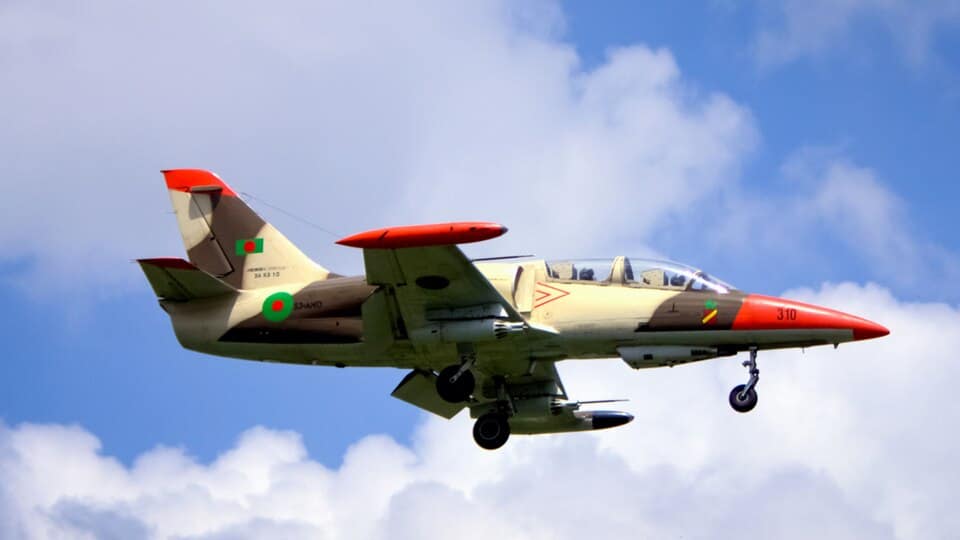
If you've ever dreamed of flying a fighter jet, chances are your dream will come true in the cockpit of an L-39 Albatros. This sleek Czech-built trainer has become the undisputed king of civilian jet flight experiences, and MiGFlug offers it in more locations around the world than any other operator. But how did a Cold War-era training aircraft become the most accessible gateway to supersonic-adjacent thrills?
The answer lies in a rare combination of performance, practicality, and pure flying joy. The L-39 delivers genuine military jet performance — pulling up to 8G in turns, rocketing skyward with the throttle wide open, and rolling inverted over stunning landscapes — all while keeping its passenger remarkably comfortable in one of the most spacious tandem cockpits ever designed.
For MiGFlug, the L-39 represents the sweet spot between raw power and passenger accessibility, making it the cornerstone of their worldwide fighter jet experience program.
Quick Facts
Aircraft: Aero L-39 Albatros
Origin: Czechoslovakia, first flight 1968
Units built: 2,800+
Top speed: 750 km/h (466 mph)
Max G-force: +8G / -4G
MiGFlug locations: Multiple countries worldwide
Born Behind the Iron Curtain, Built for the World
The Aero L-39 Albatros first took to the skies in November 1968, designed by the Czechoslovak aircraft manufacturer Aero Vodochody as a successor to the L-29 Delfin. What the engineers at Aero created was nothing short of revolutionary: the world's first jet trainer powered by a turbofan engine, which gave it better fuel efficiency and range than anything in its class.
The Warsaw Pact quickly adopted it as its standard training aircraft. Over the next two decades, more than 2,800 L-39s rolled off the production line, making it the most widely used jet trainer in the world. Air forces from over 30 countries — from the Soviet Union to Nigeria, from Algeria to Vietnam — used it to train their fighter pilots before they graduated to front-line combat aircraft.

Why the L-39 Is Perfect for Passengers
Many fighter jets were designed with one purpose: air superiority. The L-39 was designed with a fundamentally different mission — teaching people to fly jets. That training DNA is precisely what makes it the ideal aircraft for civilian fighter jet experiences.
The tandem cockpit gives the passenger their own seat with excellent forward visibility, a full set of instruments, and even a control stick. Unlike the cramped confines of a single-seat fighter, the L-39's rear cockpit feels almost spacious. The large bubble canopy provides panoramic views that make aerobatic maneuvers even more spectacular — you can see the horizon spinning around you during rolls, watch the ground rush up during dives, and take in sweeping vistas at altitude.
The aircraft's handling characteristics are equally well-suited to the passenger experience. The L-39 is responsive without being twitchy, powerful without being overwhelming. It can pull serious G-forces — up to 8G in certain configurations — but it transitions smoothly between maneuvers, giving passengers time to process each thrill before the next one begins.

What a MiGFlug L-39 Flight Looks Like
A typical MiGFlug L-39 experience begins well before you strap into the cockpit. You'll arrive at the airfield for a comprehensive briefing covering the aircraft, safety procedures, and the maneuvers you'll experience. You'll be fitted with a flight suit, helmet, and in some locations, a G-suit — the same pressure garment that military pilots wear to prevent blackouts during high-G turns.
Once airborne, the experience typically lasts 20 to 60 minutes depending on the package you've chosen. Most flights include a mix of high-speed low passes, aerobatic maneuvers like loops, rolls, and Immelmann turns, plus high-altitude cruise segments where you can take in the scenery from an entirely new perspective. Some locations even offer air combat maneuvering — simulated dogfights between two L-39s that will test your G-tolerance and leave you grinning for days.
The best part? In many MiGFlug L-39 programs, you actually get to take the controls. Under the pilot's watchful guidance, you can fly the jet yourself — feeling the responsive stick, banking through turns, and experiencing what it truly means to be a fighter pilot.
Where MiGFlug Offers L-39 Flights
One of the reasons the L-39 dominates the civilian jet experience market is its global availability. MiGFlug operates L-39 programs in more countries than any other fighter jet type, giving you the flexibility to combine your fighter jet dream with destinations you already want to visit.
From the sun-drenched coastlines of Florida to the dramatic mountains of Europe, each L-39 location offers a unique combination of flying thrills and breathtaking scenery. The aircraft's excellent range and reliability make it ideally suited for operations at airfields around the world, and its relatively low operating costs (compared to front-line fighters) help keep the experience accessible.
Whether you want to fly over Mediterranean coastlines, American heartland, or European countryside, there's likely an L-39 waiting for you. Check the full list of MiGFlug L-39 Albatros flights to find the location that speaks to your sense of adventure.
The L-39 Legacy Continues
More than five decades after its first flight, the L-39 Albatros remains one of the most capable and beloved jet aircraft in the world. Its successor, the L-39NG (Next Generation), proves that the basic design philosophy — jet performance with pilot-friendly handling — is as relevant today as it was in 1968.
For MiGFlug customers, the L-39 represents something special: a genuine military jet that welcomes you into its cockpit rather than intimidating you. It's fast enough to press you into your seat, agile enough to make the world spin, and comfortable enough to let you actually enjoy every second of the experience.
Ready to find out why thousands of MiGFlug customers have fallen in love with the L-39 Albatros? Explore L-39 flights worldwide and start planning the ride of your life.
Sources: Aero Vodochody official history, Jane's All The World's Aircraft, MiGFlug flight operations data.
Related Questions
What is the L-39 Albatros?
The Aero L-39 Albatros is a Czechoslovak-built jet trainer that first flew in 1968. Designed by Aero Vodochody as a successor to the L-29 Delfin, it became the most widely used jet trainer in the world and the most popular aircraft for civilian fighter-jet experiences.
When did the L-39 Albatros first fly?
The L-39 Albatros made its first flight in November 1968. It was developed in Czechoslovakia by Aero Vodochody and was soon adopted as the standard training aircraft of the Warsaw Pact, going on to serve air forces around the world for decades.
How many L-39s were built?
More than 2,800 L-39 Albatros aircraft were produced over roughly two decades. This large production run, combined with its rugged design and low operating cost, is a key reason so many survive in private and civilian hands today.
How fast is the L-39 Albatros?
The L-39 Albatros has a top speed of about 750 km/h (466 mph). While slower than a supersonic fighter, this is more than fast enough for spirited aerobatics, and its handling makes it ideal for giving passengers a genuine fast-jet experience.
Why is the L-39 so popular for civilian jet flights?
The L-39 is rugged, affordable to operate and built as a two-seat trainer, making it perfectly suited to carrying passengers. With over 2,800 built and many in private hands, it is the most accessible way to fly in a fighter jet, offered in more locations than any other jet.
What aircraft did the L-39 replace?
The L-39 Albatros replaced the earlier L-29 Delfin as the Warsaw Pact's standard jet trainer. The L-39 was a major step forward, introducing a more efficient turbofan engine and better performance to train a new generation of military pilots.
What made the L-39 revolutionary?
The L-39 was the world's first jet trainer powered by a turbofan engine. This gave it better fuel efficiency and greater range than rival trainers of its class, which helped make it the standard across the Warsaw Pact and more than 30 air forces worldwide.
How many G-forces can the L-39 pull?
The L-39 Albatros is stressed for roughly +8G and -4G, allowing a full range of aerobatic manoeuvres. Passenger flights stay well within comfortable limits, but you can find out what those G-forces do to your body before you fly.
0 Comments