
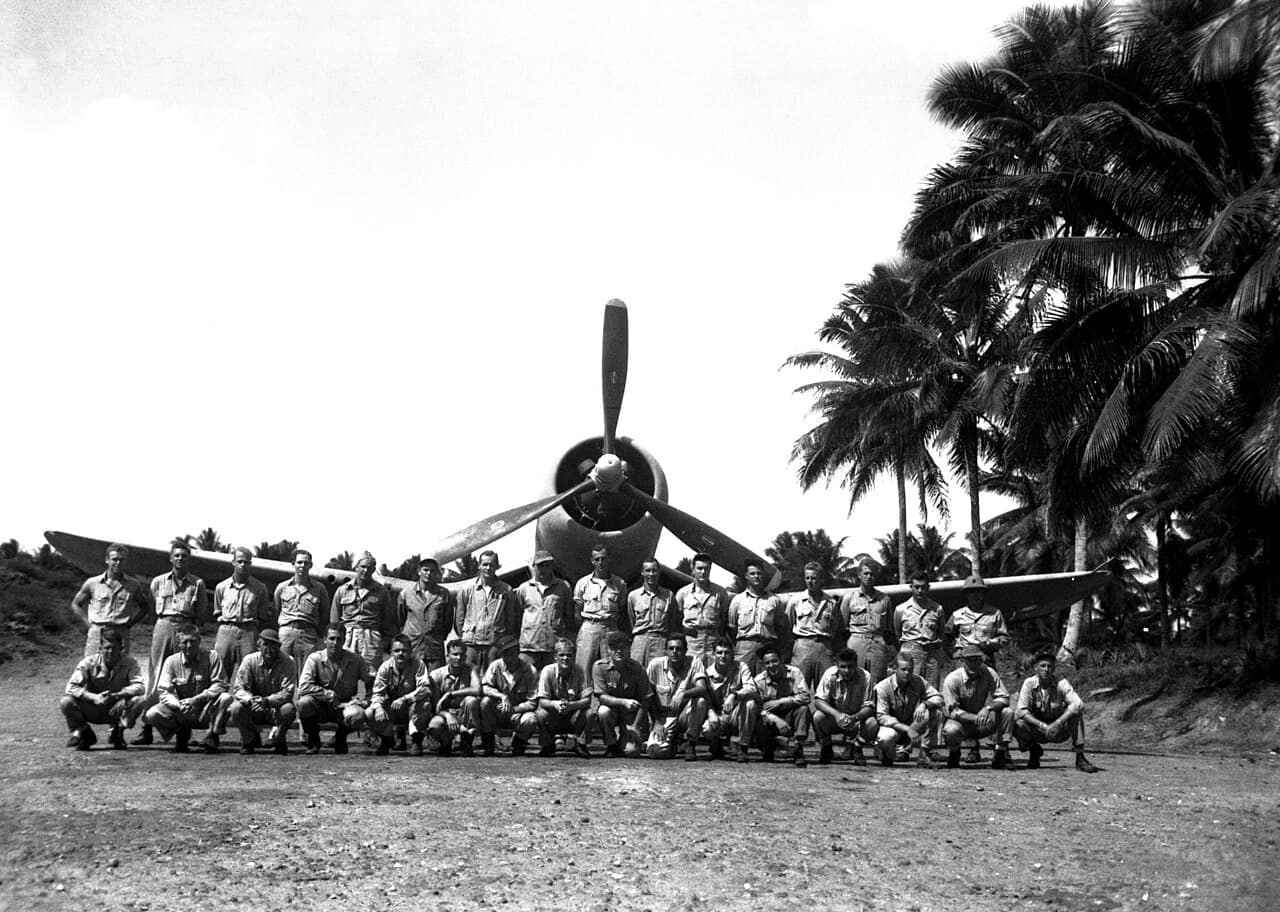
He was a brawler, a drinker, a man who forged his own name to get into flight school and punched a superior officer on his way out of one. He was also, when strapped into the cockpit of a bent-wing Corsair over the Solomon Islands, one of the finest fighter pilots the United States ever produced. Gregory Boyington contained both of those men, and never apologised for either.
The squadron he built from spare pilots and cast-offs became the most famous in Marine Corps history: VMF-214, the Black Sheep. For a few blazing weeks over the Pacific they were untouchable. Then their leader vanished, and America spent a year and a half believing he was dead.
Datos rápidos
- OMS: Col. Gregory “Pappy” Boyington (1912–1988), U.S. Marine Corps
- Squadron: VMF-214, the “Black Sheep,” formed in the South Pacific in 1943
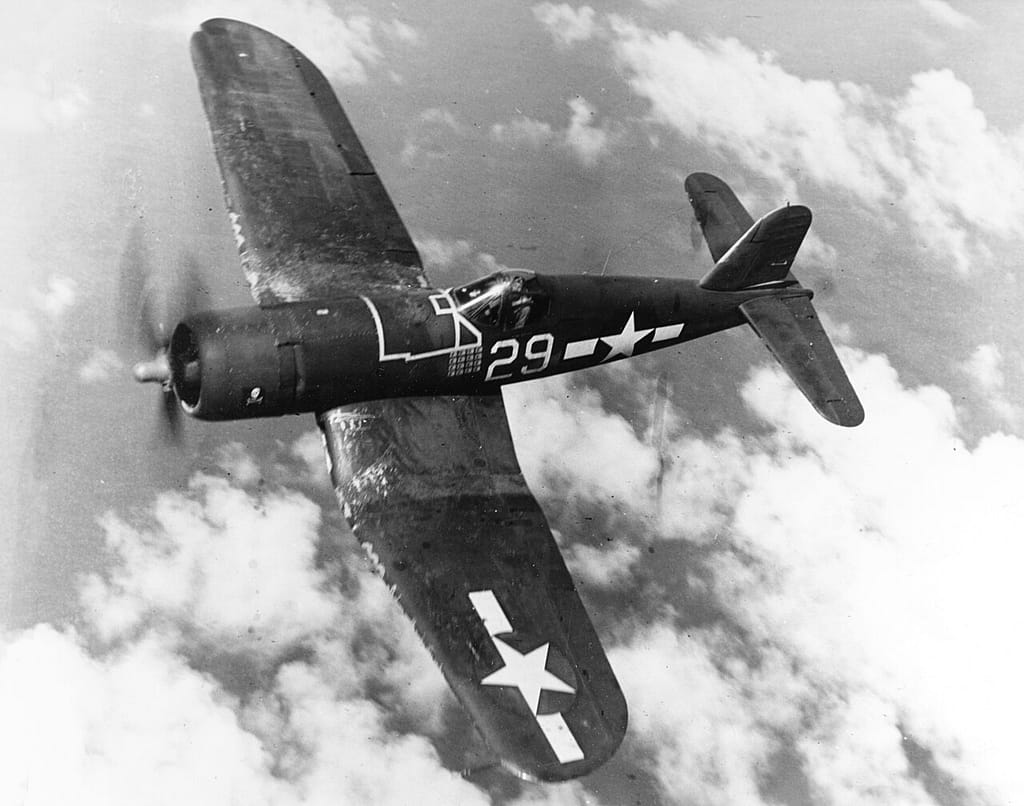
- Aeronave: the Vought F4U Corsair
- Puntaje: credited with 28 aerial victories by war’s end (the six from his Flying Tigers days remain debated)
- Derribado: 3 January 1944 over Rabaul; captured and held as a POW for 20 months
- Honors: Medal of Honor and Navy Cross
Gramps Takes Command
Before the Marines, Boyington had flown for the Flying Tigers in Burma, where he was credited with six kills — a figure argued over ever since — and where fellow pilots frankly disliked him. He returned to the Marine Corps in 1942, and in 1943 was handed a scratch squadron of replacement pilots in the Solomons. At 31 he was a decade older than most of them. They called him Gramps, which a war correspondent softened to Pappy, and the name stuck forever.
What Pappy did with those men was astonishing. In one 32-day stretch he personally shot down 14 Japanese aircraft. He led from the front and fought dirty-smart, studying enemy tactics and then using them. His most famous stunt came on 17 October 1943, when he circled the Japanese airfield at Kahili with two dozen fighters and simply dared the enemy to come up. Sixty aircraft were based there; twenty of them were shot down that day, and not one Black Sheep was lost.
The squadron’s swagger became legend. When major-league baseball players offered to send caps, Boyington’s men promised to shoot down a Japanese Zero for every one. Twenty caps arrived. They made good on the deal.
The Day He Disappeared
On 3 January 1944, Boyington led a fighter sweep over the great Japanese stronghold at Rabaul. He downed another plane — and then, in the swirling dogfight, he was gone. His wingman, Captain George Ashmun, was killed. No one saw what happened to Pappy. After a fruitless search, the Marine Corps declared him missing, and in March President Roosevelt awarded him the Medal of Honor, assuming it would be given to his family.
He was not dead. Boyington had been fished out of the sea by the crew of a Japanese submarine and spent the next 20 months in prison camps, from Rabaul to a camp near Tokyo, alongside other famous prisoners including the Olympic runner Louis Zamperini. The Japanese never registered him as a POW, so to the world he remained lost. He was finally freed at the end of August 1945, gaunt but alive, and — by his own wry admission — healthier for two years of forced sobriety.
The Legend and the Man
Boyington received his Medal of Honor from President Truman in October 1945. The rest of his life was rockier than his war: heavy drinking, several divorces, a string of civilian jobs, even a spell as a professional-wrestling referee. In the 1970s a television series, Baa Baa Black Sheep, made him famous all over again — a version of events he cheerfully dismissed as “hogwash and Hollywood hokum.”
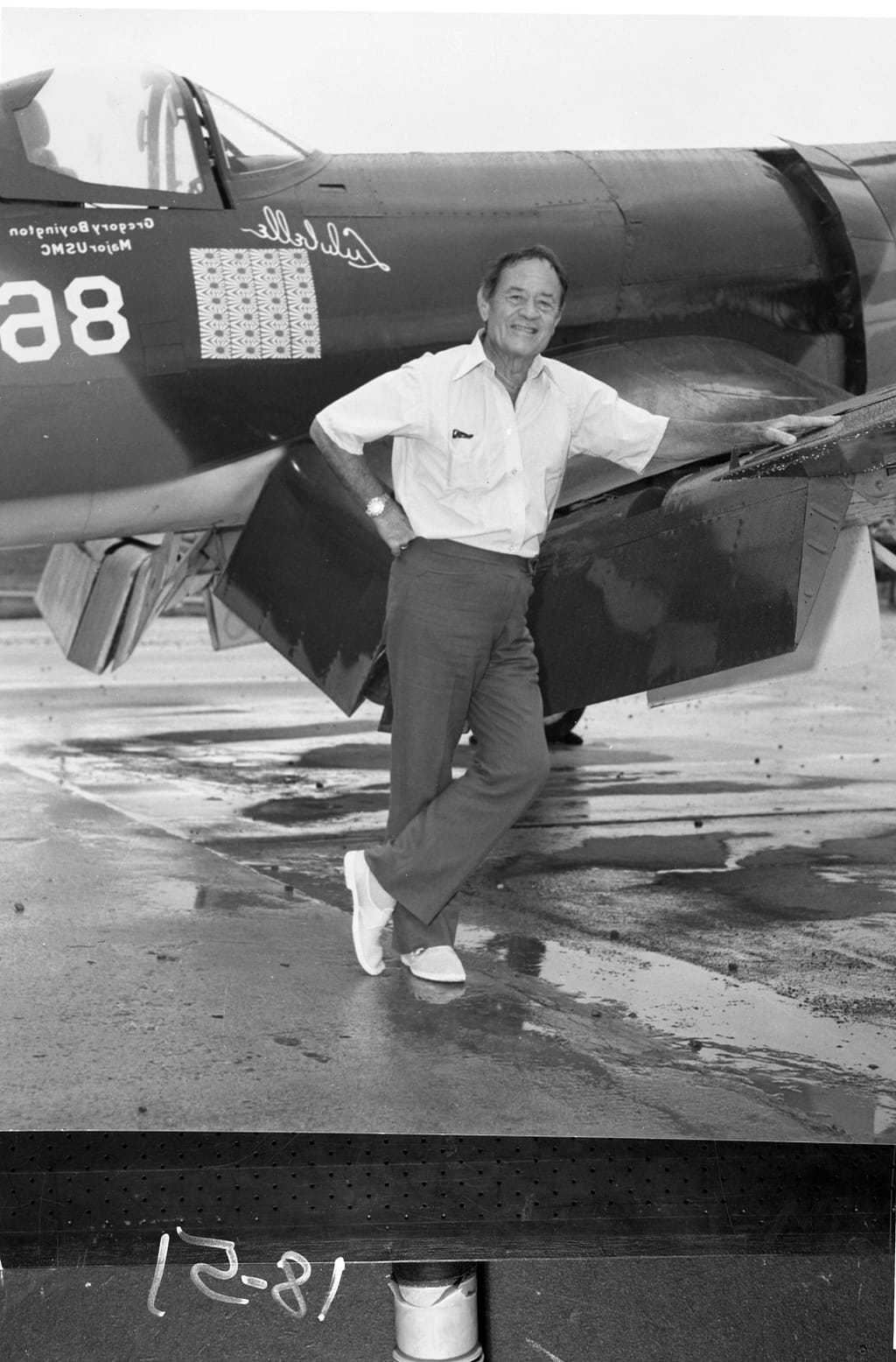
He never lost the fighter pilot’s certainty. At a 1981 reunion at the Smithsonian, standing before a restored Corsair, a young fan asked if he could still fly it. Pappy did not hesitate.
He died of lung cancer in 1988 and was buried at Arlington, in a plot that happens to sit beside that of the boxer Joe Louis. One of his old Black Sheep looked at the two headstones and said the only thing that really needed saying.
Difficult, unruly, larger than life — Pappy Boyington was never the model Marine the recruiting posters wanted. He was something rarer: the man you wanted leading the flight when the odds were bad and the enemy was coming up to meet you.
Sources: Wikipedia; Bruce Gamble, Black Sheep One; U.S. Marine Corps History Division; Los Angeles Times; The New York Times.
0 Comentarios