
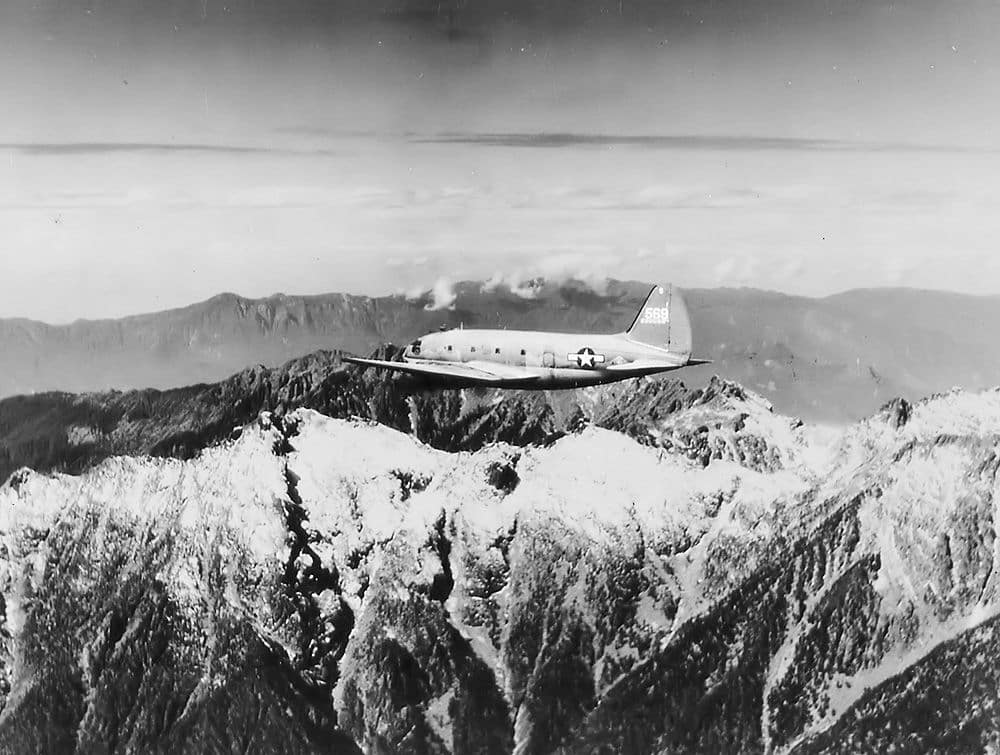
There was a stretch of sky between India and China so lethal that the men who flew it said you could navigate by the wrecks below. They called it the Hump — and for three years, an unbroken stream of transport planes crossed the highest mountains on Earth, in the worst weather in the world, to keep China in the war.
It was the first great strategic airlift in history, and one of the deadliest flying jobs of the Second World War.
Datos rápidos
| Qué | Allied aerial supply route over the eastern Himalayas |
| Ruta | Assam, India to Kunming, China (~500+ miles) |
| Years | April 1942 - November 1945 |
| Aeronave | C-47 Skytrain, C-46 Commando, later C-54 |
| Delivered | More than 650,000 tons of cargo |
| Costo | Roughly 600 aircraft and over 1,600 airmen lost |
Why fly over the roof of the world?
When Japan cut the Burma Road in 1942, China was severed from overland supply. The only way left to deliver fuel, weapons and ammunition to Chiang Kai-shek’s armies — and to the American airmen fighting in China — was straight over the mountains. So the U.S. Army Air Forces’ Air Transport Command built an aerial bridge across the Himalayas and never let it close.
The route threaded between peaks 15,000 to 20,000 feet high, through monsoon storms, severe icing, and winds that could top 100 miles per hour. Crews flew overloaded aircraft with poor charts, almost no navigation aids, and little weather information. Many pilots arrived in India with no training on the big Curtiss C-46 Commando they were about to fly across the tallest mountains on the planet.
Bad weather, not the enemy, was the great killer. Air Transport Command’s commander, Brigadier General William H. Tunner, would later run the Berlin Airlift — and he never forgot the Hump.
The Aluminum Trail
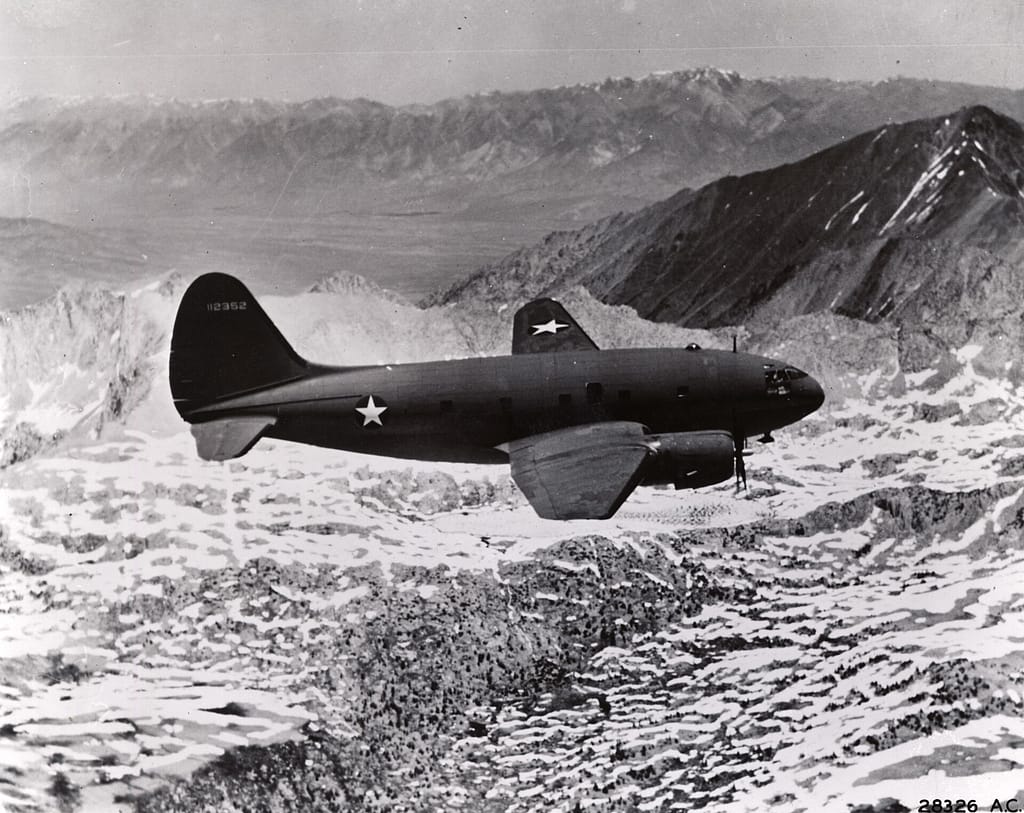
So many aircraft went down along the route that it earned a grim nickname: the Aluminum Trail, for the glint of crashed transports scattered through the jungles and gorges below. To this day, wrecks and the remains of missing airmen are still being found in the mountains of northern Burma and western China.
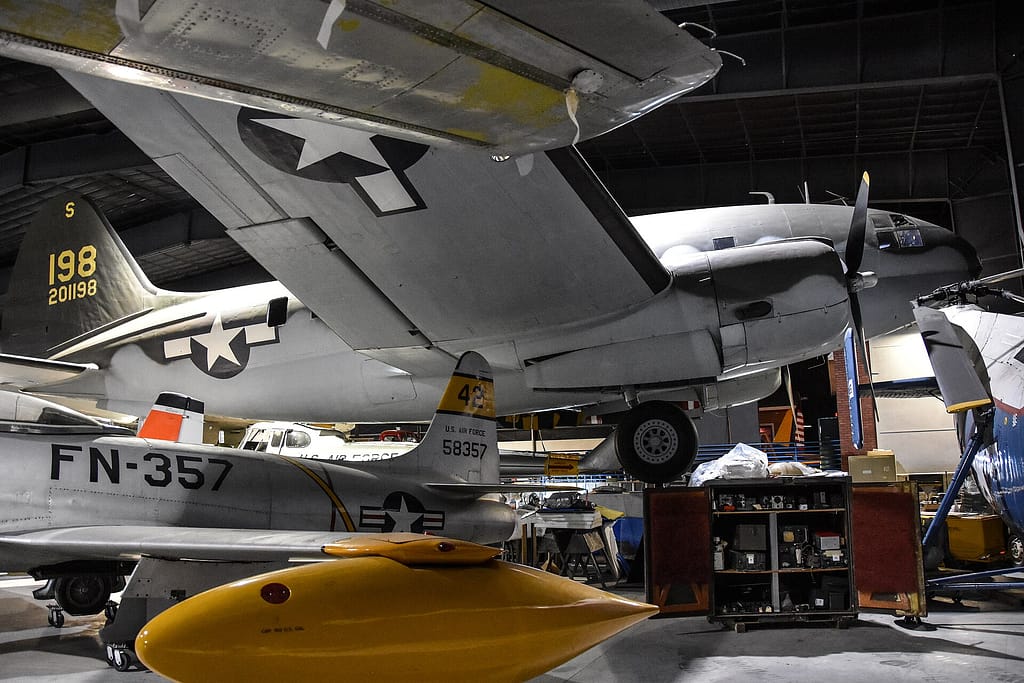
The danger was real even for observers. In August 1943, CBS war correspondent Eric Sevareid had to bail out of a stricken C-46 over the Naga hills of Burma and was rescued only after days on the ground. He had come to report on the airlift; instead he became part of its story.
The bridge that held
By 1945 the Hump was delivering enormous tonnages every month, a feat of organisation that proved a sustained airlift could supply an entire theatre of war. That lesson went straight into the Berlin Airlift three years later, run by the same Tunner. The men who flew the Hump paid a heavy price — but they kept China supplied, and they wrote the playbook for every great airlift that followed.
Sources: HistoryNet, Warfare History Network, Air & Space Forces Magazine, Library of Congress Veterans History Project, Wikipedia.
Publicaciones relacionadas
0 Comentarios