
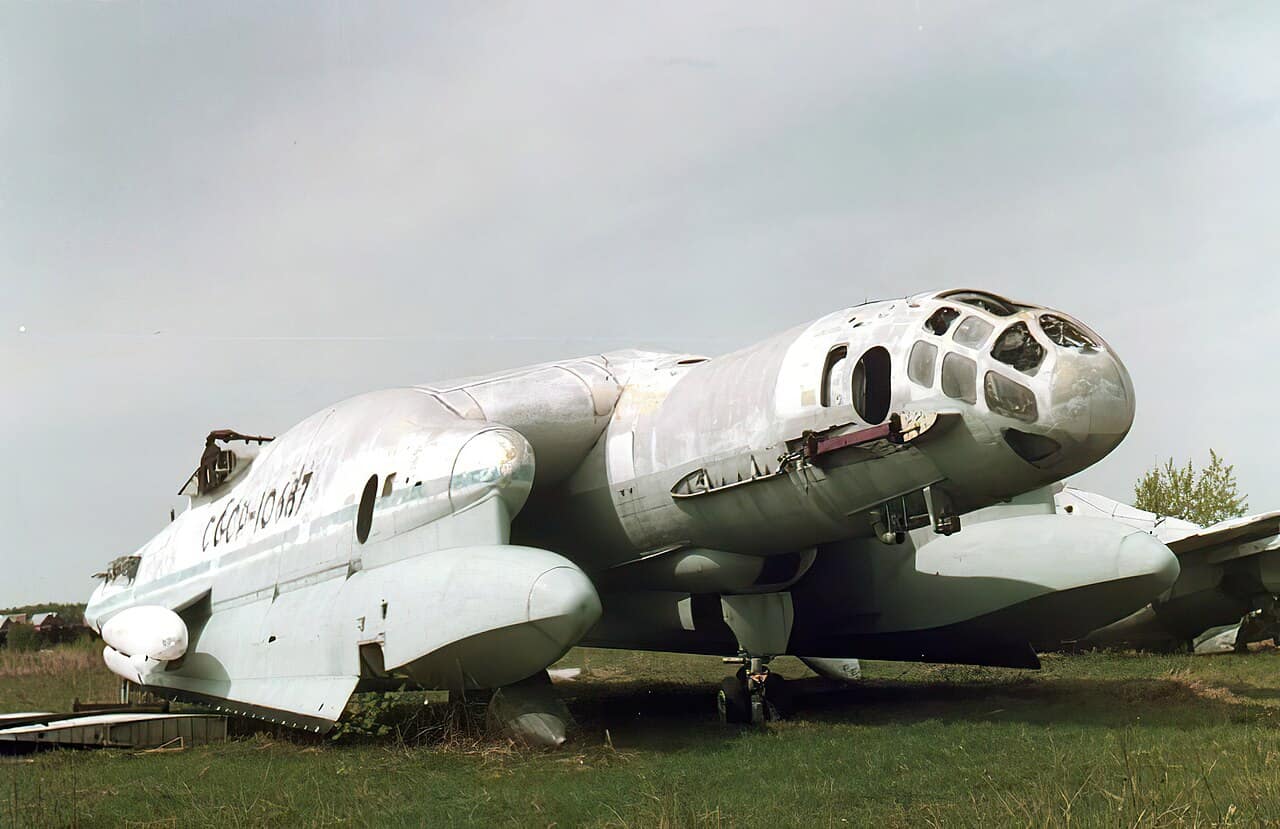
Algunas armas de la Guerra Fría eran aterradoras. Otras, hermosas. Y luego estaba el Bartini Beriev VVA-14: una máquina que parecía un platillo volador fusionado con un submarino, construida, con toda seriedad, para acechar y destruir lanchas misileras nucleares estadounidenses. Volaba sobre las olas, prometía saltar verticalmente desde el mar, y hoy yace sin alas y oxidándose en un campo a las afueras de Moscú.
Es uno de los aviones más extraños jamás producidos en el siglo XX, y la mente que lo creó era tan singular como la propia máquina. Su diseñador, Robert Bartini, era un aristócrata italiano convertido en visionario de la aviación soviética, a quien sus colegas llamaban, medio en broma, un extraterrestre. El VVA-14 fue su obra maestra de ingeniería peculiar: un avión que se suponía que debía hacerlo todo a la vez, pero que al final no hacía casi nada.
Esta es la historia del dragón de tres cabezas de la Unión Soviética: qué se suponía que iba a ser, por qué nunca llegó a serlo y cómo un superviviente maltrecho acabó convertido en chatarra en la mayor colección de aviones soviéticos del mundo.
• Qué era: Bartini Beriev VVA-14: un avión anfibio de despegue vertical.
• Diseñador: Robert Bartini, del Beriev Design Bureau
• Misión: Cazar y destruir los submarinos de misiles Polaris de la Armada de los Estados Unidos.
• Primer vuelo: 4 de septiembre de 1972, desde una pista convencional
• Construido: Dos prototipos; solo uno llegó a volar.
• Fuerza: 2 motores de crucero + 12 motores de elevación vertical = 14 (los motores de elevación nunca se instalaron)
• Vuelos: 107 vuelos, ~103 horas en total
• Destino: Retirado en 1987; el único superviviente permanece desmantelado y sin alas en Monino.
Un cazador de submarinos nacido del pánico de la Guerra Fría
El VVA-14 fue la respuesta a una pesadilla muy concreta. En 1961, Estados Unidos comenzó a armar su flota de submarinos con misiles balísticos Polaris, un arma de disuasión nuclear capaz de permanecer oculta en cualquier lugar de los océanos del mundo. La Unión Soviética necesitaba un sistema que pudiera localizar esos submarinos y destruirlos rápidamente en vastas extensiones de mar abierto.
Presentamos a Robert Bartini. Concebida en la década de 1960 y desarrollada como prototipo a principios de la de 1970, su máquina anfibia fue diseñada para despegar desde cualquier lugar sin necesidad de pista, volar largas distancias a gran altitud y, lo que es crucial, deslizarse justo por encima del agua utilizando el efecto suelo aerodinámico para acercarse sigilosamente a su presa. En colaboración con la Oficina de Diseño Beriev, famosa por sus hidroaviones, Bartini planificó la aeronave en fases progresivas, culminando en un cazasubmarinos totalmente armado con un detector de anomalías magnéticas.
Catorce motores y un truco llamado efecto suelo.
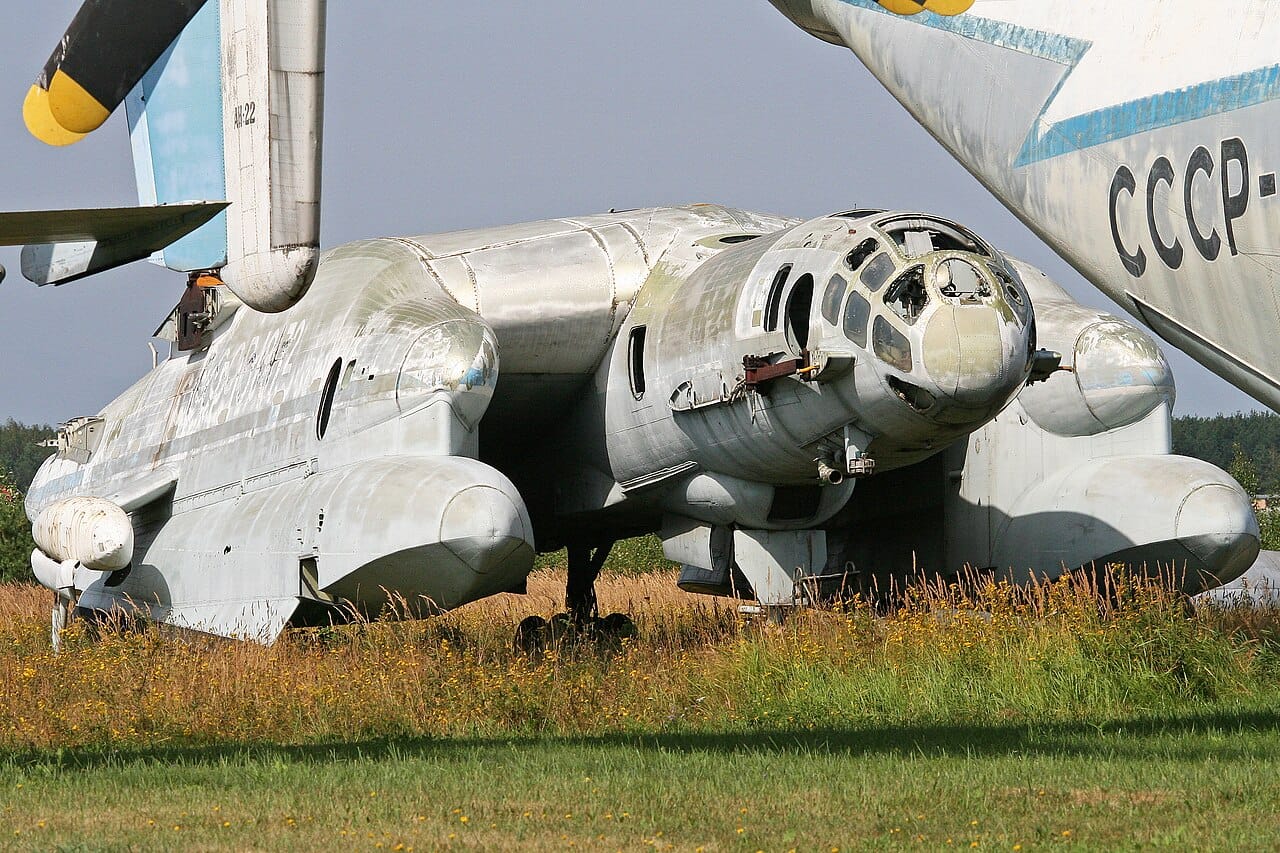
El nombre lo dice casi todo. “VVA” significa aeronave anfibia de despegue vertical, y el 14 era el número de motores: dos grandes turbofanes para el vuelo de crucero normal, más una batería de doce motores de sustentación más pequeños diseñados para impulsar la aeronave directamente desde el agua. El fuselaje central parecía un submarino con alas cortas, flanqueado por dos largos cascos tipo pontón.
Su principal atractivo era el efecto suelo: la capa de aire a alta presión atrapada entre el ala y la superficie que se encontraba justo debajo. Volando a pocos metros sobre las olas, el VVA-14 podía desplazarse rápido y a baja altitud, difícil de detectar por radar, antes de ascender a la altitud convencional cuando era necesario. Para mantener el programa en secreto, los ingenieros incluso pintaron el prototipo con los colores de la aerolínea civil Aeroflot para que no se confundiera con un avión militar.
Mustard narra la historia completa del VVA-14 de la Unión Soviética, uno de los aviones más extraños jamás construidos.
El primer prototipo se completó en 1972 y realizó su vuelo inaugural desde una pista el 4 de septiembre de ese mismo año. En 1974 se le añadieron pontones inflables para realizar pruebas en el agua —un sistema que causó innumerables problemas— y las pruebas de flotación y rodaje dieron paso a los primeros vuelos de la versión anfibia en junio de 1975.
El despegue vertical que nunca llegó
Aquí es donde el sueño se topó con la física y las cadenas de suministro soviéticas. Todo el concepto VTOL dependía de ese conjunto de doce motores de sustentación RD-36-35PR. La oficina responsable de suministrarlos nunca los entregó, lo que hizo que las pruebas de despegue vertical fueran completamente imposibles. La máquina que se suponía que se elevaría del mar como un pájaro asustado nunca despegó verticalmente.
Como explicó posteriormente el historiador de aviación Andrii Sovenko, el prototipo volador era un banco de pruebas simplificado: no llevaba motores de sustentación ni equipo para la caza de submarinos, y su único propósito era estudiar el vuelo horizontal y probar los sistemas de la aeronave. Entre 1972 y 1975 realizó 107 vuelos y acumuló poco más de 103 horas de vuelo, cifras respetables para una rareza experimental, pero muy lejos de ser un cazasubmarinos operativo.
Entonces el proyecto perdió su esencia. Robert Bartini falleció en 1974, y con él murió el programa. Solo se construyeron dos de los prototipos previstos, y el segundo —el que iba a albergar los motores del ascensor— acabó siendo desmantelado porque nunca se desarrolló un motor adecuado.
No es el monstruo del mar Caspio
El VVA-14 suele agruparse con el famoso avión soviético de efecto suelo, el enorme KM —el “Monstruo del Mar Caspio”—, pero son máquinas muy distintas. El Monstruo del Mar Caspio era un ekranoplano puro, un avión de efecto suelo que solo podía volar aprovechando la capa de aire cercana a la superficie. El VVA-14, en cambio, estaba concebido como un verdadero avión capaz de despegar verticalmente, flotar como un barco y ascender a gran altitud como un avión convencional. El efecto suelo era solo uno de los muchos requisitos de su interminable lista de deseos.
Irónicamente, tras la muerte de Bartini, la estructura restante del avión fue modificada para el vuelo por efecto suelo en una variante conocida como 14M1P, con flotadores rígidos y un fuselaje alargado. Estas pruebas contribuyeron al proyecto soviético de ekranoplanos, por lo que el VVA-14 dejó su huella en la misma familia de aeronaves con la que a menudo se le confunde.
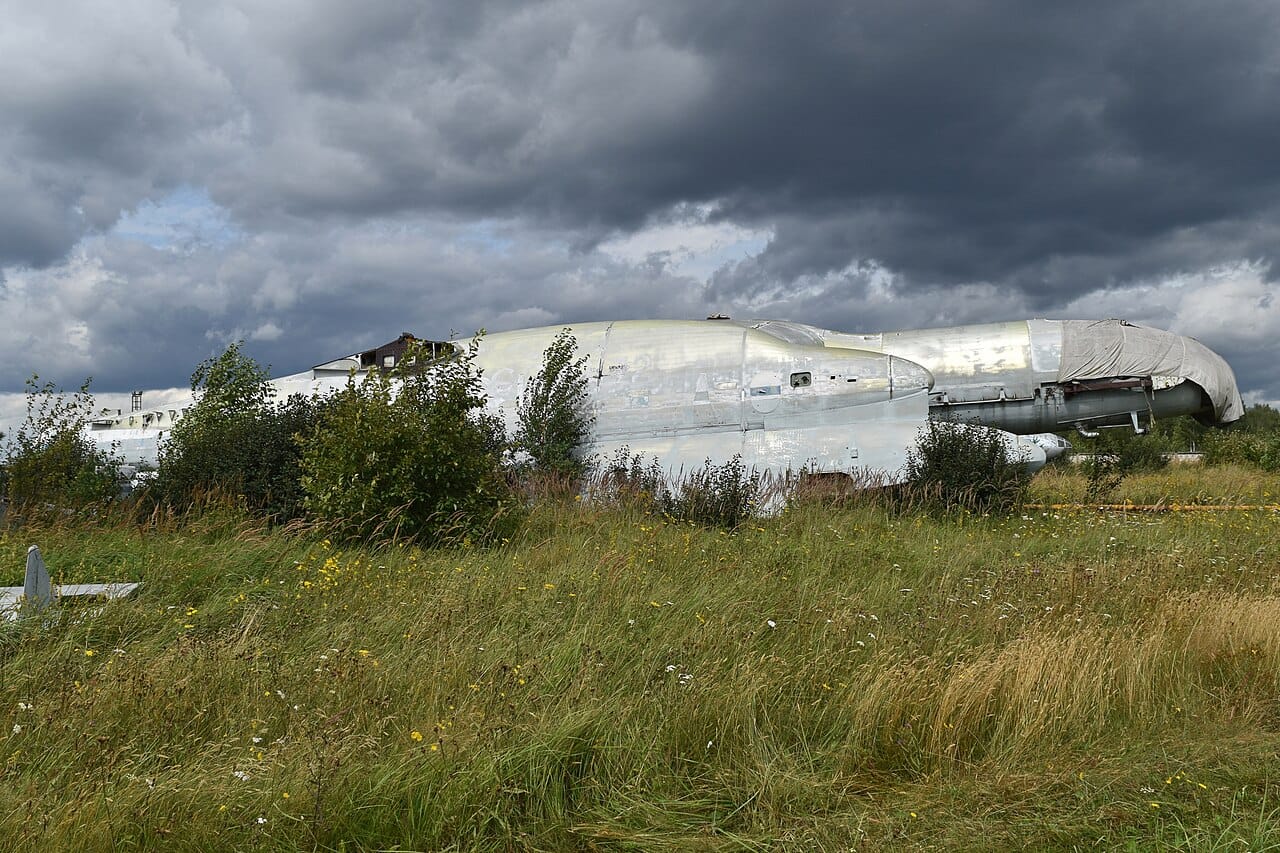
Un dragón oxidándose en un campo
El único VVA-14 superviviente ha tenido una jubilación desastrosa. En 1987 fue enviado desde Taganrog al Museo de la Fuerza Aérea Central, cerca de Moscú. Algo salió mal durante el transporte: descargado y abandonado, fue saqueado y dañado, y nunca ha sido reparado. Hoy yace a la intemperie en Monino, notablemente sin sus alas; fragmentos de ellas yacen en la hierba a su lado. Todavía luce su antigua matrícula soviética y las marcas descoloridas de Aeroflot.
El personal del museo calculó que restaurarlo costaría bastante más de un millón de dólares, dinero que nunca llegó a materializarse. Así, la máquina que debía sobrevolar el Atlántico y cazar submarinos nucleares permanece ahora en silencio en un campo ruso, convirtiéndose lentamente en chatarra: un monumento a una de las ideas más audaces y extrañas que la Guerra Fría se atrevió a concebir.
Y, sin embargo, tiene algo magnífico. El VVA-14 pretendía ser a la vez barco, avión, helicóptero y cazasubmarinos. Fracasó en casi todas sus funciones. Pero como obra de pura imaginación fundida en aluminio, sigue siendo inigualable: prueba de que la ingeniería más extraña es a veces la más humana.
Fuentes: Wikipedia (Bartini Beriev VVA-14); Jacopo Prisco, CNN Travel, 26 de enero de 2021; Simple Flying, 24 de septiembre de 2023.
Preguntas relacionadas
¿Qué era el Bartini Beriev VVA-14?
El Bartini Beriev VVA-14 fue un avión anfibio soviético de despegue vertical diseñado para cazar y destruir submarinos con misiles Polaris de la Armada estadounidense. Concebido por Robert Bartini junto con la Oficina de Diseño Beriev, tenía la apariencia de una mezcla entre un platillo volador y un hidroavión. Solo se construyeron dos prototipos, y únicamente uno llegó a volar.
¿Quién diseñó el VVA-14?
El VVA-14 fue diseñado por Robert Bartini, un aristócrata italiano que se convirtió en un visionario de la aviación soviética y a quien sus colegas llamaban, medio en broma, "un extraterrestre". Trabajando con la Oficina de Diseño Beriev, su intención era que la máquina despegara verticalmente desde el mar y rozara las olas: un avión diseñado para hacerlo todo a la vez.
¿Para qué se diseñó el VVA-14?
El VVA-14 fue construido para localizar y hundir submarinos de la Armada estadounidense armados con misiles balísticos Polaris. Desde 1961, esos submarinos proporcionaron a Estados Unidos una capacidad de disuasión nuclear que podía permanecer oculta en los océanos del mundo, y la Unión Soviética necesitaba algo capaz de cubrir vastas extensiones de mar abierto con rapidez para darles caza.
¿Alguna vez voló el VVA-14?
Sí. El VVA-14 realizó su primer vuelo el 4 de septiembre de 1972, despegando de una pista convencional. A lo largo de su trayectoria, el único prototipo en vuelo acumuló 107 vuelos, con un total aproximado de 103 horas. Sin embargo, sus 12 motores de despegue vertical nunca se instalaron, por lo que la capacidad de despegue vertical, elemento central de su diseño, nunca se materializó.
¿Por qué se llama VVA-14?
El número "14" hace referencia a los 14 motores previstos para la aeronave: dos motores de crucero y doce motores dedicados al despegue vertical. En la práctica, los motores de despegue vertical nunca se instalaron, lo que impidió que la aeronave anfibia pudiera realizar el despegue vertical desde el agua que justificaba su extraordinaria configuración.
¿Qué pasó con el VVA-14?
El VVA-14 fue retirado del servicio en 1987, y su único ejemplar superviviente se encuentra ahora desmantelado y sin alas en el Museo Central de la Fuerza Aérea en Monino, cerca de Moscú. Concebido en su momento como un cazasubmarinos que volaría a baja altura sobre las olas, acabó convirtiéndose en una de las reliquias más extrañas de la aviación: una idea de la Guerra Fría que nunca llegó a materializarse.

0 Comentarios