
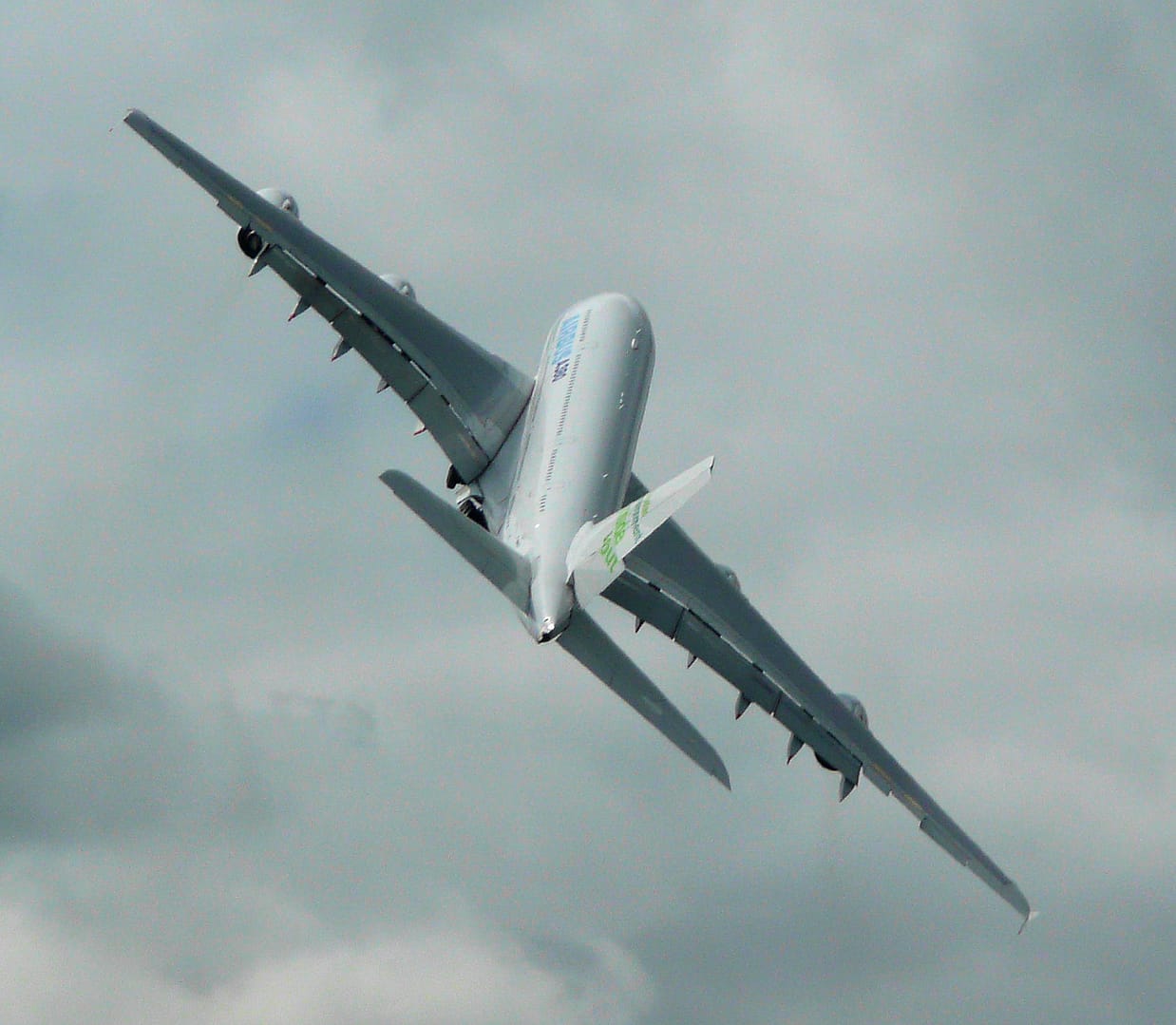
The gates opened at Farnborough this morning. For the next five days a stretch of Hampshire tarmac becomes the place where the aerospace industry finds out what everyone else has been building, and where roughly a hundred thousand people stand in a field watching very expensive machinery do things it was not strictly designed to do.
If you cannot get there, you can watch it. If you can get there, you need the timetable. Both are below.
But first, briefly, why this particular field matters more than most.
Quick Facts
Dates: Monday 20 to Friday 24 July 2026
Where: Farnborough Airport, Hampshire, England
Flying displays: each afternoon
Monday hours: shortened opening day, 10:00 to 16:00
Friday: Pioneers of Tomorrow public and STEM day, from 09:00
Exhibitors: around 1,500
Cycle: biennial, alternating with the Paris Air Show
Airshows here since: 1948
Watch it live
The organisers stream the flying display on the official Farnborough International Airshow YouTube channel, which has carried a day-by-day live feed in previous years. Aerospace Global News, the show's official media partner, also runs a flying display live stream page with rolling coverage.
Here is this year's teaser, which will give you the flavour in ninety seconds.
The flying display, day by day
Displays run each afternoon. Organisers reserve the right to change the programme, and weather does what weather does, so treat this as the plan rather than a promise.
| Display | Mon 20 | Tue 21 | Wed 22 | Thu 23 | Fri 24 |
|---|---|---|---|---|---|
| USAF F-35A Lightning II Demo Team | yes | yes | yes | yes | yes |
| Joint Aviation Command Chinook role demo | yes | yes | yes | yes | yes |
| Airbus A350-1000 | yes | yes | yes | yes | yes |
| GE Aerospace Saab 340B | yes | yes | yes | yes | yes |
| Bombardier Global 8000 | yes | yes | yes | yes | yes |
| BETA Technologies CX300 (electric) | yes | yes | yes | yes | yes |
| Embraer C-390 Millennium | yes | no | no | no | no |
| Czech Air Force L-159 (flypast) | yes | no | no | no | yes |
| Red Devils parachute team | yes | no | no | no | yes |
| Army Air Corps Apache and Wildcat | no | no | no | yes | yes |
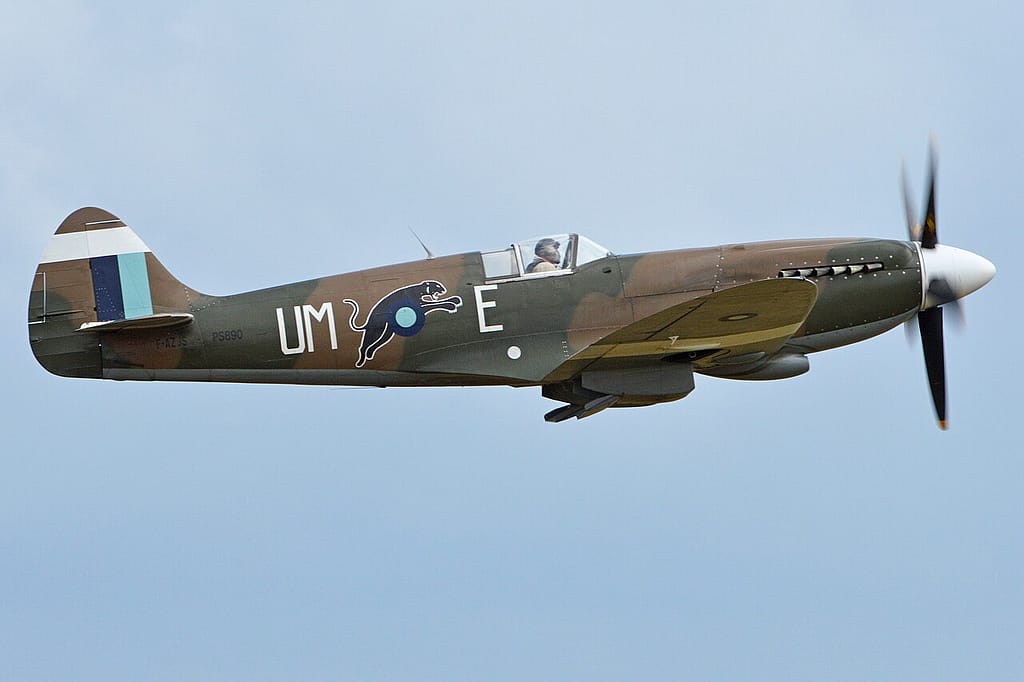
| Supermarine Spitfire PR Mk XIX | no | no | no | yes | yes |
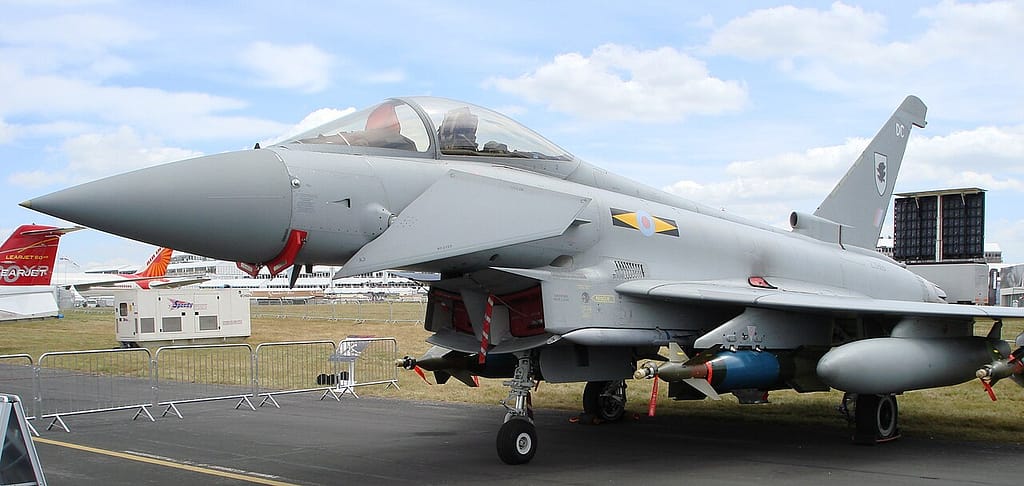
| RAF Eurofighter Typhoon (flypast) | no | no | no | no | yes |
| RAF Falcons parachute team | no | no | no | no | yes |
| P-51D Mustang | no | no | no | no | yes |
| Starlings Aerobatic Team | no | no | no | no | yes |
A few notes on that grid. Friday is by far the best day if you want variety: the Typhoon flypast, both parachute teams, the Mustang, the Starlings and the Spitfire all land on the final day, which is also the public day. Monday, today, is the thinnest programme and the shortest opening hours, because Monday is when the industry does business rather than showing off.
Also worth knowing: the UAE national aerobatic team, Fursan Al Emarat, arrived in Hampshire on 11 July to validate its routine. They fly seven Hongdu L-15s, one for each emirate, trailing smoke in the colours of the UAE flag.
What is new on the ground
The static park is where you get close enough to see panel gaps, and this year it has picked up some genuinely interesting additions: Textron's Cessna SkyCourier, three Bell types including the MV-75, and a full-size mock-up of Turkish Aerospace's HÜRJET trainer and light combat aircraft.
Why Farnborough, of all places
This is not an arbitrary airfield that happened to get a trade show. British powered flight started here.
On 16 October 1908, Samuel Franklin Cody, an American showman with a Wild West stage act and a serious talent for engineering, flew British Army Aeroplane No 1 for about 1,390 feet at a height of roughly 18 feet, staying up for around half a minute. It was the first recognised powered, sustained aeroplane flight in the United Kingdom, and it happened on Farnborough Common. The site went on to become the Royal Aircraft Establishment, which is to say the place where Britain worked out how aeroplanes actually behave.
The day it went very wrong
Farnborough also carries the memory of the worst airshow accident in British history, and the reason modern display flying looks the way it does.
On 6 September 1952, the prototype de Havilland DH.110 broke up in the air during an aerobatic manoeuvre. Test pilot John Derry and flight test observer Anthony Richards were killed instantly. Debris fell into the crowd, killing 29 spectators and injuring around 60. Thirty-one people died in total. The cause was traced to a structural failure originating in a design flaw in the wing leading edge.
The DH.110 was redesigned and entered Royal Navy service as the Sea Vixen. More importantly, British airshow safety was rewritten: display lines were pushed back, crowd separation was formalised, and manoeuvres were restricted. It worked. There was not another spectator fatality at a British airshow until Shoreham in 2015.
Every display line you see roped off this week traces back to that afternoon in 1952.
What to actually watch for
Three things, if you are only half paying attention.
The orders. Airlines and manufacturers cluster their announcements on Monday and Tuesday, when the press are thickest on the ground. The running total by Tuesday evening is the number the industry will quote for the next two years.
The electric aircraft. BETA's CX300 flying daily is not a novelty item any more. Watching a battery-powered aeroplane fly a display at the same show as an F-35 is a reasonable snapshot of where aviation currently is.
The Spitfire and the Lightning on the same programme. Thursday and Friday put a 1945 photo-reconnaissance Spitfire and a fifth-generation stealth fighter in the same afternoon. Eighty-one years apart, both built for the same job of going somewhere dangerous and coming back with information.
The highlights reel above is from 2024, for a sense of what the flying display actually delivers.
We will be covering the announcements as they land through the week.
Sources: Farnborough International, Aerospace Global News, ADS Advance, Defense News, Imperial War Museums, Farnborough Air Sciences Trust.
0 Comments