
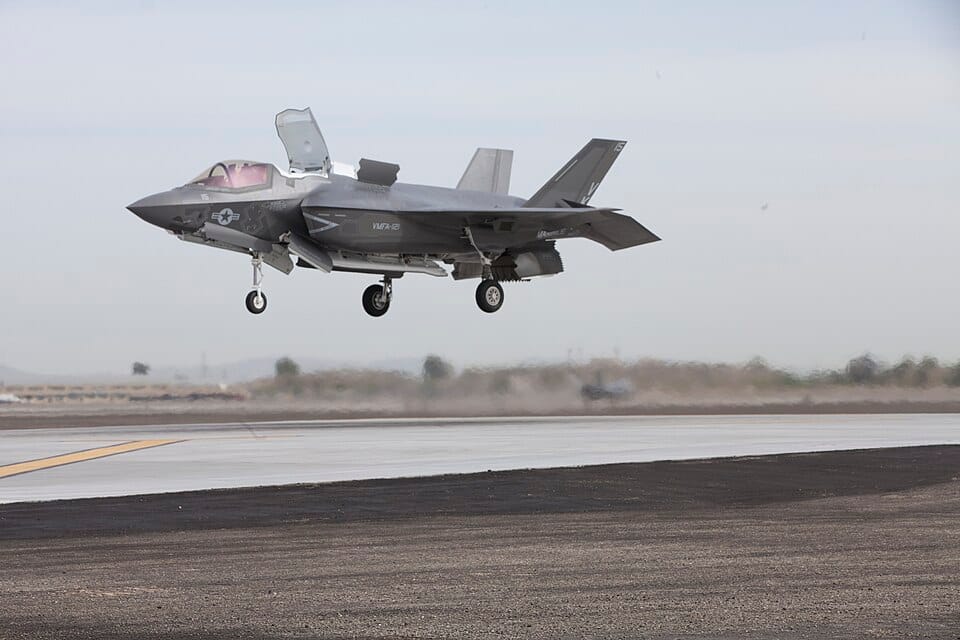
Quick Facts
- What: First operational F-35Bs retrofitted from TR-2 to TR-3 configuration
- Where: Fleet Readiness Center East (FRCE), MCAS Cherry Point, North Carolina
- Airframes: BF-105 (delivered 14 May), BF-88 (delivered 21 May), BF-81 (due July 2026)
- Key upgrade: AN/APG-85 AESA radar replacing AN/APG-81
- Other systems: New EW suite, improved EOTS, new cockpit display, next-gen DAS
- Retrofit scope: $1.7 billion requested in FY2027 to retrofit 181 aircraft from Lot 17 and prior
Anatomie des Upgrades
The Technology Refresh-3 designation sounds bureaucratic. The reality is radical. At its core sits a new integrated core processor with vastly more memory, throughput, and processing capacity than the TR-2 hardware it replaces. This computing backbone supports 75 major Block 4 systems — the suite of capabilities the F-35 programme has been promising for years but could never deliver on the old silicon. The headline sensor is the AN/APG-85 active electronically scanned array radar, built by Northrop Grumman. It replaces the AN/APG-81 that has equipped every F-35 since initial production. The APG-85 offers wider bandwidth, greater sensitivity, improved electronic warfare modes, and — critically — the ability to simultaneously track air and ground targets while jamming enemy radars. It is, by any measure, the most capable fighter radar ever fitted to a Western production aircraft.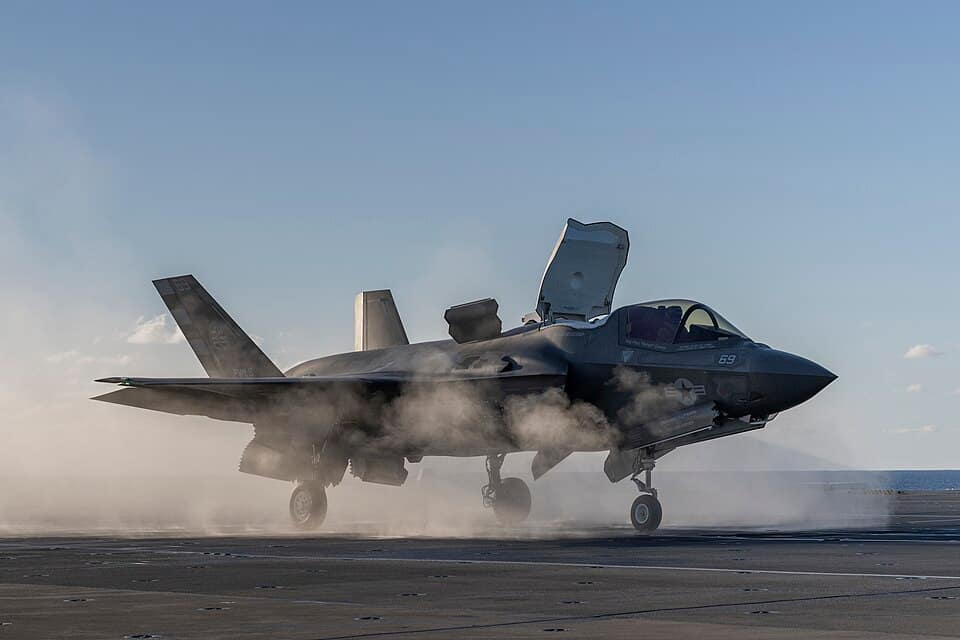
Warum das Retrofit so bedeutsam ist
Lockheed Martin delivered a record 191 F-35s in 2025 after clearing the TR-3 production backlog that had frozen deliveries for over a year. New jets now leave the factory with TR-3 installed. But the hundreds of F-35s already in squadron service — including the Marine Corps’ jump jets at Cherry Point, Beaufort, and Yuma — are stuck on the older TR-2 hardware. Without the retrofit, they cannot run Block 4 software, cannot mount the APG-85, and cannot access the full suite of future weapons integrations.“This conversion represents a significant milestone, demonstrating the ability to upgrade fielded aircraft with the TR-3 hardware that supports Block 4 capabilities.”
F-35 Joint Program Office — U.S. Department of Defense, 2 June 2026 press release
Der schwierige Weg hierher
The TR-3 programme has not been smooth. The Pentagon’s own operational testing office declared an early iteration of the upgrade “predominantly unusable” in late 2024. Software instability, integration failures between new and legacy subsystems, and the APG-85’s sheer power appetite — it demands more electrical generation than the current F135 engine provides without modification — all contributed to delays that froze new F-35 deliveries for over a year. Some jets were reportedly delivered without radars installed, their APG-85 nose cones empty, because Northrop Grumman could not produce the arrays fast enough. The Air Force accepted them anyway to keep the production line moving, planning to install radars later. That makes the FRCE milestone all the more significant. It proves the retrofit pathway works on real operational aircraft, not just test jets at Edwards or Patuxent River. And it gives the Marines — who depend on the F-35B for their entire tactical aviation future after retiring the AV-8B Harrier on 3 June 2026 — a concrete timeline for when their jets become truly Block 4-capable. The F-35’s growing pains have been expensive, public, and politically painful. But FRCE’s quiet achievement at Cherry Point — two jets in, two jets out, upgraded and flyable — is the kind of unglamorous progress that eventually turns a troubled programme into a dominant weapon system. Sources: F-35 Joint Program Office, DVIDSHUB, The Aviationist, Aviation Week, Defence-industry.euRelated Posts



 English
0 Comments