
Between June 10 and June 15, 2026, at least six military aircraft crashed in five countries across three continents. The combined toll: 37 dead, a handful of survivors, and hard questions about aging fleets, maintenance standards, and the brutal pace of military flying in a world that seems to be getting more dangerous, not less.
This was not one bad day. It was a full week of catastrophe — from the mountains of Kashmir to the California desert, from the forests of Siberia to the rice paddies of Assam. Some crashes made global headlines. Others barely registered outside their home countries. Together, they paint a stark picture of the risks that military aviation still carries, every single day.
✈ Quick Facts
- Timeframe: June 10–15, 2026 (six days)
- Total crashes: 6 military aircraft in 5 countries
- Fatalities: At least 37 killed
- Aircraft lost: B-52H, Tu-22M3, F/A-18D, An-32, Mi-17, PAF trainer
- Countries affected: USA, Russia, India, Pakistan (two incidents)
- Deadliest incident: Pakistan Army Mi-17 helicopter — 22 killed
- Highest-profile incident: B-52H at Edwards AFB — 8 killed, deadliest B-52 crash since 1982

Edwards AFB: Eight Dead in B-52H Crash
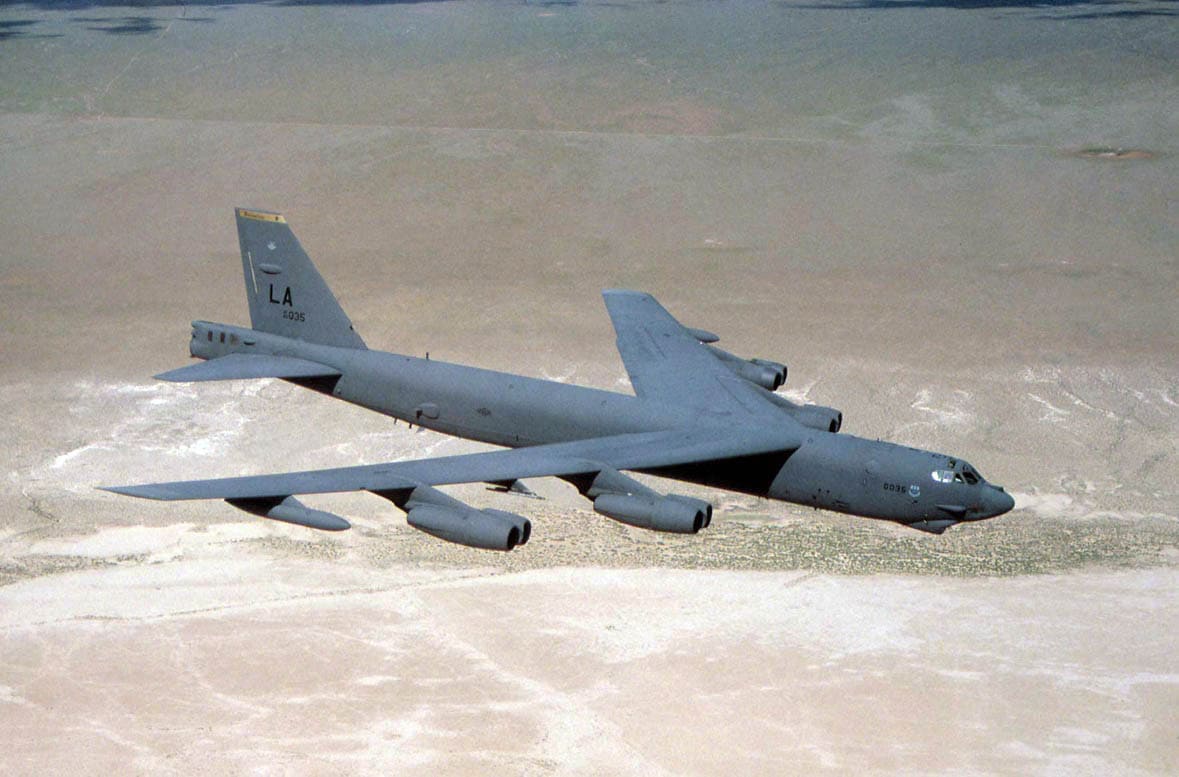
The deadliest single incident came on June 15 when B-52H serial 60-0061, assigned to the 412th Test Wing at Edwards Air Force Base, California, crashed and burst into flames shortly after takeoff at approximately 11:20 AM local time. All eight crew members — a mix of military personnel, government civilians, and defense contractors — were killed. The aircraft was on a routine test flight for a radar modernization program.
It was the deadliest B-52 crash since 1982 and the first loss of a Stratofortress since a 2016 incident at Andersen AFB, Guam. The investigation is expected to take months.
“We lost eight of our own today. These were the people who push the boundaries of what’s possible in aerospace, and the entire Edwards community is devastated.”
412th Test Wing statement — June 15, 2026
Irkutsk: Tu-22M3 Backfire Down on Approach

Hours after the Edwards crash, a Tupolev Tu-22M3 strategic bomber went down near Belaya Air Base in the Irkutsk region of Siberia. The four-man crew — commander, deputy, navigator, and flight engineer — ejected during approach. Witnesses in the town of Svirsk saw parachutes deploying over the Angara River. Most reports indicate all four survived, though some sources suggest one crew member may have died on landing.
Preliminary reports cite engine failure. The aircraft was on a scheduled training flight with no combat payload. This was the third Tu-22M3 crash in the Irkutsk region in two years, following incidents in August 2024 and April 2025 — a pattern that raises serious questions about maintenance standards in Russia’s Long-Range Aviation fleet, which has been under extreme operational pressure since the start of the war in Ukraine.
Rimrock Lake: Marine Hornet Into the Hillside

Two days before the B-52 and Tu-22M3 crashes, an F/A-18D Hornet from VMFA-323 “Death Rattlers” — callsign SNAKE 21 — slammed into a hillside near Rimrock Lake in Yakima County, Washington. The pilot ejected safely and walked away with minor injuries. The jet was flying Visual Route 1355, one of the military’s most demanding low-level training corridors through the Cascade Range.
The crash ignited a two-acre wildfire and forced the evacuation of nearby campers. Video footage posted on social media showed the Hornet impacting the hillside at high speed.
India and Pakistan: The Crashes Nobody Talked About
While American and Russian crashes dominated Western headlines, South Asia had its own devastating week. On June 10, a Pakistan Army Mi-17 helicopter crashed near Muzaffarabad in Kashmir due to a technical fault shortly after takeoff, killing all 22 on board — making it the single deadliest incident of the week by fatality count.
On June 13, an Indian Air Force An-32 transport veered off the runway at Jorhat Air Force Station in Assam, caught fire, and killed five of the six crew members. And on June 15, a Pakistan Air Force trainer aircraft crashed near Mardan, killing both pilots and injuring three civilians on the ground.
“Military aviation is inherently dangerous, and weeks like this are a sobering reminder. But three crashes near the same Russian base in two years isn’t bad luck — it’s a systemic problem.”
Defense aviation analyst
A Pattern, or Bad Luck?
Pentagon data shows that the rate of severe accidents per 100,000 flight hours across the U.S. military rose 55% in 2024 compared to four years earlier. Russia’s Long-Range Aviation fleet has been flying aging bombers at wartime tempo without wartime maintenance budgets. India’s An-32 fleet has been plagued by runway incidents for decades. Pakistan’s helicopter fleet is heavily used in mountainous terrain with limited maintenance infrastructure.
None of these crashes appear to be connected. But together, they illustrate a truth that military aviation communities know well: flying fast, low, or heavy in machines that are decades old, maintained by overstretched crews, in conditions that would ground any airline — that is the daily reality for military pilots around the world. Most days, nothing goes wrong. In mid-June 2026, everything did.
Sources: CNN, Defence Blog, The Aviationist, Aviation Safety Network, Al Jazeera, Moscow Times, ThePrint, Military.com, Dawn (Pakistan)



 English
0 Comments