

Stand at any airport window and count the aircraft. Almost all of them are white, with a tail and a bit of branding to tell them apart. Airlines spend fortunes on brand identity, and then paint their single most visible asset the same colour as everybody else’s.
That is not laziness or lack of imagination. It is one of the most thoroughly optimised decisions in commercial aviation, and it comes down to heat, weight, cracks, birds and resale value — roughly in that order.
Informations clés
| Weight of a full livery | Roughly 270–540 kg (600–1,200 lb) on a large airliner |
| Equivalent to | About eight extra passengers, carried on every single flight |
| Main reason | Reflecting solar heat and limiting UV damage to composites and paint |
| Maintenance reason | Cracks, leaks, corrosion and fluid stains show up clearly on white |
| Commercial reason | A white aircraft is far cheaper to repaint when sold or re-leased |
| Fading | Dark colours fade faster, forcing more frequent repainting |
| Notable exception | Air New Zealand’s all-black Boeing 777 in All Blacks livery |
Heat Is the Big One
An aircraft parked on an apron in Dubai or Phoenix is a large metal-and-composite box sitting in direct sun, often for hours. Anything that absorbs that energy has to give it back — into the cabin, into the structure, and into the air conditioning bill.
Two things follow. The cabin is cheaper to cool before departure, which on a hot day is a real fuel saving from the auxiliary power unit or a ground cart. And the airframe itself ages more slowly: ultraviolet light degrades paint systems and composite structures over time, and modern aircraft with large carbon-fibre sections care about that more than aluminium ones ever did.
An airline pilot walks through the reasoning, including the maintenance angle.
Paint Is Surprisingly Heavy
A complete livery on a widebody weighs somewhere between about 270 and 540 kilograms. Boeing has put that in the terms airlines actually think in: it is roughly the same as carrying eight more passengers, on every sector, for the life of the paint job.
There is a widely repeated claim that white paint is lighter than dark paint because it uses less pigment. It is worth being careful with that one, because people in the paint trade will tell you the opposite — titanium dioxide, the pigment that makes white white, is dense, and a can of white aviation paint can weigh materially more than the same volume of black.
So the honest version is this: the weight saving does not come from white being a magically light colour. It comes from not painting — from leaving most of the aircraft in a single base coat instead of layering a complex multi-colour scheme over the whole fuselage. A simple white base with a decorated tail needs fewer coats than a full-body design, and fewer coats is where the kilograms go.
You Can See Things Going Wrong
This is the reason engineers care about most, and passengers never think about.
Airframes are inspected constantly for fatigue cracks, fastener wear, corrosion, and fluid leaks — hydraulic, fuel and oil. Every one of those shows as a stain, a line or a discolouration, and every one of them is dramatically easier to spot against white than against dark blue or red, particularly in a badly lit hangar at three in the morning.
Finding a defect earlier means fixing it sooner and grounding the aircraft for less time. White paint is, in a small way, a safety feature.
And the Birds Can See You
There is reasonable evidence that lighter, more reflective aircraft are involved in fewer bird strikes, because a bright airframe stands out earlier against sky and terrain and gives birds more time to get out of the way. Given what a bird strike costs — an engine, a diversion, occasionally far more — even a small reduction is worth having.
The economics of aircraft paint, from application to resale.
A short summary of every factor at once.
The Money Reason
Most airliners are not owned by the airline flying them. They are leased, and they change hands repeatedly across a life of twenty-five years or more.
An aircraft that is white underneath a modest livery can be repainted into new colours quickly and cheaply. One that has been fully wrapped in a dark, saturated scheme needs stripping first — a slow, expensive, chemically unpleasant job that keeps the aircraft out of service. Lessors know this, and it is reflected in what a dark aircraft is worth at the end of a lease.
Dark colours also fade. Sun-bleached red or navy looks tired within a few years, while white stays looking acceptable for far longer, stretching the interval between repaints.

The Exceptions Are Statements
Which is exactly why the exceptions are memorable. Air New Zealand’s all-black 777, painted in honour of the All Blacks, is a marketing decision taken with full knowledge that it costs more to apply, absorbs more heat, hides defects better than anyone would like, and will be a nuisance to sell on.
The same is true of every dark special scheme you have ever photographed. They exist because somebody decided the attention was worth the penalty — and the fact that they stand out so sharply is the clearest possible proof of how rational the white default is.
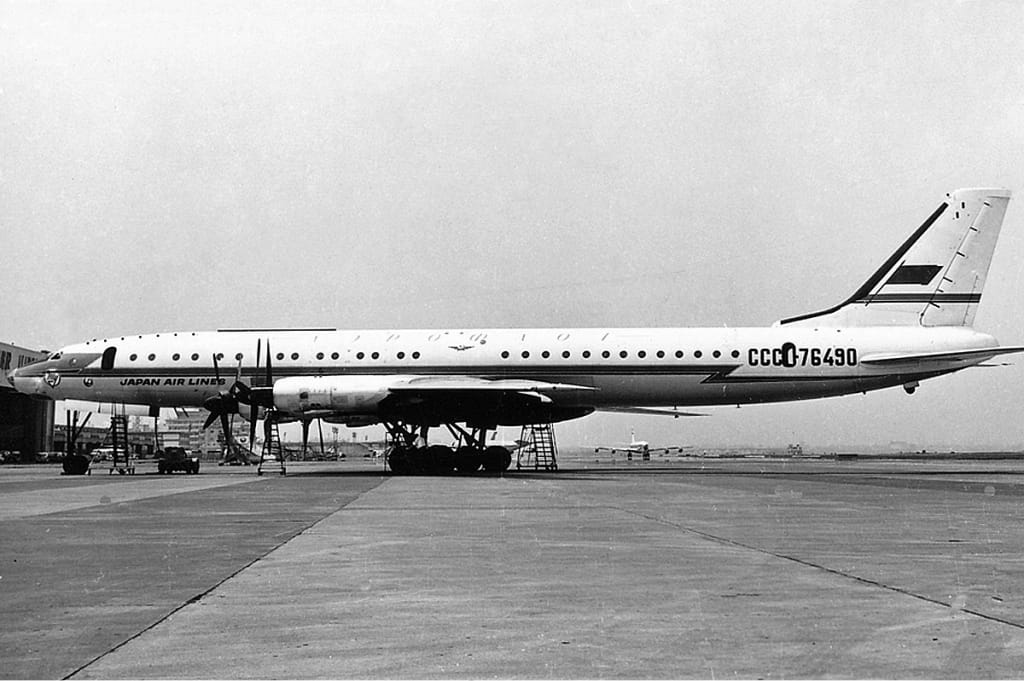
Before the 1970s, incidentally, plenty of airliners flew largely unpainted, in polished bare metal, which was lighter still. Composites changed that: you cannot polish carbon fibre, and it needs protecting from the sun. So the industry settled on the next best thing, and painted almost everything white.
Sources: Boeing published figures on livery weight; R. John Hansman, MIT, via Business Insider; aviation paint industry data; airline maintenance and leasing practice.


0 commentaire