
On Tuesday, 18 August 2026, a very unusual crowd gathered in the sky over northern Poland and the Baltic — and every serious flight-tracker in Europe stopped to watch.
In a large, U.S.-led NATO air exercise, a dense package of allied aircraft flew combat-strike, tanker, airborne-radar and electronic-warfare missions along the alliance's northeastern flank, some of it right up against Kaliningrad, the heavily militarised Russian exclave wedged between Poland and Lithuania. Observer estimates of the number of aircraft involved ranged from 25 to as many as 50; officials declined to give a figure, citing security.
Informations clés
- Quand: 18 August 2026 (multi-day exercise)
- Où: Poland and the Baltic, near Kaliningrad
- Led by: United States, with NATO allies
- Assets: US and Norwegian fighters, NATO E-3A AWACS, tankers, EA-37B Compass Call
- Aircraft count: Estimated 25–50 (unverified)
- Notable first: EA-37B's debut operational mission near Kaliningrad
The jet that made analysts sit up
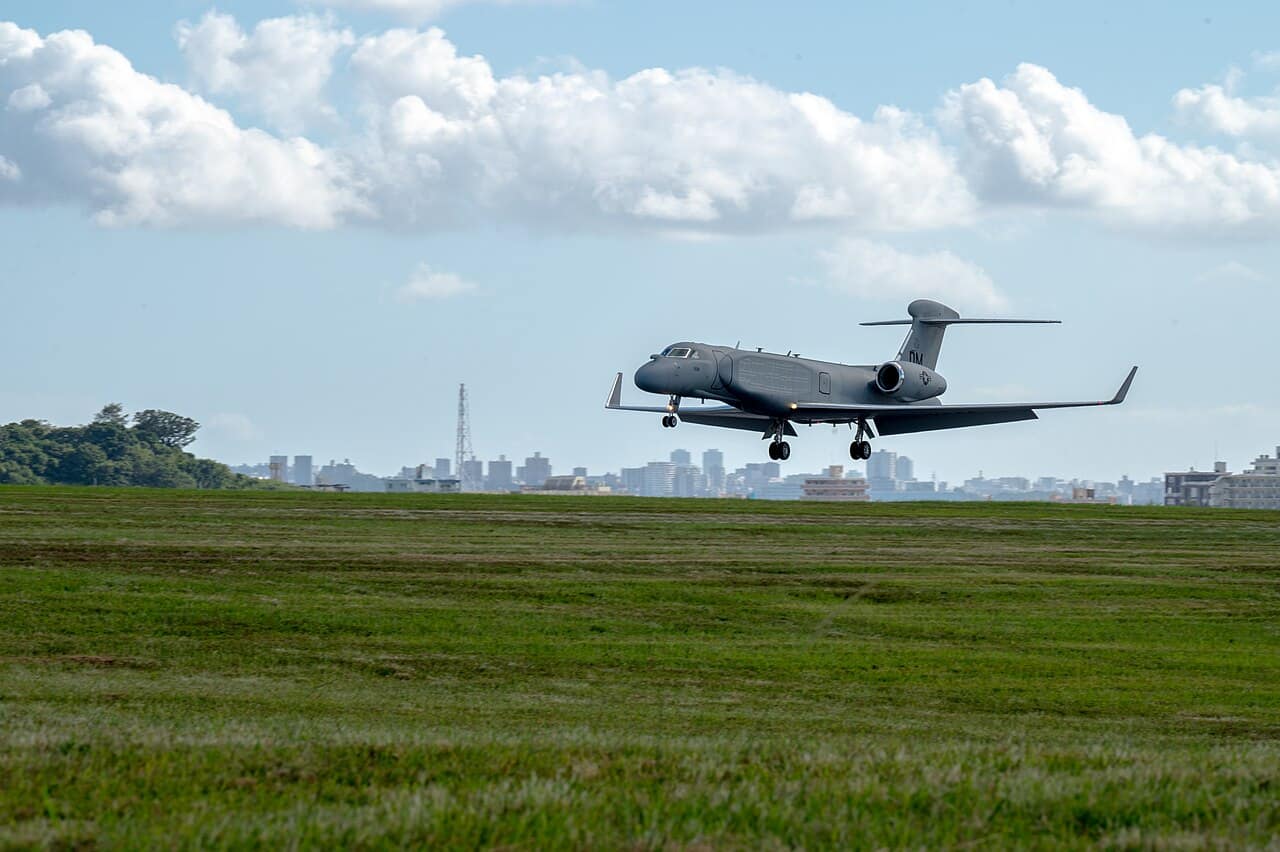
The headline guest was the U.S. Air Force's EA-37B Compass Call, a heavily modified Gulfstream G550 and the newest electronic-attack aircraft in the American inventory. Flight-trackers logged it flying from Souda Bay on Crete, landing at Powidz in Poland, then orbiting for roughly two hours over northern Poland, west of Kaliningrad, before returning to Greece — reportedly its first operational mission focused on the exclave's electromagnetic environment.
Deterrence, not reaction — officially
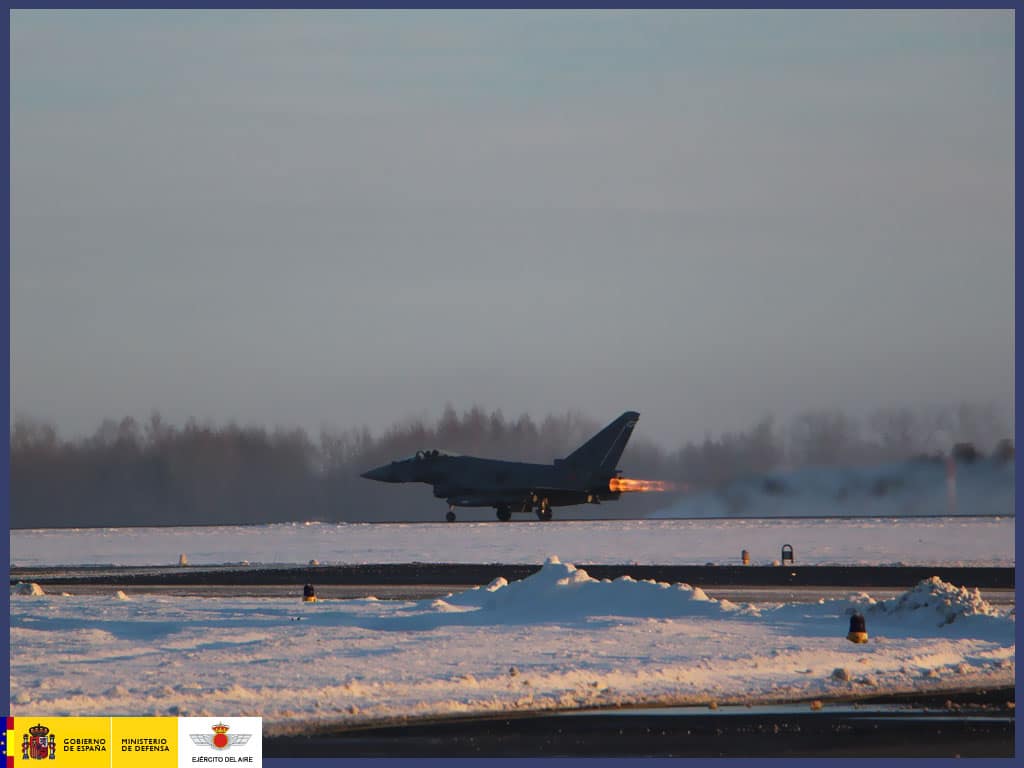
NATO framed the activity as routine training rather than a response to any single event. Col. Martin O'Donnell, spokesman for Supreme Headquarters Allied Powers Europe, said the exercise involved U.S. and Norwegian fighters, Polish ground forces and a NATO E-3A AWACS, and that allies are constantly sharpening their defences.
The backdrop no one can ignore
The timing is what gives the exercise its charge. It comes amid a run of drone incursions into allied airspace and a recent U.S. intelligence assessment, reported by the Wall Street Journal, that Moscow may be probing NATO's resolve. Days earlier, one of Russia's most advanced frigates, the Admiral Kasatonov — capable of carrying Zircon hypersonic missiles — had transited the Baltic.
Analysts were careful not to draw a straight line between the two. As Olga Lautman put it, there is no evidence the exercise was staged in reply to Russian ship movements — but, she added, “it is worth paying attention to as warnings about Russia continue to grow louder and more frequent.” For a corner of Europe where NATO and Russian forces operate within a few minutes' flying time of each other, a 25-jet show of force is both a training day and a message.
Sources: Stars and Stripes; itamilradar; The War Zone; Center for European Policy Analysis.
What the EA-37B Compass Call brings to the electronic battlefield.
Articles similaires

0 commentaire