
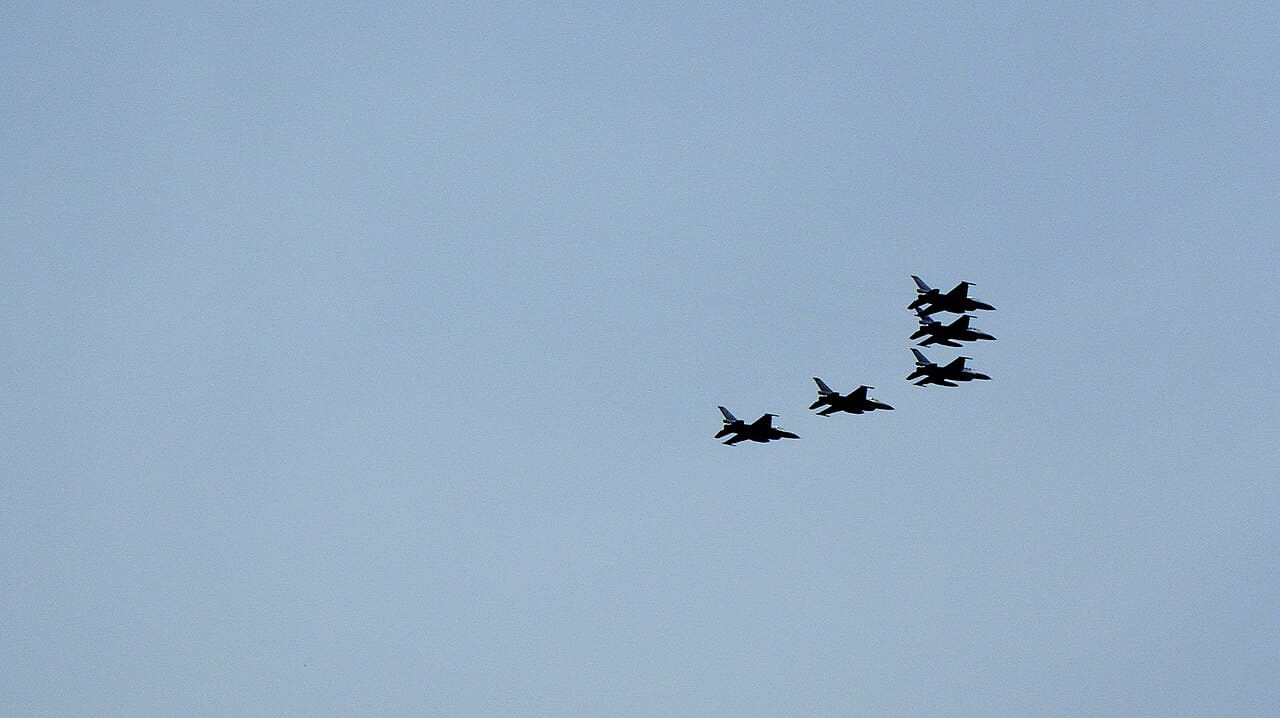
The first of Taiwan’s brand-new F-16V fighters are on their way home, and China’s state media wants everyone to know it is not impressed. Two single-seat F-16V Block 70s left the United States on 17 August 2026, routing through Fort Worth, Hawaii and Guam toward Chihhang Air Base — the first of 66 on order.
In Beijing’s telling, they will not shift the balance across the Taiwan Strait one bit. A mainland military expert told the state-run Global Times that the jets, while modern, are outclassed by the numbers and generations the People’s Liberation Army now fields. Taiwan and the United States see it differently. Both framings are worth laying out.
Informations clés
| Commande | 66 F-16V Block 70 for Taiwan |
| First two | Serials 6727 and 6728, departed the US on 17 August 2026 |
| Itinéraire | Fort Worth, Hawaii, Guam, then Chihhang Air Base |
| Also upgraded | 140 older F-16A/B raised to F-16V (Blk 20), completed Dec 2023 |
| Chinese view | Comparable to the J-10C; outclassed by J-16, J-20 and J-35 |
| Source of that view | Chinese state media (Global Times) |
The jets are real; the debate is whether they matter
There is no dispute about the hardware. The F-16V Block 70 is the newest F-16 built, with an AESA radar, a more powerful engine, conformal fuel tanks for extra range, and improved beyond-visual-range punch. For Taiwan, it is a substantial jump over the 1990s-era F-16s that form the backbone of its fighter fleet.
The argument is about context. China now operates a large, layered air force, and its own mainstay fighters already carry AESA radars.
Beijing’s argument
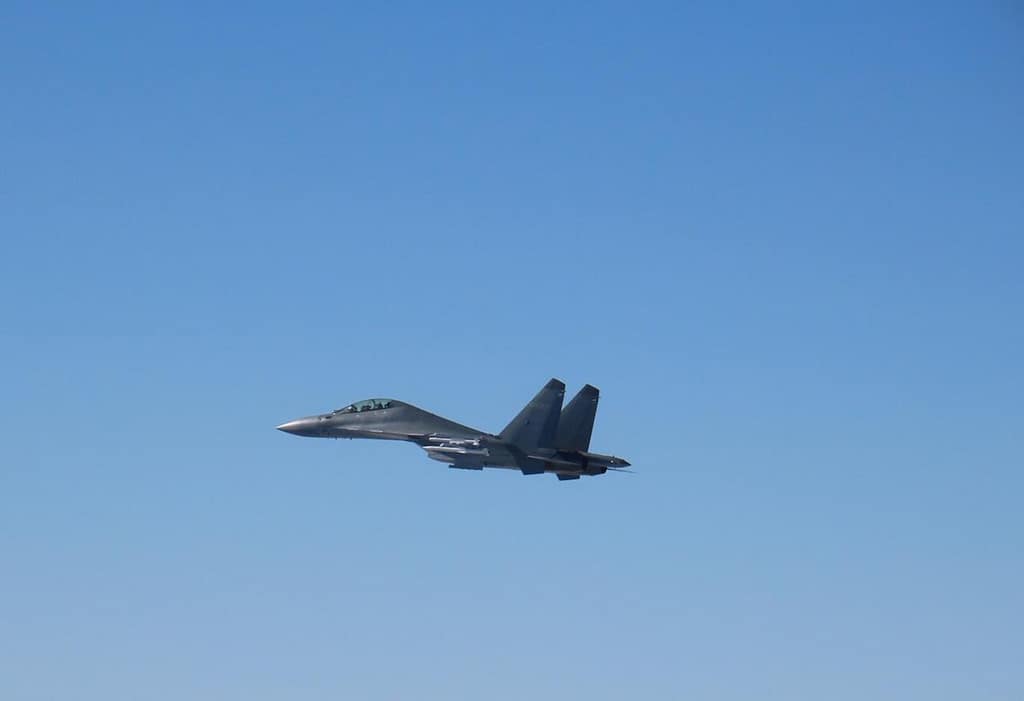
Song Zhongping, a mainland military affairs commentator, told the Global Times that the F-16V is roughly on a par with China’s light-to-medium J-10C, but has no edge against heavier types like the J-16 or the fifth-generation J-20 and J-35. His larger point was that individual aircraft no longer decide the outcome.
The other side of the ledger
That assessment comes from Chinese state media, and it carries Beijing’s framing. Taiwan and the United States argue the opposite: that modern AESA-equipped fighters, dispersed and hardened, meaningfully raise the cost of any attack and buy time for defenders. The truer picture is that a two-jet delivery changes little on its own, and the real questions — basing survivability, pilot numbers, munitions stocks and the wider system each side can bring to bear — will not be settled by a ferry flight through Guam.
Sources: Global Times; Defence Security Asia; CNA; HK01. This article summarises claims made by Chinese state media and does not endorse them.

0 commentaire