
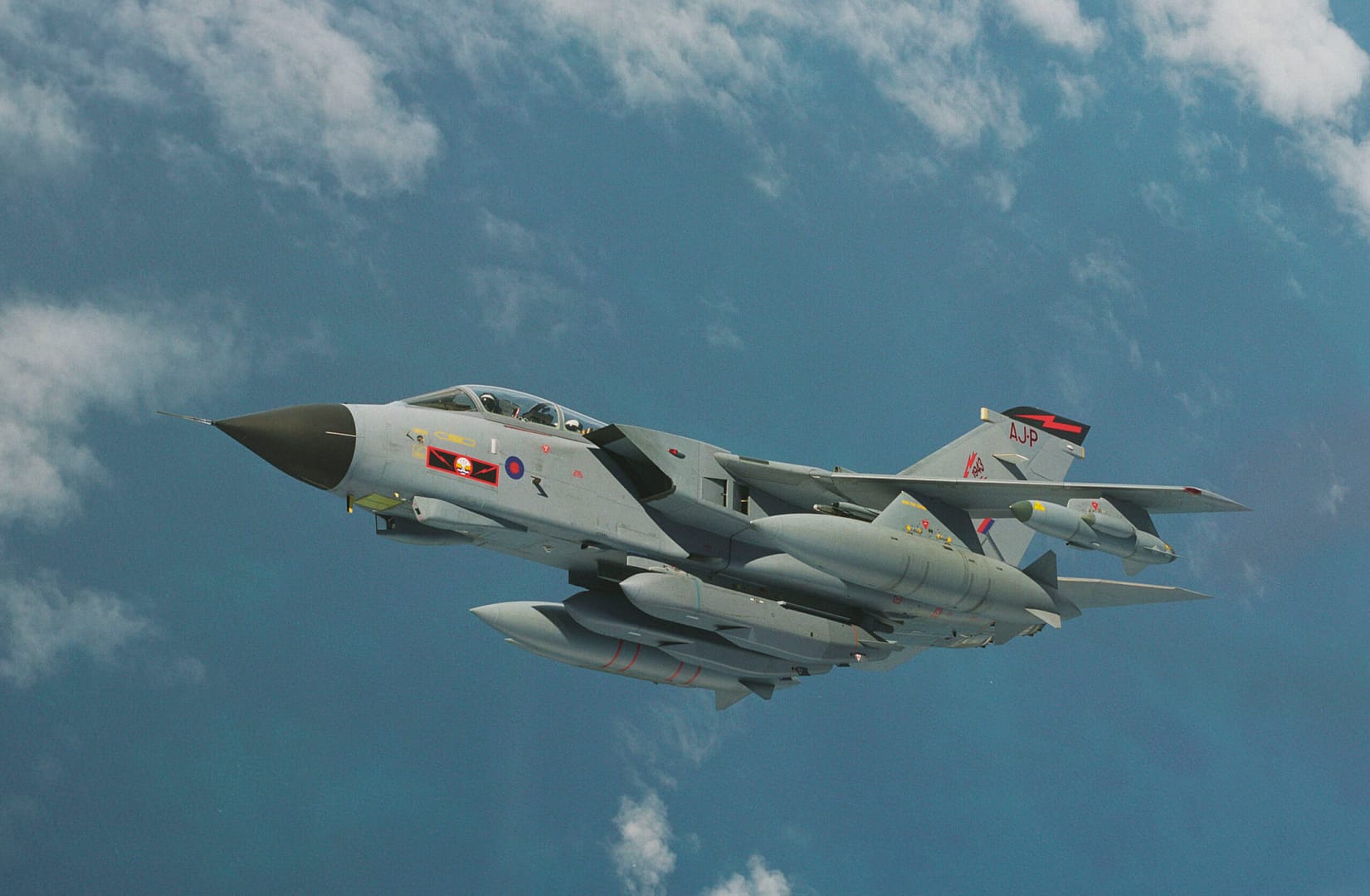
British defence programmes are not, as a rule, famous for speed. The Ajax armoured vehicle spent eight years mired in delay; the RAF’s Wedgetail radar aircraft arrived three years late. So when three new long-range strike weapons go from a sheet of paper to a successful test firing in under a year, it is worth noticing — and asking why.
The answer is Ukraine. Under a programme bluntly named ‘Project Brakestop’, the UK has just test-fired three cheap, ground-launched deep-strike weapons designed to be handed to Kyiv and built by the hundred. They are called One-Way Effectors, and they represent a very deliberate British bet on quantity.
- Quoi: three British low-cost “One-Way Effector” deep-strike weapons, all successfully test-fired
- Programme: ‘Project Brakestop’
- The trio: MBDA’s Crossbow, MGI Defence’s Tigershark, and Rotron Aerospace’s SkyLance
- The brief: range over 500 km, a 225 kg+ warhead, 600+ km/h, and a target cost of about £400,000 (~$527,000) per round, excluding the warhead
- Le rebondissement : built free of U.S. components and navigation data, so Britain — not Washington — controls how Ukraine uses them
- Next: £15m per company for 15 weapons each, then serial production, with deliveries to Ukraine targeted by the end of the year
Three weapons, one brief
The brief, set in late 2024, was demanding precisely because it was cheap: a range beyond 500 km, a warhead of at least 225 kg, a speed over 600 km/h, and a target unit cost of around £400,000 — roughly $527,000 — excluding the warhead. Crucially, each supplier had to be able to build at least 20 a month soon after an order. Twenty-seven companies pitched; six built prototypes; three survived to fire them.
MBDA — the firm behind the Storm Shadow cruise missile — offered the Crossbow OWE Heavy, a modular weapon assembled from off-the-shelf parts, launched from the back of a vehicle, and reaching beyond 800 km. It went from design to demonstration in nine months.
The second contender is the most unlikely. MGI Defence is part of MGI Engineering, a company that spent 25 years machining Formula 1 components. Its Tigershark, partly 3D-printed, flies at around 750 km/h to over 1,000 km, with autonomy supplied by the American firm Auterion. The third, Rotron’s SkyLance, is the odd one out: instead of a jet it uses a Wankel rotary engine turning a propeller, trading speed for a reach of roughly 1,200 km.
The quiet revolution: no American parts
The most strategically interesting detail did not appear in the government’s press release at all. According to the Financial Times, these weapons are being built deliberately free of U.S. components and navigation data. That is not an engineering footnote — it is a political statement.
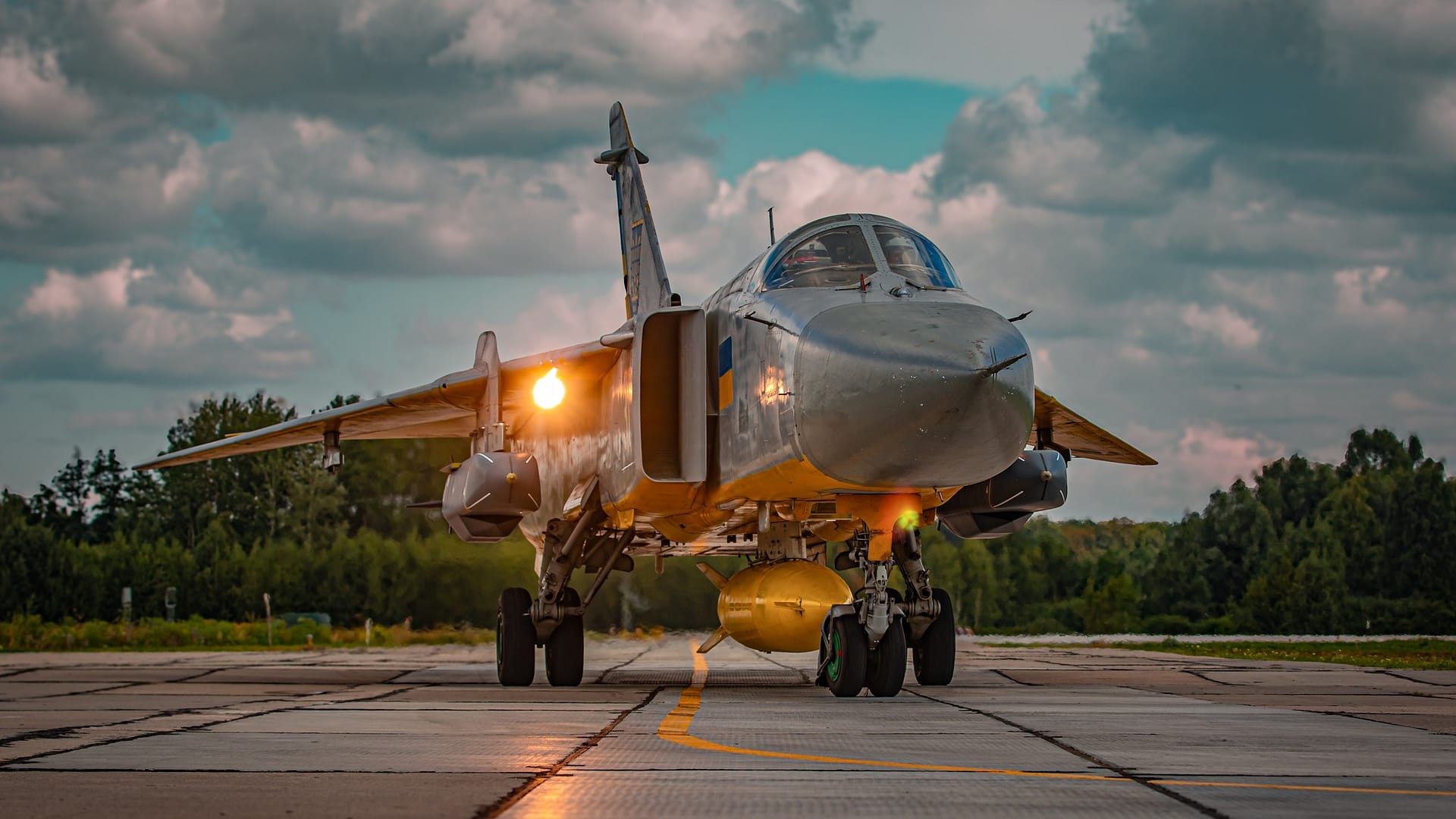
Ukraine learned the hard way that Western weapons with American parts can come with American vetoes: the Storm Shadow’s early use was held up over exactly that. With Washington’s posture toward Kyiv now less predictable, a weapon that Britain can authorise on its own — with no foreign permission slip — is worth as much for its politics as for its payload.
Why mass beats elegance
There is a deeper logic here. Ukraine and Russia now exchange strikes by the thousand, sometimes launching over a thousand cheap drones in a single night. No Western arsenal of exquisite cruise missiles can answer that arithmetic; firing that many Storm Shadows would burn through decades of production in days. The One-Way Effector is Britain’s way of buying the punch of a 1,000-bomber raid at a fraction of the price.
Rather than crown a single winner, the UK looks set to field all three — giving Ukraine variety, giving Russian air defences three different problems, and giving three British firms a much-needed boost. If the deliveries land by year’s end as promised, it will be that rarest of things: a British defence programme that was fast, cheap, and on time.
Sources: UK Ministry of Defence; The Aviationist; Financial Times; MBDA; MGI Defence; Rotron Aerospace.
Questions connexes
What is a One-Way Effector?
A One-Way Effector (OWE) is a low-cost, single-use strike weapon that sits between a cruise missile and an attack drone. It is cheaper and faster to build than a cruise missile but carries a real warhead over long range — designed to be fired in large numbers to overwhelm and exhaust an enemy's air defences. The Russian–Iranian Shahed-136 is a well-known example.
What is Project Brakestop?
Project Brakestop is a British Ministry of Defence programme, launched in late 2024, to develop cheap, mass-producible deep-strike weapons for Ukraine. From 27 initial bids, three companies — MBDA UK, MGI Defence and Rotron Aerospace — have now successfully test-fired their designs and won follow-on contracts.
What are the three weapons?
MBDA's Crossbow OWE Heavy is a modular, vehicle-launched weapon using off-the-shelf parts, with a range over 800 km. MGI Defence's Tigershark, built partly from 3D-printed components, flies at around 750 km/h to more than 1,000 km. Rotron's SkyLance is the only one without a jet engine, using a Wankel rotary engine driving a propeller to reach roughly 1,200 km.
Why build them without American parts?
So that Britain can decide how Ukraine uses them without needing U.S. permission. Earlier weapons like the Storm Shadow were initially held up because they relied on American components and navigation data. With U.S. policy toward Ukraine increasingly uncertain, the Financial Times reports these new weapons are deliberately free of U.S. parts and data, giving the UK sovereign control.
Why does cheap, mass-producible matter so much?
Because Ukraine and Russia now trade strikes by the thousand. Firing that many cruise missiles would drain decades of Western production in days. Cheap One-Way Effectors let a country mount the equivalent of a Second World War 1,000-bomber raid for a fraction of the cost — which is exactly the capability Britain is trying to hand Ukraine.

0 commentaire